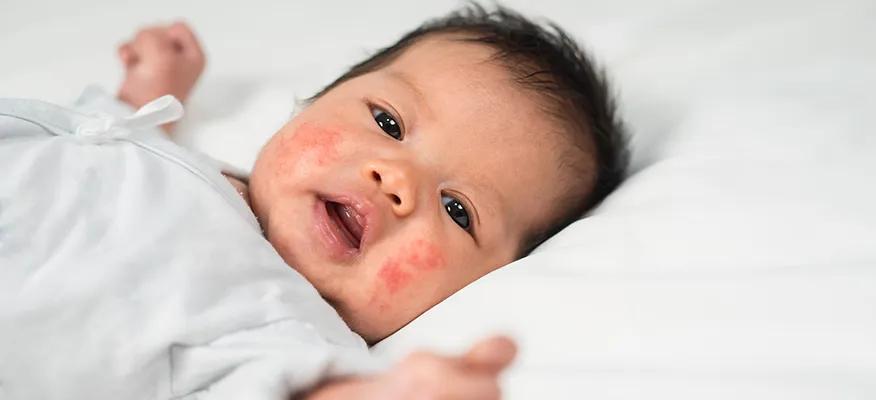
Is Your Baby Developing Acne?
As humans, we are affected by several health conditions throughout our life. Some present during later childhood, some during adolescence and teenage years, many during young and late adulthood, and a host of problems occur in middle and old age. However, there are conditions we typically expect to notice in later years that we see early on, even as young as infancy. Acne is one such problem.
Acne is typically observed in pre-teens and teenage children. Clinically, as many as 20% newborns might also experience acne. While some infants are born with it, most babies who have acne start to develop it between two and six weeks of birth. This is called neonatal acne. It is very common, and although alarming to see, is harmless.
Baby Acne – What It’s All About
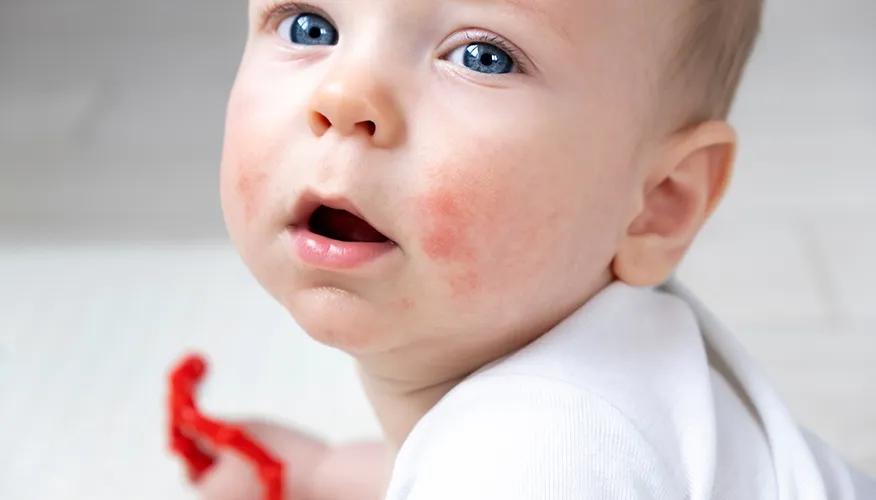
Baby acne is also referred to as neonatal cephalic pustulosis, newborn acne, or neonatal acne. It is almost like adult acne, visible as bumps, pustules, or small pimples on the baby’s skin. Baby acne is usually seen in infants who are about two weeks old. The acne usually clears up within a few weeks. In most cases, it clears up without any intervention or treatment.
Infantile acne is a condition that is fairly similar to neonatal acne. However, it is seen in infants between two months and a year old. While infantile acne includes the generalised symptoms of acne, little blackheads may also be visible. This variant of acne takes longer to clear and may require medical assistance.
Baby Acne – Why It Occurs
Acne results from clogged pores. However, it is hard to tell exactly why a baby develops neonatal acne. It can stem from a variety of causes, including:
- Hormonal changes occurring in the baby immediately after or during birth
- Excessive sebum production clogging the pores
- Highly sensitive skin in infants
- Residues of food, drool, or vomit on the skin
- Hormones from breast milk
Baby Acne – How It Looks
The presentation of baby acne is almost the same as adult acne. You may notice:
- Pustules: A little bump containing pus, surrounded by a dark ring
- Papules: Small bumps that can be purple, red, or crimson in colour
The most common areas affected by baby acne include the scalp, chin, neck, forehead, cheeks, and nose. Typically, neonatal acne forms on the chest, face, and back.
You may notice the acne develop either suddenly or show gradually. The acne and pimples are temporary and subside on their own in a few weeks. They usually leave no traces or blemishes as they clear.
When To Seek Medical Assistance For Baby Acne?
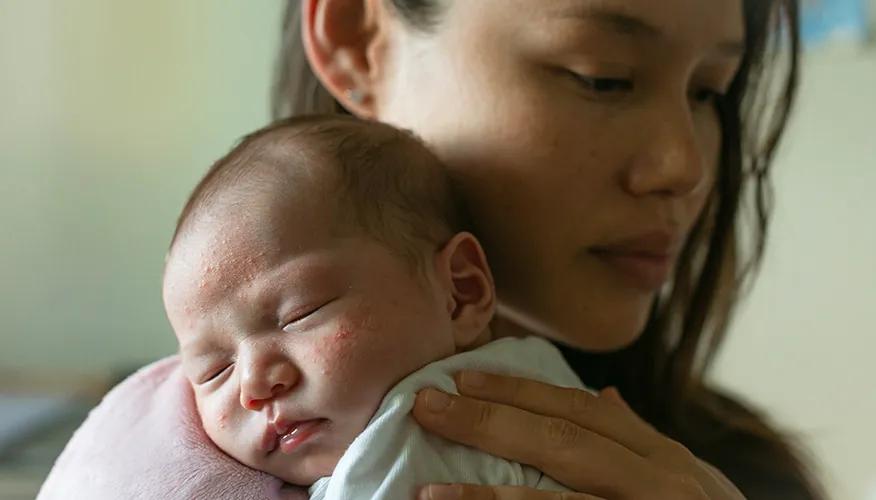
A general practitioner or your baby’s paediatrician should be able to diagnose baby acne. A simple check-up can help identify it, and neonatal acne doesn’t need any special tests. Baby acne usually subsides without any medical help or treatment.
However, you should seek medical assistance if:
- You notice blackheads, which could be an indication of infantile acne
- The acne starts to present after your baby is two months old
- The acne takes longer than a few weeks to clear
- Your baby is excessively bothered by the acne
- If you notice the skin peeling, blisters form, or a fever arise
- If your baby has trouble feeding and sleeping from the acne
Most doctors help you and your baby work around the problem to make it more comfortable. However, in some cases, your doctor may prescribe either a mild antifungal cream or a low-dose steroid to help the acne subside faster.
Baby Acne – Tips At Home
Although there is no special treatment required, always consult your physician before administering any kind of home treatment for baby acne. All that is needed is a clean, dry environment to help the acne clear faster.
Some important things to keep in mind are:
- Be very gentle with your baby’s skin. Avoid scrubbing or squeezing the acne
- Use non-greasy and light lotions and creams on your baby’s skin
- Use lukewarm water to bathe and wash. Avoid washing the face with hot water
- Clean up drool, food, or vomit immediately and don’t leave it to dry on your baby’s skin
- Use very soft, organic cotton cloth to clean your baby and avoid any abrasive fabrics
Conclusion
It’s Temporary And Harmless
There are several crises and conditions that parents must deal with as their baby grows. Baby acne is just one of the phases that many children experience as they grow and settle into the external environment. While care and caution are important, do ensure that you continue to shower your little ones with love, hugs, and kisses. It won’t change the acne at all but will certainly intensify the bond that you and your baby will create for life.
Meet our expert

Meet our expert
Dr. Iunis Galina Ivanovna is a Neurologist from Ukraine. She graduated from the Luhansk State Medical University in 1998, and has been in the medical profession since then. In the course of her career as a neurologist, Dr. Ivanovna has gathered extensive experience and expertise having handled a wide variety of cases.
How was the experience with article?
We'd love to know!