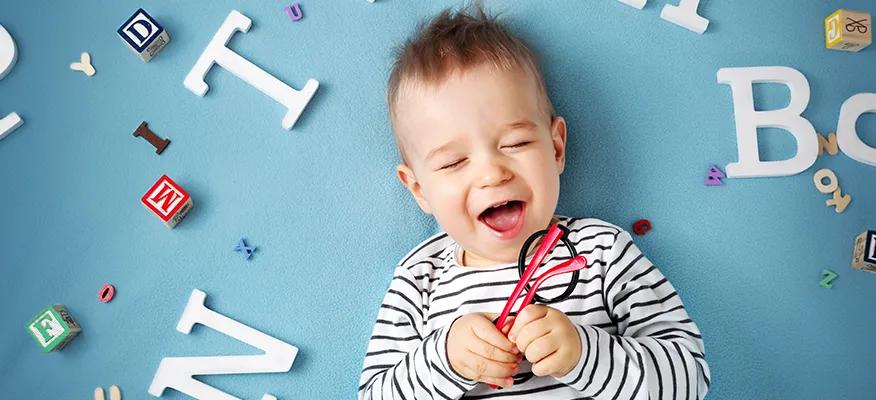
New Milestones Your Baby May Achieve
Congratulations on your newborn! As they grow, you and your baby will encounter new achievements. Your baby has a curious mind. They grow each day. Thus, making their growing journey exciting and at the same time rollercoaster for parents. As this journey is completely new for both of you. You will surely need a guide that will tell you about the emotional and cognitive developmental milestones while growing up.
While growing, you can promote healthy growth and development by providing timely feedings, a proper environment, and emotional bonding.

Growth And Development
At an early age, your baby will only demand feeding, essentially breast milk or formula milk. They start developing an interest in food when they start to sit up. At this time, you can introduce your baby to solids. Each baby is different from the others. They will grow at their own pace. During their first year, they will grow by achieving five areas of development. It includes cognitive, physical, emotional, language, social, sensory, and motor skills.
What Is A Developmental Milestone?
When a child can do something at a certain age is known as developmental milestones. It includes skills like rolling, sitting, standing, smiling for the first time, waving ‘bye’, etc.
As they achieve these physical activities, keeping tabs on their emotional and social development is also important. These activities will help them to become social, make friends, express their emotions, problem-solving attitudes, etc.

Emotional And Social Development
During the first month of your child, he/she will be able to express their feelings. They will become more alert and have rounded mouths and widened eyes. They began to bond with you as parents. In their second month, the most positive emotion starts to develop, i.e., a smile. They also start moving their arms and making eye contact. Further, they develop affection toward their caregivers in their third and four months.
During their fourth to sixth months, your child will become more social and can have various facial expressions, such as happiness or anger. Further, in their sixth and ninth months, they start to communicate with their caregivers, can experience separation anxiety through crying or anger, or can feel stranger anxiety.
When they turn one year of age, separation and stranger anxiety start to decrease. There is more affection towards their caregivers. Babies also develop slight independence, as they began crawling and walking.
Cognitive Development
Cognitive development refers to how a child’s brain is developing skills like learning, thinking, problem-solving, and exploring. It also includes developing skills like social and language skills.
During their first and second month of baby, they are interested in things and people around them and they start turning their heads towards it. In their third month, their interest in their surroundings evolves. They start recognizing and reacting to familiar things. In the fourth month, your baby starts recognizing the bottle and breast from where the baby is getting milk and is surprised by loud noises.

During the fourth month, your baby starts to see things as their vision improves. They also develop the sense of taste, sight, touch, and hearing. This sense is called sensory integration. When your baby reaches six to nine months, they start to get familiar with the same sounds, sights, and touches. At this age, they also develop a skill known as object permanence, which helps them understand and create memories.
In their ninth to twelfth months of life, they began to understand what is familiar, more curious about surrounding objects and people. At this age, they also began to develop their curiosity, personality, and emotions.

Conclusion
While your babies are growing, they achieve many milestones. Apart from emotional, social, and cognitive development, children also develop in language, physical, sensory, and motor aspects.
Having said that, all developmental milestones have major contributions towards your child’s health, ability to learn, and happiness. You as a parent, can create a healthy and good environment around your child to help them develop gradually.
Meet our expert

Meet our expert
Dr. Inna Anatolyivna Kirilyuk graduated from Vinnytsia National Medical University in 2008, marking the inception of her remarkable journey in healthcare. Following her graduation, Dr. Kirilyuk embarked on a path of continuous learning and specialization.
How was the experience with article?
We'd love to know!