
You are not alone in feeling heavy after finishing a meal. Globally, nearly one in five adults reports feeling bloated after eating at least once a week. When you zoom out, that means millions of us walk around carrying that pressure after meals, often brushing it off as normal digestion.
But here is what you need to know. While occasional fullness is part of being human, frequent post-meal bloating often reflects something deeper happening in your gut. And once you understand what is driving it, you can actually do something about it.
What is bloating after eating?
Clinically, bloating after eating, also called postprandial bloating, is defined as a subjective sensation of abdominal pressure or fullness after a meal.
Interestingly, researchers have separated bloating from distension. Bloating is the internal sensation. Distension is the visible increase in abdominal size.
When scientists used abdominal measurement devices to track girth changes in people who complained of severe bloating, only about half showed measurable expansion. In other words, you can feel extremely swollen even when your abdomen has not actually grown.
That gap points to something important. Your gut nerves can become overly sensitive. This is called visceral hypersensitivity. In that state, normal stretching from food or gas feels exaggerated. Your brain interprets ordinary digestive activity as discomfort.
Is it normal to bloat after eating?
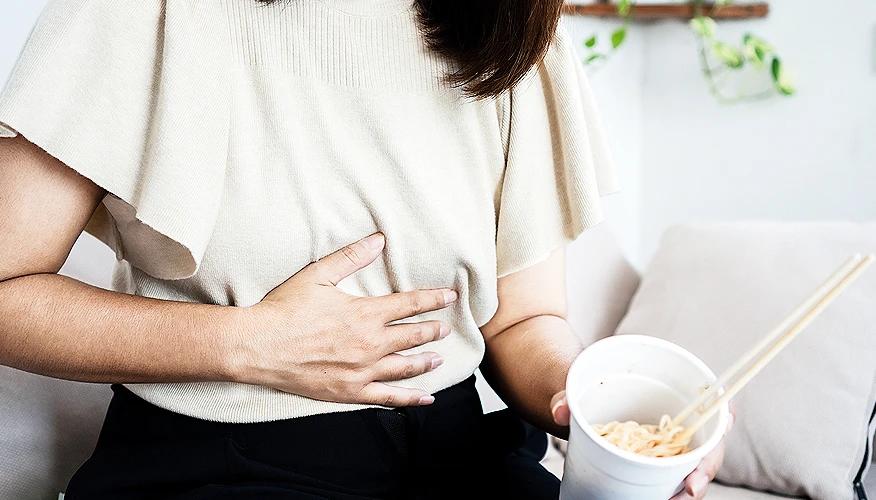
Your stomach is designed to stretch. When you eat, your stomach relaxes to accommodate food, a process known as gastric accommodation. In healthy individuals, abdominal girth naturally increases after meals and returns to baseline by morning. That daily rhythm is expected.
However, the line between normal and problematic becomes clearer when symptoms persist. According to Rome IV diagnostic criteria, bloating is considered a functional disorder when it occurs at least one day per week for three months and began at least six months earlier.
If you feel uncomfortable several times a week, and it interferes with work, social plans, or sleep, that is no longer simple fullness.
When your bloating lasts for hours, comes with pain, or keeps repeating regardless of what you eat, your body is asking for attention.
Why Do You Feel Bloated After Eating?
Bloating after eating can happen for several reasons, ranging from normal digestion to underlying digestive conditions. It is not always just “too much gas.” Modern gastroenterology shows that mechanics, microbes, gut motility, and the brain–gut axis all play a role.
1. Overeating
Large meals stretch the stomach and slow gastric emptying. When the stomach is overly full, it creates a heavy, tight sensation in the abdomen. Digestion takes longer, and pressure builds up.
2. Swallowing Air (Aerophagia)
Eating too quickly, chewing gum, talking while eating, drinking through a straw, or consuming carbonated beverages can cause you to swallow excess air.
Some individuals swallow air dozens of times per hour. That air accumulates in the stomach, leading to early bloating, tightness, and frequent belching.
3. Gas-Producing Foods and Fermentation
Your gut contains trillions of bacteria. When they ferment undigested carbohydrates — especially certain fibers and sugars — they produce gases such as hydrogen, carbon dioxide, and sometimes methane.
Certain foods ferment more easily, including:
- Beans and lentils
- Cruciferous vegetables
- Onions and garlic
- Wheat products
- Carbonated beverages
If gas production exceeds your body’s ability to clear it, the abdomen expands and feels bloated.
4. Food Intolerances
If your body has difficulty digesting certain foods — such as lactose, gluten (in sensitive individuals), or high-FODMAP carbohydrates — fermentation increases in the gut.
This leads to excess gas, fluid shifts, and abdominal distension after eating.
5. The Role of the Brain–Gut Axis
Gas alone does not explain all bloating.
The digestive system communicates directly with the brain through the gut–brain axis. When stress hormones rise, gut motility changes and intestinal sensitivity increases.
This means normal digestion may feel exaggerated. Even average amounts of gas can feel uncomfortable in people with heightened gut sensitivity.
6. Irritable Bowel Syndrome (IBS)
Irritable Bowel Syndrome is a common digestive disorder characterized by increased gut sensitivity and altered bowel habits.
People with IBS often feel bloated even when the amount of gas is normal. The issue is often visceral hypersensitivity — the gut overreacts to normal digestive processes.
7. Small Intestinal Bacterial Overgrowth (SIBO)
Small Intestinal Bacterial Overgrowth occurs when excess bacteria grow in the small intestine.
Fermentation begins too early — often within 30 to 90 minutes after eating — causing rapid abdominal distension.
Methane-producing bacteria can also slow intestinal movement, reducing gut transit speed. This allows gas to linger longer, increasing the sensation of heaviness and fullness.
8. Constipation
When stool moves slowly through the colon, gas becomes trapped behind it. This leads to pressure buildup, abdominal distension, and discomfort.
Chronic constipation is one of the most overlooked causes of persistent bloating.
Symptoms of bloating after eating
- Although pressure is the headline complaint, the details matter. Early satiety, where you feel full after a few bites, often suggests delayed gastric emptying. If heaviness lingers in your upper abdomen for hours, functional dyspepsia becomes more likely.
- Belching excessively frequently indicates air ingestion. A visible edema that becomes worse during the day and goes away in the morning indicates a buildup of gas. If nausea joins the picture, especially with vomiting, motility disorders rise higher on the list.
- The timing gives clues. Immediate bloating leans toward aerophagia. Bloating that peaks 60 minutes after a meal raises suspicion for fermentation issues like SIBO. Evening worsening suggests gas accumulation across the day.
How Long Does Bloating Last After Eating?
Bloating after eating usually lasts 1 to 3 hours and improves as your body digests food and releases trapped gas.
However, the duration can vary depending on the cause:
- Mild overeating or gas: 1–2 hours
- Gas from fermenting foods (beans, dairy, high-fiber foods): 3–6 hours
- Constipation-related bloating: May last all day
- Hormonal bloating (PMS): A few days
- Digestive conditions like Irritable Bowel Syndrome: Can occur frequently and last several hours
If bloating happens daily, becomes painful, or does not improve within a few hours, it’s a good idea to consult a healthcare professional.
Occasional bloating is normal — persistent bloating is not.
Foods that commonly cause bloating after eating
Diet often acts as the trigger. Short-chain carbohydrates known as FODMAPs are poorly absorbed and highly fermentable.
- Lactose is found in dairy, fructans are found in wheat and onions, too much fructose is found in apples and honey, and sugar alcohols are found in sugar-free foods.
- Cruciferous vegetables such as broccoli and cabbage contain raffinose and insoluble fiber. They are healthy, yet if you suddenly increase your intake, your microbiome needs time to adapt.
When is bloating after eating not normal?
Certain signs demand medical evaluation. Unexplained weight loss, blood in stool, iron deficiency anemia, persistent fever, or new-onset bloating after age 50 require attention. Severe, progressive pain is not something you ignore.
If your symptoms intensify over weeks rather than fluctuate, your doctor needs to evaluate underlying causes such as inflammatory bowel disease or celiac disease.
Health conditions linked to post-meal bloating
- Irritable bowel syndrome stands at the top of the list. Nearly all individuals with IBS report bloating.
- Functional dyspepsia, gastroparesis, celiac disease, and carbohydrate malabsorption also frequently present this way.
In celiac disease, gluten damages intestinal villi, impairing nutrient absorption. Undigested nutrients reach the colon, ferment, and produce gas. The mechanism is direct.
How to reduce bloating after eating
Because causes vary, relief works best when personalized. Still, certain strategies consistently help.
- Slowing down at meals reduces swallowed air and improves enzyme contact with food. Even pacing yourself deliberately changes outcomes.
- Studies show that short walks, about 10 to 15 minutes after meals, significantly reduce bloating and gas. Movement stimulates peristalsis. It works better than many medications.
Natural remedies for bloating after eating
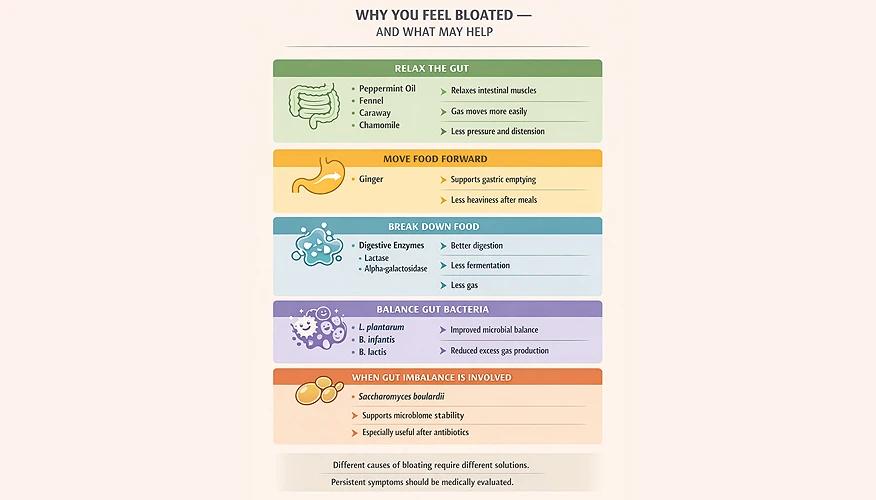
- Peppermint oil, especially enteric-coated forms, relaxes intestinal smooth muscle. Clinical trials show reduced bloating and pain in IBS patients.
- Ginger speeds gastric emptying. Doses around 1,200 to 2,000 mg daily improve dyspepsia symptoms in several studies.
You feel lighter when your stomach empties more efficiently.
Natural ingredients that may help reduce bloating
Not all bloating happens for the same reason. Sometimes the gut muscles are tense. Sometimes food sits too long in the stomach. Sometimes certain carbohydrates ferment and create excess gas.
Different natural ingredients work in different ways — and understanding the mechanism helps you choose the right support.
Ingredients that relax the gut
When intestinal muscles are tight or spasming, gas can get trapped. Relaxing the gut allows pressure to ease.
Peppermint oil
- Enteric-coated peppermint oil has been shown in clinical trials to reduce bloating and abdominal pain, especially in IBS.
- It relaxes intestinal smooth muscle, helping trapped gas move more easily.
Fennel
- Traditionally used after meals in many cultures, fennel has mild antispasmodic and carminative effects. Small studies suggest it may reduce bloating and gas.
Caraway oil
- Often studied in combination with peppermint oil, caraway may reduce fullness and abdominal discomfort by decreasing intestinal spasm.
Chamomile
- Known for its soothing properties, chamomile may help calm mild gut irritation and reduce digestive tension.
- When the gut relaxes, pressure reduces — and bloating feels less intense.
Ingredients that support gut microbial balance
Certain probiotic strains have been shown to reduce bloating, particularly in functional digestive disorders.
Strains studied include:
- Lactobacillus plantarum
- Bifidobacterium infantis
- Bifidobacterium lactis
Not all probiotics reduce bloating — strain specificity matters. But when the gut microbiome is better balanced, fermentation and gas formation may decrease.
Ingredients that reduce gut irritation
Low-grade digestive inflammation can contribute to discomfort and distension.
Turmeric (curcumin)
- Some studies suggest curcumin may help improve digestive discomfort and bloating, possibly by supporting bile flow and reducing inflammation.
You don’t need all of these at once. The right solution depends on why bloating is happening in the first place.
Occasional bloating is common. Persistent, painful, or worsening symptoms should be evaluated by a healthcare professional.
Is post-meal bloating different for women?
Hormones have a dramatic effect on digestion. Nearly one in four women has weekly bloating, compared to one in eight males.
Estrogen influences fluid balance through kidney channels called aquaporins. When levels fluctuate, water retention changes. That creates fluid-based bloating distinct from gas.
Pregnancy slows motility dramatically. Menopause shifts microbiome diversity. Your hormonal landscape shapes your gut every month and across decades.
When to see a doctor
Seek medical attention if bloating:
- Occurs daily
- Is painful
- Is associated with persistent diarrhea or constipation
- Worsens over time
Your doctor may recommend tests to rule out:
- IBS
- SIBO
- Food intolerances
- Celiac disease
- Ovarian conditions
Conclusion
When you understand that bloating is not just random gas but a signal from your gut, everything shifts. Instead of criticizing yourself for "overeating," you begin to observe trends in your eating habits, the foods you eat, and your body's reactions. You have control because of that awareness. Small changes, practiced consistently, often calm your digestion more than you expect.
Additionally, you should be properly evaluated rather than dismissed if your symptoms continue. Your uneasiness is genuine. You get closer to eating meals that fill you up without making you feel heavy when you pay attention to your body and act on it with consideration.
Meet our expert

Meet our expert
Dr. Inna Anatolyivna Kirilyuk graduated from Vinnytsia National Medical University in 2008, marking the inception of her remarkable journey in healthcare. Following her graduation, Dr. Kirilyuk embarked on a path of continuous learning and specialization.


How was the experience with article?
We'd love to know!