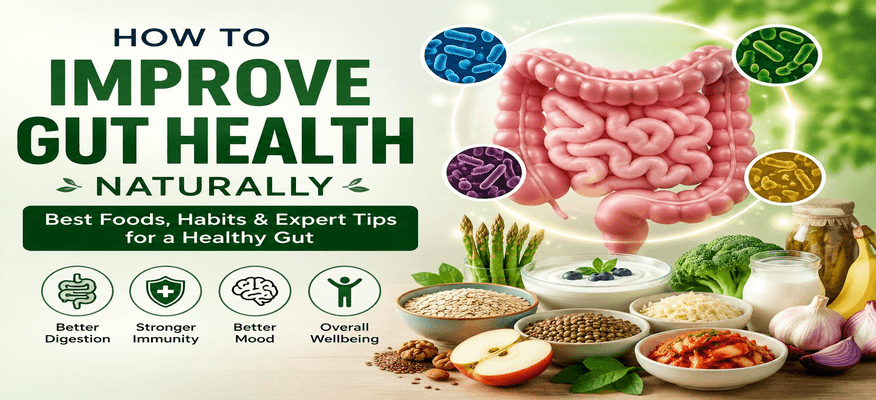
Gut health is the balance and diversity of the trillions of microorganisms — bacteria, viruses and fungi — living in your digestive tract, together called the gut microbiome. A healthy gut digests food efficiently, absorbs nutrients, supports your immune system, and even influences your mood. You can improve gut health naturally by eating more fiber and fermented foods, staying hydrated, managing stress, sleeping well, and exercising regularly.
What is gut health?
Gut health refers to the function and balance of the microorganisms in your gastrointestinal tract — primarily your large intestine. This community of microbes is your gut microbiome, and most people carry hundreds to thousands of different species.
When your gut microbiome is diverse and balanced, it helps you:
- digest food and absorb nutrients
- produce certain vitamins (such as vitamin K and some B vitamins)
- regulate your immune system
- protect against harmful bacteria
- reduce inflammation
- support brain and mood health through the gut–brain axis
In short, gut health is not just about digestion. A healthy gut is increasingly linked to overall physical and mental wellbeing.
Why gut health matters?
Research increasingly shows your gut microbiome can affect nearly every system in your body. A diverse, balanced microbiome is associated with a lower risk of conditions including:
- type 2 diabetes
- inflammatory bowel disease (IBD) and irritable bowel syndrome (IBS)
- cardiovascular disease
- obesity
- certain cancers
- anxiety and low mood
Roughly 70% of your immune cells live in your gut, and the gut produces a large share of the body's serotonin — which is why poor gut health can show up as both physical and emotional symptoms.
Signs of an unhealthy gut
You don't need a lab test to spot the warning signs. Common signs of an unhealthy gut include:
- Digestive symptoms — bloating, gas, constipation, diarrhea or heartburn
- Fatigue or poor sleep — an imbalanced microbiome can disrupt rest
- Mood changes — high stress, low mood or anxiety via the gut–brain axis
- Frequent illness — getting sick often can reflect weakened gut-based immunity
- Unintentional weight changes — without changes to diet or activity
- Skin problems — flare-ups of acne, eczema or rosacea
Factors that throw your gut off balance include chronic stress, too little sleep, inactivity, a diet high in ultra-processed foods, smoking, excess alcohol and overuse of antibiotics.
How to improve gut health: 10 science-backed ways

1. Eat a diverse range of whole foods
Different microbes thrive on different foods, so variety builds a more resilient microbiome. Studies suggest people who eat 30+ different plant foods per week have more diverse gut bacteria than those who eat 10 or fewer. Rotate fruits, vegetables, whole grains, legumes, nuts and seeds.
2. Eat enough fiber
Fiber is the number-one fuel for good gut bacteria. Aim for 25–38 grams of fiber per day (most adults get only about half that). Excellent sources include legumes, oats, whole grains, berries, leafy greens, avocado, sweet potato, Brussels sprouts, nuts and seeds. Increase fiber gradually and drink more water to avoid bloating.
3. Add fermented foods
Fermented foods deliver live beneficial microbes (probiotics). Include yogurt with live cultures, kefir, kimchi, sauerkraut, miso, tempeh and kombucha. Even a small daily serving can increase microbiome diversity and lower markers of inflammation.
4. Feed your microbes with prebiotics
Prebiotics are fibers that feed your good bacteria. Top prebiotic foods include garlic, onions, leeks, asparagus, bananas (slightly green), oats and apples. Pairing prebiotics (fuel) with probiotics (the bacteria) is one of the most effective natural gut-health combinations.
5. Cut ultra-processed foods and added sugar
Ultra-processed foods and excess sugar reduce microbial diversity and increase gut inflammation. Practical steps:
- read labels and avoid long lists of additives
- choose whole, fresh foods where possible
- cook at home more often
- swap sugary snacks for fruit
6. Stay hydrated
Water supports the mucus lining of your gut and keeps things moving, preventing constipation. Most people benefit from around 6–8 cups (1.5–2 liters) of water a day, more in heat or with exercise.
7. Manage stress
Chronic stress disrupts the microbiome through the gut–brain axis, triggering symptoms like cramping, diarrhea or constipation. Evidence-based ways to lower stress include deep "belly" breathing, meditation, yoga, time in nature and regular walks.
8. Prioritize sleep
Poor or irregular sleep is linked to a less diverse microbiome — and your gut bacteria, in turn, influence sleep quality. Aim for 7–9 hours per night and keep a consistent sleep schedule.
9. Exercise regularly
Physical activity increases microbial diversity and the growth of beneficial species. Target at least 150 minutes of moderate exercise per week (such as brisk walking, cycling or swimming), ideally combined with some strength training.
10. Be smart about antibiotics and consider probiotics
Only use antibiotics when prescribed, since they reduce microbiome diversity. After a course — or if you have specific digestive issues — a probiotic supplement may help restore balance. Choose a product with clinically studied strains and talk to your doctor or pharmacist about what's right for you.
Best foods for gut health
If you want a simple shopping list, prioritise these gut health foods:
| Category | Examples | Why it helps |
| High-fiber foods | Oats, lentils, beans, berries, broccoli | Feed good bacteria, keep you regular |
| Fermented foods | Yogurt, kefir, kimchi, sauerkraut, miso | Add live probiotics |
| Prebiotic foods | Garlic, onion, leek, asparagus, banana | Fuel for healthy microbes |
| Polyphenol-rich | Green tea, dark chocolate (70%+), olive oil, berries | Support beneficial bacteria |
| Omega-3 sources | Salmon, sardines, flaxseed, walnuts | Reduce gut inflammation |
Foods to limit: ultra-processed snacks, sugary drinks, processed meats, excess alcohol, and foods high in saturated fat.
The Gut-Brain Connection
The gut and brain communicate through a complex network known as the gut-brain axis.
Gut bacteria can influence:
- Mood
- Stress response
- Cognitive function
- Sleep quality
- Emotional wellbeing
Research suggests that maintaining a healthy gut microbiome may positively impact mental health and overall quality of life.
Common Habits That Harm Gut Health
Several lifestyle habits can negatively affect the gut microbiome, including:
- Excess sugar consumption
- Smoking
- Heavy alcohol intake
- Chronic stress
- Lack of sleep
- Sedentary lifestyle
- Overuse of antibiotics
- Frequent consumption of processed foods
Reducing these habits can help restore and maintain a healthy gut.
Daily Routine to Improve Gut Health
A simple gut-friendly routine may include:
- Drink a glass of water after waking up.
- Eat a fiber-rich breakfast.
- Include probiotic foods daily.
- Take a short walk after meals.
- Stay hydrated throughout the day.
- Manage stress with mindfulness or exercise.
- Prioritize quality sleep each night.
How to clean your gut naturally?

There's no need for harsh detoxes or cleanses — your gut, liver and kidneys clean themselves. To reset your gut naturally:
- Eat whole, plant-rich, high-fiber meals for 2–4 weeks.
- Add one fermented food daily.
- Cut added sugar and ultra-processed foods.
- Drink enough water and move daily.
- Improve sleep and lower stress.
This gives your microbiome the conditions to rebalance — far safer and more effective than detox teas or extreme cleanses.
How long does it take to improve gut health?
Your microbiome begins shifting within 24–48 hours of a dietary change, and most people notice less bloating and more regularity within 2–4 weeks of consistent habits. Lasting change comes from small, sustainable adjustments rather than short-term cleanses.
When to see a doctor
See a healthcare professional if you have persistent symptoms such as ongoing bloating, unexplained weight loss, blood in your stool, severe or lasting abdominal pain, or a sudden change in bowel habits. These can signal conditions that need medical assessment.

Conclusion
Learning how to improve your gut health doesn’t need to be complex. By incorporating a diverse range of foods in your diet, including fermented and prebiotic-rich foods, and managing stress, you can significantly improve your gut health. Regular exercise and adequate sleep are also essential for maintaining a healthy gut.
Remember, making small, sustainable changes is the best way to improve gut health in the long term. Prioritizing gut health can lead to better digestion, improved mood, enhanced immune function, and overall wellness. So, let's start today and make our gut health a priority. Your body—and especially your gut—will thank you!
Meet our expert

Meet our expert
Dr Adwoa Agyei-Nkansah is a fellow of the West African College of Physicians, a fellow of the Royal College of Physicians, London and a member of the American College of physicians.



How was the experience with article?
We'd love to know!