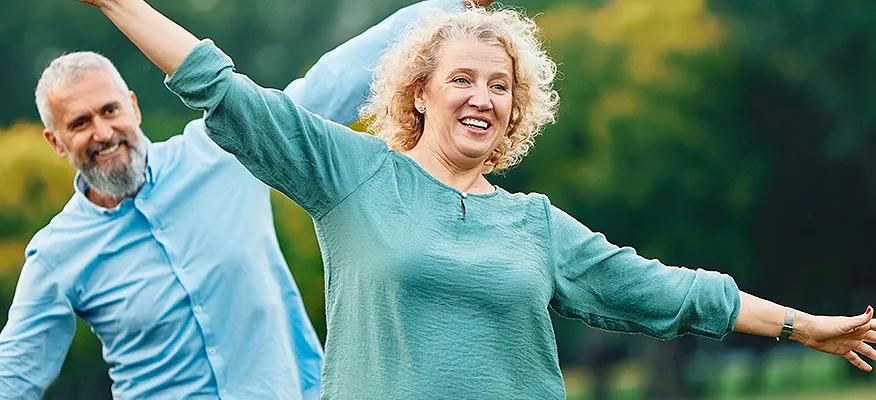
As we age, maintaining balance becomes increasingly important to prevent falls and enhance overall mobility. Good balance is crucial for daily activities, independence, and quality of life.
Falls are one of the leading causes of injury among the elderly, often resulting in fractures, loss of independence, and a decline in overall health. Therefore, incorporating balance exercises into a regular fitness routine is essential for seniors to stay steady on their feet, improve strength, and boost confidence.

Balance exercises not only target the muscles responsible for stability but also enhance coordination and reaction times. These exercises can be easily performed at home or in a gym setting, often without the need for special equipment.
This blog will explore 16 of the best balance exercises for elderly, ensuring they can continue to enjoy their daily activities safely and effectively.
What are balance exercises?
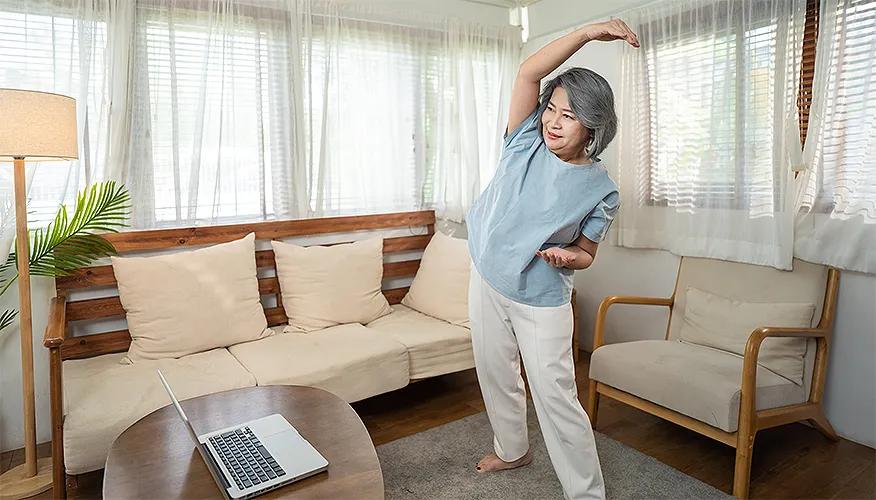
Balance exercises for elderly are specific movements and activities designed to improve stability, coordination, and strength, helping to prevent falls and maintain independence.
By practicing balance exercises for elderly physical therapy regularly, seniors can enhance their ability to perform daily activities with confidence and reduce the risk of injury.
Balance exercises for elderly are often gentle and can be adapted to suit different fitness levels and physical abilities. They typically focus on:
- Strengthening Key Muscle Groups: Exercises that build strength in the legs, hips, and core are essential for maintaining balance. Strong muscles give better stability and support.
- Improving Coordination: Balance exercises often involve movements that require coordination between different parts of the body, helping seniors improve their overall motor skills.
- Enhancing Proprioception: Activities that challenge the body’s sense of position and movement can improve proprioception, allowing seniors to react more quickly to changes in their environment.
- Increasing Flexibility: Stretching and flexibility exercises help maintain the range of motion in joints, making it easier to move and maintain balance.
- Boosting Confidence: Regular practice of balance exercises can build confidence in movement, reducing the fear of falling and encouraging a more active lifestyle.

Why is balance important for the elderly?
Balance is a crucial aspect of overall health and well-being, especially for the elderly.
As we age, several changes occur in our bodies that can affect balance, such as reduced muscle strength, joint flexibility, and changes in vision and inner ear function.
Maintaining good balance is vital for several reasons:
Fall prevention
- Falls are a leading cause of injury among older adults, often resulting in fractures, head injuries, and other serious complications.
- Falls can significantly impact an elderly person’s quality of life, leading to a loss of independence and increased fear of falling again.
- Good balance reduces the risk of falling by improving stability and coordination, which helps prevent these injuries and their associated health consequences.
Mobility and flexibility
- Good balance enhances overall mobility, enabling seniors to move more freely and participate in a wider range of activities.
- Improved mobility allows seniors to enjoy recreational activities, travel, and engage in hobbies that contribute to a fulfilling life.
- Additionally, good balance contributes to better flexibility, which is important for maintaining a healthy range of motion in the joints.
- This flexibility can reduce stiffness and discomfort, making movement more comfortable and reducing the risk of joint injuries.
Physical fitness
- Balance exercises often involve strengthening the muscles, particularly in the legs and core.
- Strong muscles provide better support and stability, improving overall physical fitness and endurance.
- Enhanced physical fitness allows seniors to engage in more strenuous activities, such as gardening, dancing, or hiking, which can improve cardiovascular health and overall vitality.
Confidence and mental wellbeing
- Knowing they have good balance can boost seniors’ confidence in their ability to move around safely.
- This confidence can reduce anxiety about falling, encourage a more active lifestyle, and improve mental well-being.
- When seniors feel secure in their physical abilities, they are more likely to engage in social and recreational activities, which can lead to a more positive outlook on life.
16 best balance exercises for elderly
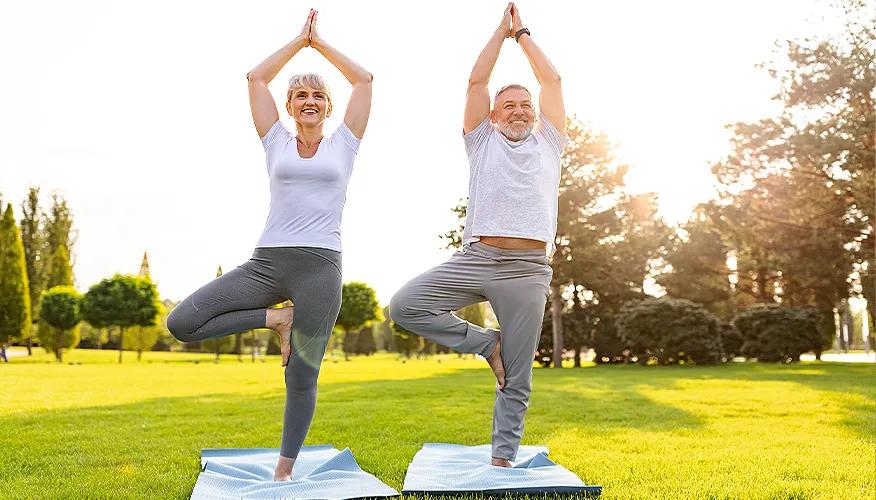
- Single Leg Stand: Stand on one leg while holding onto a sturdy chair or countertop for support. Gradually try to balance without holding on. Switch legs after a few seconds. This exercise helps improve balance and strengthens the muscles in your legs and core. Aim to hold each position for 10-15 seconds, gradually increasing the duration as your balance improves.
- Heel-To-Toe Walk: Walk in a straight line, placing one foot directly in front of the other, heel to toe. This exercise improves coordination and balance by mimicking a tightrope walk. Perform this exercise for 20 steps, focusing on a straight posture and slow, deliberate movements.
- Rock The Boat: Stand with feet hip-width apart. Shift your weight to one foot, lifting the other slightly off the ground. Hold for a few seconds and switch sides. This exercise challenges your balance and helps strengthen the stabilizing muscles in your legs and core. Perform 10 repetitions on each side.
- Clock Reach: Imagine standing in the center of a clock. Reach one arm out to 12 o'clock, then 3 o'clock, 6 o'clock, and 9 o'clock, shifting weight as needed to maintain balance. This static and dynamic balance exercises for elderly enhances balance and coordination while engaging the core. Repeat this sequence 5 times with each arm.
- Side Leg Raise: Stand behind a chair for support. Slowly lift one leg to the side without tilting your body. Bring the leg down and repeat with the other leg. This exercise strengthens the outer thighs and hips, which are crucial for maintaining balance. Perform 10 repetitions on each leg.
- Back Leg Raise: Hold onto a chair for support. Lift one leg straight back in a way that your knees are not bent. Lower it slowly and switch legs. This exercise targets the glutes and lower back muscles, which support overall stability. Aim for 10 repetitions on each leg.
- Marching In Place: Among the best balance exercises for seniors, marching in place is a crucial one. Lift your knees high as if you are marching in place. This exercise strengthens the legs and improves coordination. It also helps with balance by challenging you to lift your legs higher than usual. March for 1-2 minutes.
- Tandem Stance: Stand with one foot directly in front of the other, heel to toe, and hold this position for as long as possible. Switch feet and repeat. This exercise challenges your balance and helps improve posture. Aim to hold each position for 20-30 seconds, gradually increasing the duration.
- Toe Lifts: Stand with feet hip-width apart and rise onto your toes. Lower back down slowly. This strengthens the ankles and improves balance by challenging your stability. Perform 15-20 repetitions, focusing on slow and controlled movements.
- Sit-To-Stand: This is the best sitting balance exercise for elderly. Sit on a sturdy chair. Stand up without using your hands, then sit back down slowly. Repeat several times to strengthen legs and improve balance. This exercise mimics a common daily movement and helps improve leg strength and stability. Aim for 10-15 repetitions.
- Heel Walk: Walk on your heels with your toes lifted off the ground. This exercise strengthens the front of your legs and enhances balance by challenging your stability in a different way. Walk for 1-2 minutes, focusing on maintaining balance.
- Chair Stand: Sit on a chair and stand up, then sit back down. Repeat several times. This exercise not only strengthens the legs but also improves balance. It’s particularly effective for improving the muscles used in daily activities. Aim for 10-15 repetitions.
- Hip Circles: Stand with feet hip-width apart and place hands on your hips. Slowly make circles with your hips in one direction, then switch directions. This exercise improves flexibility and balance by challenging your core stability. Perform 10 circles in each direction.
- Step-Ups: Use a step or low platform. Step up with one foot, then bring the other foot up to meet it. Step down and repeat, alternating legs. This exercise strengthens the legs and enhances balance. Perform 10-15 step-ups on each leg.
- Balance Walking: Place one foot in front of the other, heel to toe, and walk in a straight line. This exercise improves coordination and balance. Focus on maintaining a straight posture and deliberate movements. Perform this exercise for 20 steps.
- Tai Chi: Practice gentle Tai Chi movements, which involve slow, controlled motions that enhance balance, flexibility, and strength. Tai Chi is known for its benefits in improving balance and reducing the risk of falls among seniors. Practice for 15-20 minutes, focusing on smooth and controlled movements.
Tips for safe balance exercises
Here are some tips for balance and flexibility exercises for seniors:
- Start slowly: Begin with simple exercises and gradually increase the difficulty as your balance improves. Starting slowly helps prevent injury and allows your body to adapt to the new movements.
- Use support when needed: Use a sturdy chair, countertop, or wall for support, especially when starting balance training for seniors. As your balance improves, try to rely less on support to challenge your stability further.
- Wear proper footwear: Wear comfortable, supportive shoes with non-slip soles. Proper footwear provides stability and reduces the risk of slipping or tripping.
- Listen to your body: Give attention on how your body feels as you exercise. If you experience pain, dizziness, or discomfort, stop the exercise immediately and consult your doctor. It's important to exercise within your comfort zone to avoid injury.
- Warm up and cool Down: Begin each exercise session with a warm-up to prepare your muscles and joints. Gentle stretching and light aerobic activity can help reduce the risk of injury. Similarly, end your session with a cool-down to relax your muscles and gradually lower your heart rate.

Conclusion
Maintaining good balance is essential for the elderly to lead a safe, independent, and active lifestyle.
Balance exercises for elderly play a crucial role in enhancing stability, strength, and coordination, reducing the risk of falls, and improving overall quality of life. By incorporating these balance training for elderly into a regular fitness routine, seniors can enjoy increased confidence in their movements, greater mobility, and better physical and mental well-being.
Meet our expert

Meet our expert
Dr. Irina Borisovna Stefanenko, a medical doctor based in Ukraine, graduated from Vinnitsa State Medical University in 1995. Between 1995 and 2000, Dr. Stefanenko pursued postgraduate studies and engaged in scientific activities at Vinnytsa Medical University in Ukraine.


How was the experience with article?
We'd love to know!