As we age, prioritizing health and well-being becomes crucial. Yoga offers holistic benefits for healthy aging, integrating physical postures, breathing exercises, and meditation to enhance flexibility, strength, balance, and mental clarity. It addresses common age-related issues like joint pain and stiffness while promoting relaxation and reducing stress.
Through regular practice, yoga supports both physical and emotional well-being, fostering a vibrant lifestyle in older adults. In this blog, we will discuss yoga for healthy aging, and how by incorporating yoga into your routine, you can support your body and mind, ensuring a healthier, more vibrant life at any age.
Benefits of yoga for older adults
Practice of yoga poses empowers older adults to sustain physical health, enhance mental well-being, and fortify the journey of healthy aging.
Here are some of the major benefits of yoga for older adults:
Enhanced Flexibility and Mobility
- Yoga's stretching exercises alleviate muscle tightness, fostering improved flexibility and improved mobility crucial for aging bodies.
- Enhanced mobility facilitates everyday tasks with ease, reducing discomfort and promoting independence.
Strengthened Balance and Stability
- Yoga poses like Warrior and Tree cultivate gentle yet potent strength in core, leg, and back muscles, vital for balance and stability maintenance.
- This strength boost significantly curtails fall risks and related injuries.
Stress Reduction and Mental Wellness
- Yoga’s mindful breathing and meditation techniques are potent stress-management tools, vital as we age and face diverse stressors.
- Regular practice calms the nervous system, fostering relaxation, mental clarity, and emotional well-being.
Improved Respiratory Health and Heart Wellness
- Pranayama’s conscious breathing elevates lung capacity and oxygen intake, bolstering respiratory efficiency and endurance.
- Yoga’s gentle physicality also benefits cardiovascular health by enhancing circulation, lowering blood pressure, and fortifying heart health.
Enhanced Sleep and Life Quality
- Yoga’s holistic approach, combining physical activity, relaxation, and stress reduction, regulates sleep patterns and enhances sleep quality for older adults.
- Quality sleep is paramount for physical and mental rejuvenation, sustaining energy levels and overall well-being.
Yoga poses for healthy aging
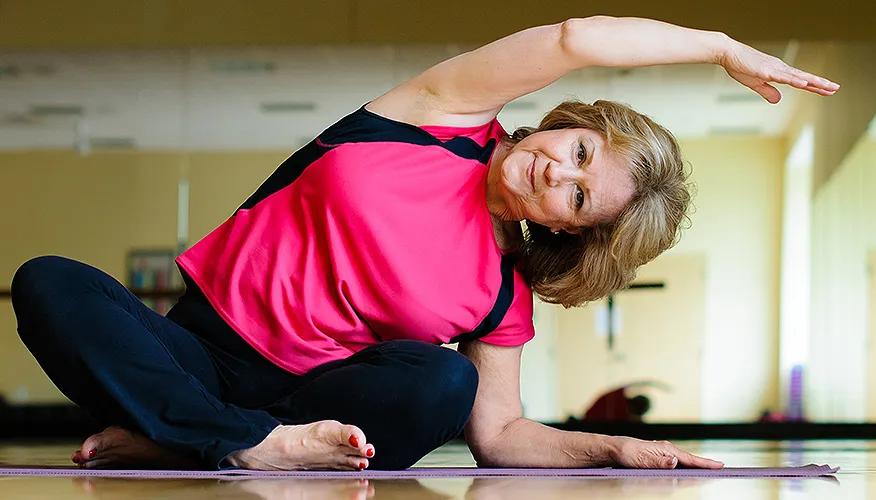
When practiced regularly, yoga for healthy aging, can help older adults maintain their physical health, improve their mental well-being, and support the process of healthy aging.
Gentle warm-up poses to prepare the body for practice
Yoga warm up poses help to increase blood flow to the muscles, loosen joints, and gradually elevate the heart rate.
Some gentle warm-up yoga poses for old age include:
Cat-Cow Pose
- In Cat-Cow Pose, start on all fours with wrists under shoulders and knees under hips.
- Inhale, then arch your back and lift your head, and gaze up (cow pose).
- Exhale, round your spine, tuck your chin to chest (cat pose).
Child’s Pose
- Child’s Pose is a gentle yoga pose for relaxation and stretching.
- Begin on your hands and knees, then sit back on your heels with arms extended forward.
- Rest your forehead on the ground and breathe deeply, relaxing into the pose.
Standing poses to improve balance and strength
Standing yoga poses are crucial for building strength and improving balance, which are essential for maintaining independence and preventing falls in older adults. Examples include:
Tree Pose (Vrikshasana)
- Vrikshasana benefits includes strengthening the legs and core while improving focus and concentration.
- It involves standing on one leg while placing the other foot against the inner thigh or calf, hands either at the heart or extended overhead.
Warrior Pose (Virabhadrasana)
- Warrior Pose strengthens legs, opens hips, and improves balance.
- Start in Mountain Pose, step feet wide apart, and turn your right foot out 90 degrees.
- Bend your right knee, keep your left leg straight, and raise your arms parallel to the ground. Hold, then switch sides. Maintain alignment and breathe deeply for stability.
Seated Poses For Flexibility And Relaxation
Seated poses are ideal for improving flexibility and providing a gentle stretch to the muscles. Examples include:
Seated Forward Bend (Paschimottanasana)
- Sit on the floor by extending your legs.
- Inhale, lengthen spine, then exhale, fold forward from hips, reaching hands towards feet.
- Keep back straight, aim to touch toes or shins, and hold for several breaths. Relax and release tension.
Easy Pose (Sukhasana)
- Easy Pose, or Sukhasana, is performed by sitting cross-legged on the floor with a straight spine.
- Rest hands on knees or in your lap, palms facing up or down. Close eyes, relax shoulders, and focus on steady breathing for relaxation and grounding.
Restorative poses for relaxation and stress relief
Restorative poses focus on deep relaxation and stress relief. These poses are typically held for several minutes, allowing the body to fully relax and the mind to unwind. Examples include:
Corpse Pose (Savasana)
- Often performed at the end of a yoga session, this pose involves lying flat on the back with arms and legs relaxed.
- It helps to integrate the benefits of the practice, reduce stress, and promote deep relaxation.
Supported Bridge Pose (Setu Bandhasana)
- In this pose, a block or bolster is placed under the sacrum to support the lower back, allowing the body to relax while gently stretching the chest, neck, and spine.
- It's excellent for reducing anxiety and alleviating tension in the back and hips.
Breathing exercises (Pranayama) for healthy aging
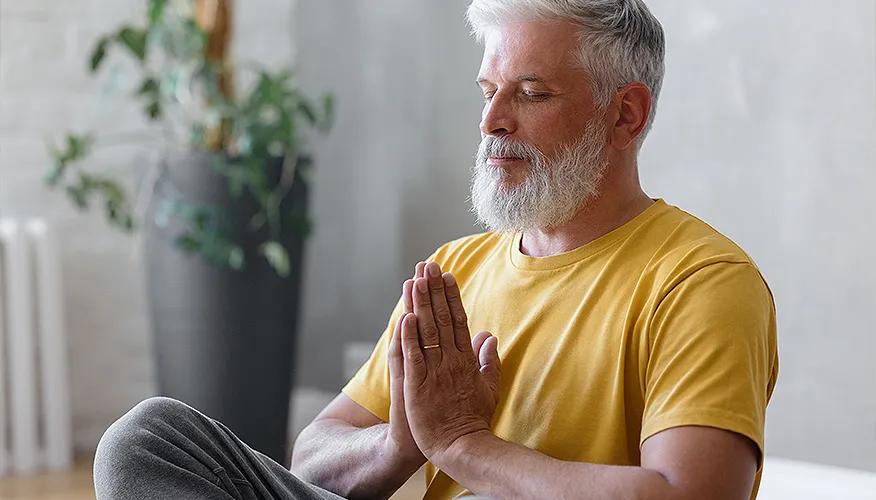
Breathing exercises, known as pranayama in yoga, are powerful techniques that can enhance lung function and bring calmness to the mind. These exercises help to maintain respiratory health, reduce stress, and promote overall well-being.
Two effective pranayama exercise used to improve cardiovascular health are:
Deep Breathing (Dirga Swasam)
Deep Breathing, also known as Dirga Swasam, is a fundamental pranayama practice that:
- Improves lung capacity and efficiency
- Reduces stress and anxiety
- Enhances mental clarity
How To Practice
- Sit or lie down comfortably.
- Place a hand on your chest and the other hand on your abdomen.
- Inhale deeply through your nose, allowing your abdomen to rise as the breath fills your lower lungs.
- Continue to inhale, feeling your rib cage expand as the breath moves into your middle lungs.
- Complete the inhale by filling your upper chest, causing it to rise slightly.
- Exhale slowly and completely, reversing the process: upper chest, rib cage, and abdomen.
- Repeat for several minutes, maintaining a slow and steady breath.
Alternate Nostril Breathing (Nadi Shodhana)
Alternate Nostril Breathing is a balancing pranayama technique that:
- Balances the nervous system
- Calms the mind
- Improves respiratory function.
How to practice
- Sit comfortably with your spine straight and shoulders relaxed.
- Place your left hand on your left knee, and bring your right hand up to your nose.
- Close your right nostril with your right thumb.
- Inhale deeply and slowly through your left nostril.
- Close your left nostril with your right ring finger, then release your right nostril.
- Exhale slowly and completely through your right nostril.
- Inhale deeply through your right nostril.
- Close your right nostril with your right thumb, then release your left nostril.
- Exhale slowly and completely through your left nostril.
- This completes one cycle. Continue for several minutes, maintaining a smooth and steady breath.
Mindfulness and meditation
Mindfulness involves paying attention to the present moment without judgment. Mindfulness practices can help older adults stay focused, reduce stress, and improve emotional regulation.
By becoming more aware of thoughts, feelings, and bodily sensations, individuals can respond to life's challenges with greater ease and resilience.
Meditation, on the other hand, is a practice that involves focusing the mind to achieve a state of deep relaxation and inner peace.
There are various meditation techniques that can be particularly beneficial for older adults, helping to reduce stress and promote a sense of calm and mental wellbeing.
How to practice
- Find a quiet and comfortable place to sit or lie down.
- Close your eyes and take a few deep breaths to relax.
- Listen to a guided meditation recording or follow instructions from a meditation app or instructor.
- Allow yourself to be led through the visualization or calming instructions, focusing on the guide's voice.
- Continue for 10-20 minutes, then slowly bring your awareness back to the present moment.
Yoga for common age-related concerns
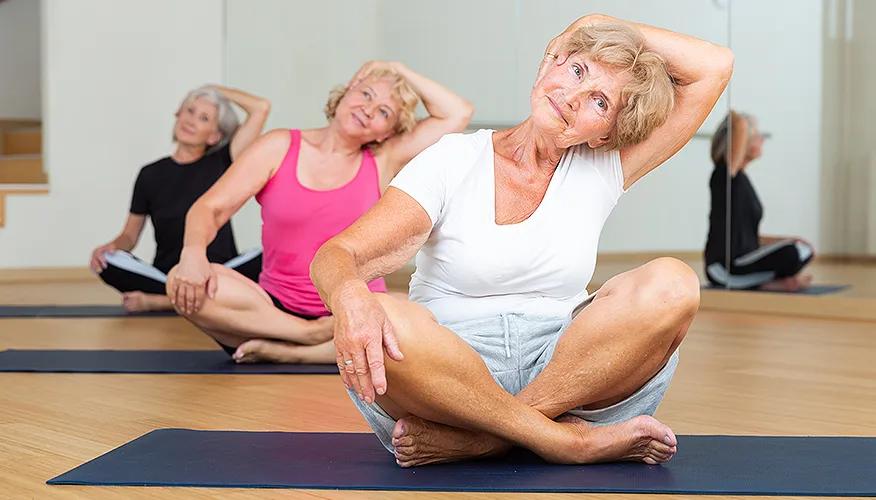
Addressing joint stiffness and arthritis through yoga
- Joint stiffness and arthritis are common concerns for older adults, often leading to pain and limited mobility.
- Yoga can be an effective way to alleviate these symptoms by promoting flexibility, reducing inflammation, and strengthening the muscles around the joints.
- Gentle yoga poses help to stretch and lengthen muscles, reducing stiffness and increasing the range of motion in joints.
Some recommended yoga poses are cat-cow pose, child’s pose and bridge pose.
Improving bone health and preventing osteoporosis
- As we age, bone density naturally decreases, increasing the risk of osteoporosis and fractures.
- Weight-bearing yoga poses can help to maintain and even improve bone density by stimulating bone growth and strengthening the muscles that support the skeleton.
- Weight-bearing poses create gentle stress on the bones, encouraging bone formation and increasing bone density.
Some recommended yoga poses are warrior pose, tree pose, and downward-facing dog pose.
Enhancing cognitive function and brain health
- Cognitive decline is a common concern as we age, but yoga can play a significant role in maintaining and enhancing brain health.
- Through a combination of physical activity, breath control, and meditation, yoga supports cognitive function and overall brain health.
- Regular yoga practice has been shown to enhance memory, attention, and executive function.
- Yoga reduces stress and anxiety, which can negatively impact cognitive function and brain health.
Some recommended yoga practices are mindful breathing, meditation, and chair yoga.
Safety tips for older adults practicing yoga
Practicing yoga is highly beneficial for older adults, but it is essential to prioritize safety to avoid injury and ensure a positive experience.
Here are some key safety tips:
- Pay attention to sensations: Always be mindful of how your body feels during practice. If you experience pain or discomfort, stop immediately and adjust your position or take a break.
- Respect your limits: Understand and respect your physical limitations. Avoid pushing yourself too hard or attempting poses that are beyond your current ability.
- Stay hydrated: Drink plenty of water before, during, and after your practice to keep your body hydrated and functioning properly.
- Use props and modifications: Props such as blocks, straps, bolsters, and chairs can make yoga more accessible and comfortable. They provide support and stability, allowing you to practice poses safely and effectively.
- Warm-up and cool down: Always include a warm-up and cool-down phase in your practice to prepare your body for movement and aid recovery.
Conclusion
Yoga offers a holistic approach to healthy aging, addressing both the physical and mental aspects of well-being.
By integrating poses of yoga for healthy aging, like, breathing exercises, and mindfulness techniques, older adults can enhance their flexibility, strength, and emotional resilience, ensuring a vibrant and fulfilling life at any age while prioritizing safety and self-care.
Meet our expert
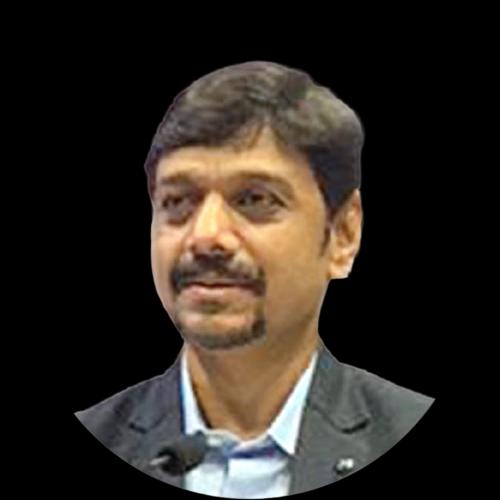
Meet our expert
A Doctor of Medicine (MD) in Pharmacology., currently based in Mumbai, India, Dr Pramod Mane, comes with an experience of more than 20 years of working in Medical Affairs in the Pharmaceuticals & Nutraceutical Industry. Director of Medical Services at Mega Lifesciences since 2008, Dr Mane has been associated with several MNCs in the areas of Medical Affairs, Medical Services, Medico-marketing, Pharmacovigilance & Clinical trials in his illustrious career.



How was the experience with article?
We'd love to know!