
Yes, omega-3 can help with fatty liver disease — and the research behind it is more substantial than most supplement claims you'll encounter.
Metabolic dysfunction-associated steatotic liver disease (MASLD), formerly known as NAFLD, has emerged as the most common chronic liver disease globally, now affecting more than a third of the world's adult population — most of whom don't know they have it until damage is already underway.
Against that backdrop, Omega-3 fatty acids have attracted serious scientific attention.
Research shows that increasing omega-3 levels enables a shift in hepatic fat metabolism away from fat production and towards fatty acid oxidation — potentially reducing liver fat accumulation at a metabolic level. A 2024 systematic review and meta-analysis published in Cureus, drawing on 15 randomised controlled trials, found that omega-3 supplementation significantly decreased ALT and AST — key liver enzyme markers — alongside meaningful improvements in serum triglyceride and lipid profiles.
But the picture isn't entirely straightforward. While some research suggests omega-3s may reduce liver fat and slow or even reverse MASLD scarring, other studies haven’t found a strong connection between omega-3s and liver inflammation or scarring specifically. The dosage you take, the form it comes in (EPA vs. DHA, triglyceride vs. ethyl ester), and where your liver disease sits on the spectrum all appear to matter enormously. Mayo Clinic
That's exactly what this guide untangles. You'll find a breakdown of what the current evidence actually shows, what dosage ranges appear in clinical research, which form of omega-3 performs best for liver fat specifically, and what to discuss with your doctor before starting supplementation.
Is Omega-3 good for fatty liver?
Yes, Omega-3 fatty acids may support fatty liver management. Studies suggest they can help reduce liver fat, support healthy triglyceride levels, and improve markers linked to metabolic health. Benefits appear strongest when combined with a balanced diet and regular exercise.
Risk factors for NAFLD
A person’s risk of developing NAFLD increases if they have metabolic syndrome (high blood pressure, blood sugar, excess body fat around the waist, abnormal cholesterol and triglyceride levels). Obesity is the most common risk factor, followed by Type 2 diabetes and dyslipidemia.
Men are twice as likely as women to have the condition. Cardiovascular disease is the leading cause of death in NAFLD patients.
Although liver disease is the 12th leading cause of death in the general population, it’s the second or third leading cause of death in NAFLD patients.
Fat infiltration affects more than 5% of liver cells in NAFLD. An abdominal ultrasound is the most commonly used imaging method for diagnosis, and a liver biopsy is the gold standard for determining the degree of fat infiltration.
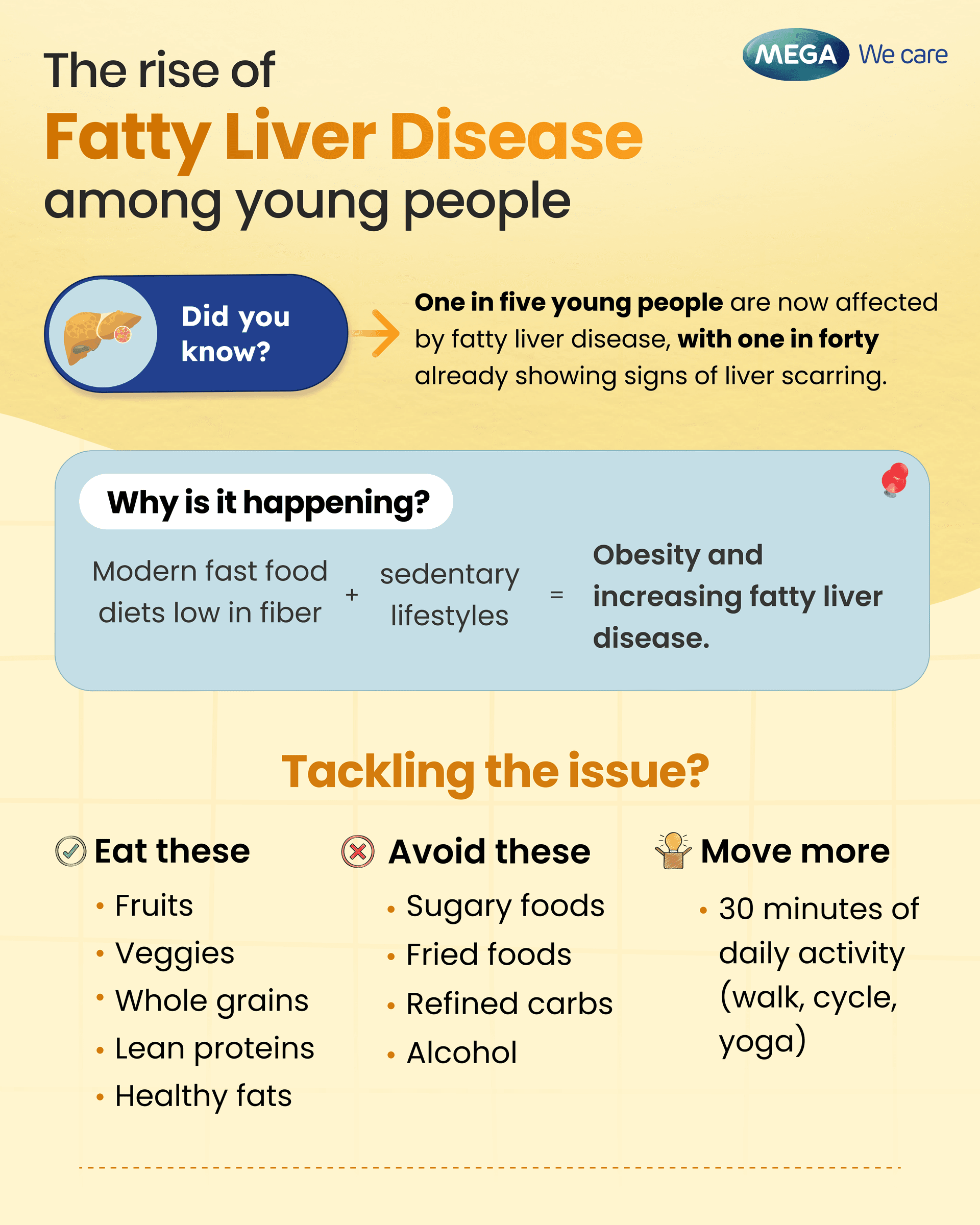
How Omega-3 helps fatty liver
Omega-3 fats are a type of polyunsaturated fat. There are three kinds of Omega-3s:
Eicosapentaenoic acid (EPA) and Docosahexaenoic acid (DHA) are primarily found in fish, and are also known as marine Omega-3s.
Alpha-linolenic acid (ALA), the most common Omega-3 fatty acid in most Western diets, is found in vegetable oils and nuts (especially walnuts), flax seeds and flaxseed oil, leafy vegetables, and some animal fat, particularly from grass-fed animals. The human body primarily uses ALA for energy, with very limited conversion to EPA and DHA.
Your body must convert ALA into EPA and DHA, which is an inefficient process, because only about 8-20% of ALA is converted to EPA and 0.5-9% to DHA.
Several observational studies have shown that patients with NAFLD have lower relative hepatic levels of EPA and DHA than people who don’t have NAFLD. The reason for this is unknown.
What makes Omega-3 fats unique? They are a component of cell membranes throughout the body and influence the function of cell receptors.
They serve as a starting point for the production of hormones that regulate blood clotting, artery wall contraction and relaxation, and inflammation. They also bind to cell receptors that regulate genetic function.
Omega-3 fats have been shown to help prevent heart disease and stroke, may help control lupus, eczema, and rheumatoid arthritis, and may play protective roles in cancer and other conditions.
Benefits of Omega-3 for liver health
Omega-3 fatty acids help your liver by reducing fat buildup. They lower inflammation and make your body more sensitive to insulin. These healthy fats actually change how your genes work to stop the liver from storing extra fat. This helps reverse damage.
The Omega-3 long chain polyunsaturated fatty acids (n-3 LC-PUFAs), specifically EPA and DHA, have been shown to help adults and children with NAFLD.
A recent meta-analysis of 18 clinical studies found that Omega-3 supplementation resulted in significant improvements in cardio-metabolic risk factors (total cholesterol, LDL-C, HDL-C, triglycerides, and insulin resistance), liver enzyme levels (ALT and GGT), liver fat content, and steatosis score.
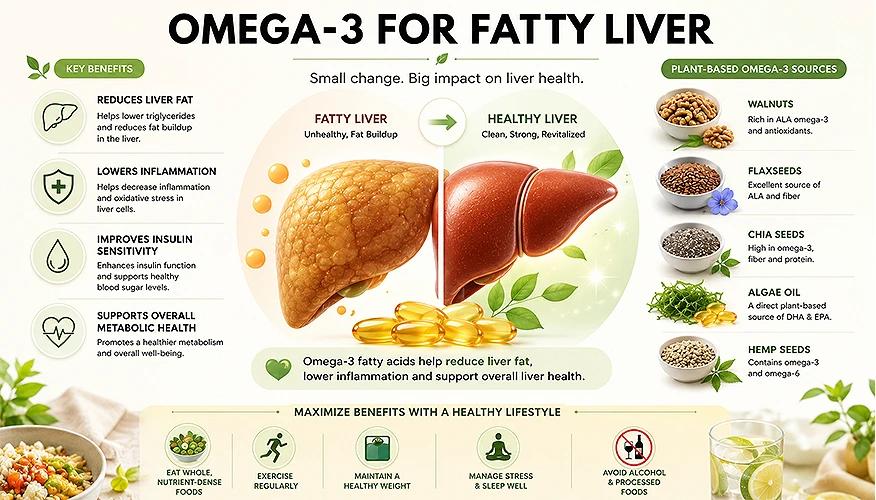
Reduces liver fat
Because EPA and DHA modulate gene expression in the liver, they promote fatty acid oxidation while inhibiting fatty acid synthesis and storage. More specifically, Omega-3 fatty acids inhibit the sterol regulatory element-binding protein 1 (SREBP-1) involved in fatty acid synthesis and storage. The overall fat accumulation is reduced as a result of this gene modulation.
Improves insulin sensitivity
Omega-3 stimulates PPAR-y to increase insulin sensitivity. Given the findings of significant improvements in several cardio-metabolic risk factors in patients with NAFLD after supplementation, adult and pediatric patients should be encouraged to increase their intakes.
Reduces inflammation
They stimulate peroxisome proliferator-activated receptors (PPAR) to increase fatty acid oxidation. Clinical studies show that they reduce hepatic steatosis, improve insulin sensitivity, and lower inflammation markers.
Best sources of Omega-3
Omega-3 fatty acids are not made naturally in the human body, so they must be supplied through food. There are three varieties:
- Eicosapentaenoic acid (EPA): Primarily found in fish (marine Omega-3s).
- Docosahexaenoic acid (DHA): Primarily found in fish (marine Omega-3s).
- Alpha-linolenic acid (ALA): Found in vegetable oils, nuts (especially walnuts), flax seeds, and leafy vegetables like spinach.
The human body primarily uses ALA for energy. Converting ALA into EPA and DHA is an inefficient process; only about 8-20% is converted to EPA and 0.5-9% to DHA.
Recommended dosage of Omega-3
Based on the dosages used in clinical studies:
- Effective daily intake for children: Approximately 250mg of DHA.
- Effective daily intake for adults: Approximately 3g of EPA + DHA.
The minimum effective intake of n-3 LC-PUFAs is unknown, nor is it clear whether EPA is even required for therapeutic effectiveness, given that efficacy in children has been reported with supplements containing only DHA. Additional research is needed to answer these critical questions.
Recommended Dosage of Omega-3
Adults should take about three grams of combined EPA and DHA each day for the best results. Children usually need about two hundred fifty milligrams of DHA. Always consult a doctor before starting. They will help you find the right amount.
How long does Omega-3 take to work?
Most clinical studies observe significant improvements in liver fat and enzyme levels over a period of 3 to 6 months. Consistent daily intake alongside dietary changes is necessary to see measurable results.
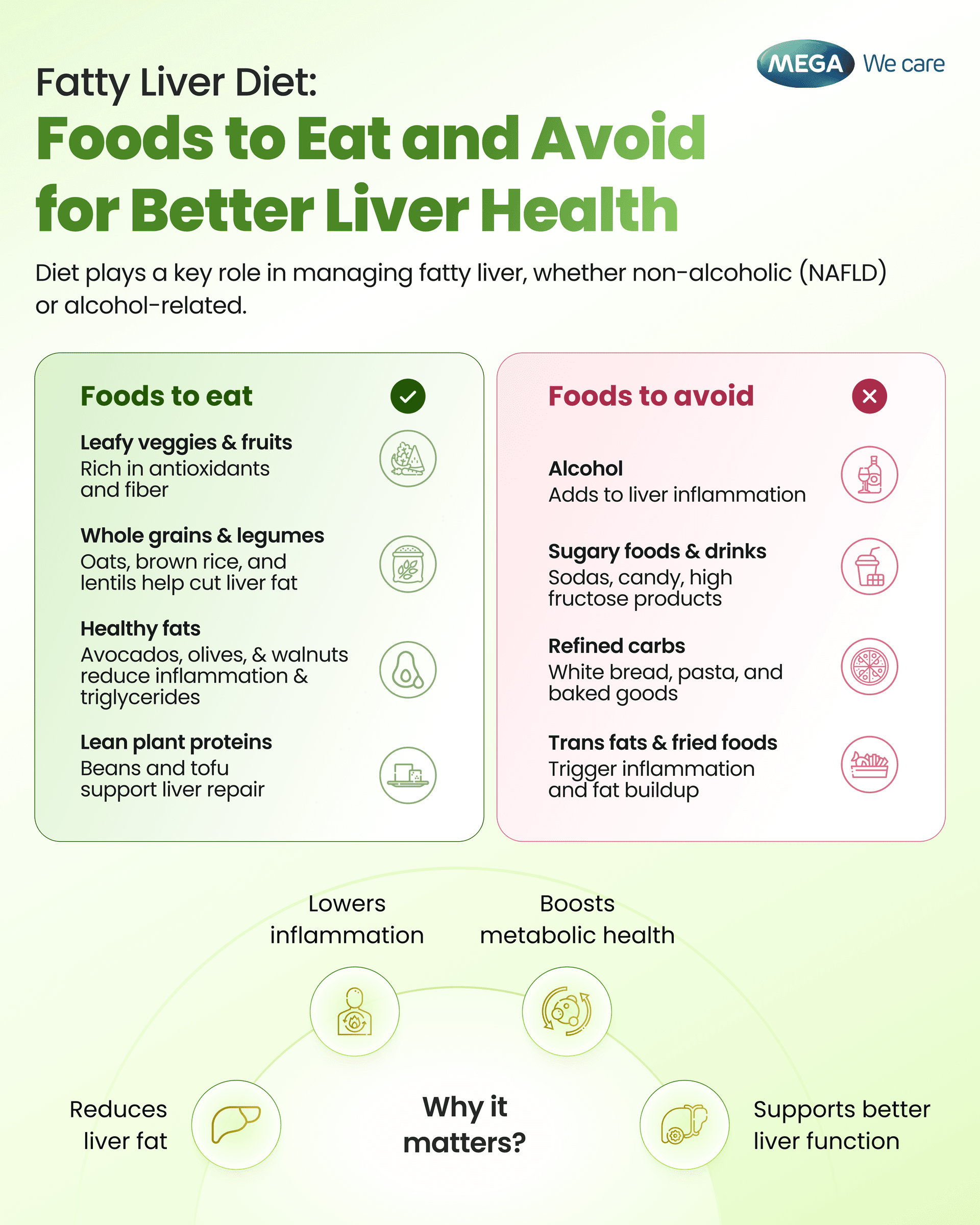
Omega-3 and fatty liver
In addition to Non-Alcoholic Fatty Liver Disease, Omega-3 fatty acids have shown promise in supporting the liver in cases of Alcoholic Fatty Liver Disease. Research suggests that Omega-3 supplementation can help mitigate liver damage caused by excessive alcohol consumption.
All evidence points to the fact that Omega-3 fatty acids are good for fatty liver. Its beneficial impact on liver health would be aided by at least 30 minutes of physical activity 4-5 days per week, as well as the management of sleep and stress issues.
Consult a qualified clinical dietician to help you fine-tune your diet to avoid aggravating fatty liver. Please incorporate Omega-3 fatty acids as one component of a comprehensive treatment plan that also includes a healthy diet and regular exercise (150-200 minutes of moderate to vigorous activity per week).
Vitamin E and Omega-3 for fatty liver
Alongside Omega-3 fatty acids, Vitamin E has also been studied for its potential benefits in fatty liver disease. Both nutrients may work synergistically to combat liver inflammation and oxidative stress.
When to speak to your doctor before taking Omega-3
Omega-3 is generally considered safe for most people when taken in recommended amounts. However, it’s best to speak to your doctor before starting if you:
- Take blood thinners such as warfarin, aspirin, apixaban, rivaroxaban, or clopidogrel
- Have a history of heart rhythm problems or cardiovascular disease
- Are pregnant or trying to conceive (avoid cod liver oil due to high vitamin A)
- Have a fish or seafood allergy
- Are scheduled for surgery or a medical procedure
For most healthy adults, Omega-3 supplements are well tolerated and considered safe even at levels commonly used in fatty liver research. The key is choosing the right type and dose for your needs.
Conclusion
Omega-3 fatty acids have a remarkable impact on fatty liver disease and should be part of a comprehensive treatment plan, including regular exercise and a healthy diet. Consulting a qualified clinical dietitian can help tailor a diet that supports liver health and avoids aggravating fatty liver disease. By incorporating Omega-3 fats into your lifestyle, you can take proactive steps towards improving your liver health and overall well-being.
Meet our expert

Meet our expert
Dr Jatin Bhide is an Ayurvedic doctor with over 16 years of enriching experience in Marketing and Strategy across OTC/FMHG, herbal medicine and Nutraceuticals (Europe) industries. He did his Bachelor of Ayurvedic Medicine and Surgery (BAMS) from Mumbai University, before moving on to do a Post Graduate Diploma in Pharmaceuticals and Healthcare Management.
How was the experience with article?
We'd love to know!