
Sleep has far-reaching effects on your wellbeing. It's a pillar of health that's critical to nearly every process of the body. What you do and what you eat during a 24-hour cycle has a big impact on the quality of your sleep. And if you're sexually active, then you should know that sex and sleep are closely connected. The answers to the questions "how sleep affects sex" and "how sex affects sleep" are the same: it gets better.
Sex and sleep
Getting enough restful sleep is crucial for maintaining physical and mental well-being. However, many people struggle with sleep problems, including insomnia or poor sleep quality. One often-overlooked solution to these sleep issues is intimacy—specifically, the role that sexual activity can play in promoting better sleep. In this article, we’ll explore the relationship between sex and sleep, delving into the physiological and psychological benefits of intimacy, and offering tips on how to use it as a natural remedy for improving your nightly rest.
The Link Between Sex and Sleep
Sexual activity, particularly when it leads to orgasm, triggers a variety of physiological responses that can contribute to better sleep. These responses affect hormone levels, muscle relaxation, and stress reduction, all of which are important factors in promoting a restful night.
1. Hormonal Changes After Sex
During and after sex, the body releases several key hormones that aid in relaxation and sleep:
Oxytocin: Known as the "love hormone," oxytocin promotes feelings of closeness and relaxation. It reduces the levels of cortisol, a stress hormone, which can interfere with sleep. The release of oxytocin during intimacy fosters a sense of calm and emotional well-being, making it easier to fall asleep.
Endorphins: These natural mood boosters are released during physical activity, including sex. Endorphins help reduce pain perception, promote relaxation, and alleviate stress, which in turn can create the perfect conditions for sleep.
Prolactin: After orgasm, levels of prolactin increase, especially in men. Prolactin is associated with feelings of satisfaction and drowsiness, which may explain why many people feel sleepy immediately after sex.
Serotonin and Melatonin: Orgasm can lead to an increase in serotonin, a neurotransmitter that enhances mood and promotes relaxation. Serotonin is also a precursor to melatonin, the hormone responsible for regulating the sleep-wake cycle.
2. Stress Reduction
Sexual activity can be a powerful stress reliever. Engaging in intimate acts with a partner can lead to a reduction in anxiety and a greater sense of emotional connection. This emotional closeness can lower stress levels, making it easier to relax and wind down before bed.
Additionally, physical touch, whether through sex or cuddling, activates the parasympathetic nervous system, which helps calm the body and mind. Lowering stress is vital for improving sleep quality, as high levels of stress hormones like cortisol can lead to disrupted sleep patterns.
3. Muscle Relaxation and Physical Exhaustion
Sexual activity involves physical exertion, which can tire the body in a similar way to light exercise. This physical exhaustion contributes to muscle relaxation, which is beneficial for sleep. Many people report feeling physically drained after sex, making it easier to drift off into deep, restorative sleep.
Psychological Benefits of Intimacy for Sleep
Intimacy, whether it involves sex or non-sexual acts of affection like kissing, hugging, or cuddling, has psychological benefits that can positively impact sleep. The emotional connection that comes with intimacy helps foster feelings of security and comfort, reducing mental distractions that might otherwise keep you awake.
1. Improved Mood and Mental Clarity
The release of oxytocin and endorphins during sex not only reduces stress but also improves mood. A positive mood and reduced anxiety levels before bed contribute to a clearer, calmer mind, making it easier to fall asleep without the distractions of negative or racing thoughts.
2. Enhancing Emotional Bonds
Sexual intimacy strengthens the emotional bond between partners. When people feel emotionally connected, their mental and emotional well-being improves, fostering a sense of comfort and security. Feeling emotionally supported can alleviate feelings of loneliness, anxiety, and depression, which are often culprits of sleep disturbances.
3. Building Healthy Sleep Habits
For many couples, engaging in intimate activities before bedtime can become a healthy part of their nightly routine. Establishing a routine that involves relaxation and closeness with a partner can signal to the brain that it’s time to wind down for the night, making it easier to fall asleep at the right time.
The Role of Non-Sexual Intimacy in Sleep
While sexual activity can have a profound impact on sleep, non-sexual intimacy can also promote better sleep. Activities such as cuddling, holding hands, or even sharing deep conversations with a partner can stimulate oxytocin release, helping to reduce stress and enhance feelings of safety and relaxation.
1. Cuddling and Touch
Cuddling triggers the release of oxytocin, which helps lower cortisol levels and induces relaxation. The physical closeness of cuddling creates a sense of warmth and comfort, making it easier for both partners to fall asleep.
2. Emotional Intimacy
Even non-physical forms of intimacy, such as emotional bonding through conversation or shared experiences, can improve mental well-being and reduce anxiety, contributing to better sleep. Feeling emotionally connected and understood can alleviate stress and provide mental clarity, allowing for a more peaceful transition to sleep.
Does sex help you sleep better?
While intimacy and sex can be effective sleep aids for many, it’s important to note that the effects can vary between individuals. Factors such as personal stress levels, the quality of the relationship, and individual health conditions can influence how sex impacts sleep. Some people may find that sex stimulates them and makes it harder to sleep, particularly if it’s vigorous or emotionally charged.
It’s also worth noting that the benefits of intimacy for sleep are not limited to people in relationships. Solo sex (masturbation) can also promote relaxation, trigger the release of prolactin, and improve sleep quality in much the same way as partnered sex.
How sex can help improve sleep?
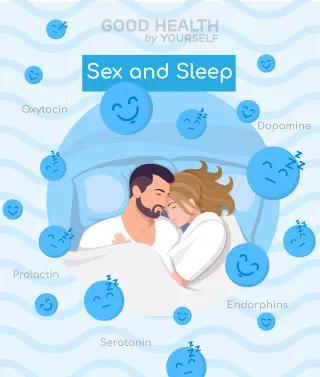
Sex can enhance sleep by triggering the release of hormones that promote relaxation and drowsiness while reducing stress:
- Oxytocin: The cuddle hormone
- Dopamine: The pleasure hormone
- Endorphins: Another pleasure hormone
- Serotonin: The happy chemical that promotes sleep
- Prolactin: The post-orgasm hormone that lets you doze off quickly
- Cortisol: This stress-related hormone is reduced through sexual activity, helping to lower overall stress levels.
In fact, insufficient sexual activity may make it harder to fall asleep, potentially leading to irritability.
How can sleep improve sex life?
Because when you get a good 7-8 hours restful sleep, you have more energy to do whatever you want before falling asleep again, and your stress levels are lower and mood is better, so you're more likely to want to have sex.
Therefore, sleep and sex are good for each other — as long as you're a willing participant in the sexual act; forcing yourself to go through it won't have quite the same happy effect. So, possibly, you need to get the refreshing sleep first, and get into the right mood, before initiating sex. Then, if you make a regular habit of it, your sleep quality and sex life will improve simultaneously.
How sex affects sleep
Research has started to reveal an important, bidirectional link between sex and sleep. There's scientific evidence to show that quality sleep can promote a better sex life, and a healthy sex life can give you improved sleep. Recognizing this connection can create opportunities for enhancing wellbeing.
- In a study conducted by CQ University in Australia, researchers found that 64% of adults surveyed felt that sex resulting in an orgasm helped them sleep better. More sleep leads to more sex.
- A 2015 report in The Journal of Sexual Medicine says that for those in romantic relationships, every extra hour they slept corresponded to higher sexual desire and a 14% increase in the chances of feeling aroused the next day.
Poor sleep and bad sex life
Because sleep and sex are so interconnected, when you lack sleep, your sex life suffers, too.
A 1997 study from the University of Chicago found that people who slept fewer hours at night experienced raised levels of cortisol, the body's stress hormone.
In a 2010 study published in The Journal of Sexual Medicine, researchers found that a rise in cortisol significantly lowered people's sex drive.
1. Impact on men
For men, how much you sleep directly impacts your testosterone levels. A 2007 study from the University of Chicago, which appeared in the journal Sleep, found that men who slept 4 hours only showed notably lower levels of testosterone than those who had slept 8 hours. Another study in 2011, published in The Journal of the American Medical Association (JAMA), showed that chronic lack of sleep completely wiped out sex drive in men.
Research has shown that sleep deprivation can also cause erectile dysfunction. A 2009 study published in The Journal of Sexual Medicine took a look at 401 male subjects with sleep issues and found that 70% of them also had erectile dysfunction.
According to a 2020 report in the journal Translational Andrology and Urology, erectile dysfunction, lower urinary tract symptoms, and hypogonadal symptoms all have a linear relationship with sleep, as worse symptoms occur with poorer sleep. The study highlights that sleep not only impacts your desire for sex, but also affects your fertility.
Male infertility, interestingly, has an inverse U-shaped relation to sleep, in which men with too little and too much sleep seem to be more at risk for infertility than those with 7-8 hours of sleep. According to a Danish study published in the American Journal of Epidemiology in 2013, sleep deprivation leads to lower sperm count in men.
A 2016 study in the journal Sleep Medicine says that people with sleep disorders, particularly those with sleep apnea, exhibit an increased risk of subsequent erectile dysfunction.

2. Impact on women
Studies have found multiple ways in which poor sleep can affect sex in women. A 2015 study, published in The Journal of Sexual Medicine, found that short sleep duration and poor sleep quality lead to poor female sexual response and it can also interfere with a woman's level of sexual satisfaction.
Disturbed sleep is common for many women during menopause, creating an array of adverse health outcomes such as heart disease, hypertension, and depression.
Short-term sleep deprivation has been found to cause increased sexual arousal in women the following day, which may be tied to changes in rapid eye movement (REM) sleep. However, this lack of sleep was not found to increase the likelihood of actually having sex, so sleepiness and fatigue can interfere with sexual activity.
Studies have also shown that sleep apnea is tied to sexual dysfunction in women. A 2013 report in the journal Sex Medicine says that treating sleep apnea leads to sleeping better, feeling more energetic, and a better sex life.
Sleep, sex, and stress
Sleep deprivation can have a negative effect on mood, even in healthy people. The more stressed you are and the greater the number of worries you go to bed with, the poorer the quality of your sleep. Easing the physical effects of stress and quietening anxiety are essential to a restful night.
During times of stress, a sharp rise in adrenaline pumps your muscles full of energy to prepare you to fight or flee from danger. With emotional and mental stress, this adrenaline doesn't get burned off. Instead, it's stored as muscle tension, which is bad news for your sleep. Sex releases hormones that help sleep.
Sex lowers cortisol, the stress hormone. Sex also boosts oxytocin, a hormone that makes you feel connected to your partner and reduces feelings of anxiety and depression.
In men, having an orgasm releases a hormone called prolactin, which makes you feel relaxed and sleepy. Women experience greater vaginal lubrication, a boost in estrogen levels, and an enhanced REM stage, giving them deeper slumber.
For many people, the combination of these hormones leads to a sense of calmness and drowsiness. Post-coital snuggling helps release oxytocin, which may result in bonding and a good night's rest.
The Big O
Research shows that you don't need to have a full-on sexual intercourse to gain the sleep-enhancing benefits of sex. A variety of studies suggest that orgasm, however you may achieve it, might lead to a good night's sleep.
- Research from CQ University, Australia, says that a study of 460 adults between the ages of 18 and 70 found that 64% of respondents slept better after an orgasm. You could also go solo.
- In the year 2000, a study was conducted with 2,632 women and it found that 39% of those who masturbated reported that they did it in order to relax. Serotonin and oxytocin released during orgasm are two built-in, natural stress reducers.
- With a sexual partner, it was found that men produced four times more prolactin when having an orgasm through intercourse when compared to masturbation.
- Prolactin is a hormone that's linked to sexual satisfaction, and it's also heavily related to sleep. Studies show that prolactin levels are naturally higher during sleep. Studies also demonstrate that plasma prolactin concentrations are substantially increased for over an hour following orgasm.
It's sweaty work
An obvious aspect of sex and sleep is the physical exertion involved. When you have sex with a partner, you're putting in a lot of physical work; naturally, you'll feel tired after the session is over.
Of course, there's no one-size-fits-all. Because serotonin and dopamine can also create a euphoric sensation, some people may feel stimulated following sex. If you prefer morning sex, it's probably because serotonin and dopamine power you up rather than down. Ultimately, figuring out what revs you up or calms you down is going to take a little trial and error — all of it should be fun, anyway!
Tips to improve sleep-sex benefits
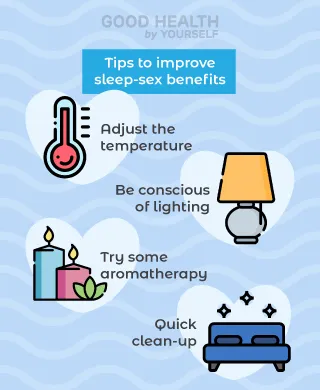
What happens in the bedroom is crucial for your overall wellness. It's important to work with your body, age, and stage of life to optimize your sleeping hours.
- Adjust the temperature: Sex will make you all hot, but sleep needs a cool temperature. Make sure that you adjust the temperature to a pleasant cool, post-coitus.
- Be conscious of lighting: Limit the amount of bright, blue-light screens (e.g. phone and laptop) in your sleep and sex space. Dim, red-light bulbs can help both sex and sleep.
- Try some aromatherapy: Aromatherapy helps both sex and sleep. Try ylang-ylang, lavender, jasmine, and chamomile.
- Quick clean-up: Always have an extra sheet on your bed when you have sex. It makes the clean-up quick and you can quickly get to a good snooze. If you use sex toys, leave the deep cleaning for the next morning and use sex-toy cleaning wipes for a quick wipe-down.
Which Food is good for Sex?
Key changes to your dietary habits can help lower cortisol levels, while also balancing your blood sugars, reducing inflammation and setting you up nicely for a sound sleep, and in turn ensuring more sex.
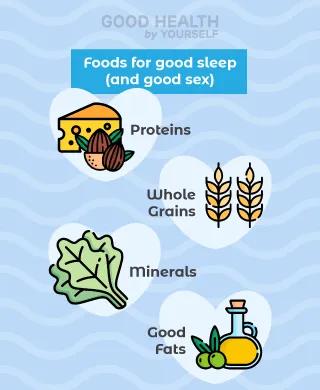
Proteins: Choose organic, hormone-free poultry and eggs, organic dairy and milk products like unflavored, unsweetened yogurt and cheese. For vegetarian sources of protein, choose organic pulses, nuts and seeds. Eat slowly, chew properly, and sip on warm water while eating.
Whole grains: Keep off white rice and white wheat flour products. Use whole grains like brown rice, rolled/steel cut oats, spelt and whole wheat. Have pseudo-grain seeds like quinoa, buckwheat, millet and amaranth, which are gluten-free and high in protein.
Good fats: Avoid margarine and choose butter and ghee made from the milk of grass-fed cows. Have extra-virgin olive oil, virgin coconut oil, avocado oil, flaxseed oil, hemp oil, and other cold-pressed nut and seed oils stored in dark glass bottles.
Minerals: Vitamin D, iron, magnesium, calcium, B vitamins, Vitamin E, Vitamin C, lycopene, and selenium all play a role in helping you to sleep. Eating a variety of vegetables and fruits of different colors will ensure you get a spectrum of nutrients.
Several foods can positively impact sexual health and performance. Here are some examples:
- Oysters: Rich in zinc, which is crucial for testosterone production and reproductive health.
- Dark Chocolate: Contains compounds that can boost serotonin and dopamine levels, enhancing mood and arousal.
- Avocados: High in healthy fats and vitamin E, which support hormone production and overall sexual health.
- Nuts and Seeds: Almonds, walnuts, and pumpkin seeds are good sources of essential fatty acids and zinc, which contribute to sexual function.
- Berries: Strawberries, blueberries, and raspberries are rich in antioxidants and can improve blood flow, which is beneficial for sexual health.
- Red Wine: In moderation, red wine contains antioxidants that can improve circulation and relax the body.
- Spinach: High in iron and magnesium, which can enhance blood flow and stamina.
- Watermelon: Contains citrulline, which can improve blood flow and enhance arousal.
- Chili Peppers: Spicy foods like chili peppers can boost endorphins and increase blood flow, potentially enhancing sexual pleasure.
- Garlic: Contains allicin, which can help improve blood circulation and boost sexual desire.
Incorporating these foods into a balanced diet may contribute to better sexual health and performance.
Tips for Using Intimacy to Improve Sleep
If you’re interested in using intimacy to enhance your sleep, here are a few tips:
- Prioritize Connection: Focus on building emotional and physical intimacy with your partner to foster feelings of security and comfort, which can help you relax before bed.
- Timing Matters: While sex can help you sleep, vigorous or overly stimulating activities right before bed may have the opposite effect. Opt for gentle, relaxed intimacy as part of your bedtime routine.
- Don’t Force It: If sex feels like an obligation, it may create stress or tension rather than relaxation. Let intimacy flow naturally rather than treating it as a sleep “requirement.”
- Experiment with Non-Sexual Intimacy: If you’re not in the mood for sex, cuddling, holding hands, or sharing emotional moments can still foster closeness and relaxation, promoting better sleep.
Conclusion
Instead of staring at the ceiling, counting sheep, or looking at the clock with increasing frustration, the next time you can't sleep, try sex. You'll probably sleep more soundly, too. Include the right foods in your diet to sleep better and have a higher sex drive, in addition to feeling fitter and more energetic.
Meet our expert

Meet our expert
Dr. Pulyk Nataliya Omelanivna is an Internal Medical Expert who is based out of Ukraine. With a special interest in internal medicine Dr Pulyk graduated from the Ternopil National Medical Academy in Ukraine, in the year 2001. Between the years 2002-2009, Dr Pulyk worked as an emergency physician. Her years of work as an emergency physician gave her immense exposure to a range of patients and an opportunity to learn on the job, and gather extensive experience.


How was the experience with article?
We'd love to know!