
Laughter may help ease stress by supporting mood, relaxing the body and encouraging positive social connection.
Laughter may help reduce stress by supporting the release of feel-good chemicals, relaxing the body and improving mood. It cannot replace medical care for chronic stress or anxiety, but it can be a simple daily habit that supports emotional wellbeing.
Laughter may help with stress relief by improving mood, relaxing muscles, supporting social connection and reducing emotional tension. It is a simple supportive habit, but ongoing stress, anxiety or low mood should be discussed with a healthcare professional.
Imagine walking out of a doctor's clinic and instead of the stress-free pill that you wished for, you get a small chit that says: "Laugh more often".
You'll probably think you just saved a lot of money, but also wonder if this "laugh more often" prescription will work.
The thought of laughing in times of stress is very common, thanks to the very famous quote "Laughter is the best medicine". We've also seen laughter for stress relief programs running worldwide that promise to help reduce stress and anxiety, so we know it is working for people.
But.
While we'd like to believe we can laugh our way out of stress, is laughter the best medicine for stress?
Let's find out.
What Is Laughter and Why Do We Laugh?
Laughter is a natural physical and emotional response that involves the brain, breathing and facial muscles. It often happens during humour, joy or social connection and can influence how we express emotions.
Google defines laughter as, "a pleasant physical reaction and emotion consisting of rhythmical, often audible contractions of the diaphragm and other parts of the respiratory system. It is a response of certain external or internal stimuli".
The definition has it. Being a pleasant physical emotion, laughter is a part of our behavior that is regulated by our brain. In social interactions, laughter helps us to clarify our intentions and provide emotional context to conversations.
Laughter is also sometimes seen as contagious, as one person's laughter can provoke another to do the same. No doubt, you must have experienced the attraction of people you get when you laugh.
How Does Stress Affect the Body and Mind?
Stress can affect mood, sleep, blood pressure, energy and overall wellbeing. Short-term stress may be manageable, but long-term stress can place pressure on both physical and emotional health.
Stress, these days, has become a normal part of life. But what we forget is that when stress and effects of stress on the heart lasts for a long time, it harms our health.
Though there is something called "eustress" – the positive form of stress, it becomes negative when a person keeps facing continuous challenges without any relief. This often increases the mental stress and mental disorders.
There's no doubt this later manifests itself into stress-related tension and problems, affecting the body. While it leads to headaches, elevated blood pressure, and sleeping problems, it may also worsen certain health conditions. It also has various effects on the heart as well – it increases blood pressure, increasing the risk for heart attack and stroke.
The physical effects of stress on the body, the psychological effects of stress, and the emotional effects of stress are all worth noting. Furthermore, some experts even state that the activation of the stress system causes 75%-90% of human diseases. Scary, isn't it?
How to live a stress-free life, how to be mentally fit and strong, and how to be tension free are questions on everyone's mind. How one gets stressed might be a mystery to some.
But in today's world, it doesn't take much to get stressed. Just turn on the TV and you're stressed about the things happening around you. Surf through social media and you're stressed about looking pretty or buying a car. Now, these are not things that you might do occasionally. You do them daily.
Stress is not only caused by such things that happen around you, but also by what you do to yourself. And the list goes on. You will find a good deal of things that put you under stress.
How Does Laughter Help Reduce Stress?
Laughter may reduce stress by improving mood, relaxing tense muscles, supporting social bonding and shifting attention away from negative thoughts for a short time.
See how easy it is to get stressed? But don't worry. Here, we will look at how laughter helps in reducing stress.
We know that laughter makes us feel good. It lightens the mood and brightens the day. In addition, psychologists say that humor and laughter help you maintain an optimistic outlook on life. When you laugh, you find strength and courage to find meaning and hope in new directions.
Notice that when you are laughing, it becomes difficult for you to be anxious, get angry or feel sad. This indicates that laughter does restrict the flow of negative emotions.
Your body feels lighter and more relaxed when you laugh, thus reducing stress and discomfort as well as energizing you. And as we saw earlier, laughter has a social effect as well. Being contagious, laughter brings you closer to people, helping you build better and stronger relationships.
What Does Research Say About Laughter and Stress?
Research suggests that laughter and humour may support relaxation, mood and stress coping. However, laughter should be seen as a supportive habit, not a complete treatment for serious or ongoing stress.
Many studies have shown and proven that physical exercise and breathing exercise help manage and reduce stress and tension. However, from the mid and late 20th century, laughter has also been studied and shown to have positive effects on the mind and the body.
Though researchers, psychologists, and many others have devoted their lives to this purpose, there is much scientific evidence on the effects of laughter.
There were many more others who contributed to how laughter helped with overall health and reduced stress. The techniques used are pretty much the same. But how and why it is used is where they differ.
It's quite clear that a good deal of research has been done on laughter and its effects. Let's now look at the various benefits laughter has.
What Are the Benefits of Laughter for Stress Relief?
Laughter has numerous benefits. Laughter for stress relief and exercise for stress.Are both important mechanisms to deal with stress.
| Benefit area | How laughter may help |
| Mood | May increase positive feelings |
| Stress | May reduce emotional tension |
| Body relaxation | May help relax tense muscles |
| Social connection | Can strengthen bonding with others |
| Confidence | May support a more positive outlook |
| Energy | May help people feel lighter and more refreshed |
Here are some of the important ones:
- The moment you start laughing, your intake of oxygen increases, stimulating your lungs, heart, and muscles. This gives rise to the release of endorphins in your brain. Endorphins, the feel-good chemicals, are a natural response to stress and pain produced by the nervous system. The release of these endorphins then relieves stress.
- Laughter also impacts your heart rate and blood pressure by first increasing and then lowering them. While all this happens, you feel calmer on the outside.
- Laughter reduces the levels of cortisol by increasing the levels of endorphins - the feel-good hormones.
- Psychological Benefits of Laughter
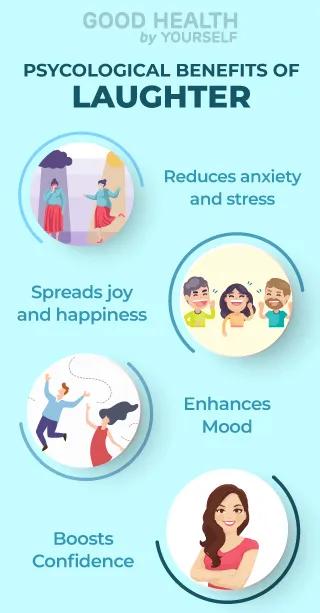
- Helps ease anxiety and stress
- Brings joy and happiness to life
- Boosts confidence
- Enhances mood
- Physical Benefits of Laughter
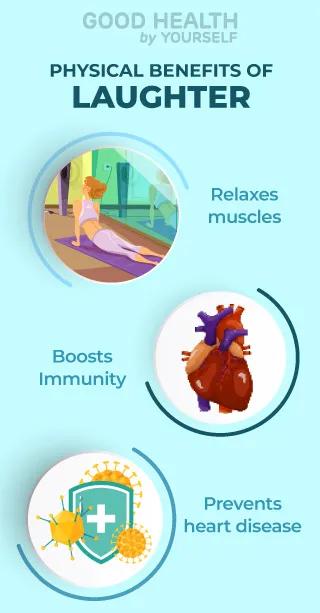
- Helps muscles relax
- May Support Heart Health
- Helps boosts immunity
- Social Benefits of Laughter
- Stronger relationships
- Attracts others
How Can You Laugh More Often in Daily Life?
You can bring more laughter into daily life by spending time with people you enjoy, watching light-hearted content, practising gratitude, joining social activities and making space for hobbies.
One of the benefits of laughter is that it's free, easily accessible, and rewarding in many ways.
If you are struggling with finding laughter in your life, the below ways might surely bring some change. Have a look:
- Say Thank You: Note down the things which you are grateful for. Count your blessings. This helps you become more aware and thankful for the real things in your life. When you display gratitude, you see life from a positive perspective. This perspective helps you block all the negativity, including stress.
- Do your own thing: Find the things in your life that makes you happy, the things that you are passionate about. It can be a hobby or interest or it can be anything that drives you. Such things naturally motivate you to move forward. And by doing these things passionately, you feel happier.
- A family picture: This goes to say that spend time with your family. Have conversations from your childhood, hear stories about how your parents met, and how was life earlier. Conversations like these will spread a smile on the faces, and you would sometimes even burst into laughter. Plan a get-together with your dear ones, and click a family picture. This is an interesting task. There is no doubt that while setting up for the picture, everyone will have a good laugh.
- "What's the joke?": When you are out with friends and family, or alone, look around you. You will find someone laughing and having a good time. Try to join them. Make the move. Begin by asking, "What's the joke?" People, when having a good time, are often happy to share something funny.
- Catching up with the class clown: Why not call up some friends? Science says laughter is contagious. When you hang out with your friends, you get to hear stories and jokes. Friends bring out the best in you. It makes you feel good when you catch up with old friends, and keep making new ones.
- Popcorn time!: In this digital world, it has become very easy to access anything. The Internet has made it possible for people to search for whatever they like. You are just a click away from ROFL-ing. Instead of watching never-ending shows and melodramatic movies, search for some really funny movies. There is no shortage of such content online. You can also share such moments with your friends and family, bringing a smile to their faces. This whole scenario can turn out to be a great relaxation exercise.
- Front row seats: Social events help you refresh your mood. When you meet and interact with people, it lightens your stress and gives you positive vibes. Search for upcoming events like concerts, sporting events, parties, and the like. Attending these events will put you in a stress-free state of mind.
- Pack your bags: Travel, as much as you can. Traveling helps you experience new places and meet new people. Experiences like these help you rejuvenate and make your life exciting. The memories you have from your travels become fun stories later on.
Fake it till you make it: Suppose you are unable to find laughter from the given ways, try faking it. Research shows that there is no difference between real and fake laughter when it comes to health benefits. Try it yourself. Fake a laugh for a few minutes and you will eventually burst out laughing. This is a good way to begin your journey toward a stress-free life.
GINSOMIN + GINSOMIN EVE
Can Fake Laughter Also Help with Stress?
Fake laughter may feel awkward at first, but it can sometimes encourage real laughter and help the body relax. It works best as a light stress-relief practice, not as a replacement for proper emotional or medical support.
Conclusion
Here you have it. The all-in-one laughter for stress relief guide. Other than exercises for stress, and breathing exercises for stress, you can now add laughter for stress relief as a remedy.
We saw the science behind laughter and its effects. Laughter can and does change your life for good. Laugh your way out of stress. But don't forget to do your research first on what your needs are and take approaches that suit you best. You can always consult your doctor if things get out of hand.
Thus, the next time someone asks, "Is laughter the best medicine for stress?"
Hope you answer with a big yes!
Meet our expert

Meet our expert
Dr. Iunis Galina Ivanovna is a Neurologist from Ukraine. She graduated from the Luhansk State Medical University in 1998, and has been in the medical profession since then. In the course of her career as a neurologist, Dr. Ivanovna has gathered extensive experience and expertise having handled a wide variety of cases.


How was the experience with article?
We'd love to know!