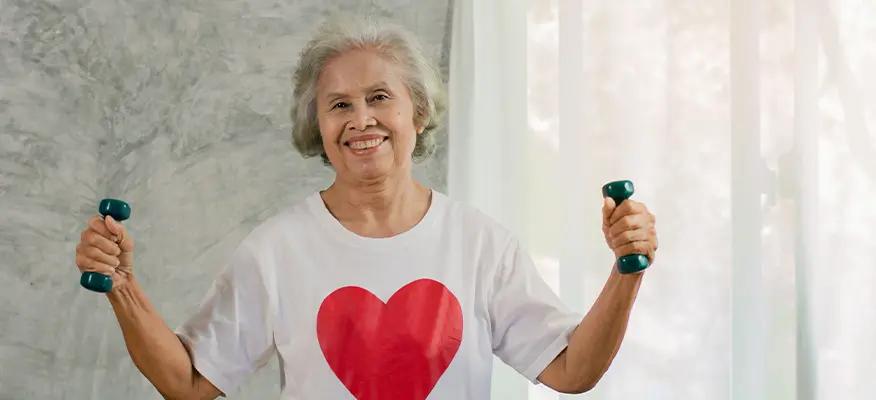
Staying active is important for people of all ages, but it becomes especially important as we age. For the elderly, healthy aging is the key to enriching and cherishing their twilight years.
Many products and supplements can keep your skin and the outside of your body looking healthy. But what about your inner body, your organs, and especially your heart?
Regular exercise can help maintain cardiovascular health, reduce the risk of chronic diseases, and improve the overall quality of life.
However, not all exercises are suitable for elderly individuals. In this blog, we will explore 7 heart-healthy exercises that are safe and effective for elderly individuals.

The effect of low impact exercise for heart patients
- 45% lower risk of death among elderly individuals.
- 63% reduction in risk of CVD-associated death in elderly individuals with 12 years of regular activity.
- 40% reduced risk of re-hospitalization.
- 30–50% CVD risk reduction.
- High levels of physical activity lower congenital heart defect (CHD) risk by approximately 30%, whereas moderate levels lower it by approximately 20%.
- Physical activity with a balanced diet prevents 33% of acute coronary episodes and 26% of the acute coronary episode.
- 2% decrease in resting systolic blood pressure with 6 months of moderate-intensity aerobic exercise.
- 45% lower risk of developing diabetes.
With this abundance of proven impact on heart health, let’s understand the types of exercises.

Types of heart healthy exercise that can improve your cardiovascular health
There are majorly 4 types of exercises that every elder needs to perform to live healthy and happy old-age days.
- Endurance: Buildup your stamina. A habit of endurance exercises for 150 minutes every week improves your breathing.
- Strength: Assist you in strengthening heart muscles. Practice it at least twice a week.
- Balance: Improves balance and prevents falls and fall-related injuries which are common among the elderly.
- Flexibility: Makes easy to perform daily tasks.
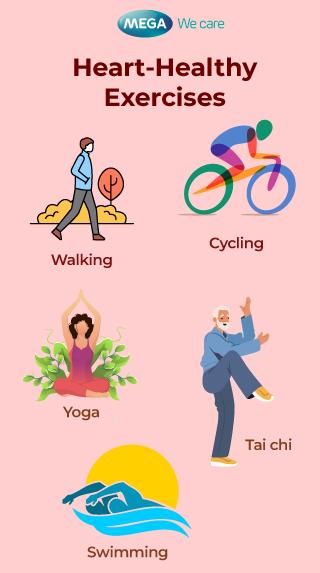
Walking/long walks
Walking is the most convenient and essential type of exercise on the list. It along with strengthening your muscles maintains body balance and weight has a significant impact on overall well-being with abundant benefits on heart health such as,
- Regular walking of more than 60 min reduced the risk of death by 48%
- 30% reduction in CVD hospitalization with Walking >4 h/week
Try a brisk walk, participate in a walking race, or listen to audiobooks or music to stimulate your walk. Walking barefoot on grass also improves heart health.
Cycling
Cycling is an effective aerobic activity that works out your heart, blood vessels, and lungs.
Cycling engages all major muscle groups while you cycle, providing several advantages such as increased muscle tone and strength, increased lung capacity, bone health, improved posture, coordination, and cardiovascular fitness.
These are some statistics that demonstrate the influence of cycling on heart health.
- 50% reduction in risk of CHD
- 40% lower risk of death
- 20% risk reduction with less than an hour’s daily cycling and 30 % with about 100 min/per day
Cycling stationery is also one of the greatest activities for seniors. So, make sure you peddle your way to keep your heart young and healthy.
Yoga
Yoga has a positive influence on both physical fitness and cardiorespiratory functioning.
Yoga is said to help cleanse the body, alleviate chronic tiredness, increase endurance, and boost organ and immunological function.
Yoga can help manage risk factors for heart disease such as hypertension, diabetes, metabolic syndrome, obesity, psychosocial stress, dyslipidemia, and oxidative stress.
- 25–30% lower risk of death from stroke
- 20–25% lower risk of death from coronary artery disease
You can also try chair yoga where you can perform all the stretching forms of yoga.
Swimming
Swimming may help us lose weight and tone our muscles while also enhancing our most vital muscle, our heart.
Swimming is an aerobic workout that strengthens the heart by increasing its size and effectiveness in pumping blood.
Swimming lowers blood pressure, increases heart rate, and improves breathing and blood circulation.
- >50% reduction in CVD mortality
- 21% increase in arterial compliance, increases the heart’s elasticity
Swimming helps us in improving cardiovascular endurance with also building muscular strength. So, dive daily to gain all these benefits.
Water aerobics
Water aerobics is popular among all ages nowadays. It helps to reduce the pain in those who are suffering from chronic diseases or obesity.
Use arm curls and leg paddles for adding resistance. You can also try aquatic jogging, flutter kicking, backward swimming, etc.
- Lowered systolic blood pressure and mean arterial pressure by 11.71- and 5.90-mm Hg respectively.
- Reduction of 11.71 mm hg systolic blood pressure reduces stroke mortality by 32% and coronary heart disease (CHD) by 20 %.
Tai Chi
Tai chi is a technique including slow, gentle motions and physical postures, a contemplative state of mind, and regulated breathing.
It is a meditative form of martial arts.
It is a perfect combination of physical exercise, breathing meditation, lifestyle change, and philosophical awareness of the world.
It consists of a series of gentle physical exercises and stretches. Let's see how it helps in heart health:
- Prevents cardiovascular disease and improves cardiopulmonary function.
- Significant benefits for common cardiovascular risk factors, such as hypertension (reducing systolic blood pressure by (systolic −12.46 mmHg; diastolic −3.20 mmHg) diabetes mellitus, fasting blood sugar (−1.27 mmol/L), etc.
Body weight workout
Muscle mass in the age range of 50-70 decreases by about 8% per year.
Let us not forget that our heart is always a muscle. Muscle problems could open doors to unwanted problems like sarcopenia.
Strength training does not always mean lifting humongous weights at the gym. Lifting your body weight and performing certain strength/resistance training exercises can largely benefit muscle strength and physical fitness in the elderly.
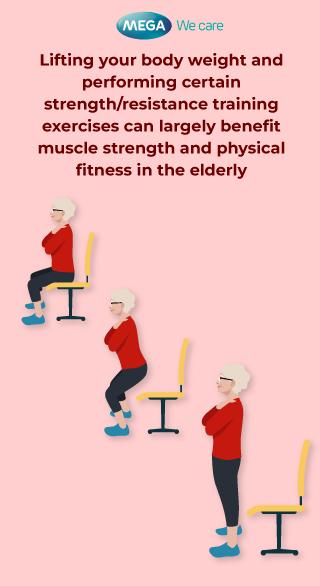
1-6 sessions per week containing 1-3 sets of 6-15 repetitions promoted significant enhancements in muscle strength, muscle power, and functional outcomes in the elderly.
These exercises include:
- Wall push-ups
- Chair squats
- Calf raises
- Step-ups
- Sun salutations
- Lunges, etc.
Tips to prevent injuries while exercising
More than 25% of the elderly suffer a fall which results in 3 million emergency room visits every single year. Take these numbers as warning signs and make a note of these safety tips you need to follow while exercising.
1. Safety equipment is a must
Always include safety equipment like a helmet while cycling, knee pads, good running shoes while jogging, breathable clothing, and so on. These tips make exercising safer and more comfortable for you.
2. Start slow
It is essential to build up your strength over time. Performing strength training exercises every day and slowly increasing the intensity of your workout is the right way to get better at it.
3. Make warm-up a habit
Elderly folks don’t have the most elastic and flexible bodies given their age. It’s always safe to start with warm-up exercises like stretching and gentle movements before beginning your workout.
4. Don’t overdo it
Knowing when to stop is the key. Overexerting yourself can cause injuries and thus disrupt your daily exercise regimen.
5. Listen to your body
Be mindful while exercising and always listen to your body. On some days, it's alright if you feel down and tired. Try doing an alternate form of fun exercise on such days.
6. Accept your trainer's advice
Understand that your trainer knows what's best for you. Listen to their advice and exercise under their supervision.
7. Stay hydrated
Carry your water bottle and always stay hydrated during your workout.
Conclusion
Regular exercise is crucial for maintaining heart health, especially for elderly individuals who are more prone to heart disease. Various exercises can be incorporated into a daily routine to keep the heart healthy and strong.
These seven heart-healthy exercises for the elderly offer a range of benefits, including improving cardiovascular fitness, increasing flexibility, building muscle strength, and reducing stress.
It is always better to consult and confirm with your physician or a physiotherapist before starting with any exercise routine. Combining exercise with diet gives you better results.
Meet our expert
GHBY Team
GHBY TeamMeet our expert
GHBY Team comprises content writers and content editors who specialise in health and lifestyle writing. Always on the lookout for new trends in the health and lifestyle space, Team GHBY follows an audience-first approach. This ensures they bring the latest in the health space to your fingertips, so you can stay ahead in your wellness game.
How was the experience with article?
We'd love to know!