
Tea is much more than a warm beverage on a cold day. It is a drink that has been celebrated for centuries for its health-promoting properties. And when it comes to heart health, tea is one of the most powerful allies you can have in your cup.
From green tea and hibiscus tea to rooibos and black tea, these flavorful and aromatic brews contain a wealth of compounds that can help protect your heart and promote overall cardiovascular health.
Many teas may strengthen your immune system, reduce inflammation, and even fight off cancer and heart disease, according to studies.
So, if you’re looking for a simple and delicious way to support your heart, it’s time to brew up a cup of one of these heart-healthy teas and give your cardiovascular system the boost it deserves. Let’s take a deeper dive into the best teas for the heart.
Effects of tea on heart health
- Tea consumption has shown to be beneficial for metabolic syndrome, coronary heart disease, arrhythmia, heart failure, stroke, and cardiovascular health.
- Tea can also significantly lower our risk of heart disease and stroke by reducing LDL (the ‘bad’ cholesterol) that can build up in arteries.
- Tea also lowers inflammation and enhances blood vessel efficiency and functionality. These anti-inflammatory properties could perhaps reduce plaque development inside arteries, which is important for overall heart health.
Tea drinkers vs Non tea drinkers
Are you a tea drinker or a non-tea drinker? If you’re part of the latter group, you might want to consider adding a cup or two to your daily routine.
- Studies have shown that regular consumption of tea, especially green and black tea, can significantly lower the risk of cardiovascular disease and mortality.
- Tea drinkers who consume at least one cup per day experience slower build-up of plaque and a lower incidence of CVD events compared to those who never drink tea.
- For men, the benefits are even more significant with a 40% reduction in mortalities from coronary heart disease for those who drink tea regularly.
- Individuals who consume more than one cup of tea per day also have a significantly lower risk of myocardial infarction.
- Those who drink 3 to 5 cups of green tea per day have a whopping 41% lower CVD mortality.
- After reading about tea’s insights, you would be tempted to grab a cup of tea, right? Before you do that let us just stop you. You should also be educated on which type of tea is right for you.
Best teas for the heart
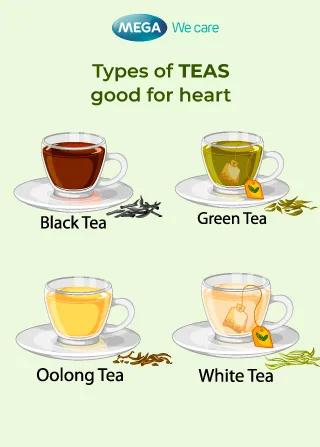
1. Black Tea
Black tea is made from the Camellia Sinensis plant, the key difference is the higher oxidation in black tea which gives it a rich flavor and dark color.
It contains caffeine and other polyphenols. The theaflavins and thearubigins give black tea its deep brown color and unique taste.
Benefits:
- Black tea was found to be efficient in reducing the levels of total cholesterol, LDL-C, apolipoprotein B, and oxidative stress all of which are advantageous to cardiovascular health.
- In animal-based research, black tea constituents reported a 10.39% decrease in total cholesterol, a 10.84% decrease in LDL cholesterol, and a 6.6% decrease in triglycerides.
- Black tea inhibited platelet aggregation and coronary thrombosis in animals.
2. Green Tea
Green tea is also known as unoxidized tea, it is prepared by heating and partially fermenting the Camellia Sinensis leaves using a pan-firing or roasting method. Thus, green tea is less processed and contains the most antioxidants and beneficial polyphenols. Polyphenols such as epigallocatechin gallate (EGCG) are the active compounds in green tea and are available in abundance in green tea and play a vital role. Green tea’s virtues have led academics to declare that ‘tea consumers live longer’.
Benefits:
- Estimated 25 percent lower risk of developing heart disease or stroke after regular green tea consumption.
- Higher consumption of green tea reduces risk of CVD and all-cause mortality by 33% and
- each cup per day increase in daily green tea consumption was linked to a 5% decrease in CVD mortality.
- Green tea consumption helps protect again incident atrial fibrillation (AF) and lowers levels of LDL cholesterol (bad cholesterol).
- Green tea helps lower blood pressure by around 4 mm/hg after 4-week consumption.
2. Oolong Tea
Oolong tea is crushed tea leaves, partially oxidized, and then heated to stop the oxidization process. Oolong tea has both the content of green tea and black tea but in lower content.
Oolong tea consists of a high quantity of amino acid L-theanine which acts as a stress-buster and mood enhancer.

Benefits:
- Oolong tea helps in lowering the levels of cholesterol levels and also increases levels of HDL cholesterol (good cholesterol)
- consumption of oolong tea for 10 weeks prevented obesity and fatty liver, one of the major comorbidities of heart health
- Oolong tea consumption of one or more cups per day was associated with a reduced risk of mortality from total CVD.
3. White Tea
White tea is produced from the new, young tea leaves and buds of Camellia Sinensis. It is prepared by immediately steaming the tea buds and leaves to prevent oxidation, and the buds are also protected from sunlight which gives them a white appearance. White tea contains the least amount of caffeine and is loaded with catechins.
Benefits:
- Prevents the onset of cardiovascular diseases, diabetes mellitus, chronic inflammation, neurodegenerative disorders and certain types of cancer.
- In animal studies, white tea improves cardiac glycolytic and heart antioxidant capacity which means a reduction in cardiac muscle damage and an increase in cardiac energy production.
- With the least caffeine content, white tea becomes one of the best options to limit caffeine consumption.
Teas to Avoid
1. Detox drinks
Created for fad diets that promise speedy weight loss, these teas frequently contain laxatives, which can have a harmful effect on your gut health.
2. Fancy tea lattes
While some of these beverages, like a green tea latte, may seem healthy on the outside, they are loaded with sugar which eventually leads to weight-gain.
3. Bubble teas
These teas consist of little to no nutritional value and a ton of sugar, calories, and carbohydrates.

Conclusion
Finally, integrating specific teas into your daily routine might be an easy yet effective method to maintain a healthy heart. The evidence supporting the beneficial effects of tea on heart health is mounting.
Regular consumption of tea, particularly green and black tea, has been linked to a lower risk of cardiovascular disease and mortality. The bioactive compounds found in tea, such as catechins and flavonoids, have been shown to have antioxidant and anti-inflammatory properties that may help protect the heart and prevent the build-up of plaque in the arteries.
So, whether you’re a tea enthusiast or not, incorporating a cup or two of green or black tea into your daily routine may be a simple and enjoyable way to promote a healthy heart.
So, now that you know all about the best teas for the heart, grab a cup of heart-healthy tea every morning to give your heart the boost it needs.
Meet our expert

GHBY Team
GHBY TeamMeet our expert
GHBY Team comprises content writers and content editors who specialise in health and lifestyle writing. Always on the lookout for new trends in the health and lifestyle space, Team GHBY follows an audience-first approach. This ensures they bring the latest in the health space to your fingertips, so you can stay ahead in your wellness game.



How was the experience with article?
We'd love to know!