
Ever wondered if a tiny brown nut could hold the secret to good health? It might seem surprising, but the answer is 'yes'! Yes, we're talking about the humble almond. This modest nut is a powerhouse of essential nutrients.
In our hectic urban and semi-urban lifestyles, it's so easy to overlook the nutritional value of small things like almonds. Yet, these small nuts are anything but insignificant! They are jam-packed with benefits – from boosting brain power to promoting skin health and even potentially aiding in weight loss.
Curious? Well, let's dive into the world of almonds and discover what makes them an incredible addition to our daily diet.
What is an almond?
Almonds are the edible seeds harvested from the almond tree, scientifically known as Prunus dulcis.
Dating back to around 1400 BC, almonds have significant cultural and historical importance, appearing in ancient Greek mythology and sacred texts like the Bible.
Originating from regions including Spain, Morocco, Greece, and Israel, almonds found their way to California in the 700s AD thanks to Franciscan padres.
Today, California leads as the world's top almond producer, contributing to approximately 80% of the global supply.
Nutritional value of almonds
Almonds offer a nutritional powerhouse packed inside a small, crunchy shell.
Here’s a glance at the key nutritional value in a 1 oz (28.35g) serving of almonds:
| Nutrient | Amount per 1 oz (28.35g) Serving |
| Calories | 160 |
| Total Fat | 14 g (18% DV) |
| - Saturated Fat | 1 g (5% DV) |
| - Polyunsaturated Fat | 3.5 g |
| - Monounsaturated Fat | 9 g |
| Cholesterol | 0 mg |
| Sodium | 0 mg |
| Total Carbohydrate | 6 g (2% DV) |
| - Dietary Fiber | 4 g (14% DV) |
| Protein in Almonds | 6 g |
| Vitamin E | 7.27 mg (50% DV) |
| Calcium | 76 mg (6% DV) |
| Iron | 1.05 mg (6% DV) |
| Potassium | 208 mg (4% DV) |
| Magnesium | 77 mg (20% DV) |
| Manganese | 0.62 mg (25% DV) |
| Zinc | 0.88 mg (8% DV) |
| Copper | 0.29 mg (30% DV) |
| Phosphorus | 136 mg (10% DV) |
Health benefits of almonds
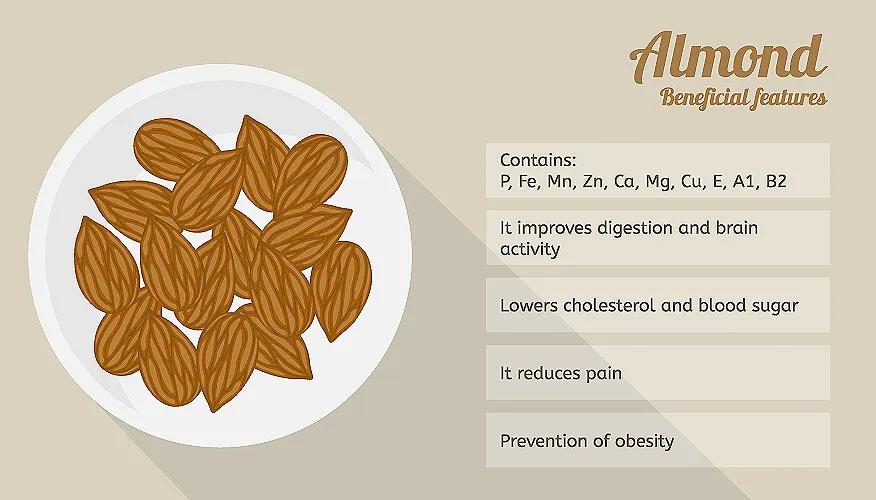
With their rich nutritional profile, almonds offer a host of health benefits. Let's look at them in detail:
1. Rich in nutrients
Almonds are packed with essential nutrients like vitamin E, magnesium, and fiber, which support overall health.
2. Promotes heart health
Almonds contain heart-healthy fats, such as monounsaturated fats, which help lower bad cholesterol levels.
3. Boosts brain function
The high levels of vitamin E in almonds may help improve memory and protect the brain from age-related decline.
4. Supports weight management
Almonds are rich in fiber and protein, which promote satiety and reduce overeating, aiding in weight management.
5. Regulates blood sugar
Almonds can help regulate blood sugar levels, making them a good choice for people with type 2 diabetes.
6. Improves gut health
The fiber in almonds supports digestive health by promoting healthy bowel movements and gut bacteria balance.
7. Enhances skin health
The vitamin E and antioxidants in almonds help protect the skin from oxidative damage, improving its appearance.
8. Strengthens bones
Almonds are a good source of calcium and magnesium, which are vital for maintaining strong and healthy bones.
9. Reduces inflammation
Almonds contain anti-inflammatory compounds, such as omega-3 fatty acids, which help reduce inflammation in the body.
10. Improves immune function
The antioxidants in almonds, including vitamin E, boost the immune system and help fight infections.
11. Promotes healthy hair
Nutrients like biotin and vitamin E in almonds support hair growth and prevent hair damage.

12. Enhances eye health
Almonds provide vitamin E and other antioxidants, which help protect against age-related eye diseases like cataracts.
13. Improves mood
Magnesium in almonds has a calming effect, helping to reduce anxiety and improve overall mood.
14. Supports healthy pregnancy
The folate and healthy fats in almonds support fetal development and contribute to a healthy pregnancy.
15. Boosts energy levels
The protein, healthy fats, and fiber in almonds provide sustained energy throughout the day, preventing energy slumps.
What is almond oil?

Almond oil is extracted from almonds and is revered for its nutritional and cosmetic benefits.
Rich in healthy fats, especially monounsaturated and polyunsaturated fats, it carries antioxidants like vitamin E. This versatile oil finds applications in cooking, skincare, and as a supplement.
Almond oil benefits
Here are a few of the benefits of almond oil:
- Skin health: The high content of vitamin E in almond oil acts as an antioxidant, protecting the skin from damage and promoting healing. Hence, it's often cited as one of the benefits of almond oil for the face.
- Hair care: Almond oil is also used for nourishing and moisturizing hair, promoting its healthy growth, which is one of the benefits of almonds for hair growth.
- Culinary uses: With a mild flavor and high smoke point, almond oil is ideal for sautéing and baking.
- Health supplements: The benefits of drinking almond milk and taking almond oil as health supplements include intake of healthy fats and antioxidants.
How to prepare almond oil?
Almond oil can be prepared using the following techniques:
- Cold pressing: Almond oil can be prepared using a method called cold pressing, where almonds are crushed using a screw or hydraulic press at low temperatures. This method ensures that the nutritional benefits of the almonds are retained in the oil.
- Refining process: The extracted oil then undergoes refining using discoloration agents and filtration to improve its quality and extend its shelf life.
Risks of consuming almonds
Despite their numerous health benefits, almonds also come with a few risks worth noting:
- High calorie content: While almonds are nutrient-dense, they are also high in calories. Overconsumption can therefore lead to weight gain.
- Interaction with medications: Due to their high vitamin E content, almonds may interact with certain medications like blood thinners.
Almond allergies
Almond allergies can cause symptoms ranging from hives and itching to stomach cramps, diarrhea, and, in severe cases, anaphylaxis.
People allergic to tree nuts may experience cross-reactivity with almonds, heightening the risk of an allergic reaction.
How to add almonds to your daily diet?
Adding almonds to your daily diet doesn't have to be complicated:
- Snacking: Enjoy them raw or roasted as a healthy snack, either on their own or mixed with other nuts and dried fruits.
- Baking and cooking: Use them in baking recipes, such as cakes and cookies, or add them to salads and stir-fries for extra nutrition and flavor.
- Smoothies and yogurt: Add sliced or ground almonds to your smoothies or yogurt for a nutrient boost.
- Granola and muesli: Include almonds in your homemade granola or muesli recipes for a nutritious start to your day.

Conclusion
The health benefits of almond nuts are wide-ranging, from promoting heart health and aiding weight management to providing essential vitamins and minerals.
They're relatively easy to incorporate into your diet and offer both nutritional and culinary versatility. However, keep in mind that they are calorie-dense, so moderation is key.
Similarly, those allergic to almonds or on certain medications should consult with their healthcare provider before incorporating them into their diet.
Meet our expert

Meet our expert
Reshma Kulkarni-Pathare is a senior Indian media professional since 1999. She has written for over 45 national and international publications, including The Times of India, Femina, and BBC Good Homes.



How was the experience with article?
We'd love to know!