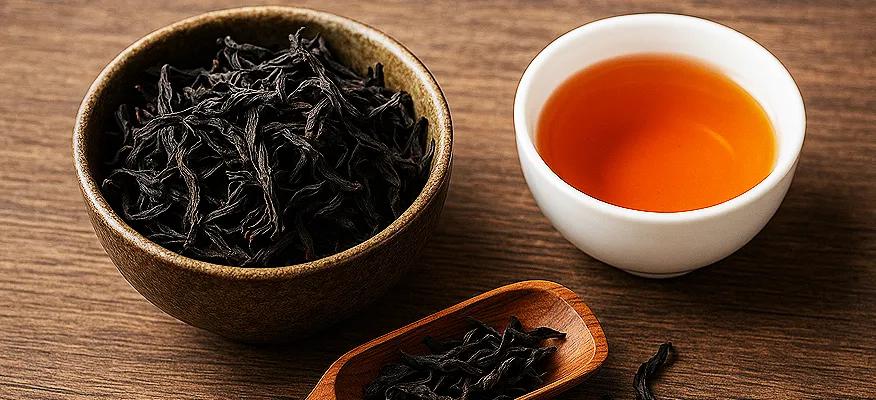
Da Hong Pao (大红袍, "Big Red Robe") is a dark, roasted oolong tea from the Wuyi Mountains in Fujian, China. It is known for its mineral, toasty flavour with notes of stone fruit and cocoa. Like other oolongs, it contains antioxidants (tea polyphenols), L-theanine and a moderate amount of caffeine, typically less than coffee. It is traditionally drunk to aid digestion and support alertness.
In many Asian homes, tea is more than just a drink — it’s a moment of pause, a quiet ritual, and sometimes, a way of showing care.
Da Hong Pao, or “Big Red Robe,” is one of those legendary teas that’s earned near-mythical status in Chinese tea culture.
With its rich, roasted flavor and calming warmth, it’s not something you rush through. And while it's steeped in centuries-old tradition, the health benefits of Da Hong Pao — like improved digestion, stress relief, and antioxidant power — are finding their way into modern wellness conversations across Southeast Asia and beyond.
You are now about to discover Da Hong Pao tea benefits and understand some peculiarities which make it a must have in every tea lover's tea box.
This special tea hails from the majestic Wuyi Mountains in Fujian province, China and is cherished for its rich flavor and remarkable health benefits.
The history of Da Hong Pao
- Da Hong Pao tea, also known as the Big Red Robe tea, has an interesting historical backstory. It originates from the Wuyi Mountains in Fujian Province, China.
- Its cultivation is believed to date back to the Ming Dynasty, making it a cherished part of Chinese cultural heritage.
- The name ‘Big Red Robe’ is linked to several interesting legends, one of which narrates about an emperor who gifted red robes as a token of gratitude to shield the tea plants after they cured his mother's illness. These legendary tales add to the allure and mystique of Da Hong Pao tea.
What is Da Hong Pao?

Da Hong Pao is a type of oolong tea, a partially oxidised tea that sits between green and black tea. It belongs to a group called Wuyi rock tea (yancha), grown among the rocky cliffs of the Wuyi Mountains in Fujian Province, China.
- Chinese name: 大红袍 (dà hóng páo)
- Meaning: “Big Red Robe”
- Tea type: Oolong (dark, heavily roasted)
- Origin: Wuyi Mountains, Fujian, China
- Also written as: Dahongpao, Da Hong Pao oolong, Big Red Robe tea
The mineral-rich rocky soil gives the tea a distinctive mineral aftertaste. Tea drinkers call this yan yun, or "rock rhyme".
Is Da Hong Pao black tea or oolong?
Da Hong Pao is an oolong, not a black tea. People often confuse the two for three reasons:
- Its leaves are dark and twisted.
- It brews an amber-to-reddish cup.
- The word "hong" means red, and in China black tea is called hong cha (red tea).
The difference lies in processing. Black tea is fully oxidised. Da Hong Pao is only partially oxidised and then charcoal-roasted, which gives it a toasty, mineral flavour rather than the malty taste of black tea.
Da Hong Pao vs other oolong teas
| Feature | Da Hong Pao | Tieguanyin (light oolong) | Typical black tea |
| Oxidation | Medium–high | Low | Full |
| Roasting | Medium–heavy | Light or none | None |
| Colour | Amber–reddish | Pale gold/green | Red-brown |
| Flavour | Roasted, mineral, stone fruit | Floral, creamy | Malty, brisk |
| Price | High | Moderate | Low–moderate |
Types of Da Hong Pao tea
There are several types of Da Hong Pao tea that you should be aware of.
Here's a short introduction to them:
- Authentic Da Hong Pao: This variant is made from the original tea bushes and is harvested near Nine Dragon Cave. As it comes directly from the source, its flavor and quality are unsurpassed.
- Descendent Cultivars: These are grown using cuttings from the authentic trees and are more readily available in markets.
- General Wuyi Oolongs: These teas come from other parts within the Wuyi region. They are often sold under the label of Da Hong Pao but may lack its distinct flavor profile.
What does Da Hong Pao tea taste like?
The distinct flavor profile of Da Hong Pao tea makes it a connoisseur's delight.
- It delivers a strong, malty taste that lingers in your palate, with subtle underlying notes of dark chocolate and dried fruit.
- The aroma is equally captivating, boasting a mix of exotic spices, nuts, and floral hints that enhances the overall tea drinking experience.
How is Da Hong Pao tea made?
The process of crafting Da Hong Pao involves several meticulous steps:
- Plucking: The tea leaves are selectively plucked, ensuring only the finest leaves make it to the next stage.
- Withering: The plucked leaves are spread out to lose their moisture content.
- Bruising: The leaves are rolled to release their enzymes, a crucial step in forming the taste and aroma of the final product.
- Oxidation: The tea leaves undergo partial oxidation, enhancing their flavor and color.
- Rolling and Final Drying: The tea leaves are then shaped and dried completely to preserve them for future use.
Does Da Hong Pao have caffeine?
Yes. Da Hong Pao contains caffeine, typically about 30–50 mg per 240 ml cup when brewed Western-style. That's roughly half the caffeine in a cup of coffee (~95 mg), and similar to or slightly less than black tea (~40–70 mg).
How much ends up in your cup depends on:
- Amount of leaf: Gongfu brewing uses much more leaf, so early infusions are stronger.
- Water temperature: hotter water extracts more caffeine.
- Steeping time: longer steeps release more caffeine.
- Number of infusions: caffeine drops with each re-steep.
Da Hong Pao milk tea also contains caffeine, since it's made with brewed tea. Amounts vary by brand and cup size.
Da Hong Pao also contains L-theanine, which tends to produce calmer alertness than coffee. Caffeine-sensitive or pregnant people should still limit intake; pregnancy guidance is under 200 mg of total caffeine per day.
Nutritional content of Da Hong Pao tea
Like other teas derived from the Camellia sinensis plant, Da Hong Pao tea offers a nutritional cocktail comprising antioxidants, vitamins C and E, along with minerals like potassium and manganese.
It does contain caffeine, but in amounts notably less than that found in black tea.
Health Benefits of Da Hong Pao tea
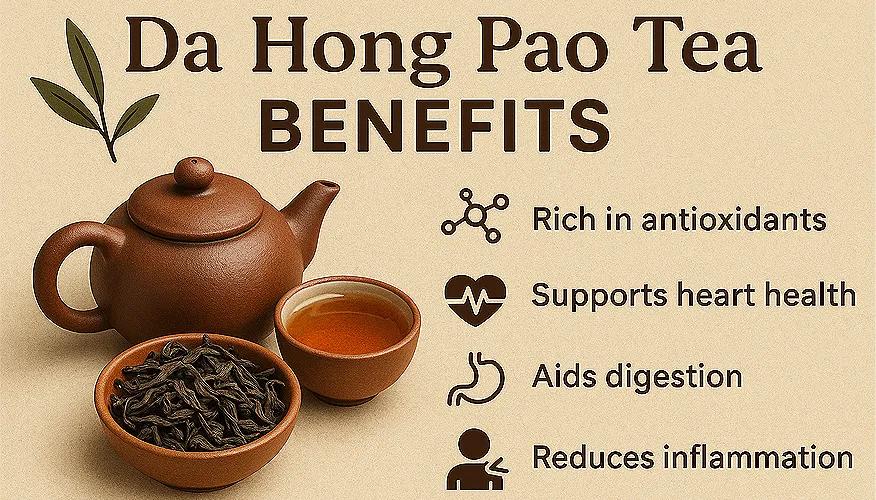
Da Hong Pao's potential benefits come mainly from tea polyphenols (including catechins and theaflavins), L-theanine and caffeine. Most research has been done on oolong tea in general or in lab and animal studies. These benefits are promising but not guaranteed.
1. Rich in antioxidants
Polyphenols in oolong tea help neutralise free radicals, unstable molecules linked to cell damage and ageing. Roasting changes Da Hong Pao's polyphenol profile, but lab analyses show it keeps significant antioxidant activity.
2. Supports digestion
Da Hong Pao is traditionally served after heavy, oily meals in Chinese food culture. Its warmth and polyphenols may help some people feel less bloated after rich food. Strongly brewed tea on an empty stomach can irritate sensitive stomachs, though.
3. May support weight management
Small human studies on oolong tea suggest it may slightly increase energy expenditure and fat oxidation, likely through the combination of caffeine and polyphenols. Animal studies on Wuyi rock tea extracts show effects on fat metabolism. The effect is modest, and tea is not a substitute for diet and exercise.
4. Alertness and calm focus
Da Hong Pao contains both caffeine and L-theanine. Together, these are associated with better attention and alertness with fewer jitters than caffeine alone.
5. Heart health
Regular tea drinking is associated with lower cardiovascular risk in large observational studies. Tea polyphenols may help support healthy cholesterol and blood vessel function. These studies show association, not proof of cause.
6. Blood sugar
Some research suggests tea polyphenols may help with glucose metabolism. Evidence specific to Da Hong Pao is limited. People with diabetes should not use it in place of medication. Also note that milk-tea versions are often high in sugar.
7. Oral health
Tea polyphenols and naturally occurring fluoride may help limit the growth of bacteria in the mouth.
Da Hong Pao is a healthy drink choice when it's unsweetened and taken in moderation. Its benefits are similar to other oolong teas rather than unique to it.
Da Hong Pao Tea vs. other Oolong teas
Da Hong Pao stands out from other oolong teas for several reasons:
- Unique Flavor Profile: Compared to lighter oolongs, Da Hong Pao offers a richer, more complex taste.
- Production Process: The careful oxidation process lends it a unique reddish-brown hue.
- Rarity and Cost: The limited cultivation and historical significance make Da Hong Pao generally more expensive than other oolong teas.
Modern uses of Da Hong Pao tea
Da Hong Pao tea has been consumed historically and today its uses have evolved, while retaining it cultural significance. Presently, you'll find Da Hong Pao used in various ways:
- Cultural Significance: Da Hong Pao is often presented as an esteemed diplomatic gift or served to honored guests, reflecting its cultural reverence in Chinese society.
- Culinary Pairing: Its robust flavor pairs excellently with rich Chinese dishes, enhancing the dining experience.
- Wellness Culture: As a part of traditional Chinese medicine, Da Hong Pao tea is often consumed for promoting digestive health and as a general wellness drink.
How to store Da Hong Pao tea
To preserve the aroma and flavor of Da Hong Pao tea, it should be stored in a cool, dry place.
It's best to keep it away from sunlight and moisture which can lead to degradation of tea leaves' quality.
Side effects of Da Hong Pao Tea
While Da Hong Pao is generally safe to consume, excessive consumption can lead to:
- Caffeine Sensitivity: While the caffeine content is less than black tea, it might still cause issues for those sensitive to caffeine.
- Digestive Irritation: Some individuals might experience stomach upset due to its richness.
- Interaction with Medications: Potential interactions with certain medications should be considered before consumption.
Conclusion
Da Hong Pao tea encapsulates an enchanting blend of history, culture, and potential health benefits.
Its unique flavor, combined with its rarity and cultural significance, make it a prized choice among tea lovers. Whether you're exploring new teas or simply looking for potential health benefits, da hong pao offers a distinctive experience that is worth exploring.
While more research is required to validate Da Hong Pao tea benefits specifically, existing findings make it a promising candidate in the world of nutraceuticals.
As more consumers look for natural alternatives to support their well-being, Da Hong Pao and similar teas can be valuable additions to a balanced lifestyle.
Meet our expert

Meet our expert
Ng Juby is a Registered Nutritionist under the Allied Health Professional Act 774, holding
a Bachelor of Science (Hons) in Nutrition with Wellness from UCSI University.


How was the experience with article?
We'd love to know!