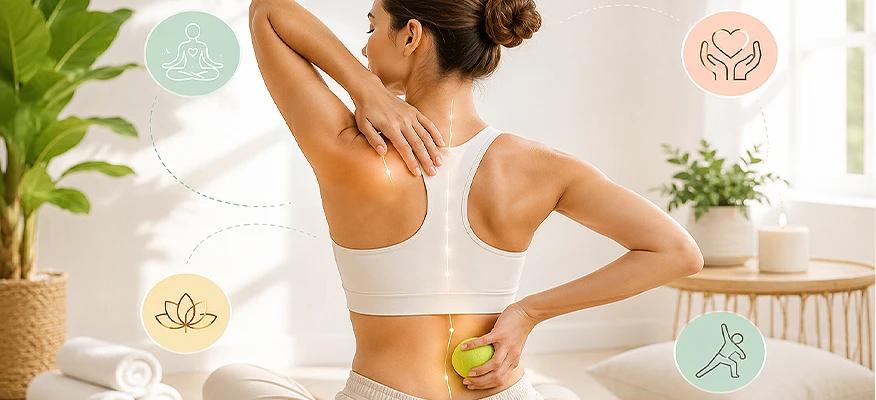
To relieve back pain at home, apply firm circular pressure to the muscles on either side of the spine — never on the spine itself — using your thumbs or a tennis ball, for 60–90 seconds per knot.
Back pain is one of the most common complaints among adults today — and it often strikes right at home, whether you've been hunched over a laptop for hours or carrying a toddler on your hip all day. That familiar tightness between your shoulder blades, the dull ache at your lower back — it's your body asking for relief, and it needs it now.
A back massage remains one of the most clinically supported methods for fast, drug-free muscle relief. A landmark review by Dr. Tiffany Field of the Touch Research Institute at the University of Miami School of Medicine, published in the International Journal of Neuroscience found that massage therapy produced an average 31% decrease in cortisol — the body’s primary stress hormone — alongside a 28% increase in serotonin and 31% increase in dopamine, the neurotransmitters that regulate pain perception and mood.
Separately, a peer-reviewed systematic review published in BMC Musculoskeletal Disorders confirmed that massage therapy significantly reduces muscle tension and improves functional mobility in adults with non-specific low back pain.
You don't need a spa, a therapist's schedule, or expensive equipment to feel that relief today.
This guide walks you through safe, effective back massage techniques you can perform at home — whether you're helping a partner, using a self-massage tool, or working with what you have. These are the same foundational methods physical therapists recommend for acute muscle tension and everyday soreness.
Why back massage helps relieve pain
Think of your back muscles like rubber bands that have been stretched too tight for too long. A therapeutic back massage works by addressing the root causes of your discomfort through scientifically-backed mechanisms.
- Improves blood circulation: Enhanced blood flow delivers fresh oxygen and nutrients to tired muscles while flushing out waste products that contribute to soreness and stiffness
- Reduces muscle tension: Gentle manipulation helps tight muscle fibers relax and lengthen, particularly effective for upper back stiffness from desk work and lower back stiffness from prolonged sitting
- Releases stress: Massage triggers the release of endorphins (your body's natural painkillers) while reducing cortisol levels, creating both physical and emotional relief
- Helps with lower and upper back stiffness: Targeted techniques address specific problem areas, improving mobility and reducing the chronic discomfort that builds up from repetitive daily activities
Things you need before starting
Creating the right environment makes all the difference between a mediocre rubdown and a truly therapeutic experience. Most of these items are probably already in your home, making massage at home both convenient and budget-friendly.
| Item | Purpose |
| Massage oil or lotion | Creates smooth gliding motion and prevents skin irritation during longer sessions |
| Comfortable surface | A firm bed, yoga mat, or even a carpeted floor provides the right support |
| Pillow support | Helps maintain comfortable positioning and reduces strain on other body parts |
| Massage ball or foam roller (Optional) | Perfect for targeting specific tight spots and enabling effective self-massage techniques |
Step-by-step guide to doing a back massage at home
Think of this process like preparing a good meal – each step builds on the previous one to create something truly satisfying.
Step 1 – Warm up muscles
Just like you wouldn't start exercising without a warm-up, muscles need gentle preparation before deeper work.
- Begin with light rubbing strokes using the flat of your hands. Start at the lower back and glide upward toward the shoulders in long, flowing motions.
- Keep your movements slow and rhythmic – think of it as introducing your hands to the muscles.
- Spend about 3-5 minutes on this warm-up phase. You will notice the skin becoming warmer under your touch, which means blood flow is increasing and the muscles are becoming more receptive to deeper work.
Step 2 – Use circular motions
- Place your fingertips on either side of the shoulder blades and begin making small circular motions.
- Start with light pressure and gradually increase as the muscles respond. Focus on areas that feel particularly tight or knotted. These circular motions help break up adhesions in the muscle tissue and encourage better mobility.
- Work on each side for about 2-3 minutes, paying special attention to tight spots.
Step 3 – Apply gentle pressure
- Here's where many people make mistakes: they think more pressure equals better results. This is not true.
- Use your thumbs to apply steady, gentle pressure along the muscles that run parallel to the spine.
- Never press directly on the spine itself. Instead, work on the thick muscles about two inches on either side.
- Hold each point for 5-10 seconds, then move to the next spot. This technique helps release deeper tension while being completely safe when done correctly.
Step 4 – Target lower back
- Apply slow kneading motions with your palms and fingers, squeezing and releasing the lumbar area. This technique is particularly valuable for addressing lower back stiffness from prolonged sitting or standing.
- Work methodically across the lower back, paying attention to any areas that feel especially tight or uncomfortable. Spend about 5 minutes in this area, adjusting pressure based on comfort levels.
Step 5 – Finish with relaxing strokes
- End the massage session on a peaceful note with long, sweeping strokes from the shoulders all the way down to the lower back.
- Use light pressure with your palms, almost like you are smoothing out a wrinkled sheet. These finishing strokes help integrate all the work you have done and signal to the nervous system that it is time to relax completely. Repeat these long strokes 5-10 times, gradually making them lighter until you're barely touching the skin.
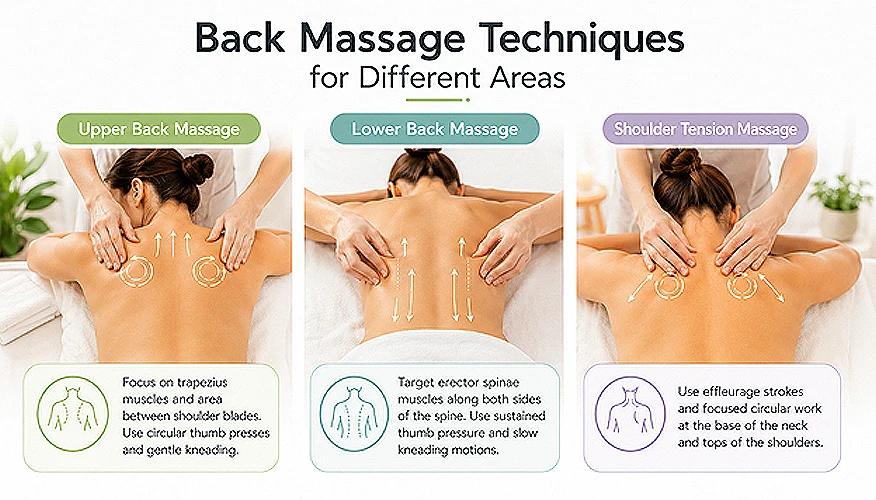
Back massage techniques for different areas
Different parts of your back have unique needs and respond best to specific approaches. Understanding these variations helps you provide more targeted, effective relief.
Upper back massage
The upper back carries tremendous stress from modern life; it is where tension from hunched shoulders and forward head posture likes to set up camp.
- For an effective upper back massage, focus on the trapezius muscles (those thick muscles that run from your neck to your shoulders) and the area between your shoulder blades.
- Use a combination of circular thumb presses and gentle kneading motions.
- The key here is consistency rather than intensity. Even 3-5 minute sessions twice a week can make a dramatic difference in reducing upper back stiffness and improving your overall posture.
Lower back massage
Lower back massage requires a slightly different approach because these muscles are larger and often carry more chronic tension.
- Focus on the erector spinae muscles that run along both sides of your spine. Use sustained thumb pressure combined with slow kneading motions, but always work bilaterally – meaning both sides equally.
- This area responds particularly well to consistent pressure and longer strokes.
- Clinical studies have shown that regular lower back massage can significantly reduce chronic pain and improve daily function.
Shoulder tension massage
Shoulder massage deserves special attention since this area connects to both neck and back tension.
- Combat shoulder tension with a combination of effleurage strokes (those long, gliding motions) and focused circular work at the base of the neck and the very tops of the shoulders.
- This area often benefits from both direct pressure and gentle mobilization. The shoulders tend to hold emotional stress as much as physical tension, so be patient and gentle.
Self-massage techniques (if alone)
Sometimes you need relief and there's nobody around to help. That's where these clever self-massage techniques come to the rescue, using items you probably already have at home.
- Using a wall and massage ball: Lean against a wall with a massage ball positioned between your back and the wall. Roll slowly over tense spots, spending 1-2 minutes per area. This method gives you excellent control over pressure and location.
- Foam roller method: Lie on the roller perpendicular to your spine, gently rocking your upper and lower back to release broad areas of tension. This technique covers more surface area and is excellent for general stiffness.
- Tennis ball method: Position a tennis ball under your back while lying on the floor, then shift your weight to apply targeted pressure on specific knots or trigger points. This approach allows for very precise work on problem areas.
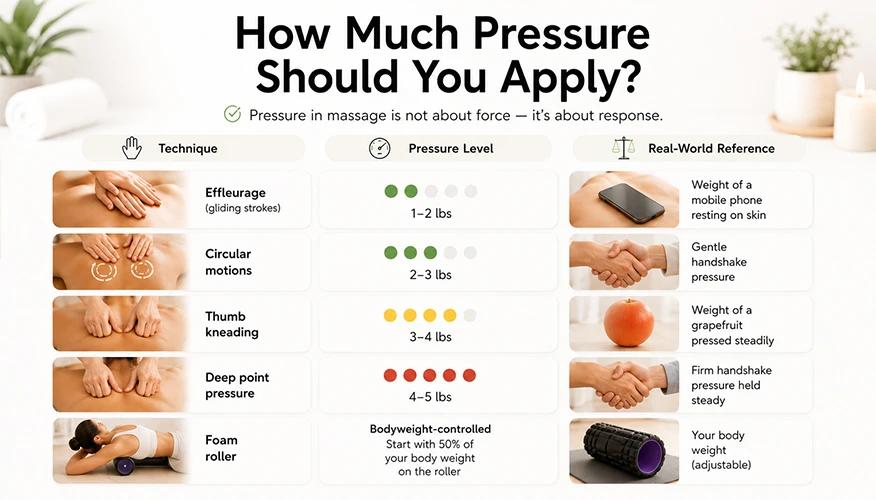
Back massage pressure points for pain relief
Understanding the right pressure for different techniques helps you get better results while staying safe.
| Technique | Best For | Pressure Level |
| Circular motions | General tension and stress relief | Light to medium |
| Kneading | Muscle stiffness and chronic knots | Medium |
| Foam roller | Self-massage and broad muscle release | Moderate |
Common mistakes to avoid
Even with the best intentions, it is easy to make mistakes that can turn a helpful massage into an uncomfortable or even harmful experience.
- Applying too much pressure: More pressure does not always mean better results. Start light and adjust based on feedback. Excessive pressure can actually cause muscles to guard and tense up more.
- Massaging an injured area: Skip areas with acute soreness, recent injuries, or sharp pain. Massage works best for general tension and stiffness, not active injuries that need time to heal.
- Ignoring pain signals: If sharp, shooting, or severe pain occurs during massage, stop immediately. Good massage might cause some discomfort as tension releases, but it should never cause significant pain.
How long does a back massage take to relieve pain?
Relief varies by the type and depth of tension — and it's important to set realistic expectations. Here's what research and clinical evidence actually supports:
| Timeframe | What the evidence Shows |
| During the session | Muscle tissue softens under sustained pressure; breathing typically deepens; perceived pain begins to ease as the nervous system shifts toward relaxation. |
| Immediately after a session | Most people report noticeable reduction in acute tension and improved ease of movement — though the degree varies widely by individual. |
| After 2–3 sessions | Research shows consistent massage begins reducing pain more meaningfully — studies found that two to three sessions per week over three to five weeks reduced pain compared to standard medical care. |
| After 4–5 weeks of regular sessions | Adults receiving two 30-minute massage sessions per week for five weeks reported significantly less pain and anxiety, better sleep, and improved range of motion. |
| Long-term | Research from the University of Illinois at Chicago found that massage produces genuine vascular changes — not just temporary relief — suggesting cumulative physiological benefit. |
When to avoid back massage
While massage is generally safe and beneficial, there are times when it is better to wait or seek professional guidance first.
- Severe injury: If you've recently experienced a fall, car accident, or any trauma that might have affected your spine or back muscles, get medical clearance before attempting massage. What feels like muscle tightness could actually be your body's way of protecting an injury.
- Swelling or inflammation: If you notice visible swelling, redness, or heat in your back area, massage could potentially make inflammation worse. These are signs that your body is already working hard to heal something, and it needs rest rather than stimulation.
- Chronic medical conditions: Conditions like osteoporosis, spinal stenosis, or herniated discs require special consideration. While massage might still be beneficial, it is important to get your doctor's approval and possibly work with a trained therapist who understands your specific condition.
- Pregnancy: Back massage during pregnancy requires specific precautions. During the first trimester, massage is generally not recommended. In the second and third trimesters, avoid deep pressure on the lower back and never apply pressure to the sacrum area. Certain acupressure points on the back are also contraindicated as they may stimulate uterine contractions. Always consult your OB-GYN before receiving any massage therapy during pregnancy, and work only with a prenatal-certified therapist for structured sessions.
Conclusion
A simple back massage can be your secret weapon against daily tension and discomfort. By improving circulation, reducing muscle tension, and releasing stress, these techniques offer genuine relief that you can access anytime you need it.
The beauty of learning how to perform a back massage at home is that you are never more than a few minutes away from comfort. Remember, consistency is key – regular sessions, even just twice a week, will give you better long-term results than occasional marathon massage sessions. Your back has been carrying you through life; now you know how to carry it back to comfort and health.
Meet our expert

Meet our expert
Dr Jatin Bhide is an Ayurvedic doctor with over 16 years of enriching experience in Marketing and Strategy across OTC/FMHG, herbal medicine and Nutraceuticals (Europe) industries. He did his Bachelor of Ayurvedic Medicine and Surgery (BAMS) from Mumbai University, before moving on to do a Post Graduate Diploma in Pharmaceuticals and Healthcare Management.

How was the experience with article?
We'd love to know!