
That sharp, shooting pain in your tooth has a way of stopping everything in its tracks. Whether you are preparing dinner for your family or trying to focus on an important work presentation, tooth pain demands immediate attention. The throbbing sensation can make even simple tasks like drinking water or speaking feel unbearable. When this intense discomfort strikes, how to stop tooth pain fast becomes your top priority.
While home remedies may help temporarily reduce discomfort, they do not always treat the underlying cause. Cold compresses, saltwater rinses, avoiding very hot or cold foods, and over-the-counter pain relief may provide short-term relief — but persistent tooth pain should never be ignored, especially if it comes with swelling, fever, bleeding gums, or difficulty eating.
Understanding what is causing the pain is the first step toward lasting relief. This guide explains how to stop tooth pain fast, common causes of toothaches, remedies that may help at home, warning signs to watch for, and when it may be time to see a dentist.
What causes sudden tooth pain?
Sudden tooth pain rarely appears without reason, and understanding the common culprits can help you take the right action.
- Tooth decay and cavities: Bacteria feed on sugars and starches, producing acids that erode tooth enamel and create holes. These cavities expose sensitive inner layers, causing sharp pain when you bite down or consume sweet foods.
- Gum infection or inflammation: Poor oral hygiene allows plaque to build up along the gumline, leading to gingivitis or more severe periodontitis. This gum inflammation causes tenderness, bleeding, and pain that can radiate throughout your mouth.
- Cracked or chipped tooth: Biting down on hard foods like ice or accidentally grinding your teeth can create fractures. These cracks expose the tooth's inner nerves, triggering sharp pain whenever pressure is applied.
- Tooth sensitivity: When tooth enamel wears down or gums recede, the underlying dentin becomes exposed. This makes your teeth extremely sensitive to hot tea, cold water, or sweet treats.
- Abscess or infection: Untreated decay can lead to a painful collection of pus at the tooth's root. This creates intense throbbing pain that often worsens at night.
- Food between teeth: Sometimes something as simple as a popcorn kernel or meat fiber stuck between your teeth can cause significant discomfort by irritating your gums or pressing against sensitive areas.
How to stop tooth pain fast at home
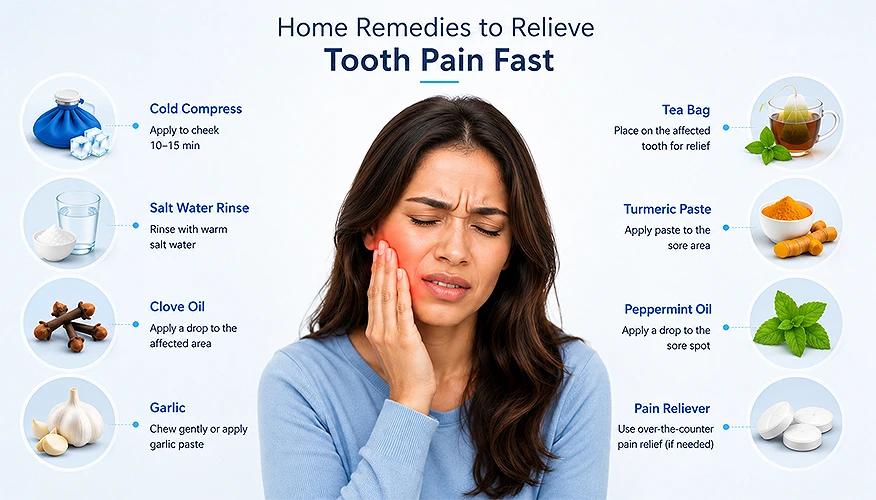
When tooth pain strikes unexpectedly, these proven home remedies can provide quick relief while you arrange professional dental care. Each method works differently to address pain and inflammation, giving you options based on what you have available.
Rinse with warm salt water
This simple remedy works as nature's antiseptic, helping to reduce harmful bacteria in your mouth while drawing out excess fluid from inflamed tissues.
- Mix half a teaspoon of salt in a cup of warm water, swish gently for 30 seconds, then spit it out.
- The salt water creates an environment where bacteria struggle to thrive, potentially reducing infection and providing temporary tooth pain relief.
Cold compress
Applying a cold compress to the outside of your cheek can significantly numb the pain and reduce swelling.
- Wrap ice cubes in a thin towel or use a bag of frozen vegetables, then hold it against the affected area for 15-20 minutes.
- This cold therapy works by constricting blood vessels and temporarily blocking pain signals to your brain. Never apply ice directly to your skin, as this can cause tissue damage.
Over-the-counter pain relievers
Common over-the-counter pain relievers for toothache include ibuprofen and acetaminophen, which work through different mechanisms to reduce pain and inflammation.
- Ibuprofen is particularly effective for dental pain because it targets inflammation directly.
- Always follow the dosage instructions on the package, and be especially careful if you are breastfeeding or managing medications for family members.
- These medications provide systemic relief but should be used as directed to avoid side effects.
Clove oil or natural remedies
Clove oil contains eugenol, a natural compound that provides temporary numbing effects similar to what dentists use.
- Apply a tiny amount to a cotton swab and dab it gently on the affected tooth, avoiding the surrounding gums to prevent irritation.
- This natural remedy for tooth pain has been used for centuries, but use it cautiously during pregnancy or if you have sensitive skin.
Elevate your head while lying down
When you lie flat, increased blood flow to your head can intensify throbbing pain.
- Prop yourself up with extra pillows or sleep in a recliner to keep your head elevated above your heart.
- This simple position change reduces blood pressure in the affected area, often providing significant relief from the constant pounding sensation that makes tooth pain so unbearable at night.
Tooth pain at night: what to do immediately
Nighttime tooth pain often feels more intense because lying down increases blood flow to your head, and there are fewer distractions from the discomfort. When sleep becomes impossible due to dental pain, these immediate steps can help you get through the night.
- Avoid lying flat: Keep your head elevated with multiple pillows to reduce blood pressure in the painful area and minimize throbbing sensations.
- Rinse and clean the mouth: Gently swish with warm water or carefully floss around the affected tooth to remove any food particles that might be aggravating the pain.
- Use cold therapy: Apply a cold pack to the outside of your cheek for 15-minute intervals to numb the pain and reduce inflammation.
- Take pain relief safely: Follow package directions for over-the-counter medications, being mindful not to exceed recommended doses even when pain is severe.
When tooth pain is a sign of infection
Certain symptoms alongside tooth pain indicate a potentially serious infection that requires immediate professional attention. Recognizing these warning signs can prevent complications that might affect your overall health.
| Symptom | Likely Severity |
|---|---|
| Swelling in the face or gums | High; signals pus buildup or spreading infection requiring urgent drainage |
| Fever | High; indicates your body is fighting a systemic infection that may need antibiotics |
| Persistent throbbing pain | Moderate to high; often accompanies an abscess and worsens without treatment |
| Bad taste in the mouth | Moderate; suggests pus is draining from an infected area |
Additional concerning symptoms include difficulty swallowing, which can indicate the infection is spreading to your throat, or a general feeling of being unwell. These signs mean the infection has moved beyond just your tooth and requires professional medical intervention.
What not to do for tooth pain
When you are desperate for relief, it is tempting to try anything that promises to help. However, certain common "remedies" can actually make your situation worse or cause additional injury.
- Do not apply aspirin directly to the gums: This old home remedy can cause chemical burns to your soft tissues without providing meaningful pain relief. Aspirin works best when swallowed, not applied topically.
- Avoid extremely hot or cold foods: These temperature extremes can trigger severe pain if you have tooth sensitivity or exposed nerves. Stick to room temperature foods and drinks until you can see a dentist.
- Do not ignore severe or worsening pain: Hoping the pain will disappear on its own can lead to more serious complications like abscesses, tooth loss, or infections that spread to other parts of your body.
When to see a dentist immediately

While home remedies provide temporary relief, certain situations require urgent professional care to prevent serious complications. Recognizing these red flags helps you make informed decisions about when to seek emergency dental treatment.
- Severe or worsening pain: If your tooth pain does not respond to over-the-counter medications or home remedies, or if it is getting progressively worse, you need professional evaluation and treatment.
- Swelling spreading to the jaw or face: Facial swelling indicates the infection may be spreading beyond the tooth, potentially affecting your airway or other vital structures.
- Pain lasting more than 1–2 days: Persistent pain usually means there is an underlying problem that will not resolve on its own and requires dental intervention.
- Difficulty swallowing or breathing: These symptoms suggest a serious infection that could be life-threatening and requires emergency medical attention immediately.
How to prevent tooth pain in the future
Prevention remains the most effective approach to avoiding the intense discomfort of dental problems. Simple daily habits can significantly reduce your risk of experiencing tooth pain and the need for emergency dental visits.
- Proper brushing and flossing: Brush twice daily with fluoride toothpaste and floss regularly to remove plaque and food particles that feed harmful bacteria. This routine prevents most cavities and gum disease.
- Regular dental checkups: Schedule professional cleanings and examinations every six months to catch problems early when they are easier and less expensive to treat.
- Avoiding excessive sugar: Limit sugary snacks and drinks, including those comforting cups of sweet tea, as bacteria in your mouth convert sugars into acids that attack tooth enamel.
- Managing teeth grinding: If you grind your teeth due to stress or while sleeping, consider using a mouth guard for teeth grinding and practice stress-reduction techniques to protect your teeth from damage.
Conclusion
Fast tooth pain relief is absolutely achievable through simple home remedies like salt water rinses, cold compresses, and over-the-counter medications. These temporary solutions can help you manage discomfort until professional care is available. However, it is crucial to understand that while these methods address symptoms, they do not treat the underlying causes of tooth pain, such as decay, infection, or damage.
Early dental evaluation ensures that minor problems do not develop into major complications requiring extensive treatment. The goal isn't just to stop the pain quickly, but to maintain long-term oral health that keeps you comfortable and confident in your daily life.
Meet our expert

Meet our expert
A Doctor of Medicine (MD) in Pharmacology., currently based in Mumbai, India, Dr Pramod Mane, comes with an experience of more than 20 years of working in Medical Affairs in the Pharmaceuticals & Nutraceutical Industry. Director of Medical Services at Mega Lifesciences since 2008, Dr Mane has been associated with several MNCs in the areas of Medical Affairs, Medical Services, Medico-marketing, Pharmacovigilance & Clinical trials in his illustrious career.


How was the experience with article?
We'd love to know!