
‘Tag, you’re it!’
Ah, the familiar laughter and cheer of children playing outdoors. Remember how our cheeks would flush with excitement, and we’d forget all about time while lost in the thrilling world of outdoor games?
As we grow older, with responsibilities and digital distractions piling up, it seems like the joy of outdoor activities has been forgotten. But let's not deny our kids the same pleasure that we had.
Today, smartphones and video games have become kids’ go-to sources of entertainment, so there’s an increasing need to encourage our young ones to step outside and get active.
Outdoor games promote physical health and stimulate creativity, teamwork, and problem-solving skills—all crucial for a child's development.
In this blog, we’re going to revisit some fun games for kids that were our favorites once upon a time. We’ll talk about classic outdoor games like ‘hide and seek’ and ‘tag’, creative ones like ‘scavenger hunt’ and ‘obstacle course’, and even exciting water outdoor games that guarantee plenty of splashes and giggles.
So, let’s unearth those delightful times and introduce our children to the wonderful world of outdoor games for kids that we cherished in our own childhood!
Timeless outdoor games

Hide and seek
- The hide and seek game is a timeless outdoor activity where one person, designated as ‘it’, closes their eyes and counts to a predetermined number while the other players find hiding spots.
- Once the counting ends, the seeker searches for the hidden players. The first player found becomes ‘it’ for the next round, and the last player found wins the game.
- Hide and seek encourages physical activity and strategic thinking. Players must run, crouch, and find clever hiding places, which improves their agility and problem-solving skills.
- Additionally, the seeker must use their observation skills and memory to find the hidden players, enhancing cognitive development.
Tag
- The tag game has several variations, including Freeze Tag, in which a player tagged must freeze in place until another player unfreezes them by tagging them again; Shadow Tag, in which players are tagged by having their shadows stepped on by the seeker; and Blob Tag, in which a player joins hands with the seeker when tagged, forming a "blob" that continues to tag others.
- Tag promotes physical fitness and social interaction. Children engage in vigorous running and dodging, which improves cardiovascular health and muscle strength. The game also fosters teamwork and cooperation, as players often strategize and collaborate to avoid being tagged.
Duck, duck, goose
- In the duck duck goose game, children sit in a circle, and one child walks around tapping others on the head, saying ‘duck’ each time.
- When the tapper says ‘goose’, the tapped child stands up and chases the tapper around the circle. The goal is for the tapper to take the goose’s spot before being tagged.
- This game improves listening skills and reaction time. Players must pay close attention to the tapper’s words and be ready to react quickly when chosen.
- It also encourages physical activity as children run around the circle.
Fun with outdoor sports
Soccer
- The soccer game involves two teams aiming to score goals by getting a ball into the opposing team’s net.
- The game is played on a field with a goal at each end. Players use their feet to dribble, pass, and shoot the ball, while goalkeepers use their hands to block shots.
- Playing soccer enhances teamwork and coordination. Children learn to communicate and work together to advance the ball and defend their goal. The game also improves physical fitness, including endurance, strength, and agility.
Basketball
The basketball game can be adapted for different skill levels:
- Mini Basketball: Use a lower hoop and a smaller ball for younger children.
- Horse: Players take turns shooting from different spots. If a player misses a shot, they receive a letter. The first player to spell "horse" loses.
- 3-on-3: A half-court game with fewer players, making it less intense and easier for beginners.
Basketball builds endurance and motor skills. Continuous movement, such as running and jumping, enhances cardiovascular health and muscle strength. Dribbling and shooting improve hand-eye coordination and fine motor skills.

T-ball
- T-ball introduces children to baseball, using a stationary tee to hold the ball, making it easier to hit.
- Players take turns batting and fielding. After hitting the ball, the batter runs to bases, and fielders attempt to catch and throw the ball to stop the runner.
- This game develops hand-eye coordination and motor skills. Children practice hitting, running, and fielding, which improves their overall athletic abilities.
- T-ball also teaches the basic rules and strategies of baseball, preparing them for more advanced play.
Get creative with outdoor games
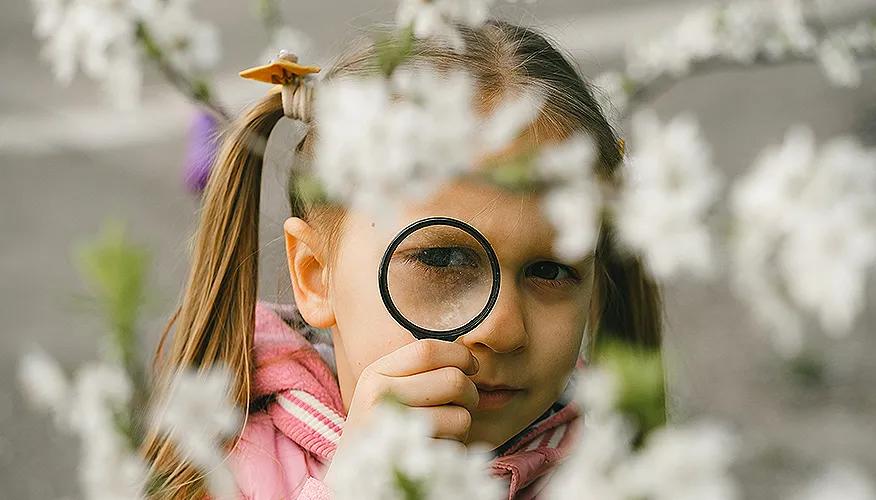
Scavenger hunt
- To organize a scavenger hunt game, create a list of items for children to find within a set area.
- Provide clues or riddles to guide them to each item. Players can work individually or in teams to find all the items on the list.
- This game encourages exploration and problem-solving. Children must use their observational skills and creativity to locate the items.
- When played in groups, it also promotes teamwork and communication.
Obstacle course
- Set up an obstacle course game using items like ropes, chairs, cones, and hula hoops.
- Design challenges that require crawling under ropes, jumping over cones, balancing on beams, and weaving through obstacles.
- An obstacle course improves agility and coordination. Children navigate different physical challenges, enhancing their balance, strength, and motor skills.
- It also provides a fun and engaging way to exercise.
Nature art
- Children gather natural items like leaves, rocks, and flowers in this creative outdoor game to create artwork. They can use these materials to make collages, sculptures, or drawings.
- Nature art stimulates creativity and appreciation for nature. Children use their imagination to create unique art pieces while learning about different natural elements. It also fosters a connection to the environment.
Splash-tastic water games
Water balloon toss
- In the water balloon toss game, children pair up and toss water balloons to each other, stepping back after each successful catch. The game continues until the balloon bursts.
- This game cools kids down on hot days and encourages teamwork. Players must coordinate and communicate with their partners to catch and toss the balloons without breaking them.
Sprinkler fun
- Set up a sprinkler in the yard and let children run through the water jets. They can play tag, dance, or simply enjoy the cooling effect of the water.
- Sprinkler fun provides physical activity and cooling off, making it a simple yet effective outdoor activity. It helps children stay active and hydrated during hot weather.
Slip and slide
- Lay out a plastic sheet, wet it down with water, and add a bit of soap for extra slipperiness. Children slide along the sheet for fun.
- The slip and slide game offers great exercise and loads of fun. Sliding and running enhance physical fitness and provide a refreshing break from the heat.

Seasonal outdoor adventures
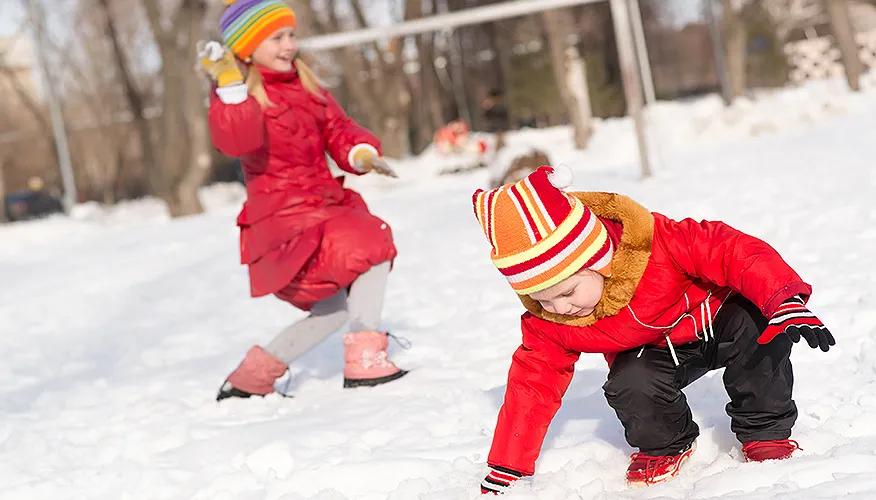
Snowball fight (Winter)
- Ensure children wear gloves and avoid packing snow too tightly. Designate safe play areas away from hard objects. Set rules to prevent throwing snowballs at faces.
- A snowball fight game provides physical activity in winter, helping children stay active even in cold weather. It also promotes social interaction and teamwork as children form teams and strategize.
Leaf pile jumping (Fall)
- Rake fallen leaves into large piles and let children jump into them. Supervise to ensure safety and remove any sharp objects from the piles.
- Leaf pile jumping is fun and provides physical exercise as children rake, jump, and play. It also encourages outdoor activity and helps with seasonal yard cleanup.
Springtime relay races
- Set up various relay race courses, such as sack races, baton passes, and three-legged races, to suit different skill levels.
- Use cones or markers to define the race track.
- Relay races encourage teamwork and coordination as children work together to complete the races. They also promote physical fitness and friendly competition.
Conclusion
- Outdoor games for kids, such as classic outdoor games, outdoor sports, and creative outdoor games, offer numerous benefits beyond just fun and entertainment. They promote physical fitness, improve coordination, and foster social interactions.
- By engaging in outdoor activities, children can develop essential life skills, from teamwork and strategic thinking to problem-solving and creativity. Additionally, water outdoor games and seasonal outdoor activities provide unique opportunities for children to enjoy and appreciate different environments throughout the year.
- Encouraging kids to participate in outdoor games and activities not only supports their physical health but also enhances their emotional and mental well-being.
A balanced approach that includes a variety of outdoor activities ensures that children stay active, healthy, and happy. Whether it’s a hide and seek game, a soccer game, or a scavenger hunt game, these activities create lasting memories and help children build strong, healthy habits that will benefit them for a lifetime.
So, let’s get kids outside, exploring, playing, and thriving in a kids’ outdoor playground!
Meet our expert

Meet our expert
Dr. Inna Anatolyivna Kirilyuk graduated from Vinnytsia National Medical University in 2008, marking the inception of her remarkable journey in healthcare. Following her graduation, Dr. Kirilyuk embarked on a path of continuous learning and specialization.

How was the experience with article?
We'd love to know!