
It Feels Like Your Baby is Growing Up Too Fast, Right?
The early years of an infant’s life are very important when it comes to physical development. During this time, babies show rapid growth in height and body weight. Parents need to keep track of these developments, commonly known as growth milestones, after 3, 6, 9, months, and 1 to 2 years of age.

Your baby’s healthcare provider or doctor can help you keep track of the baby’s growth, by measuring the weight and height at different times. In addition, keeping track of these changes will help you better understand your baby and its needs.
Also, it is important to note that all babies grow at their own pace. In most cases, there is nothing to worry about as long as the baby grows ½ to 1 inches every month. However, if you feel the need to reach out to your child’s healthcare provider, feel free to do so. Taking regular appointments and consulting with the doctor will help you take better care of your baby.
How Much Should Your Child Grow?
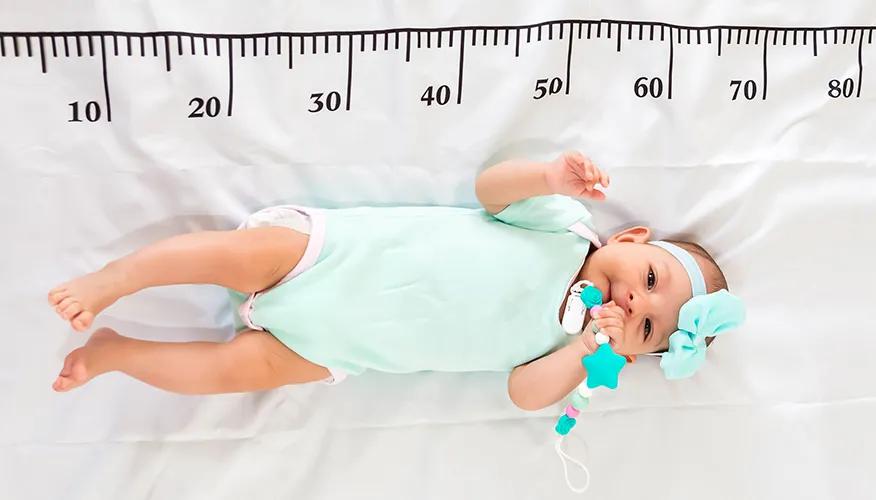
It is important to know that all children grow at different rates and will reach milestones at varied time points. However, there are a few milestones you can look out for to keep track of your baby’s development.
1. 1 to 3 months old
Babies aged 1 to 3 months old can achieve significant height and weight development. the first few months of an infant’s life undergrow rapid growth. It is important to note that the values provided are averages and your baby may grow faster or slower, depending on his or her growth rate.
Table 1: Height and weight milestones of the baby between 1 to 3 months old
| Height milestone | Average height increment of 1 inch each month |
| Weight milestone | Average weight gain of 1 to 2 pounds monthly |
2. 4 to 6 months old
During this period, babies continue to grow rapidly. By the end of 6 months, the babies reach double their birth weight.
Table 2: Height and weight milestones of the baby between 4 to 6 months old
| Height milestone | ½ to 1 inch each month |
| Weight milestone | Average gain of 1 to 1¼ pounds each month |
3. 7 to 9 months old
- By this time, the baby continues to grow at a rapid rate and may show additional weight and height gain. During the 7 to 9 months of a baby’s life, significant growth is seen. By 1 year, babies reach a weight of 3 times the birth weight.
Table 3: Height and weight milestones of the baby between 7 to 9 months old
| Height milestone | Average of ½ inch each month |
| Weight milestone | Average gain of 1 pound of weight each month on average. Boys weigh more than girls, about ½ pounds more |
4. 1 to 2 years of age
After the first birthday of your baby, the growth slows down.
- When the baby reaches 1 year, the weight triples the birth weight. The baby grows into a toddler, a very active stage.
- During the second year of your baby’s life, they gain about 5 pounds of weight and grow 4 to 5 inches in height.
- Once your baby reaches 2 years, they reach about half of its adult height. On average, boys tend to weigh more than girls.

Signs Of Delayed Growth
The primary symptom of delayed growth is when the child grows less than 2 inches a year after their first birthday.
- Delay in rolling over, walking, or sitting
- Lack of neck and head control
- Delay in speech
- Muscle stiffness
- Difficulty in swallowing
- Clumsiness
- Limp or awkward body posture
- Muscle spasms

Conclusion
During the early period of an infant’s life, they are largely dependent on breastfeeding and baby formula. During this time, they may show rapid growth and changes in weight and height. Your doctor can help you keep track of your baby’s weight and height during this time.
You can always talk to your baby’s healthcare provider regarding the growth rate and nutrition of your baby. It is normal to know whether the child is growing enough or at a normal rate. Talking to a healthcare provider can put your stress to rest.
Also, it will help you take better care of your baby and make well-informed decisions.
Meet our expert

Dr. Lozynska Liudmyla Yaroslavivna
Psychiatry & Psychotherapy
Ukraine
Dr. Lozynska Liudmyla YaroslavivnaMeet our expert
She graduated from Lviv National Medical University. She has a specialization in psychiatry and psychotherapy. She have published scientific articles: “Anemia of Pregnant Women”; “Urinary Tract Infections”.



How was the experience with article?
We'd love to know!