
Are you tired of the sleepless nights of repeatedly waking up to feed or soothe your baby back to sleep? It can be hard for moms still recovering from pregnancy insomnia to wake up repeatedly to tend to the baby. It adds to the misery of the healing postpartum body too. Parents who do not get restful sleep at night cannot be productive and may not get things done well.
But that isn’t the baby’s fault! The baby is used to the mother’s warmth inside the cocoon or womb. For the first year of life, babies need approximately 9 to 12 hours of sleep per day, apart from regular naps. So, both the baby and parents need their restful sleep. Sleep training for babies can be the solution.
It takes babies around three to six months to develop their internal body clock or circadian rhythm. If you introduce sleep training early on it will be much easier for them to get accustomed and sleep independently.
In this blog, we address the parents’ fears and queries regarding how to sleep train a baby, different baby sleep training methods, when to sleep train a baby, and most importantly training a baby to sleep through the night.
What is sleep training?
Sleep training, also called sleep teaching, is coaching your baby to fall asleep independently, without your help. The drowsy but awake baby, when sleep-trained drifts off without being rocked, swayed, cuddled, nursed, or shushed. And that’s a win-win situation. Both parents and the baby get their much-needed rest at night, making the morning less distressing.
However, new parents tend to get anxious about sleep training their baby, fear the harm to a baby’s health, create attachment-related issues, or increase the risk of behavioral or emotional problems later in childhood. But rest assured-many experts say that sleep training is safe healthy and important for babies’ development.
It doesn’t mean the baby may not wake up for the feed. If the baby is hungry, you should feed him, ensuring the right nutrition and fewer hunger pangs. Every baby is different and requires a different approach to sleep training. What suits a baby may not work for the other. Staying consistent and patient is the only way out.
However, sleep training is a personal decision and should be tailored to meet the needs of both the baby and the family. Consulting a pediatrician or a sleep specialist can provide additional guidance and support.
Benefits of sleep training baby
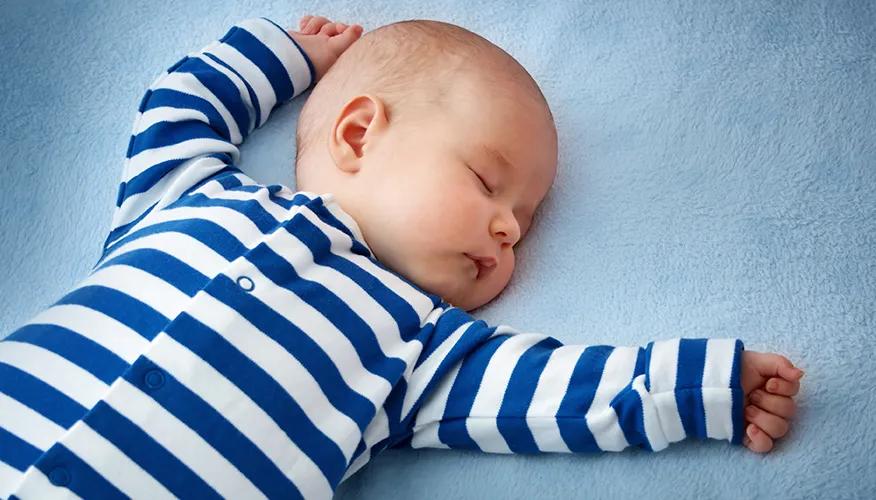
Infants’ sleep problems are associated with parental depression, psychological distress, and poor health. Sleep training teaches children how to fall asleep faster, stay asleep longer, and the ability to get themselves back to sleep when they wake.
- Sleep-trained babies sleep better, and researchers found no correlation between sleep training and negative outcomes such as depression, sleepiness, or damage to parent-infant bonding.
- Children who sleep better are emotionally adjusted, have less difficulty learning, less fussiness, and have a reduced risk of health problems as they grow. Restorative sleep is crucial for the development and overall well-being of the whole family.
- Increased infant sleep is associated with good temperament, adaptability, and low distractibility.
- Sleep training ensures regular sleep patterns that can help regulate a baby’s internal clock, leading to more predictable sleep and wake times. Consistent sleep patterns for the baby allow parents to plan their day more effectively, balancing work, household responsibilities, and personal time.
- Well-rested babies are generally happier and less irritable.
- Babies who get more restful sleep have fewer developmental and behavioral issues.
- Adequate rest can improve parents' mental health, reducing the risk of postpartum depression and anxiety.
When to sleep train baby
When to sleep train a baby can be confusing. Your baby may already be a good sleeper and you may not want to separate him and trigger a change. But it is always better to try before the separation anxiety phase kicks in which usually starts around 8 months old.
- There’s no exact right age to begin sleep training. You can always take a cue from your baby. Watch closely to see if your baby falls asleep by themselves at night when sleepy.If yes, they’re most likely ready.
- Most sleep coaches say the ideal time to start sleep training is based on your baby’s development, usually, somewhere between four and six months when your baby never really got used to nursing or rocking to sleep.
- At around four months, your baby’s sleep cycles begin to mature, and their circadian rhythm also sets in.
- Training babies to sleep throughout the night may be possible by 4-6 months as many babies can sleep for 6-8 hours without a feeding. So there is less chance of waking up.
- There is no specific formula for this and parents should have realistic expectations and goals if they start to sleep train. It may depend on the baby’s temperament, sleep environment, method of feeding, age, and size of the baby, and also parents’ goals and desires.
- Before sleep training make sure the baby is well awake before the sleep time. Set up a calming and consistent bedtime routine, like a feed, bath, or massage followed by pajamas and stories or songs to make the tiny tot accustomed.
Baby sleep training methods
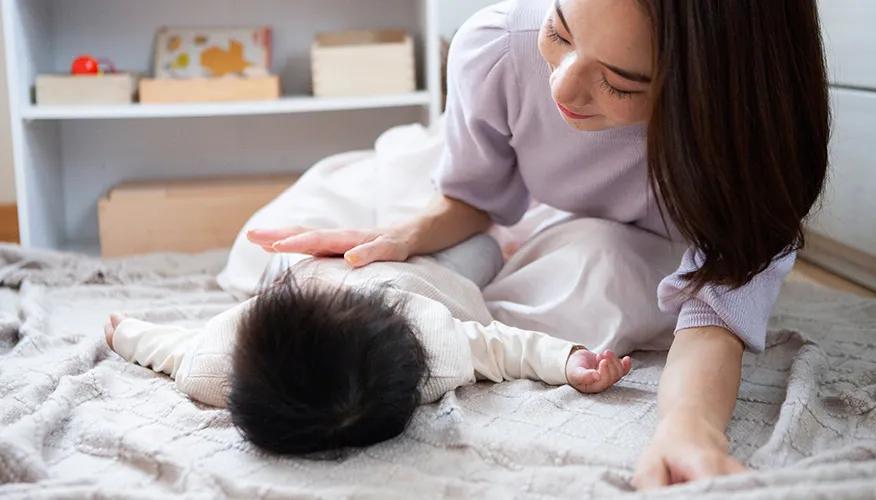
There are different methods available for sleep training and it is important that parents get the right understanding about the technique and can pick the right one for their little one.
Here are some of the most common sleep training approaches:
Cry it out (CIO)
- CIO is also known as the extinction method as you extinguish the behavior of crying by not responding to it.
- You should put the baby to bed while they are awake and cuddle with them and kiss them, say goodnight, walk away, and allow them to cry until they fall asleep without intervention.
- This can be rough for the parents and the baby in the initial days but eventually settle in three or four nights. It often works the quickest.
- You should ensure they have a clean diaper, are fed well and their crib is safe.
- The goal is to teach the baby to self-soothe, sleep, and set up a routine.
- It is recommended to try for a week before calling it quits.
Ferber Method
- This is also known as check and console/ graduated extinction/ progressive waiting or the interval method and is the best one for parents who do not believe in crying the baby out to sleep. It gradually teaches the baby to fall asleep independently.
- As in CIO, you put the baby to bed while awake cuddle with them do the good night routine, and leave. Let the baby cry for gradually increasing intervals before checking on them. Continue to check on your baby at preset intervals but never feed or rock them to sleep.
- You can briefly say a word or two to your baby, touch it, such as a rub or pat but leave as soon as possible.
- This reassures the child that you are always there to support them and make them feel safe.
- Increase the intervals each night and maintain a log to see the progress. This technique could take up to a week to work.
Chair Method
- The chair method is similar to the Ferber method in that it involves gradual intervals of sleep training the baby but involves lots of patience and time.
- Parents sit in a chair next to the crib and gradually move the chair farther away each night until they are out of the room reducing the baby’s dependence on parental presence.
- The downside is, here the baby may be startled and possibly upset when she wakes up and doesn’t find you.
- This requires patience and can take several weeks to complete.

Pick up, put down
- This method involves picking up and soothing your baby when he cries and when settled placing them back in the crib. You may need to repeat the process until your baby falls asleep.
- This provides direct physical comfort to your baby when they cry or fuss.
- This method works well for younger babies and requires time and patience.
- Remember not to rock them to sleep, rather just calm them down and place them back in the bassinet.
Bedtime fading
- This technique minimizes crying as it is tailored to the baby’s routine.
- Here you gradually move the baby’s bedtime earlier or later to match their natural sleep cycles and tiredness cues. Adjust the baby’s internal clock to promote easier falling asleep.
- Keep a diary or a video monitor for a few nights to track when they finally settle for the night.
- This method works well for babies who have trouble falling asleep at a consistent time.
The “No Tears” Method
- It is also known as the Gentle sleep training method. It focuses on helping your baby learn to sleep without any crying involved.
- This routine should follow the same set of activities, in the same order, so the baby recognizes these activities as a transition from day to night, and consequently bedtime.
- The activities such as feeding, rocking, or singing help the baby fall asleep without letting them cry.
- Gentle sleep training methods are less emotionally stressful since they involve no crying, but they take longer to be successful and are physically taxing for the parents.
Baby Sleep Training Tips
There is no best way to sleep train; it’s just finding what works for your child. Here are some practical tips for successfully sleep-training your baby:
- You do not need an Instagrammable separate kids' bedroom for sleep training. Just find a way to separate yourself from them so they can learn to self-soothe.
- Take cues from your baby and put your baby down when they’re getting drowsy, they’ll get in the habit of falling asleep on their own.
- Create a schedule and be consistent by picking a bedtime and sticking to it every night. Develop a calming bedtime routine that includes bathtime, reading a story, singing a lullaby, or gentle rocking, to signal your baby that it’s time to sleep.
- Set a bedtime routine each night to help regulate your baby’s internal clock.
- Understand the baby may take a few weeks to adjust to the new sleep routine.
- Ensure the baby’s sleep environment is dark and quiet, the crib is safe and comfy and the room is at a correct temperature.
- Never panic over every cry or fuss. Understand it is part of the process and be confident in your decision.
- All methods may not suit you and it's O.K. Always trust your intuition, you know your baby best.
- You can consult your pediatrician and seek advice from a pediatric sleep specialist who can provide tailored guidance.

Conclusion
Sleep training can offer significant benefits, promoting better sleep for the baby and improving the overall quality of life for the entire family. It ensures that your little one will have learned the valuable life skill of how to fall and stay asleep independently.
Babies also have no sense of day and night in their infancy, and bedtime routines can help them distinguish between them. Maintain a patient, consistent approach and you can help your baby develop healthy sleep habits.
You have to sleep-train at a time when appropriate for your baby and not force it. Always talk to your pediatrician if your child is ready for it and then try. If you follow a sleep training method consistently and it’s still not working after two weeks, call your doctor for tips and advice.
We hope we have put all your worries about sleep training to rest. Night-night, may you and your baby get a good night's sleep!
Meet our expert

Meet our expert
Dr Sintayehu Abebe is a Consultant Internist and Interventional Cardiologist at the Addis Ababa University. The young and energetic Dr Abebe who is always keen on learning new things is also President of the Ethiopian Society of Cardiac Professionals (ESCP).

How was the experience with article?
We'd love to know!