
If you have ever sat through a meeting, a date, or even a quiet evening at home feeling like your stomach is slowly inflating, you already know how disruptive bloating can feel. You do not need a diagnosis or a dramatic trigger for it to take over your attention. It sneaks in after meals, during hormonal shifts, or on days when your digestion feels just a step behind you.
Up to a quarter of otherwise healthy adults deal with bloating regularly, and if you live with irritable bowel syndrome, it affects nearly everyone. What usually makes it worse is that you often handle it alone, just like more than half of people who never seek medical care for it.
This guide focuses on how to get rid of bloating fast, while also explaining why bloating happens in the first place. The goal is bloated stomach relief, while understanding and gaining some control over the same.
What is bloating?
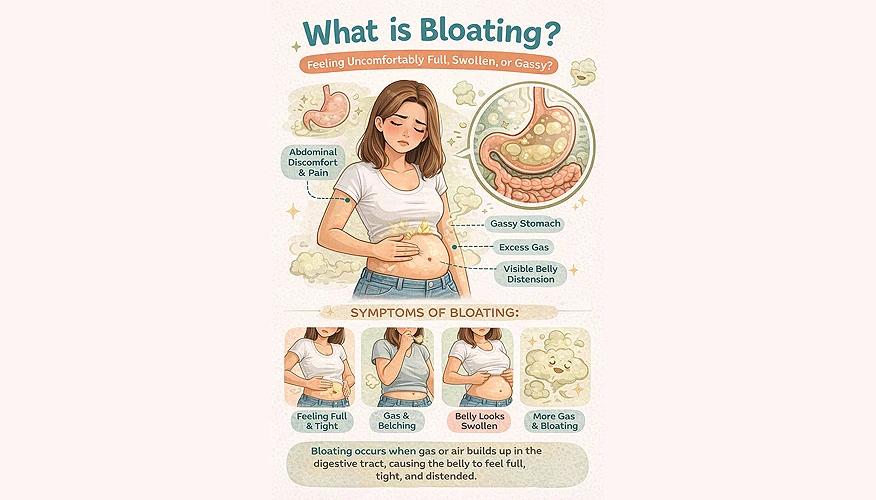
Bloating is not always what it looks like from the outside. Clinically, it is defined as a sensation, not a measurement. You feel pressure, tightness, or fullness in your abdomen, even when your waistline does not change much.
Distension, on the other hand, is when your abdominal girth actually increases. According to surveys that followed close to ninety thousand adults, about one in seven people feel bloated weekly, with women reporting it about twice as often as men.
What matters here is that bloating does not always correlate with how much gas you actually have. Studies show that many people with bloating have normal gas volumes.
Instead, your gut becomes more sensitive to what is already there, or your muscles stop coordinating the way they usually do. That is why you can feel painfully full even after a normal meal.
Common causes of bloating
- Once you look closer, for most of us, it starts with fermentation. Certain carbohydrates, especially lactose, fructose, and other fermentable fibers, reach your colon undigested and feed the bacteria. This process produces hydrogen, carbon dioxide, and, in about a third of adults, methane.
Even though the average person only carries a few hundred milliliters of intestinal gas at any time, those gases can feel overwhelming if your gut holds onto them.
- Constipation plays an even bigger role than most realize. Around four out of five people with chronic constipation report bloating as their main complaint. Stool sits longer in the colon, bacteria ferment more, and pressure builds. Hormones, medications like opioids, and slow gut motility all add to the complications.
- If you have visceral hypersensitivity, your nervous system amplifies normal digestive sensations. People with IBS also often perceive normal gas volumes as painful or distressing. Hormonal fluctuations, especially estrogen and progesterone shifts, further heighten this sensitivity, which explains why bloating often worsens around your period.
How to relieve bloating fast (immediate relief tips)
When you want to know what relieves bloating fast, the focus shifts to three things. You want to move gas along, help your gut muscles relax, and calm the way your body interprets sensations. None of these are instant miracles, but many of you feel improvement within minutes to hours.
- Gentle movement helps more than lying still. A ten to fifteen-minute walk encourages gas to travel through your intestines instead of sitting in one spot. Simple yoga positions that fold or gently compress the abdomen often help for the same reason.
- Heat works more calmly. A warm heating pad or a slow clockwise abdominal massage relaxes intestinal spasms. Even though studies show heat does not reduce gas volume itself, you often feel less pressure because your muscles stop fighting the sensation.
- Over-the-counter options can add another layer of relief. Simethicone helps break up gas bubbles, which can reduce that stretched, ballooned feeling after meals.
Peppermint oil, whether in capsule or tea form, relaxes smooth muscle in the gut and has solid evidence for easing bloating in IBS. Activated charcoal absorbs gas for some people, especially after high-carbohydrate meals, though results vary.
Alt image tag: Infographic showing remedies to tackle bloating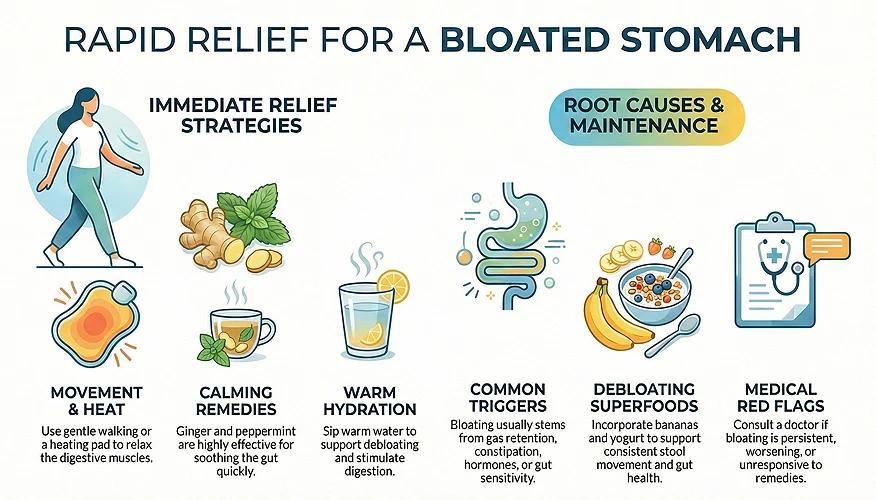
Foods and drinks that help reduce bloating fast
What you consume during a bloating episode matters more than what you eat on a perfect day.
- Low-residue, soothing foods reduce further fermentation while helping your gut empty.
- Clinical trials show that ginger tea speeds gastric emptying and reduces post-meal fullness.
- Peppermint tea works similarly by relaxing intestinal muscles. A ripe banana can give you potassium, which helps counter fluid retention, and its soluble fiber supports motility without producing excessive gas.
- Yogurt with active cultures can help if lactose intolerance is something that troubles you. Certain probiotic strains produce lactase, which improves digestion and reduces gas production. Plain water, especially warm, keeps things moving, while carbonated drinks often make bloating worse.
How to relieve bloating caused by constipation
When constipation drives your bloating, evacuation is the turning point. Once stool moves, pressure often drops quickly. Osmotic laxatives like polyethylene glycol draw water into the colon and soften stool without causing cramping. Stimulants like senna work faster but feel harsher for some of you.
Prescription options matter if this is chronic. Large meta-analyses show that medications like linaclotide significantly reduce bloating in constipation-predominant IBS, with meaningful improvement in about one out of every seven users. Probiotics such as multi-strain formulations reduce flatulence and support regularity for some people.
Hydration and gentle fiber help long-term, but psyllium can temporarily worsen gas if you increase it too quickly. Slow adjustments make a difference here.
How to relieve period bloating fast
Hormones change how your body handles fluid and digestion. Progesterone slows gut motility, while estrogen promotes water retention. Many of you feel this shift days before bleeding starts.
Calcium intake shows consistent benefit in reducing premenstrual bloating. Magnesium helps relax smooth muscle and reduces fluid retention when taken in moderate doses. Heat and light exercise improve circulation and ease both cramps and bloating. Reducing salty and highly fermentable foods during this window lowers swelling and pressure.
When to see a doctor
Most stomach bloating cases are functional, but sometimes you might need intervention. Seek immediate care if you notice unintentional weight loss, anemia, bleeding, vomiting, or fever. New onset of bloating after age fifty may also be caused by other underlying issues. Persistent bloating that does not respond to dietary changes also warrants testing. Many people avoid care out of embarrassment, yet early evaluation often brings clarity and relief.
Conclusion
Bloating feels frustrating because it shows up fast and demands your attention, yet it usually follows clear patterns. Once you understand whether gas, constipation, hormones, or sensitivity drives it for you, relief becomes more predictable. Movement, heat, targeted foods, and simple medications often calm things down sooner than you expect.
Over time, prevention becomes much more important than a solution. Bloating is relieved when causes are adjusted, normal digestion is supported, and symptoms are addressed.
Meet our expert

Meet our expert
Song has been practising as a nutritionist with more than 12 years of experience. She
holds a Bachelor of Nutrition & Community Health with Distinction from University
Putra Malaysia and experience in conducting product training, giving health talk to the
public on health-related topic, and providing nutritional consultations to the customers.


How was the experience with article?
We'd love to know!