Nothing disrupts your daily routine quite like an unexpected bout of diarrhea. You are stuck wondering what foods are safe to eat, and that juicy watermelon sitting in your fridge suddenly seems questionable.
While this refreshing summer fruit is packed with water and nutrients, is watermelon good for diarrhea, or could it actually make things worse? The answer is not as straightforward as you might think.
This article covers the science behind watermelon and digestive health, the specific risks during diarrhea, when it may be safe to reintroduce it, and how to eat it strategically if you choose to.
Quick answer:
Is watermelon good for diarrhea?
Watermelon is generally not recommended during active diarrhea. Despite being hydrating, its high water content and natural sugars — particularly fructose — can worsen loose stools and increase intestinal discomfort in people with sensitive or irritated digestive systems. That said, small amounts may be tolerated once symptoms begin to ease.
What happens to the body during diarrhea?
When diarrhea strikes, your digestive system goes into overdrive. Your intestines rapidly push stool through, resulting in loose, watery bowel movements that can leave you feeling drained and uncomfortable. Here is what's actually happening inside your body during this process:
- Rapid fluid secretion: Your intestines release excess water into the stool
- Reduced absorption: Your gut struggles to absorb nutrients and fluids properly
- Electrolyte imbalance: Essential minerals like sodium and potassium get flushed out
- Dehydration risk: You lose more fluids than you can replace
This becomes particularly concerning for those living in hot, humid climates, where the combination of heat and fluid loss can quickly lead to severe dehydration. Your body needs gentle, easily digestible foods that won't further irritate your already sensitive digestive system.
Is it safe to eat watermelon during diarrhea?
The safety of eating watermelon during diarrhea is not a simple yes-or-no answer; it depends on several factors that make this fruit both potentially helpful and potentially problematic.
Watermelon's biggest advantage is its impressive water content of 90-92%, which can help combat the dehydration that comes with diarrhea. When you are losing fluids rapidly, this natural hydration source seems like a logical choice.
However, there's a catch. Watermelon contains high levels of fructose and is classified as a high FODMAP food. These fermentable carbohydrates can worsen digestive symptoms in sensitive individuals, creating a paradox in which the very fruit that could help with hydration might make your diarrhea worse.
How watermelon affects digestion
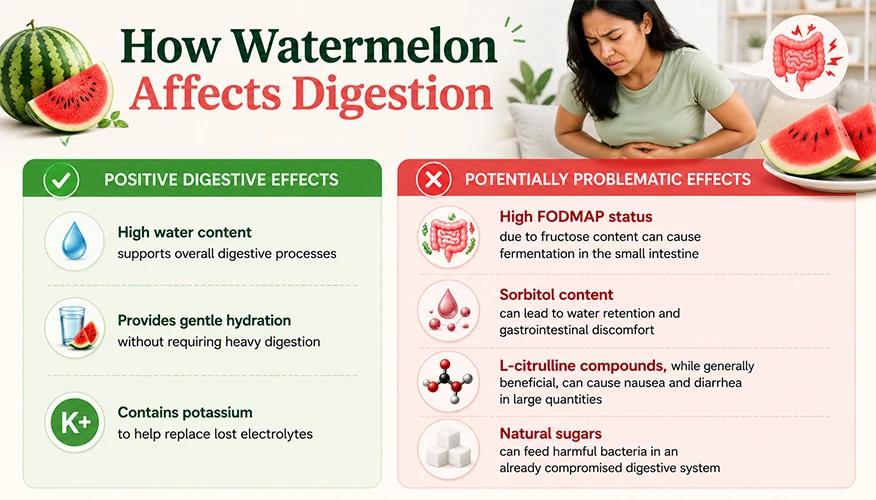
Understanding how watermelon interacts with your digestive system helps explain why the question "Is watermelon ok for diarrhea?" doesn't have a straightforward answer.
Watermelon affects digestion in multiple ways, creating both positive and negative impacts:
Positive digestive effects:
- High water content supports overall digestive processes
- Provides gentle hydration without requiring heavy digestion
- Contains potassium to help replace lost electrolytes
Potentially problematic effects:
- High FODMAP status due to fructose content can cause fermentation in the small intestine
- Sorbitol content can lead to water retention and gastrointestinal discomfort
- L-citrulline compounds, while generally beneficial, can cause nausea and diarrhea in large quantities
- Natural sugars can feed harmful bacteria in an already compromised digestive system
For people with sensitive digestive systems or existing conditions like IBS, these negative effects often outweigh the hydration benefits during acute diarrheal episodes.
Is watermelon good for diarrhea?
Despite its appealing water content, watermelon is generally not recommended as a primary food choice during diarrhea. The risks typically outweigh the potential benefits for most people experiencing digestive distress.
Think of it this way: when your digestive system is already struggling to absorb fluids properly, adding a high-fructose, high-water fruit can be like adding fuel to a fire. Your gut needs gentle, binding foods that help firm up stools, not foods that increase fluid movement through your intestines.
Benefits of watermelon during diarrhea
While watermelon is not the ideal choice during active diarrhea, it does offer some potential benefits that are worth understanding
- Hydration support: With its 91-92% water content, watermelon can help maintain fluid levels if your body tolerates it well.
- Detoxification assistance: The high water content may help flush toxins from your system, though this should be secondary to symptom management.
- Gut repair potential: Watermelon contains citrulline, an amino acid that may support gut health. Some research suggests citrulline could aid in repairing colon structure and improving nitric oxide levels, which might be beneficial for inflammatory gut conditions like ulcerative colitis.
Risks of eating watermelon during diarrhea
The risks of consuming watermelon during diarrhea episodes are significant and can actually prolong your recovery time. Here are the main concerns you should be aware of:
| Risk Factor | Why It Happens | Impact on Recovery |
|---|---|---|
| Worsened diarrhea | High fructose draws water into the intestines | Delays healing and increases dehydration risk |
| Bloating and gas | Fructose fermentation in the compromised gut | Increases discomfort and cramping |
| Blood sugar spikes | Natural fruit sugars are absorbed quickly | Problematic for diabetic women |
| Medication interactions | High potassium content | Risk for those on heart medications |
Can watermelon make diarrhea worse?
Watermelon can definitely make diarrhea worse, and this is more common than you might expect. The very properties that make watermelon refreshing and hydrating in normal circumstances can become problematic when your digestive system is already compromised.
How watermelon can worsen diarrhea:
- Fructose fermentation creates gas and draws more water into your intestines
- High water content, combined with natural sugars, can increase stool frequency
- FODMAP sensitivity reactions can trigger inflammatory responses in your gut
- Osmotic effect from natural sugars pulls additional fluid into your digestive tract
This is especially true if you consume normal-sized portions (1-2 cups) rather than limiting yourself to small amounts. The question "Can watermelon cause diarrhea?" is relevant even for people who normally tolerate it well, as your digestive system's tolerance can change during illness.
How to eat watermelon safely during diarrhea
If you're experiencing mild diarrhea symptoms and feel you must include watermelon in your diet, here's how to minimize risks
- Start small and test tolerance: Begin with just 1/4 cup and wait several hours to see how your body responds before consuming more.
- Stick to daily limits: Never exceed 1-2 cups per day, even if you are feeling better.
- Choose quality fruit: Select ripe, fresh watermelon and avoid any pieces that look overripe or have been sitting out.
- Remove problematic parts: Skip the rind and seeds, which add unnecessary fiber that can further irritate your digestive system.
- Pair strategically: If you do eat watermelon, combine it with binding foods like plain toast or rice to help counteract its loose-stool effects.
- Time it right: Avoid eating watermelon first thing in the morning or on an empty stomach when your digestive system is most sensitive.
What to avoid with watermelon during episodes
Certain combinations and practices can make watermelon even more problematic during diarrhea episodes. Foods to avoid combining with watermelon include:
- Other high-FODMAP foods like onions, garlic, or beans
- Dairy products, which can be harder to digest during illness
- Artificial sweeteners that can have laxative effects
- Caffeinated beverages that may increase dehydration
Portion-related mistakes to avoid:
- Do not eat large servings, thinking "more water is better"
- Avoid unripe watermelon, which has a higher starch content
- Skip watermelon juice, which concentrates the fructose without fiber
- Do not eat watermelon as your primary fluid replacement
Who should avoid watermelon during diarrhea?
Certain people should completely avoid watermelon during diarrhea episodes due to a higher risk of complications:
- Those with existing digestive conditions:
- IBS sufferers who are sensitive to FODMAPs
- Those with fructose malabsorption
- Anyone with a history of food intolerances
- Those with chronic health conditions:
- Diabetics who need stable blood sugar levels
- Those with kidney problems who must monitor potassium intake
- Women taking diuretics or ACE inhibitors
- People living in extremely hot, humid regions where dehydration happens quickly should be extra cautious, as worsened diarrhea can lead to dangerous fluid loss.
- While watermelon is not inherently dangerous, pregnant and breastfeeding women should prioritize proven, gentle foods during digestive illness.
Better food choices than watermelon for diarrhea

Instead of wondering "Is watermelon good for diarrhea?" focus on foods that actually help your recovery. The BRAT diet remains the gold standard for good reason.
| Food | Why It Helps | How to Prepare |
|---|---|---|
| Bananas | A binding potassium source, easy to digest | Mashed or sliced, avoid green ones |
| Rice | Absorbs excess water in the intestines | Plain white rice, well-cooked |
| Applesauce | Pectin soothes the gut lining | Unsweetened, room temperature |
| Toast | Low fiber, gentle on the stomach | Plain white bread, lightly toasted |
Additional helpful options:
- Clear broths for electrolyte replacement
- Herbal teas like chamomile or ginger
- Plain crackers for easy carbohydrates
- Boiled potatoes without skin
When can you eat watermelon after diarrhea?
The timing of watermelon reintroduction is crucial for preventing symptom recurrence. Rushing back to normal eating patterns, including watermelon consumption, can trigger a relapse of diarrheal symptoms.
Safe reintroduction timeline:
- Wait 24-48 hours after your last loose stool before considering watermelon
- Allow 2-3 days for complete digestive system stabilization
- Start with tiny portions (¼ cup or less) to test tolerance
- Monitor for 4-6 hours after consumption for any symptom return
- Gradually increase portion size only if no symptoms occur
Factors affecting reintroduction timing:
- Individual sensitivity: FODMAP-sensitive people need longer recovery periods
- Severity of episode: More severe diarrhea requires longer waiting periods
- Overall health: Individuals with compromised immune systems need extended recovery time
- Age: Older adults and children may need more gradual reintroduction
Conclusion
So, is watermelon good for diarrhea? The evidence suggests that for most people, the risks outweigh the benefits. While watermelon offers hydration and contains some potentially gut-supportive compounds, such as citrulline, its high FODMAP content and fructose make it risky during active digestive distress.
The key is understanding your individual tolerance and prioritizing proven remedies over appealing but potentially problematic foods. When you're dealing with diarrhea, stick to gentle, binding foods that support recovery rather than complicate it.
Meet our expert

Meet our expert
As a registered Dietitian with a strong academic background in dietetics from University
Putra Malaysia, she is committed to empowering individuals to make informed, health-conscious decisions that align with their wellness goals


How was the experience with article?
We'd love to know!