
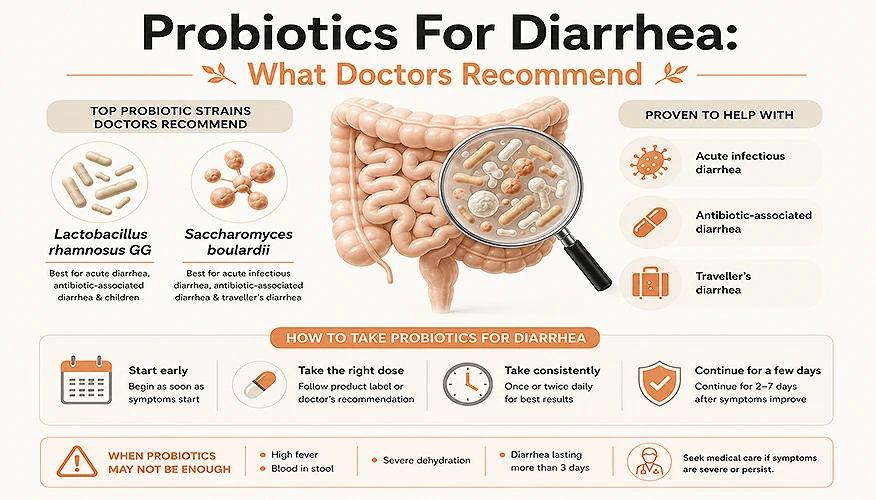
Certain probiotics can help shorten the duration of diarrhea and reduce symptom severity, but their effectiveness depends on the strain used. Doctors most commonly recommend Lactobacillus rhamnosus GG and Saccharomyces boulardii, two probiotics with the strongest evidence for acute infectious diarrhea, antibiotic-associated diarrhea, and traveller's diarrhea.
Diarrhea disrupts the balance of beneficial bacteria in the gut, and probiotics work by helping restore that balance. According to the World Gastroenterology Organisation, certain probiotic strains may shorten the duration of acute diarrhea by approximately one day—a meaningful benefit, particularly for children and older adults who are at higher risk of dehydration.
However, not all probiotics are equally effective. The right probiotic depends on the cause of diarrhea, whether it is triggered by infection, antibiotics, food intolerance, or an underlying digestive condition. This article examines the evidence behind probiotics for diarrhea, which strains doctors most commonly recommend, how to take them correctly, and when medical treatment may still be necessary.
Should I take probiotics when I have diarrhea?
Yes, evidence supports using probiotics alongside standard care to shorten the duration of diarrhea and reduce its severity. This is especially true for infectious or antibiotic-related cases, which are common concerns.
Do probiotics help with diarrhea? Research consistently shows they can. Studies demonstrate that probiotics can reduce both the frequency of loose stools and the overall duration of symptoms. They are particularly effective when started early in the course of illness.
The key is choosing the right strains and starting them at the appropriate time. Unlike some treatments that only address symptoms, probiotics work to restore the natural balance your gut needs to function properly.
How do probiotics help with diarrhea?
Probiotics aid recovery by modulating your gut microbiome and improving intestinal function through several targeted mechanisms. Here's how probiotics support your digestive recovery:
- Reduce stool frequency and improve consistency by increasing beneficial bacteria like Bifidobacterium and Lactobacillus in your gut.
- Enhance immune response and intestinal barrier integrity to limit pathogen invasion and protect your gut lining.
- Reducing inflammation in your intestinal tract, decreasing pain and discomfort.
- Shorten diarrhea duration by about one day on average while decreasing the likelihood of prolonged symptoms.
- Alleviate associated issues like bloating, cramping, and urgency, especially in IBS-related cases.
- Decreasing pathogenic colonization by competing with harmful bacteria for nutrients and attachment sites, preventing infection from taking hold.
The probiotics mechanism of action in diarrhea is like having a skilled repair crew that not only fixes immediate problems but also strengthens your gut's defenses against future issues.
Types of diarrhea that probiotics may help
Different types of diarrhea respond to probiotic intervention in various ways. Knowing which type you're dealing with can help you choose the most effective approach.
Probiotics for acute infectious diarrhea
Probiotics may reduce the severity and duration of diarrhea caused by bacteria or viruses, especially in children. When your body is fighting an infection, probiotics support your natural defenses so they work more effectively.
Probiotics for antibiotic-associated diarrhea
Antibiotics kill both good and bad bacteria in your gut. Probiotics for adults taking antibiotics help restore gut balance and significantly reduce the risk of antibiotic-associated diarrhea. Starting probiotics within the first two days of antibiotic treatment provides the best protection.
Probiotics for traveler's diarrhea
Certain probiotic strains may help prevent diarrhea caused by contaminated food or water while traveling. This is particularly valuable for those who travel frequently for work or family reasons and want to avoid disrupting important plans.
Probiotics for IBS-related diarrhea
People with IBS-D may benefit from probiotics that reduce bloating and regulate bowel movements. Probiotics for upset stomach and diarrhea related to IBS work by stabilizing gut motility and reducing inflammatory responses that trigger symptoms.
Best probiotic strains for diarrhea
Specific strains show strong evidence for diarrhea relief, making strain selection crucial for effectiveness. The most effective strains include:
- Lacticaseibacillus rhamnosus(GG strain): Reduces antibiotic-associated diarrhea risk and helps manage ongoing symptoms.
- Saccharomyces boulardii: Particularly effective against C. difficile diarrhea, working at doses of 5-40 billion CFUs daily.
- Limosilactobacillus reuteri: Particularly effective in shortening acute diarrhea duration, especially in children.
- Lactobacillus acidophilus(LA85 strain): Prevents antibiotic-associated diarrhea and improves stool consistency.
- Multi-strain products with Bifidobacterium and Lactobacillus: Enhance stool quality and reduce IBS symptoms.
When looking for the best probiotic for diarrhea, focus on products containing these clinically studied strains rather than generic formulations.
Saccharomyces Boulardii: Why it stands out for diarrhea
Saccharomyces boulardii is not a bacterium — it is a tropical yeast, originally isolated from lychee and mangosteen fruit. That distinction is clinically significant. Because it is a yeast, it survives stomach acid, bile salts, and antibiotics that would destroy most conventional probiotic strains. This is why doctors specifically recommend it in situations where other probiotics simply would not survive long enough to work.
The World Gastroenterology Organisation includes S. boulardii in its global guidelines for multiple types of diarrhea. Clinical trials show it reduces the duration of acute infectious diarrhea by one to two days compared to placebo — meaningful, particularly for children and older adults where dehydration risk is highest. It is also one of the only probiotics with strong evidence for antibiotic-associated diarrhea, precisely because antibiotics cannot touch it.
It works through several mechanisms at once: breaking down bacterial toxins, competing with pathogens for space along the intestinal wall, stimulating the gut's immune defences, and supporting the integrity of the intestinal lining. It does not just slow diarrhea — it actively works to restore the gut environment that diarrhea disrupts.
Dose matters. Studies showing meaningful outcomes have used 250mg to 500mg per day. When choosing a probiotic for diarrhea, look for a product that contains a clinically validated dose of Saccharomyces boulardii and meets pharmaceutical-grade manufacturing standards — potency varies considerably between brands. Normagut is one such option, formulated specifically around this strain for digestive health and gut balance.
S. boulardii is generally well tolerated across age groups including children, and considered safe for short-term use. Those with compromised immune systems or known yeast allergies should consult a doctor before use.
Probiotic foods for diarrhea

Incorporating fermented foods can naturally introduce probiotics into your diet, offering a gentle and sustainable approach to gut health. These foods are often easier to tolerate when your stomach is sensitive. Beneficial probiotic foods include:
- Fermented dairy products:Yogurt and kefir contain live cultures of Lactobacillus and Bifidobacterium species, though some people may experience lactose sensitivity during acute episodes.
- Fermented vegetables: Sauerkraut and kimchi provide various Lactobacillus strains plus fiber and nutrients that support recovery.
- Miso and tempeh: These traditional fermented soy products offer probiotic bacteria and tend to be easier on sensitive stomachs.
- Kombucha: This fermented tea beverage contains beneficial bacteria, though the carbonation might cause discomfort during acute symptoms.
Probiotic supplements for diarrhea
Supplements may be useful when food intake is limited due to acute illness or travel. They offer concentrated doses of proven-effective strains. When choosing a probiotic supplement:
- Look for clinically studied strains like L. rhamnosus or S. boulardii that have proven track records.
- Check CFU (colony-forming units), aiming for 5-40 billion daily for therapeutic efficacy; verify the label specifies CFU at the end of shelf life, not just at manufacture.
- Choose productswith proper storage instructions to maintain bacterial viability, especially in warm climates.
- Avoid unnecessary additives that might irritate your already sensitive digestive system.
Over-the-counter probiotics are readily available, but quality varies significantly between brands. Look for third-party tested products from reputable manufacturers.
Antibiotic-associated diarrhea

Antibiotics disrupt your natural gut flora, increasing the risk of diarrhea by 15-20%, including the potential for severe C. difficile infections. This disruption can persist even after you finish your antibiotic course.
Probiotics' role in preventing diarrhea during antibiotic treatment is well established. Strains such as S. boulardii or L. rhamnosus, started within two days of beginning antibiotics, can reduce the incidence of diarrhea by 16%.
This preventive approach is particularly beneficial for adults under 65 who are at lower risk for complications but still want to avoid the discomfort and inconvenience of antibiotic-related digestive issues.
How to take probiotics for diarrhea
Starting probiotics early provides the best results, and consistency throughout your recovery period is key to maximizing benefits. Follow these guidelines for optimal effectiveness:
- Timing relative to meals: Take probiotics with food to improve survival through stomach acid, though some strains tolerate fasting conditions better than others.
- Separation from antibiotics: If you are taking antibiotics, separate probiotic administration by at least 2-3 hours to prevent the medication from killing beneficial bacteria.
- Temperature considerations: Store supplements according to the label instructions and avoid exposure to heat, as heat can damage live organisms.
- Continuation strategy: For acute diarrhea, continue probiotics until stools normalize; for antibiotic courses, maintain supplementation throughout treatment and 1-2 weeks after completion.
Probiotics are most effective when used as part of a comprehensive approach that includes rest, hydration, and appropriate medical care when needed.
Are probiotics safe for diarrhea?
Probiotics have demonstrated an excellent safety profile across numerous clinical trials involving thousands of participants. Evidence consistently shows that probiotics are associated with rare adverse events, even in hospitalized populations receiving intensive treatment.
Most people tolerate probiotics well, though certain populations should exercise caution. If you are immunocompromised, dealing with severe acute illness, or have central venous catheters, consult your healthcare provider before starting probiotics. For otherwise healthy individuals experiencing diarrhea, probiotics are a safe, evidence-based therapeutic option that can be used alongside conventional treatments.
Are there any side effects related to probiotic use?
Side effects from probiotics are uncommon and typically mild, resolving quickly as your body adjusts to the beneficial bacteria. Possible probiotic side effects include:
- Initial digestive changes: Temporary bloating, gas, or mild abdominal discomfort may occur during the first few days as your microbiota rebalances.
- Headaches: Rarely reported in early treatment phases, potentially related to microbial shifts in your system.
- Allergic reactions: Uncommon but possible, particularly with dairy-based products if you are lactose-sensitive.
- Infection risk in immunocompromised patients: While rare, people with compromised immune systems face a theoretical infection risk and should seek medical guidance.
- Interactions with medications: Minimal documented interactions exist, though your healthcare provider should review your individual circumstances.
The question "Can probiotics cause diarrhea?" occasionally arises, but this is rare and usually indicates either a low-quality product or an underlying health condition that requires medical attention.
When probiotics may not be enough
While probiotics are helpful, they support rather than replace essential treatments for severe dehydration, bloody stools, or symptoms persisting beyond 48 hours. Recognizing when additional intervention is needed can prevent serious complications.
Probiotics are most effective for mild to moderate diarrhea. They are not a substitute for proper medical care when you are dealing with severe symptoms or signs of dehydration.
Probiotics vs oral rehydration solution (ORS)
Understanding the different roles of probiotics and ORS helps you use both effectively for comprehensive diarrhea management. Each addresses different aspects of the problem.
| Aspect | Probiotics | Oral Rehydration Solution (ORS) |
| Primary Benefit | Shortens duration, restores gut flora | Replaces fluids and electrolytes |
| Best For | Infectious/antibiotic diarrhea | All cases, especially with dehydration |
| Speed of Action | 1-2 days for symptom relief | Immediate fluid balance restoration |
| Limitations | Not sufficient for severe cases alone | Does not address the underlying gut imbalance |
When to see a doctor
Recognizing when professional medical care is needed can prevent complications and ensure you receive appropriate treatment for your specific situation. Seek medical help promptly if you experience:
- Diarrhea lasting over 2 days in adults or any fever in children with diarrhea.
- Signs of dehydration, including dry mouth, dizziness, or significantly reduced urination.
- Blood or mucus in stool, severe abdominal pain, or persistent vomiting.
- Recent antibiotic use with worsening symptoms that might indicate C. difficile infection.
Conclusion
Probiotics for diarrhea offer a safe, evidence-backed option to ease digestive distress while supporting your body's natural healing process. Whether you are dealing with travel-related stomach upset, antibiotic side effects, or recurring IBS symptoms, the right probiotic strains can help restore balance to your gut microbiome and reduce both the duration and severity of symptoms.
Probiotics work best when combined with proper hydration, rest, and medical care when needed. By understanding which strains work for different types of diarrhea and how to use them effectively, you can take a proactive approach to digestive health that fits seamlessly into your busy lifestyle.
Meet our expert

Meet our expert
Dr. Irina Borisovna Stefanenko, a medical doctor based in Ukraine, graduated from Vinnitsa State Medical University in 1995. Between 1995 and 2000, Dr. Stefanenko pursued postgraduate studies and engaged in scientific activities at Vinnytsa Medical University in Ukraine.



How was the experience with article?
We'd love to know!