
Milk may help relieve acid reflux symptoms temporarily by soothing the esophagus and diluting stomach acid. However, high-fat milk can sometimes worsen reflux by relaxing the lower esophageal sphincter. For most people with acid reflux, low-fat milk or certain plant-based alternatives may be better tolerated than whole milk.
Milk does not cure or consistently relieve acid reflux. It may feel soothing in the moment — its cool, alkaline nature temporarily neutralises stomach acid — but the fat and protein in milk trigger a second wave of acid secretion, often intensifying symptoms 30 to 60 minutes later. This rebound effect is why doctors rarely recommend milk as a remedy for GERD or chronic heartburn.
For people managing acid reflux, not all milk is equal. Skim and plant-based options behave differently in the stomach than whole milk, and some may be better tolerated depending on the underlying trigger. This article breaks down the science, the risks, the best choices, and what to drink instead.
Understanding the benefits and risks can help you decide when milk makes sense and which choices are better for reflux control.
Is milk good for acid reflux?
Milk can provide short-term relief from acid reflux symptoms, but its effects vary by type. Low-fat milk may be easier on the digestive system, while whole milk and high-fat dairy products can trigger or worsen reflux in some people. Individual tolerance plays an important role in determining whether milk helps or aggravates symptoms.
What is acid reflux?

Acid reflux happens when stomach acid flows backward into your esophagus. This occurs because the lower esophageal sphincter (LES), a ring-like muscle that acts as a gateway between your esophagus and stomach, doesn't close properly.
When this muscle relaxes at the wrong time, stomach acid can backflow into the esophagus, irritating its delicate lining. The result is an uncomfortable burning sensation in your chest known as heartburn. Common symptoms of acid reflux include:
- Burning chest pain that worsens when lying down
- Sour or bitter taste in your mouth
- Difficulty swallowing
- Chronic cough or hoarseness
- Bloating and belching
If you experience these symptoms more than twice a week, you might have gastroesophageal reflux disease (GERD), which requires more comprehensive management than occasional heartburn.
Is milk good for acid reflux?
The relationship between milk and acid reflux isn't straightforward. It can be both helpful and harmful depending on various factors.
Why milk may help
Milk contains proteins and fats that can temporarily coat your esophagus, creating a protective barrier against stomach acid. This coating effect provides quick, soothing relief from the burning sensation.
Additionally, milk's alkaline properties can neutralize stomach acid for a short period, diluting its strength and reducing immediate discomfort. This is why many people instinctively reach for milk when heartburn strikes.
Why milk may worsen acid reflux
Milk's benefits are often short-lived. After the initial relief, milk can actually stimulate your stomach to produce more acid as your digestive system works to break down the proteins and fats.
The calcium content in milk can also relax the LES, making it easier for acid to escape into your esophagus. Full-fat milk is particularly problematic because high-fat foods slow stomach emptying and further relax the LES, increasing your risk of reflux episodes.
Types of milk and their effect on acid reflux
Not all types of milk affect acid reflux equally. Understanding which types are gentler on your digestive system can help you make better choices.
- Low-fat and skim milk:
- Contains less fat, reducing LES relaxation
- Empties from the stomach faster than whole milk
- Generally better tolerated by people with GERD
- Whole milk:
- High fat content delays stomach emptying
- More likely to relax the LES
- Can trigger stronger rebound acid production
- Plant-based alternatives:
- Acid reflux symptoms from almond milk may be reduced due to lower fat content
- Oat milk and rice milk are often gentler options
- Choose unsweetened varieties to avoid added sugars
- Milk to avoid:
- Chocolate milk (contains caffeine and high sugar)
- Full-cream milk
- Flavored milk with artificial additives
Does milk neutralize stomach acid?
Yes, milk can temporarily neutralize stomach acid, but this effect is brief and may backfire. When you drink milk, its alkaline proteins and calcium initially buffer stomach acid, reducing acidity for about 10-20 minutes.
However, this neutralization triggers your stomach to produce even more acid to maintain proper digestion. This rebound effect often leaves you with higher acid levels than before you drank the milk, potentially worsening your reflux symptoms.
Can milk help acid reflux?
The answer depends on your individual tolerance and the type of milk you choose. For occasional, mild heartburn, small amounts of low-fat milk might provide temporary relief without significant side effects.
However, if you have frequent reflux or GERD, milk isn't a reliable long-term solution. The temporary relief often comes at the cost of increased acid production later, creating a cycle that may worsen your symptoms over time.
Milk might help if:
- You have occasional, mild heartburn
- You choose low-fat varieties
- You drink small amounts (100-150ml)
- You're not lactose intolerant
Milk may worsen symptoms if:
- You have chronic GERD
- You're drinking whole or high-fat milk
- You consume large quantities
- You have lactose sensitivity
When is the best time to drink milk for acid reflux?
Timing matters significantly when using milk for acid reflux relief. The best approach is to sip small amounts between meals rather than with or after eating.
Optimal timing:
- Mid-morning or mid-afternoon, when your stomach isn't full
- During early symptoms, before they worsen
- At least 2-3 hours before bedtime
Times to avoid:
- Right before lying down or sleeping
- Immediately after large meals
- Late evening or nighttime
Drinking milk before bed is particularly problematic because lying down makes it easier for acid to flow back into your esophagus, and the relaxed LES from milk compounds this risk.
How to use milk safely if you have acid reflux
If you want to try milk for symptom relief, follow these guidelines to minimize potential negative effects:
Safe consumption tips:
- Choose low-fat or skim milk over whole milk
- Limit portions to 100-150 ml (about half a cup)
- Drink slowly, taking small sips
- Keep the milk chilled for additional soothing effects
- Consider pairing with alkaline foods like bananas
Monitor your response:
- Track symptoms for 2-3 hours after drinking milk
- Note any increase in heartburn or regurgitation
- Discontinue if symptoms worsen consistently
Milk vs yogurt for acid reflux
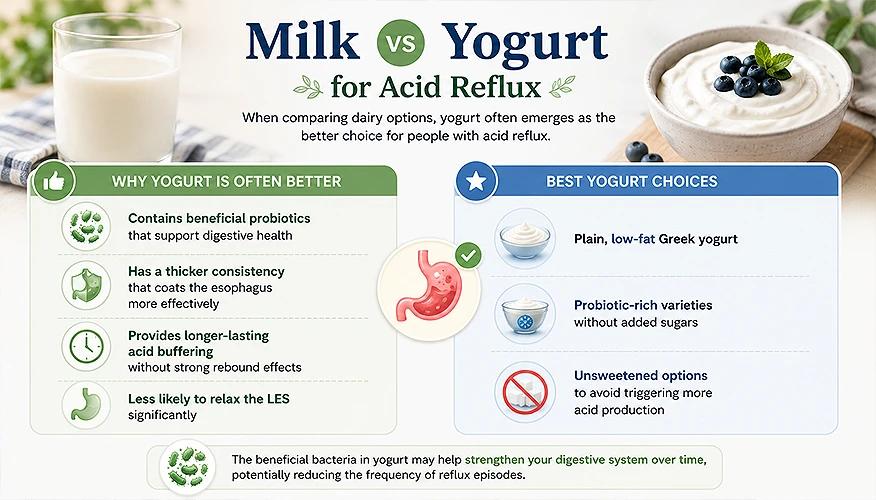
When comparing dairy options, yogurt often emerges as the better choice for people with acid reflux. Unlike milk, yogurt offers several advantages that make it more suitable for regular consumption.
Why yogurt is often better:
- Contains beneficial probiotics that support digestive health
- Has a thicker consistency that coats the esophagus more effectively
- Provides longer-lasting acid buffering without strong rebound effects
- Less likely to relax the LES significantly
Best yogurt choices:
- Plain, low-fat Greek yogurt
- Probiotic-rich varieties without added sugars
- Unsweetened options to avoid triggering more acid production
The beneficial bacteria in yogurt may help strengthen your digestive system over time, potentially reducing the frequency of reflux episodes.
Who should avoid milk for acid reflux?
Certain individuals should be particularly cautious about using milk for acid reflux management or avoid it altogether.
Avoid milk if you have:
- Lactose intolerance
- Severe GERD or frequent reflux episodes
- Sensitivity to dairy fats
- A hiatal hernia, which increases the risk of reflux
Special considerations:
- Pregnant women should limit milk intake due to increased abdominal pressure
- People with chronic digestive issues may find milk worsens symptoms
- Those taking certain medications should consult healthcare providers
If you're unsure about your lactose tolerance or dairy sensitivity, consider keeping a food diary to track how different dairy products affect your symptoms.
Alternative drinks for acid reflux
If milk isn't suitable for you, several other beverages can provide relief without the potential drawbacks of dairy.
Soothing alternatives:
- Herbal teas like ginger or chamomile (avoid mint, which can relax the LES)
- Alkaline water to help neutralize acid
- Diluted aloe vera juice for its anti-inflammatory properties
- Coconut water for gentle hydration with mild alkalinity
Drinks to avoid:
- Carbonated beverages that increase stomach pressure
- Citrus juices that are highly acidic
- Coffee and caffeinated drinks that stimulate acid production
- Alcohol, which relaxes the LES
These alternatives often provide gentler, more sustained relief without the rebound acid production associated with milk.
Milk and acid reflux at night
Nighttime reflux is particularly problematic, and milk can sometimes make it worse. When you lie down soon after drinking milk, stomach contents can move upward more easily, especially if the lower esophageal sphincter is already weak or relaxed. Milk’s fat content and its effect on gastric acid secretion in some people may further increase the chance of reflux symptoms at night.
Why nighttime milk is risky:
- Horizontal position encourages acid backflow
- Milk relaxes the LES when you need it most protective
- Slower digestion during sleep keeps milk in your stomach longer
Better nighttime strategies:
- Elevate your bed head by 15-20 centimeters
- Avoid eating or drinking 2-3 hours before bed
- If you must have something, try a small amount of yogurt earlier in the evening
Other ways to manage acid reflux
While the question "Is milk good for acid reflux?" is important, it's just one piece of a comprehensive management strategy. Lifestyle modifications often provide more reliable, long-term relief.
Effective lifestyle changes:
- Eat smaller, more frequent meals instead of large portions
- Identify and avoid personal trigger foods (common ones include spicy foods, citrus, and chocolate)
- Maintain a healthy weight to reduce abdominal pressure
- Quit smoking, which weakens the LES
- Manage stress through relaxation techniques
Dietary adjustments:
- Incorporate more alkaline foods like leafy greens and non-citrus fruits
- Choose lean proteins over fatty cuts
- Opt for whole grains instead of refined carbohydrates
- Stay hydrated with water throughout the day
If lifestyle changes aren't sufficient, consult a healthcare provider about medications like antacids, H2 blockers, or proton pump inhibitors (PPIs) for more comprehensive symptom management.
Conclusion
So, is milk for acid reflux a good option? The answer isn't a simple yes or no. While milk can provide temporary relief by coating your esophagus and briefly neutralizing stomach acid, it often creates more problems than it solves, especially with regular use. Low-fat milk may be tolerable for occasional mild symptoms, but full-fat varieties typically worsen reflux by relaxing the LES and triggering rebound acid production. For most people dealing with frequent heartburn or GERD, alternatives like low-fat yogurt, herbal teas, or alkaline water offer safer, more effective relief.
Remember, managing acid reflux successfully requires a holistic approach that includes dietary modifications, lifestyle changes, and, when needed, medical intervention. If you're struggling with frequent symptoms, don't rely on milk as your primary solution and work with a healthcare provider to develop a comprehensive management plan that addresses your individual needs and triggers.
Meet our expert

Meet our expert
Dr. Pulyk Nataliya Omelanivna is an Internal Medical Expert who is based out of Ukraine. With a special interest in internal medicine Dr Pulyk graduated from the Ternopil National Medical Academy in Ukraine, in the year 2001. Between the years 2002-2009, Dr Pulyk worked as an emergency physician. Her years of work as an emergency physician gave her immense exposure to a range of patients and an opportunity to learn on the job, and gather extensive experience.



How was the experience with article?
We'd love to know!