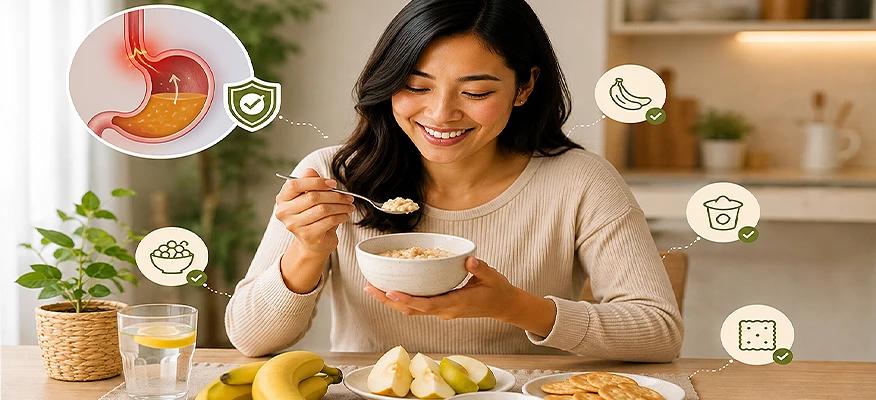
The best snacks for acid reflux are low-fat, low-acid, and easy to digest. Oatmeal, bananas, plain crackers, low-fat yogurt, and non-citrus fruits are among the most reflux-friendly options because they are less likely to trigger heartburn or irritate the oesophagus. In contrast, fried snacks, chocolate, citrus fruits, and spicy foods are common reflux triggers that may worsen symptoms.
Managing acid reflux does not mean giving up snacks—it means choosing foods that help keep stomach acid where it belongs. According to the American College of Gastroenterology, dietary choices are among the most important controllable factors in managing gastro-oesophageal reflux disease (GERD) and chronic heartburn. The foods eaten between meals can influence symptoms just as much as breakfast, lunch, or dinner.
The right snacks support digestion without placing extra pressure on the lower oesophageal sphincter (LES), the valve that helps prevent stomach contents from flowing back into the oesophagus. Foods high in fat and acidity are among the most common dietary triggers for reflux, while snacks based on whole grains, non-citrus fruits, and low-fat protein sources tend to be better tolerated.
This article explores the best snacks for acid reflux, foods to avoid, and how factors such as portion size and snack timing can affect heartburn symptoms.
What is acid reflux?

Acid reflux happens when your stomach acid decides to take an unwelcome trip upward into your esophagus. Think of your lower esophageal sphincter as a one-way door that is supposed to keep stomach contents down where they belong.
When this "door" weakens or relaxes at the wrong time, stomach acid flows back up, creating the burning sensation we call heartburn. Gastroesophageal reflux disease (GERD) is simply the medical term for chronic acid reflux. Factors like diet, weight, and even pregnancy can influence how often this happens to you.
Common symptoms
Recognizing acid reflux symptoms helps you address them before they derail your entire day.
- Heartburn (a burning sensation in the chest)
- Unpleasant, sour, or bitter flavor in the mouth
- Difficulty swallowing
- Persistent cough, especially at night
- Hoarseness or sore throat
- The feeling of a lump in your throat
- Chest pain that's not heart-related
Why snacks matter in acid reflux
Your snacking choices directly influence how your digestive system behaves throughout the day.
- When you eat large portions or foods high in fat, your stomach works overtime to digest them. This increased workload puts pressure on the lower esophageal sphincter, making it more likely to relax and allow acid to reflux.
- The timing matters too. Eating late at night means you're lying down while your stomach is still actively producing acid.
Small, frequent snacks work differently. They help maintain steady digestion without overwhelming your stomach, reducing the pressure that leads to reflux. This approach is particularly beneficial for those whose hectic schedules often result in skipping meals and then overeating later.
Best snacks for acid reflux
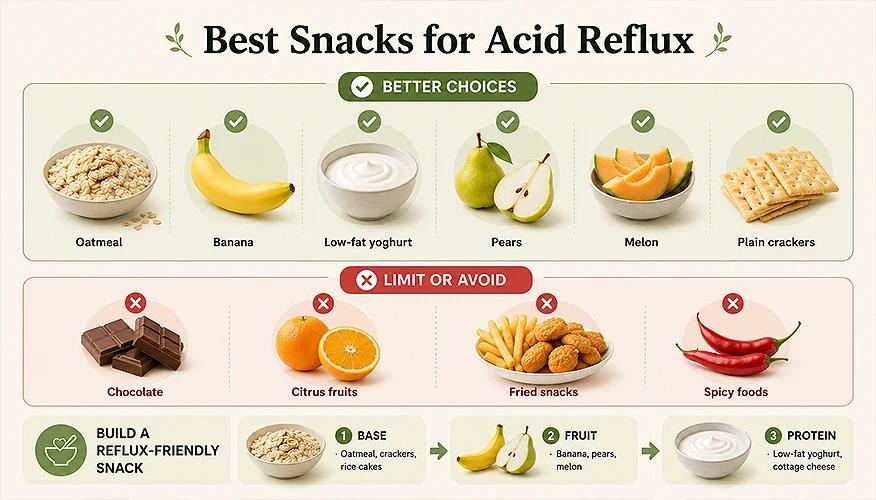
The key to good snacks for acid reflux lies in choosing foods that won't trigger your lower esophageal sphincter to relax or irritate your esophagus. Focus on low-fat, non-acidic options with alkaline properties to help neutralize stomach acid.
Alkaline and soothing options
These snacks help neutralise stomach acid while gently soothing your digestive system:
- Oatmeal tops the list because it absorbs excess stomach acid while providing a protective coating for your esophagus. Prepare it with water or low-fat milk, and skip the sugar.
- Bananas are naturally alkaline and easy to digest. They're perfect for busy mornings or as a quick energy boost without triggering reflux.
- Melons like watermelon, cantaloupe, and honeydew have high water content and low acidity, making them excellent snacks for acid reflux.
Protein-rich choices
Lean proteins like grilled chicken, fish, or boiled eggs provide sustained energy without excess fat that could relax your LES. These work well as part of small, frequent meals.
Fiber-rich vegetables and whole grains
Non-acidic vegetables like broccoli, cauliflower, green beans, and leafy greens are excellent choices. Cucumber sticks or steamed carrots make convenient, portable snacks. Whole grains like brown rice, couscous, or plain rice cakes provide complex carbohydrates without triggering acid production.
What is the most soothing food for acid reflux?
If you had to choose just one food to keep on hand for acid reflux relief, ginger would be the winner. This powerful root has anti-inflammatory properties that calm irritated digestive tissues while promoting healthy gastric motility.
Oatmeal runs a close second for its unique ability to absorb stomach acid like a gentle sponge. Unlike many foods that either increase acid production or irritate the esophageal lining, oatmeal actually provides protective benefits for your digestive tract.
Both foods support your body's natural healing mechanisms. Ginger reduces inflammation and helps food move through your system more efficiently, while oatmeal creates a protective barrier that absorbs excess acid and prevents irritation.
Best bedtime snacks for acid reflux
What snacks can I eat with acid reflux before bedtime? Evening snacks require extra consideration because lying down after eating increases the risk of reflux. The goal is choosing light options that won't stimulate excess acid production while you sleep.
- A small banana about an hour before bed provides gentle nutrition without overwhelming your digestive system.
- Low-fat yogurt with a small amount of melon offers probiotics that support gut health, plus the alkalizing benefits of melon.
- Herbal teas make excellent bedtime companions for people with acid reflux. Chamomile, ginger, or fennel tea can soothe digestive irritation while providing hydration.
Snacks to avoid with acid reflux
Knowing what snacks are good for acid reflux is only half the battle; understanding what to avoid is equally important.
- Spicy foods top the avoidance list. While they're integral to many South Asian and African cuisines, chili peppers, hot sauces, and heavily spiced snacks directly irritate the esophageal lining and increase acid production.
- Fried foods create a double problem: they're high in fat, which slows digestion and increases stomach pressure, and they often contain oils that can trigger reflux symptoms.
- Caffeine from coffee, tea, chocolate, or energy drinks relaxes the lower esophageal sphincter while increasing acid production.
- High-fat foods, including nuts, cheese, and rich desserts, slow gastric emptying, meaning food stays in your stomach longer and produces more acid.
- Citrus fruits and tomatoes are naturally acidic and can directly irritate an already sensitive esophagus, despite their nutritional benefits in other contexts.
Best snacks vs snacks to avoid
| Better Choices | Common Triggers |
| Oatmeal | Potato chips |
| Bananas | Chocolate |
| Low-fat yoghurt | Full-fat ice cream |
| Plain crackers | Fried snacks |
| Pears | Oranges |
| Melon | Grapefruit |
| Whole-grain toast | Spicy snack mixes |
| Rice cakes | Processed meats |
Homemade acid reflux-friendly snack ideas
Creating your own snacks gives you complete control over ingredients while ensuring freshness and quality.
- Banana oat bites: Mash one ripe banana and mix with half a cup of rolled oats. Form small balls and refrigerate for 30 minutes.
- Ginger melon cups: Combine cubed cantaloupe or honeydew with finely grated fresh ginger and a drizzle of honey.
- Steamed vegetable medley: Lightly steam broccoli, carrots, and green beans with a small amount of fresh ginger.
- Yogurt parfait: Layer plain, low-fat yogurt with small pieces of banana and a sprinkle of oats.
Portion control: how much to eat?
Size matters when it comes to food for people with acid reflux. Large portions create stomach distension, which increases pressure on the lower esophageal sphincter and makes acid reflux more likely. Practical portion examples:
- One medium banana or apple
- Half a cup of oatmeal
- A small handful of melon pieces
- One slice of whole-grain toast
- A quarter cup of low-fat yogurt
Eating slowly also matters. When you're rushing between meetings or trying to grab a quick bite while managing household tasks, it's easy to eat too quickly. This leads to swallowing air and not giving your brain time to register fullness, both of which contribute to overeating and subsequent reflux.
How to get rid of acid reflux with better snacking habits
Start by shifting to smaller, more frequent meals and snacks throughout the day. This prevents the stomach from becoming too full while maintaining steady blood sugar levels. Instead of three large meals, consider five smaller eating occasions.
Timing strategies:
- Eat your largest meals earlier in the day when digestion is most efficient
- Have your last snack at least two to three hours before bedtime
- Avoid eating when stressed; take a few deep breaths before snacking
Food combination principles:
- Pair alkaline foods with neutral ones
- Include a small amount of healthy fat to slow digestion without overwhelming your system
- Add fiber gradually to avoid digestive upset
Chewing and eating pace:
- Chew each bite thoroughly to aid digestion and increase saliva production
- Put your snack down between bites
- Focus on eating rather than multitasking
Lifestyle tips to reduce acid reflux
Managing acid reflux extends beyond food choices to encompass your overall lifestyle patterns.
- Weight management plays a crucial role, particularly abdominal weight that increases pressure on the stomach.
- Sleep positioning makes a difference for nighttime symptoms. Elevating the head of your bed by 6-8 inches helps gravity keep stomach contents where they belong.
- Stress management directly impacts digestive health. Chronic stress increases acid production and can worsen reflux symptoms. Regular stress-reduction practices like deep breathing, gentle exercise, or meditation can provide both immediate and long-term benefits.
- Physical activity supports healthy digestion, but timing matters. Avoid vigorous exercise immediately after eating, which can worsen reflux. Instead, take a gentle walk 30 minutes after snacking to promote healthy gastric emptying.
Are packaged snacks safe for acid reflux?
Many packaged snacks are high in fat, sodium, and artificial additives that can irritate the digestive system. Even seemingly healthy options like granola bars often contain high amounts of sugar and fat that can trigger symptoms. Red flags on ingredient labels:
- High fat content (especially saturated fats)
- Spice blends or "natural flavoring" that may include triggers
- Caffeine or chocolate
- High sodium levels
- Citric acid or other acid additives
When to see a doctor
While dietary changes can significantly improve acid reflux symptoms, certain warning signs indicate the need for professional medical evaluation. Immediate medical attention is needed if you experience:
- Severe chest pain that could indicate heart problems
- Difficulty swallowing that worsens over time
- Persistent vomiting, especially if it contains blood
- Unexplained weight loss alongside reflux symptoms
Schedule a doctor visit if you have:
- Heartburn occurring more than twice per week
- Symptoms that don't improve with dietary changes after several weeks
- Nighttime symptoms that disrupt sleep regularly
- A chronic cough or hoarseness that might be related to acid reflux
Conclusion
Managing acid reflux doesn't mean giving up the joy of snacking; it means making smarter choices that support your digestive health while satisfying your taste buds and busy lifestyle. By choosing alkaline, low-fat snacks for acid reflux, like oatmeal, bananas, and ginger-based snacks, you're not just preventing heartburn; you're actively supporting your body's healing processes.
Combined with mindful portion control, strategic timing, and lifestyle adjustments, these dietary changes can provide significant relief from acid reflux symptoms. Start with one or two modifications that feel manageable within your current routine, then build from there. Your future self will thank you for the investment in digestive health you're making today.
Meet our expert

Meet our expert
Song has been practising as a nutritionist with more than 12 years of experience. She
holds a Bachelor of Nutrition & Community Health with Distinction from University
Putra Malaysia and experience in conducting product training, giving health talk to the
public on health-related topic, and providing nutritional consultations to the customers.


How was the experience with article?
We'd love to know!