
That red, trumpet-shaped flower blooming in your neighbor's garden might just be your skin's new best friend.
If you've been struggling with dull skin, stubborn dark spots, or that constant battle against fine lines, hibiscus benefits for skin could be the natural solution you've been searching for.
This vibrant flower, known as Gumamela in many parts of Asia, has been quietly revolutionizing skincare routines worldwide with its powerful anti-aging and healing properties.
What is hibiscus?
Hibiscus belongs to a large family of flowering plants, with the most commonly used varieties being Hibiscus sabdariffa and Hibiscus syriacus. You might recognize these stunning blooms from tropical gardens, where their large, colorful petals create eye-catching displays.
However, hibiscus, also known as gumamela, is much more than just a pretty flower. For centuries, women across Southeast Asia, East Africa, and other tropical regions have turned to this flower for both traditional medicine and personal care. The same plant that makes a refreshing, ruby-red tea also happens to be packed with skin-loving compounds that can transform your complexion.
What makes hibiscus special is its dual nature – it's gentle enough for daily use yet powerful enough to deliver visible results. This accessibility has made the gumamela flower benefits a well-kept secret in many traditional beauty practices.
Key nutrients in hibiscus for skin health
Think of hibiscus as nature's multivitamin for your skin. Each petal is loaded with compounds that work together to nourish, protect, and rejuvenate your complexion.
The star players include:
- Polyphenols and flavonoids: These antioxidants act like tiny shields, protecting your skin from environmental damage and pollution.
- Hibiscus acid and gentisic acid: Natural compounds that help brighten skin and fade discoloration.
- Vitamin C (ascorbic acid): Essential for building collagen, a protein that keeps your skin firm and bouncy.
- Beta-carotene: Your body converts this into vitamin A, which supports healthy skin cell turnover.
- Natural AHAs (malic and citric acids): Gentle exfoliants that reveal smoother, brighter skin underneath.
- Mucilage: A gel-like substance that acts like a natural moisturizer, locking in hydration.
This impressive nutritional profile explains why hibiscus flower benefits extend far beyond surface-level improvements; they actually work at the cellular level to support long-term skin health.
Top hibiscus benefits for skin
Hibiscus benefits the skin in several ways. Here are the top ones:
Anti-aging effects (nature's botox)
Here's where hibiscus truly earns its reputation as the "botox flower." The high concentration of antioxidants and natural AHAs work together to improve skin elasticity and smooth out fine lines and wrinkles. Unlike harsh chemical treatments, hibiscus delivers these anti-aging benefits gently, making it perfect for sensitive skin types.
Exfoliates and brightens skin
The natural AHAs in hibiscus act as gentle exfoliants, dissolving dead skin cells that can make your complexion look dull and tired. This process promotes cell renewal, revealing the fresh, radiant skin underneath. Regular use leaves your skin noticeably smoother and more luminous.
Reduces hyperpigmentation and dark spots
Struggling with acne scars, age spots, or uneven skin tone? Hibiscus helps inhibit melanin production, a process that creates dark spots. Over time, this leads to a more even complexion and gradual fading of existing discoloration.
Deeply hydrates and moisturizes
The natural mucilage in hibiscus works like a moisture magnet, drawing water to your skin and holding it there. This creates that coveted plump, dewy look while preventing the tightness and flaking that comes with dehydrated skin.
Improves skin tone and texture
Regular use of hibiscus can transform not just how your skin looks, but how it feels. The combination of gentle exfoliation and deep hydration helps refine pores and creates a velvety-smooth texture that's wonderful to touch.
Combats acne and breakouts
Thanks to its antibacterial and anti-inflammatory properties, hibiscus is particularly beneficial for oily and combination skin types. It helps prevent new breakouts while calming existing inflammation, making it an excellent choice for acne-prone skin.
Boosts collagen production
The high vitamin C content in hibiscus supports your skin's natural collagen synthesis. This results in improved firmness, enhanced skin structure, and a more youthful appearance over time.
How to use hibiscus for skin
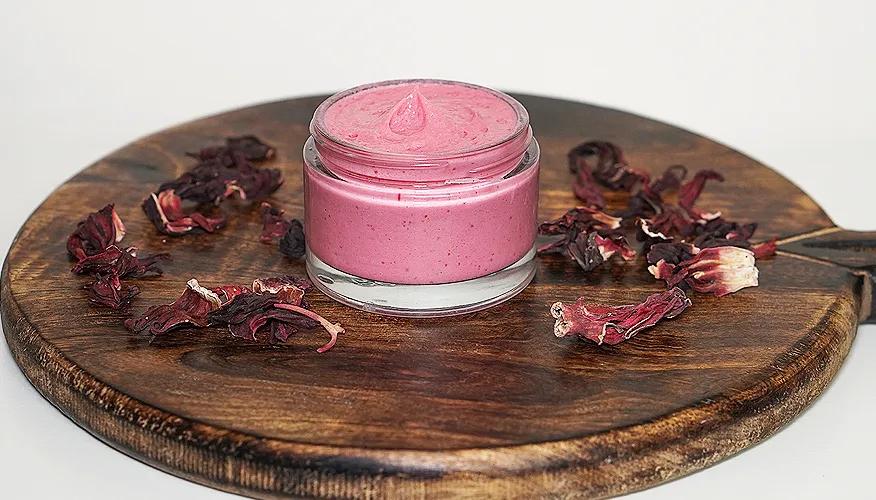
The beauty of working with hibiscus lies in its versatility. You can incorporate this powerful flower into your routine in different ways, depending on your preferences and skin needs.
- Topical masks are perhaps the most popular method. You can create these using ground dried flowers or hibiscus powder, mixed with complementary ingredients such as water, yogurt, or honey. This method gives you the most concentrated dose of hibiscus benefits.
- Infused oils provide a gentler approach, making them ideal for daily use. By steeping hibiscus flowers in carrier oils like coconut or sesame oil, you create a nourishing treatment that can be used for facial massage or targeted spot treatment.
- Serums and creams, whether store-bought or homemade, allow you to layer hibiscus benefits under your regular skincare routine. These are ideal for individuals seeking consistent, long-term results.
- Hibiscus water or toner provides a refreshing way to start or end your skincare routine. This method is particularly appealing during hot, humid weather when heavy products feel uncomfortable.
For women in Southeast Asia and East Africa, the advantage is clear – locally available hibiscus flowers or powders make it easy and affordable to integrate these gumamela flower benefits into your existing routine.
DIY hibiscus skincare recipes
Creating your own hibiscus skincare products is simpler than you might think. Here are three tried-and-tested recipes that deliver real results:
Brightening hibiscus face mask
What you'll need:
- 1 tablespoon hibiscus powder
- 2 tablespoons plain yogurt
- 1 teaspoon honey
Mix all ingredients until you have a smooth paste. Apply to clean skin, avoiding the eye area. Leave for 15 minutes, then rinse with lukewarm water. The lactic acid in yogurt enhances the exfoliating effects of hibiscus, while honey provides additional moisture and antibacterial benefits.
Refreshing hibiscus toner
What you'll need:
- 5-6 dried hibiscus petals
- 1 cup hot water
Steep the petals in hot water for 10 minutes, then cool completely. Strain out the flowers and transfer the liquid to a clean bottle. Use as a skin mist or apply with a cotton pad after cleansing. Store in the refrigerator and use within 3 days to maintain freshness.
Nourishing hibiscus oil infusion
What you'll need:
- Fresh or dried hibiscus petals
- Coconut oil (enough to cover petals)
- Clean glass jar
Place petals in the jar and cover completely with oil. Let it infuse for 7-10 days, shaking gently each day. Strain out the flowers and store the infused oil in a cool, dark place. Use for facial massage or as a nourishing scalp treatment.
How often should you use hibiscus on skin?
Like any active skincare ingredient, hibiscus works best when used consistently but not excessively. Here's a safe starting schedule that you can adjust based on your skin's response:
- Face masks: Start with once per week, gradually increasing to twice weekly if your skin tolerates it well. The concentrated nature of masks means a little goes a long way.
- Toners: Daily use is generally safe for most skin types, but begin with every other day to assess your skin's reaction. This is particularly important if you have sensitive skin or are new to using AHAs.
- Oil infusions: Two to three times per week works well for dry or mature skin types. Those with oily skin might prefer to use these treatments less frequently or only on particularly dry areas.
Remember that hibiscus tea benefits the skin from the inside out, too, so don't forget about incorporating this flower into your diet alongside your topical routine.
Precautions and tips
While hibiscus is generally gentle and well-tolerated, taking a few precautions will help ensure the best experience with your new skincare routine.
- Always patch test before applying any new hibiscus preparation to your entire face. Apply a small amount to your inner wrist or behind your ear, wait 24 hours, and check for any signs of irritation or allergic reaction.
- Freshness matters when it comes to DIY preparations. Homemade toners and masks don't contain preservatives, so they can become breeding grounds for bacteria if stored too long. When in doubt, make smaller batches more frequently.
- Sun protection remains essential. While hibiscus offers some natural UV protection, it's not a substitute for proper sunscreen. In fact, because AHAs can make your skin more photosensitive, daily SPF becomes even more important.
- The quality of your hibiscus source can make or break your results. Choose organically grown flowers or powder to avoid pesticide residues that could irritate your skin or counteract the benefits you're trying to achieve.
- During pregnancy or lactation, topical use of hibiscus is generally considered safe, but consult your healthcare provider if you're planning to consume hibiscus tea regularly, as internal use may have different considerations.
Conclusion
The remarkable hibiscus benefits for skin make this vibrant flower a worthy addition to any natural skincare routine. From its gentle anti-aging effects to its ability to brighten, hydrate, and heal, hibiscus offers a comprehensive approach to skin health that's both scientifically supported and culturally familiar.
For women seeking sustainable, effective skincare solutions, the medicinal uses of the hibiscus flower extend far beyond traditional remedies – they represent a bridge between ancient wisdom and modern beauty science. The accessibility and versatility of this botanical powerhouse make it an ideal choice for those ready to embrace natural skincare without compromising on results.
Whether you're dealing with signs of aging, struggling with uneven skin tone, or simply wanting to maintain healthy, glowing skin, hibiscus provides a gentle yet powerful path forward. Start with simple preparations, listen to your skin's needs, and enjoy the journey toward naturally radiant skin.
Meet our expert

GHBY Team
GHBY TeamMeet our expert
GHBY Team comprises content writers and content editors who specialise in health and lifestyle writing. Always on the lookout for new trends in the health and lifestyle space, Team GHBY follows an audience-first approach. This ensures they bring the latest in the health space to your fingertips, so you can stay ahead in your wellness game.
How was the experience with article?
We'd love to know!