Several herbal teas may help relieve bloating naturally by supporting digestion, reducing gas buildup, relaxing digestive muscles, and promoting healthy bowel movements. From peppermint and ginger to fennel and chamomile, these soothing beverages have been traditionally used to ease digestive discomfort and help you feel lighter after meals.
That uncomfortable, tight feeling in your stomach often caused by gas, slow digestion, or fluid retention can make even a normal day feel heavy. While bloating is common, especially after meals or during certain phases of the menstrual cycle, many people look for simple, natural ways to ease it without medication.
This is where herbal teas come in.
For generations, ingredients like peppermint, ginger, and fennel have been used to support digestion and reduce bloating. Today, modern research is beginning to validate these traditional remedies. For instance, studies referenced by the National Institutes of Health highlight how peppermint oil can help relax the muscles of the digestive tract, allowing gas to pass more easily and reducing that feeling of pressure.
Similarly, ginger has been shown to support gastric emptying and reduce digestive discomfort, while fennel is known for its ability to ease gas and intestinal spasms — effects discussed in research published in journals such as the World Journal of Gastroenterology.
The key is that these teas don’t just soothe — they work with your body’s natural digestive processes.
In this article, we explore the best teas for bloating, how they work, and when to use them, so you can find gentle, effective relief and feel lighter, more comfortable through your day.

What causes bloating?
From the way physicians understand it, bloating is a pileup of smaller problems that all feed into each other. A big part of it comes down to gas. Certain foods, especially fermentable carbs like lactose or fructose, get broken down by gut bacteria. As a result, they produce gas, and when it builds up, you feel distended.
However, gas alone is not the whole case. Some of us move gas through our digestive tract poorly, so even normal amounts linger longer than they should. Constipation can make this even worse.
Swallowing air throughout the day can also add to the pressure. In some cases, bacteria that belong in the colon end up in the small intestine, which creates gas earlier in digestion and makes bloating feel more intense.
Moreover, the nervous system plays a bigger role, especially in people with IBS. They are not actually producing more gas than anyone else, but their gut is more sensitive, so normal stretching feels uncomfortable or even painful.
Although your doctor might need to rule out things like celiac disease or delayed stomach emptying, most bloating ends up being functional. This means that your system is working poorly rather than being structurally broken, which is frustrating but also explains why it can be so stubborn to treat.
How tea helps reduce bloating
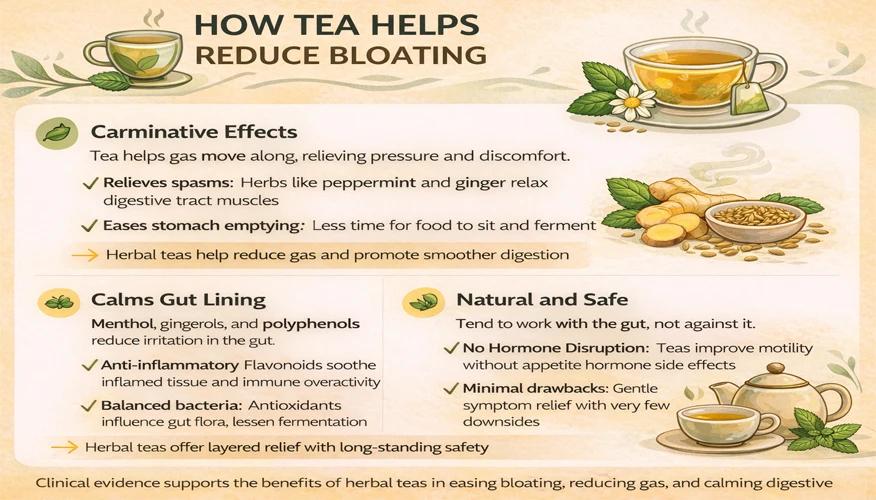
- Most herbal teas work as carminatives, which means they help the body move gas along instead of letting it sit and build pressure. They also sometimes show antispasmodic effects, so they relax the muscles in the digestive tract.
- Compounds like polyphenols, menthol, and gingerols help reduce irritation in the gut lining, and they also encourage the stomach to empty more efficiently. Therefore, food does not hang around as long, fermenting and producing excess gas. Peppermint is also a good example, since its menthol blocks certain calcium channels and directly eases spasms, which is why it has shown real benefits for people with IBS.
- There is also an anti-inflammatory angle surrounding Flavonoids in herbal teas, which soothe irritated tissue and help calm immune activity in the gut. Meanwhile, the antioxidants present can gently influence gut bacteria to reduce excessive fermentation instead of wiping everything out as stronger medications might.
- What stands out is that clinical evidence suggests these effects improve motility without messing with appetite hormones or metabolic signaling. Unlike drugs, teas offer layered relief with very few downsides, which is probably why people have kept using them for centuries.
Best teas for bloating relief
Bloating can be uncomfortable, making your stomach feel tight, heavy, or full. While diet and lifestyle play a major role, certain herbal teas can soothe your digestive system, help move trapped gas, and relieve abdominal pressure. Here are the top options you can try:
1. Peppermint Tea for Bloating Relief
Peppermint tea is often considered one of the most effective herbal remedies for bloating and digestive discomfort.
Benefits of Peppermint Tea for Bloating
- Helps relax intestinal muscles
- Supports the movement of trapped gas
- Reduces abdominal pressure
- Eases digestive cramps
- May help manage symptoms associated with IBS
- Supports overall digestive comfort
How Peppermint Tea Works
Peppermint contains menthol, a natural compound with antispasmodic properties. Menthol helps relax the muscles of the gastrointestinal tract, reducing cramping and allowing gas to pass more easily.
Best Time to Drink
Drink peppermint tea after meals or whenever bloating symptoms occur.
How to Prepare
- Add 1–2 teaspoons of dried peppermint leaves to hot water
- Steep for 5–10 minutes
- Strain and serve warm
2. Ginger Tea for Bloating and Indigestion
Ginger has been used for centuries in traditional medicine to support digestive health.
Benefits of Ginger Tea for Bloating
- Stimulates digestion
- Supports stomach emptying
- Reduces gas accumulation
- Helps relieve nausea
- Reduces feelings of fullness after meals
- Supports healthy intestinal movement
How Ginger Tea Works
Ginger contains gingerols and shogaols, bioactive compounds that support digestive function and may help food move more efficiently through the gastrointestinal tract.
Best Time to Drink
- Before meals
- After heavy meals
- During digestive discomfort
How to Prepare
- Slice fresh ginger root
- Simmer in water for 10 minutes
- Strain and enjoy
- Optional: add lemon or honey
3. Chamomile Tea for Stress-Related Bloating
Chamomile tea is valued for both digestive and calming benefits.
Benefits of Chamomile Tea for Bloating
- Relaxes digestive muscles
- Helps reduce stomach cramps
- Supports healthy digestion
- May soothe digestive irritation
- Helps manage stress-related digestive symptoms
- Promotes relaxation and better sleep
How Chamomile Tea Works
Chamomile contains natural compounds with anti-inflammatory and antispasmodic properties that help soothe the digestive tract.
Best Time to Drink
- Evening
- Before bedtime
- During periods of digestive stress
How to Prepare
- Steep chamomile flowers or a tea bag in hot water for 5–7 minutes
- Drink warm
4. Fennel Tea for Gas and Abdominal Pressure
Fennel tea is a traditional digestive remedy known for reducing gas and bloating.
Benefits of Fennel Tea for Bloating
- Helps release trapped gas
- Relaxes intestinal muscles
- Supports bowel regularity
- Promotes healthy digestion
- May relieve abdominal pressure and fullness
How Fennel Tea Works
Fennel contains anethole and other volatile oils that help relax digestive muscles and support efficient digestion.
Best Time to Drink
- After meals
- When experiencing gas or bloating
How to Prepare
- Crush 1 teaspoon of fennel seeds
- Add to hot water
- Steep for 10 minutes
- Strain before drinking
5. Lemon Balm Tea for Digestive Comfort
Lemon balm belongs to the mint family and has traditionally been used to support digestive wellness.
Benefits of Lemon Balm Tea for Bloating
- May reduce gas and bloating
- Helps calm digestive spasms
- Supports healthy bowel function
- Relieves mild digestive discomfort
- May reduce stress-related digestive symptoms
Best Time to Drink
- After meals
- In the evening
How to Prepare
Steep fresh or dried lemon balm leaves in hot water for 5–10 minutes.
6. Green Tea for Water Retention and Digestion
Green tea offers digestive support while providing powerful antioxidants.
Benefits of Green Tea for Bloating
- Supports metabolism
- Helps reduce water retention
- Promotes healthy digestion
- Provides antioxidant protection
- Supports gut health
How Green Tea Works
Green tea contains catechins and other antioxidants that may support digestive function and reduce fluid retention.
Best Time to Drink
- Morning
- Afternoon
- After meals
How to Prepare
Steep green tea leaves for 2–3 minutes in hot water.
7. Dandelion Tea for Fluid-Related Bloating
Dandelion tea is commonly used to help manage water retention.
Benefits of Dandelion Tea for Bloating
- Supports natural fluid balance
- May reduce water retention
- Supports liver health
- Promotes digestive wellness
- Encourages healthy elimination
Best Time to Drink
- Morning
- Early afternoon
How to Prepare
Steep dried dandelion root or leaves in hot water for 10–15 minutes.
8. Gentian Root Tea for Digestive Stimulation
Gentian root is a traditional bitter herb used to support digestion.
Benefits of Gentian Root Tea for Bloating
- Stimulates digestive secretions
- Supports breakdown of food
- Helps reduce fullness after meals
- May support nutrient absorption
- Encourages digestive efficiency
How Gentian Root Works
Its natural bitter compounds stimulate saliva, stomach acid, and digestive juices, helping improve digestion.
Best Time to Drink
Approximately 15–30 minutes before meals.
9. Wormwood Tea for Digestive Support
Wormwood is a bitter herb traditionally used to support digestive function.
Benefits of Wormwood Tea for Bloating
- Supports digestive secretions
- May improve digestive efficiency
- Traditionally used for digestive discomfort
- Helps stimulate appetite
- Supports gastrointestinal health
Important Note
Pregnant women should avoid wormwood unless advised by a healthcare professional.
10. Angelica Root Tea for Digestive Wellness
Angelica root has a long history in traditional herbal medicine.
Benefits of Angelica Root Tea for Bloating
- Supports healthy digestion
- May promote bowel regularity
- Helps reduce digestive discomfort
- Traditionally used for gas and bloating
- Supports intestinal function
Best Time to Drink
After meals or during digestive discomfort.
Best time to drink tea for bloating
While any time can be tea time, bioavailability and mortality effects can be optimized by taking them at specific times.
In empty stomach, in the morning, fennel or ginger tea can be great to awaken digestion and reduce bloating. After 30 to 60 minutes after taking your meals, when fermentation peaks, take peppermint or chamomile tea to ease bloating.
How often can you drink tea for bloating?
Think of tea for bloating like giving your stomach a gentle helper instead of a strong medicine. Most people do best with 2 to 3 cups a day. That is enough to calm gas and cramps without irritating your tummy, but that can backfire if extended to more than about 4 cups a day. Excessive tea can give you heartburn, and ginger can interfere with blood-thinning medications.
It’s best to take short 1-2 week breaks after using tea for 4 to 6 weeks to keep it effective and gentle on your body.
5 Teas to avoid when bloated
Not all teas are helpful for bloating. Some can actually make gas, water retention, or stomach discomfort worse:
1. Black Tea
High in caffeine, which can stimulate your gut and sometimes worsen cramps or diarrhea in sensitive individuals.
2. Green Tea (Strong/Concentrated)
While mild green tea can be soothing, very strong or concentrated green tea may irritate the stomach or increase acid, potentially worsening bloating.
3. Herbal Teas with High FODMAP Ingredients
Some blends contain ingredients like chicory root, licorice, or inulin, which can ferment in the gut and increase gas.
4. Peppermint in Excess
While peppermint tea is generally good, very large amounts may relax the lower esophageal sphincter too much, worsening heartburn in sensitive people.
5. Carbonated Teas or Sparkling Herbal Drinks
The added carbonation introduces extra gas into the stomach, directly contributing to bloating.
Tip: Stick to teas that are gentle, low in FODMAP ingredients, and caffeine-light. Pair with slow sipping and gentle movement to maximize relief.
Additional tips to enhance tea benefits
Even if the tea is doing its job, it will not fix everything on its own. If you keep eating obvious triggers like beans and onions, the bloating will keep coming back. Pairing tea with a low FODMAP approach is where you actually see consistent results.
Also, tea works better when digestion is already moving. A short walk afterward can help push things along instead of letting gas sit there. Probiotics can also help when paired with tea.
Moreover, the quality of the tea matters more than quantity. After all, you need a little bit of tea when making yourself a cup. Loose-leaf tea tends to be stronger and more reliable, while loading it up with honey or lemon can undo some of the benefit if you overdo it.
Precautions: Who Should Avoid Certain Teas
While herbal teas are generally safe for most people, some can have side effects or interact with medical conditions and medications. Here’s a quick guide to help you stay safe:
- Peppermint Tea – Avoid if you have acid reflux, gastroesophageal reflux disease (GERD), or hiatal hernia, as peppermint can relax the lower esophageal sphincter and worsen heartburn.
- Ginger Tea – Safe in moderation, but avoid excessive amounts if you are taking blood-thinning medications or have gallstones, as it may increase bleeding risk or stimulate bile flow.
- Dandelion Tea – Avoid if you have allergies to ragweed, daisies, or chrysanthemums. Those taking diuretics or medications affecting potassium should also consult a doctor.
- Wormwood Tea – Only consume in small amounts due to its strong, bitter nature. Avoid during pregnancy or breastfeeding, and if you have a history of seizures.
- Licorice Root Tea – Avoid if you have high blood pressure, heart disease, or low potassium, as excessive consumption can affect blood pressure and electrolyte balance.
- Tulsi (Holy Basil) Tea – Generally safe, but consult your doctor if you are pregnant, breastfeeding, or taking diabetes medications, as it may lower blood sugar levels.
Tip: Always start with one cup per day when trying a new tea to observe how your body reacts. If you experience discomfort, reduce intake or stop entirely, and seek medical advice if needed.
Tea vs Medication for Bloating
Herbal teas can be a gentle and natural way to relieve bloating, especially when it’s mild or occasional. Teas like peppermint, ginger, fennel, and chamomile relax digestive muscles, reduce gas, and calm gut sensitivity. They are generally safe, have few side effects, and can be consumed regularly as part of a healthy routine.
Medications, on the other hand, are usually targeted for more persistent or severe bloating. These may include antacids, simethicone (for gas), or prokinetic drugs (to improve digestion). While effective, medications can sometimes cause side effects and are best used under medical advice.
Key takeaway: For mild bloating, herbal teas often provide effective relief with minimal risk. Medications are better for frequent, severe, or medically linked bloating. Combining lifestyle measures, mindful eating, and herbal teas often reduces the need for medication.
When to see a doctor
Even if bloating is usually harmless, there are points where it stops being something you can just manage on your own.
For instance, if you are losing weight without trying, seeing blood in your stool, waking up at night because of symptoms, or dealing with anemia, those are not normal bloating symptoms. A family history of gastrointestinal cancer also makes early evaluation the smart move.
If bloating drags on for more than three months despite diet changes and home remedies, it is probably not just “sensitive digestion.” At that point, consult your physician to rule out other complications.
Conclusion
Herbal tea is not a miracle cure, and it is not going to fix a digestive system that is being constantly sabotaged by diet, stress, or underlying disease. Still, it nudges digestion back toward normal function instead of just masking discomfort. For many people, that alone is enough to make bloating manageable rather than overwhelming.
However, tea only works within its limits. If symptoms persist, escalate, or come with warning signs, no amount of peppermint will save the day. Used wisely, tea is a useful tool, not a final solution.
Meet our expert

Meet our expert
Chai Jie Qi is a passionate nutritionist and fitness professional with a strong background in healthcare, wellness, and fitness. With over five years of experience in the healthcare industry and a journey in fitness and wellness since 2015, Chai is dedicated to helping individuals achieve their health goals through a well-rounded approach.



How was the experience with article?
We'd love to know!