
Bloating can make breathing feel harder because your stomach pushes against the diaphragm, limiting lung expansion. This pressure often happens after large meals, gas buildup, reflux, or constipation, making breaths feel shallow and uncomfortable.
When your stomach feels tight or distended, it can push upward against the diaphragm — the muscle that controls breathing. Many adults experience bloating and shortness of breath, sometimes together, because the abdomen and lungs share limited space. Functional gastrointestinal disorders affect nearly 4 in 10 adults, while about 1 in 7 report episodes of unexplained shortness of breath. This article explains the main causes, relief strategies, and warning signs of bloating and shortness of breath, helping you understand why it happens and how to feel better.
The link between bloating and shortness of breath
Inside your body, the diaphragm acts like a flexible wall between your chest and abdomen. Every time you inhale, it contracts and moves downward, creating space for your lungs to expand. When you exhale, it relaxes and rises.
Now imagine your abdomen is distended with gas, fluid, or even backed-up stool. That pressure pushes upward. Your diaphragm has less room to descend. As a result, your lungs cannot fully expand.
Researchers first described this interaction in the early 1900s when Austrian physician Ludwig von Roemheld documented patients who developed stomach aches and difficulty breathing triggered by gastric distension.
Today, clinicians refer to this cluster as Roemheld Syndrome. While it remains underdiagnosed, the mechanism is straightforward. Mechanical pressure in your abdomen interferes with normal breathing and even heart rhythm.
Beyond mechanics, your vagus nerve plays a role. This nerve connects your gut to your brain, heart, and lungs. When your stomach stretches, receptors send signals upward. In some individuals, that signaling alters heart rate and breathing patterns.
How bloating affects breathing?
Bloating doesn’t just make your stomach feel tight — it can physically interfere with how your lungs function. When the abdomen becomes distended with gas or digestive contents, it increases pressure inside the abdominal cavity. That pressure pushes upward against the diaphragm, the main muscle responsible for breathing.
When the diaphragm cannot move freely, lung expansion becomes restricted. As a result, you may feel short of breath, unable to take a deep breath, or as though your chest feels tight.
1. Reduced Lung Capacity
Controlled studies show that when abdominal pressure rises significantly, total lung capacity can drop by up to 40 percent.
Another important measure called functional residual capacity (FRC) — the air left in your lungs between breaths that acts as your oxygen reserve — can fall by a similar margin.
This means:
- Your lungs physically hold less air
- Oxygen reserves decrease
- Breathing feels more effortful
Even though your lungs are healthy, they simply cannot expand fully.
2. Increased Work of Breathing
As abdominal pressure rises:
- The chest wall becomes stiffer
- The diaphragm cannot descend properly
- Respiratory muscles must work harder
You may start breathing:
- Faster
- More shallowly
- With increased effort
Over time, rapid shallow breathing can cause you to swallow excess air — a process known as aerophagia. This increases gas in the digestive tract, worsening bloating and reinforcing the cycle.
3. Abdomino-Phrenic Dyssynergia (APD)
There is also a reflex issue called abdomino-phrenic dyssynergia (APD).
In normal digestion:
- The abdominal wall subtly contracts
- The diaphragm adjusts upward after meals
In certain individuals with functional bloating, this reflex reverses:
- The diaphragm moves downward when it should relax
- The abdominal wall relaxes instead of supporting
This causes visible abdominal protrusion and further pushes the diaphragm upward against the lungs, worsening breathlessness.
4. Greater Impact in People with Lung Conditions
If you already live with asthma or chronic obstructive pulmonary disease (COPD), even small reductions in lung volume matter.
Studies show that patients with preexisting lung conditions report disproportionate breathlessness when abdominal distension develops. Because their lung reserve is already limited, additional pressure from bloating can significantly increase symptoms.
What does shortness of breath from bloating feel like?
Shortness of breath from bloating often feels different from typical respiratory problems. People commonly describe:
- Difficulty taking a deep breath – it feels like your lungs can’t fully expand.
- Chest tightness after eating – a pressure or fullness in the chest, especially after large meals.
- Feeling like “there’s no room for air” – as if the abdomen is pushing up against the lungs.
- Shortness of breath that improves after passing gas – relief often comes once abdominal pressure decreases.
This sensation occurs because bloating increases abdominal pressure, pushing the diaphragm upward and limiting lung expansion. While usually temporary, it can feel uncomfortable or alarming, especially for people with asthma or other lung conditions.
Common causes of bloating with shortness of breath

Bloating can make breathing feel difficult because the abdomen and lungs share limited space. When your stomach or intestines expand, the diaphragm — the main muscle for breathing — can’t move freely, leading to shallow breaths or a feeling of pressure. Here are the most common causes:
1. Overeating or large meals
Eating a large meal stretches your stomach rapidly, pushing upward against your diaphragm within minutes. This limits lung expansion, making it harder to take a deep breath and sometimes causing mild shortness of breath.
2. Carbonated Drinks, Sugar Alcohols, and Food Intolerances
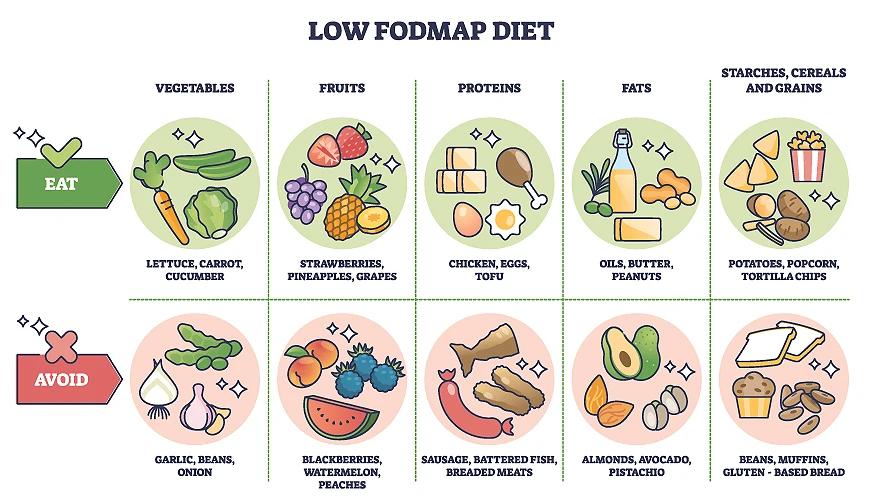
Carbonated beverages introduce gas directly into your stomach. Sugar alcohols, like sorbitol, ferment in the gut, producing extra gas. Similarly, intolerances to foods such as lactose, gluten, or high-FODMAP items can create bloating. The resulting pressure against the diaphragm may make breathing feel shallow or uncomfortable.
3. High-Fiber Foods, Gut Motility Issues, and Constipation
Foods rich in fiber, especially beans and lentils, produce hydrogen and methane during bacterial breakdown. If gut motility slows or constipation develops, gas lingers longer, increasing abdominal pressure. This can reduce diaphragmatic movement and make it harder to breathe deeply.
4. Irritable Bowel Syndrome (IBS)
IBS has become more prevalent, particularly during high-stress periods. Bloating is one of the dominant complaints in people with IBS, and many report episodes of unexplained breathlessness. Improper coordination between the diaphragm and abdominal muscles can worsen the feeling of chest tightness.
5. Small Intestinal Bacterial Overgrowth (SIBO)
In SIBO, fermentation occurs higher in the digestive tract, so gas accumulates closer to the diaphragm. Patients often feel pressure and fullness sooner after eating, which can make deep breathing uncomfortable.
6. Weight and Central Obesity
Excess abdominal fat raises baseline intra-abdominal pressure. Research shows that rapid weight gain can trigger bloating in about one-quarter of individuals. Chronically, this upward pressure subtly limits diaphragmatic excursion, leading to shallow or labored breathing.
7. Pregnancy
During pregnancy, the growing uterus naturally pushes the diaphragm upward. This can cause bloating, a feeling of fullness, and shortness of breath, especially after meals.
8. Fluid Retention and Medical Conditions
In some cases, fluid accumulation in the abdomen from liver, heart, or kidney conditions increases abdominal pressure. This can further restrict lung expansion, making breathing feel harder and intensifying bloating-related discomfort.
No matter the cause, increased abdominal pressure from bloating can push the diaphragm upward, limiting lung expansion. This results in shallow breathing, a feeling of chest tightness, and sometimes shortness of breath. For most people, these symptoms improve once bloating subsides, but individuals with asthma, COPD, or other lung conditions may notice them more acutely.
When is it normal and when is it not?
Most of the time, your body resolves temporary bloating within a day. You pass gas. You have a bowel movement. You walk around, and your diaphragm regains its full range.
Normal bloating follows a pattern. It appears after a large or specific meal. It improves with movement. The shortness of breath feels mild and disappears as the distension fades.
However, when symptoms persist beyond 48 hours, recur several times each week, or appear after very small meals, you should pay closer attention.
If breathlessness occurs at rest or wakes you from sleep, that shifts the picture. Chronic daily bloating lasting more than three months falls into functional disorder territory and deserves evaluation.
Context matters. Your body gives signals consistently. You just need to observe them honestly.
When is bloating with shortness of breath a serious medical concern?
While bloating-related breathlessness is often harmless, certain signs indicate that the issue may be more serious and requires prompt medical attention. You should seek help immediately if you notice:
1. Severe or Sudden Chest Pain
Intense chest pressure or pain that radiates to the arm, neck, jaw, or back could signal a heart-related problem rather than simple bloating.
2. Difficulty Breathing at Rest
If shortness of breath occurs even when sitting or lying down, or worsens rapidly, it may indicate a lung or heart condition.
3. Dizziness, Fainting, or Rapid Heartbeat
These symptoms alongside bloating or breathlessness can suggest low oxygen levels or cardiovascular distress.
4. Rapidly Increasing Abdominal Swelling or Pain
Sudden or severe abdominal distension, tenderness, or inability to pass gas or stool may point to digestive emergencies like bowel obstruction or fluid accumulation (ascites).
5. Preexisting Health Conditions
People with asthma, COPD, heart disease, liver disease, or kidney problems may experience disproportionate breathlessness even with mild bloating. Extra caution is necessary in these cases.
Most bloating and breathlessness episodes are temporary and improve with posture changes, gentle movement, or passing gas. However, if any of the above red-flag symptoms appear, do not ignore them — seek urgent medical evaluation immediately.
How to differentiate between digestive bloating and cardiac symptoms?
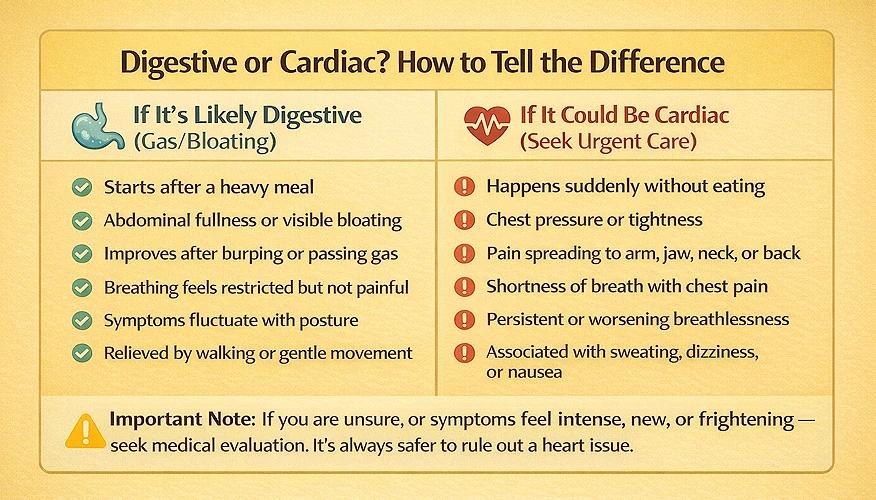
symptoms can sometimes feel similar, such as chest discomfort or tightness. However, there are key differences to help you distinguish between the two:
Location of Discomfort
- Bloating: Usually felt in the upper or lower abdomen; may spread across the stomach area.
- Cardiac Symptoms: Often felt in the center or left side of the chest and may radiate to the arm, shoulder, neck, jaw, or back.
Type of Sensation
- Bloating: Typically a feeling of fullness, pressure, or “gassiness.” May be accompanied by burping, belching, or visible abdominal swelling.
- Cardiac Symptoms: Often described as tightness, squeezing, heaviness, or burning. Not usually relieved by passing gas or a bowel movement.
Triggering Factors
- Bloating: Often worsens after meals, eating certain foods (beans, carbonated drinks, high-fat meals), or lying down.
- Cardiac Symptoms: Can occur during physical exertion, emotional stress, or sometimes at rest; not directly related to eating.
Associated Symptoms
- Bloating: May include nausea, indigestion, changes in bowel habits, or belching.
- Cardiac Symptoms: May include shortness of breath, cold sweats, dizziness, palpitations, or fainting.
Response to Remedies
- Bloating: Often improves with passing gas, changing position, or taking antacids or digestive enzymes.
- Cardiac Symptoms: Usually do not improve with digestive remedies and may worsen over time.
Important: If chest discomfort is sudden, severe, accompanied by shortness of breath, sweating, nausea, or radiates to the arm, neck, or jaw, seek emergency medical care immediately as it could be a heart-related issue.
How to relieve bloating-related shortness of breath
Bloating can make breathing feel shallow or uncomfortable, but there are several strategies to relieve the pressure and improve airflow:
1. Sit or Stand Upright
Maintaining an upright posture helps your diaphragm move more freely. Avoid slouching or lying down immediately after meals, which can worsen pressure on the lungs.
2. Take Slow, Deep Breaths
Practice diaphragmatic breathing:
- Place one hand on your abdomen and one on your chest.
- Inhale slowly through your nose, feeling your abdomen rise.
- Exhale fully through your mouth.
This helps expand your lungs fully and reduces the sensation of breathlessness.
3. Walk or Move Gently
A short walk after eating can help stimulate digestion, move gas through the intestines, and reduce abdominal pressure.
4. Avoid Gas-Producing Foods and Drinks
- Carbonated beverages
- Sugar alcohols (sorbitol, xylitol)
- Foods high in FODMAPs or certain fibers if sensitive
Eating smaller, more frequent meals can also prevent the stomach from overexpanding.
5. Address Constipation
- Stay hydrated
- Include fiber gradually in your diet
- Consider gentle physical activity
6. Manage Stress
Stress can worsen IBS and functional bloating, which can increase abdominal pressure. Mindfulness, meditation, and gentle yoga can help regulate digestion and breathing.
7. Seek Medical Help if Needed
If bloating is severe or accompanied by:
- Persistent shortness of breath
- Chest pain
- Dizziness or fainting
…consult a healthcare professional. Underlying conditions like asthma, COPD, heart, or liver problems may require evaluation.
Quick Relief Tips
- Lean slightly forward while sitting to reduce pressure on the diaphragm.
- Use a warm compress on the abdomen to relax muscles and ease discomfort.
- Gentle abdominal massage or lying on your left side can help move trapped gas.
How to Prevent Abdominal Bloating and Shortness of Breath?
Abdominal bloating and shortness of breath are often linked to diet, lifestyle, or underlying health conditions. Preventive measures focus on improving digestion, reducing gas buildup, and supporting respiratory comfort.
- Eat Smaller, Frequent Meals
- Large meals can stretch your stomach and cause bloating.
- Opt for 4–5 smaller meals throughout the day instead of 2–3 heavy meals.
- Avoid Gas-Producing Foods
- Limit foods that commonly cause bloating: beans, lentils, carbonated drinks, onions, cabbage, broccoli, and high-fat fried foods.
- Keep a food diary to identify personal triggers.
- Eat Slowly and Chew Thoroughly
- Eating quickly can make you swallow air, contributing to gas and bloating.
- Chewing well also aids proper digestion and nutrient absorption.
- Stay Hydrated
- Drink enough water throughout the day to support digestion and reduce constipation, which can worsen bloating.
- Exercise Regularly
- Gentle exercise, like walking or yoga, helps move gas through the digestive tract and improves lung capacity.
- Focus on deep breathing exercises to strengthen respiratory muscles.
- Limit Carbonated Drinks and Chewing Gum
- Carbonation adds gas to the stomach.
- Chewing gum increases swallowed air, both of which can lead to bloating and discomfort.
- Manage Stress
- Stress can slow digestion and increase bloating.
- Practices like meditation, deep breathing, or yoga can help prevent both bloating and shortness of breath triggered by anxiety.
- Avoid Lying Down Immediately After Eating
- Wait at least 2–3 hours after a meal before lying down to prevent bloating and acid reflux, which can affect breathing.
- Check for Underlying Conditions
- If bloating and shortness of breath persist, it could indicate digestive disorders (like IBS, GERD) or heart/lung issues.
- Seek medical evaluation if accompanied by severe pain, persistent discomfort, or chest tightness.
Tip: Keeping a daily diary of meals, activities, and symptoms can help you pinpoint triggers and prevent future episodes.
When to see a doctor
If your bloating and shortness of breath persist despite simple changes, or if they interfere with daily activities, schedule a medical evaluation. Bring details. Note when symptoms begin, what you ate, how long they last, and what relieves them.
If you live with heart disease, chronic lung conditions, or prior abdominal surgeries, do not ignore new patterns of breathlessness. Early evaluation prevents complications.
Medicine now recognizes the gut-heart-lung axis as a connected system rather than isolated organs. Your symptoms deserve that integrated approach.
Conclusion
When your belly feels tight, and your breathing feels harder, it is not in your head. Extra pressure in your abdomen can gently push up on your lungs. Making small adjustments, such as eating smaller portions, taking your time, and focusing on calm breathing, can really help you feel better.
If your symptoms stick around, get worse, or feel a bit different than what you're used to, it's a good idea to chat with a doctor. Being mindful from the start keeps you safe and allows for easier breathing.
Meet our expert

Meet our expert
Diyanah is a passionate registered dietitian with a Bachelor of Dietetics from the International Islamic University Malaysia (IIUM) and extensive experience in healthcare.



How was the experience with article?
We'd love to know!