
A glass of cold water can feel instantly refreshing especially in warm weather or after a meal. But if you’ve ever noticed your stomach feeling tight, heavy, or slightly uncomfortable after drinking it, you might wonder: can cold water actually cause bloating?
The short answer is — not directly, but it can influence how your digestive system behaves.
From a physiological standpoint, temperature can affect how quickly the stomach empties and how the muscles of the digestive tract contract. Insights from the American College of Gastroenterology suggest that digestion is closely linked to gut motility, and even small changes in how the gut moves can alter how gas and food are processed.
Some research has explored how colder temperatures may temporarily slow gastric emptying or create a sensation of tightness in sensitive individuals, especially those prone to bloating or conditions like functional gut disorders. This aligns with broader findings discussed in journals such as the World Journal of Gastroenterology, which highlight how gut sensitivity and perception can vary based on internal and external triggers.
Experts in digestive health, including researchers like Emeran Mayer, have also emphasised the role of the gut–brain connection where even mild physical changes in the digestive system can feel more pronounced in people with heightened sensitivity.
In most cases, cold water itself isn’t harmful. But if your digestion is already sensitive, it may amplify the feeling of bloating or discomfort for a short time.
In this article, we explore whether cold water can cause bloating, why it may feel that way, and simple ways to avoid discomfort, so you can stay hydrated without second-guessing how your body will respond.
What is bloating?
Bloating is a sign, not a sickness. It’s your objective sensation to the stomach nerves, usually meaning that your stomach feels full, tight, or under pressure. Sometimes this may be seen on your stomach, but not always.
You might also notice that food feels like it “just sits there.” You may burp more, feel gassy, or get full quickly. In IBS and functional dyspepsia, bloating is one of the most common and distressing symptoms.
There are several reasons bloating happens:
- Gas buildup from swallowed air or gut bacteria
- Slower movement of food and liquid through the stomach (delayed emptying)
- Increased sensitivity of gut nerves, so normal stretching feels painful
- Fluid shifts in the intestines after sugary or salty meals
- Changes in how your abdominal wall and diaphragm respond when you feel full
Cold water can interact with some of these processes, especially stomach movement and gut sensitivity.
Can cold water really make you bloated?
Research discussed by the American College of Gastroenterology and published in the World Journal of Gastroenterology suggests that digestion and gut sensitivity can be influenced by how the digestive tract moves and responds to stimuli, including temperature.
For most people, cold water is safe. However, if you frequently feel bloated after drinking it, switching to room temperature water may feel more comfortable.
Cold water does not create gas in your intestines. Once you drink it, your body warms it quickly to near body temperature. For many healthy people, digestion continues normally, and no symptoms occur.
However, research has shown three important things.
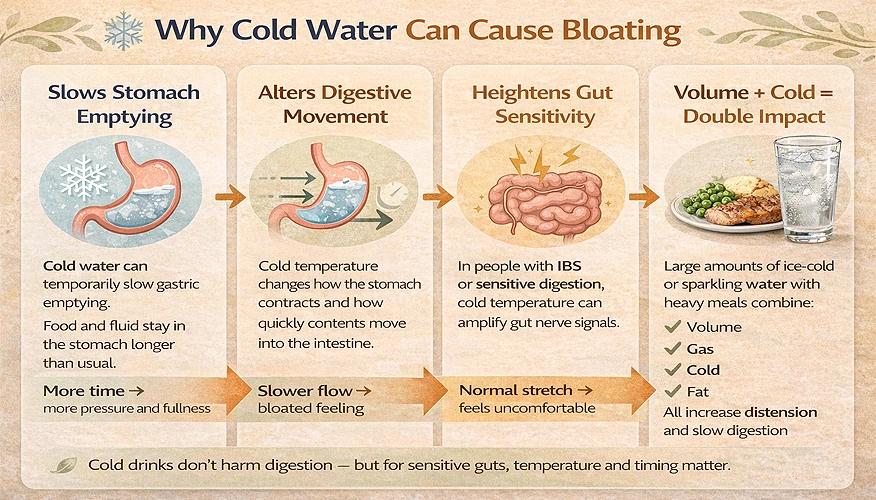
Very cold liquids, around 2–5 °C, can temporarily slow the early phase of gastric emptying compared with liquids at body temperature (around 37 °C). In other words, your stomach may release its contents into the small intestine a little more slowly at first.
Cold drinks can also change stomach muscle activity. Drinks at 4°C alter antral and pyloric contractions, thereby holding stomach contents back briefly.
In people with IBS, even a relatively small glass of ice-cold water has been shown to increase gut sensitivity and trigger symptoms such as bloating, abdominal pain, and diarrhea compared with warm water.
Cold water is usually a trigger that can tip an already sensitive system into discomfort.
Takeaway: Cold water does not directly cause bloating, but it may temporarily affect digestion in some people. Drinking very cold water can slightly slow stomach emptying or cause mild tightening of digestive muscles, which may make you feel bloated, especially if you already have a sensitive gut.
Why cold water can cause bloating
If you’re wondering why something as simple as temperature would affect your stomach, you’re not alone. It helps to think about your digestive tract as a finely tuned muscular tube, constantly coordinating movement and sensation.
As mentioned, cold water can temporarily slow early gastric emptying, so fluid and food sit in your stomach a bit longer. It also alters the pattern of stomach contractions and pyloric (outlet) activity, which may delay flow into the small intestine.
In people with IBS or functional gut disorders, cold temperature itself can amplify nerve signals.
Furthermore, if you gulp a large glass of ice-cold sparkling water with a heavy meal, you are combining volume, gas, temperature, and fat, all of which can slow stomach emptying or increase distension.
Who is more likely to feel bloated after cold water?
You are more likely to notice bloating after cold water if you:
- Live with IBS
- Have functional dyspepsia or a “sensitive stomach.”
- Have a known motility disorder, such as gastroparesis or achalasia
- Tend to feel very aware of gut sensations, especially during times of stress
- Frequently drink large, ice-cold, carbonated beverages quickly
Cold water vs warm water for digestion
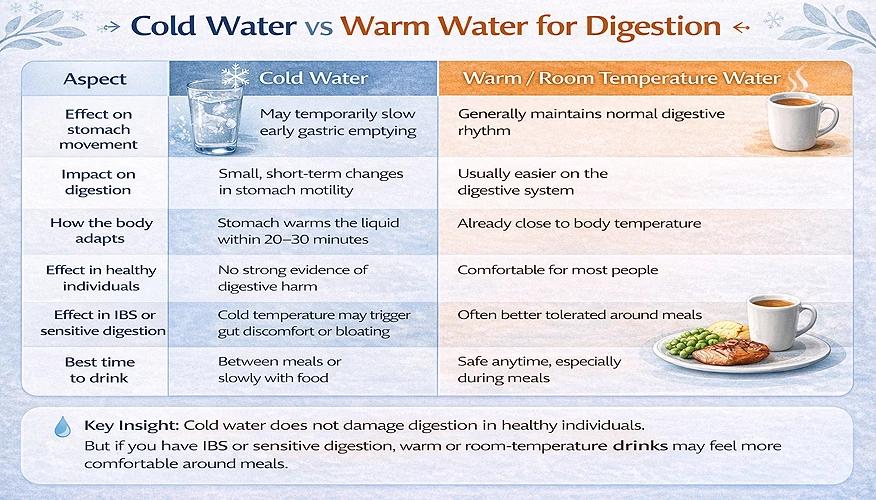
Studies comparing drink temperatures show that extremes, very cold or very hot, tend to alter stomach motility more than liquids close to body temperature.
For most healthy people, these changes are small and short-lived. The stomach warms liquids within 20–30 minutes, and digestion continues as usual. There is no strong evidence that cold water “damages” digestion in healthy individuals.
But if you have IBS or functional dyspepsia, you may find warm or room-temperature drinks more comfortable, especially around meals. However, you don’t have to give up cold water forever. But you might experiment with when and how you drink it.
How to prevent bloating from cold water
If you enjoy cold water but notice it bothers you, try these practical strategies. Start with moderating the temperature, and choose cool rather than ice-cold water. Let it sit for a few minutes before drinking.
While drinking, sip slowly instead of gulping. Smaller, spaced-out amounts reduce stomach stretch and swallowed air. Also, avoid straws if you’re prone to gas, as they can increase air swallowing. Drink most fluids between meals and not with meals.
During flares, switch to room-temperature or warm still water, or soothing herbal teas like peppermint or chamomile. You may find that simply slowing down and reducing volume makes more difference than temperature alone.
It's also important to support the health of your gut as a whole. Managing constipation, finding things that make it worse (such as high-FODMAP meals in IBS), staying active, and dealing with stress can all help with baseline bloating.
Is cold water always bad?
No. For many people, cold water is refreshing and encourages hydration, especially during exercise or hot weather. Some research even suggests that drinking cold water before a meal may modestly reduce appetite, likely through temporary changes in stomach contractions.
There is no convincing evidence that cold water causes long-term digestive harm in healthy individuals.
The key is individual response. If cold water consistently makes you uncomfortable, your body is giving you useful information about how your gut behaves. Listening to that feedback is an act of self-care, not restriction.
When to see a doctor
Occasional bloating linked to specific foods or habits is common and usually harmless. However, you should seek medical evaluation if bloating becomes persistent, progressively worsens, or is accompanied by concerning symptoms such as unintentional weight loss, ongoing vomiting, and difficulty swallowing.
Conclusion
Cold water can be refreshing, but your comfort is what really counts. If icy drinks often make you feel tight or heavy, it's definitely worth paying attention to. Your gut might just be a bit more sensitive to changes in temperature and volume, and even small tweaks can really make a difference.
Take your time and be kind to yourself as you try new things. Take your time sipping, find the right temperature, and observe the patterns without any judgment. By being a bit mindful and taking care, you can keep yourself hydrated and also promote a more relaxed and pleasant digestion.
Meet our expert

Meet our expert
Ng Juby is a Registered Nutritionist under the Allied Health Professional Act 774, holding
a Bachelor of Science (Hons) in Nutrition with Wellness from UCSI University.



How was the experience with article?
We'd love to know!