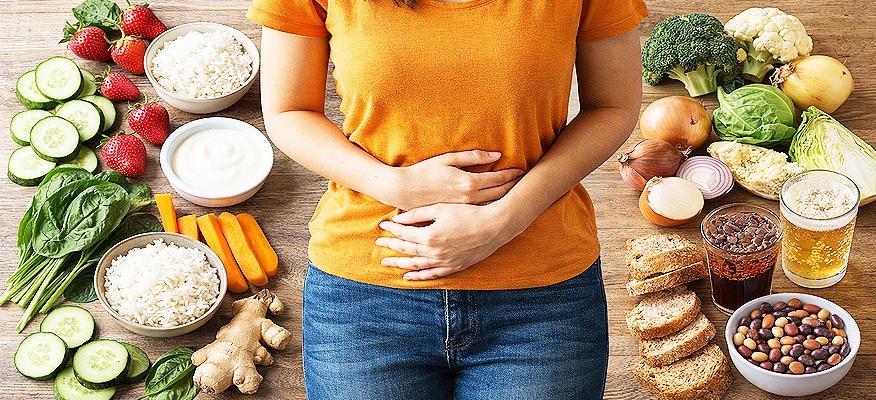
If you often feel uncomfortable, gassy, or bloated after eating, your food choices may be playing a bigger role than you realise. While occasional gas is a normal part of digestion, certain foods are more likely to ferment in the gut, leading to excess gas, pressure, and that familiar feeling of fullness.
This happens because not all foods are broken down in the same way. Some carbohydrates, especially those that are poorly absorbed in the small intestine, travel to the large intestine, where they are fermented by gut bacteria, producing gas as a natural byproduct. Clinical insights from the American College of Gastroenterology highlight how this process is a key driver of bloating and abdominal discomfort.
Research has also shown that specific groups of foods, often referred to as fermentable carbohydrates, can trigger symptoms more easily in people with sensitive digestion. Studies supported by the National Institutes of Health and widely discussed in gastroenterology research including work published in the World Journal of Gastroenterology point to how these foods influence gas production, gut sensitivity, and overall digestive comfort.
Importantly, this doesn’t mean these foods are “bad.” Many are nutrient-rich and part of a healthy diet. The key lies in understanding how your body responds to different foods and learning how to balance what you eat to reduce discomfort without compromising nutrition.
In this article, we break down common gas-forming foods, what to eat instead, and simple ways to reduce bloating, so you can enjoy your meals without the discomfort that follows.
What are gas-forming foods?
When we talk about gas-forming foods, they usually mean carbohydrates that your small intestine cannot fully digest. These compounds travel intact to your colon, where trillions of bacteria ferment them.
Gastroenterology experts, including researchers like Peter Gibson, have extensively studied how fermentable carbohydrates affect bloating and gut symptoms.
That fermentation releases hydrogen, carbon dioxide, and sometimes methane. Alongside those gases, your microbes also produce short-chain fatty acids that actually nourish your colon cells. So the same process that feeds you can also bloat you.
FODMAPs are short-chain carbs that pull water into your intestine and ferment quickly. For example, oligosaccharides like raffinose in beans require an enzyme your body does not produce.
That means every single molecule reaches your colon. Lactose in milk needs lactase to break it down, yet many adults gradually lose lactase activity as they age.
What are the causes of gas in the stomach?
Although food gets most of the blame, gas forms through several pathways.
First, you swallow air. When you eat quickly, chew gum, drink through a straw, or sip carbonated beverages, you pull air into your stomach. Most of it escapes through belching, but some of it moves downward. If you repeatedly try to force a burp because you feel full, you actually swallow more air and worsen the cycle.
Second, chemical reactions occur as stomach acid meets bicarbonate from your pancreas. This neutralization produces carbon dioxide. Fortunately, your body absorbs most of it quickly into the bloodstream, and you exhale it. However, the largest share of gas, roughly three-quarters of expelled flatus, comes from microbial fermentation in your colon. These microbes generate hydrogen and methane, gases that your own cells cannot produce.
Why do some foods cause more gas?
The structure of a food determines how your body handles it. Humans lack specific enzymes, such as alpha galactosidase, which means raffinose in legumes passes untouched into the colon.
Fructans in onions and wheat resist digestion for similar reasons. Because these sugars arrive intact, bacteria ferment them rapidly, creating a noticeable surge in gas.
Small molecules like fructose and polyols pull water into your gut. That extra fluid speeds transit, delivering fermentable material quickly to bacteria. Rapid fermentation means more gas in a shorter window, and you feel that expansion more intensely.
Starch type also changes the outcome. Rice, for instance, produces almost no gas in most individuals. Its small starch granules and digestible structure allow your enzymes to break it down efficiently in the small intestine.
In contrast, cooled potatoes develop resistant starch that travels to the colon for fermentation. Even the way you cook food shifts how much reaches your microbes.
Common foods to avoid that cause gas
If air in the stomach follows you regularly, certain foods deserve closer attention.
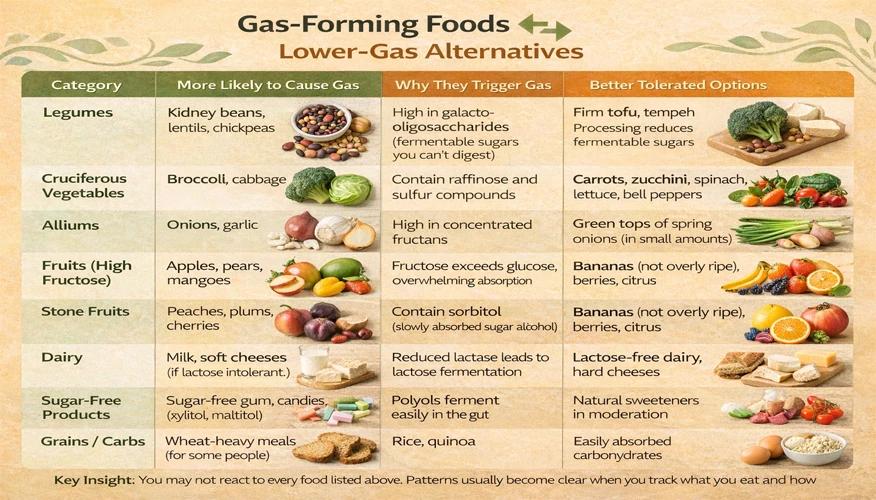
Legumes such as kidney beans, lentils, and chickpeas contain high levels of galacto-oligosaccharides. You cannot digest these, so fermentation becomes inevitable.
Cruciferous vegetables like broccoli and cabbage add both raffinose and sulfur compounds. Onions and garlic concentrate fructans so intensely that even small amounts in sauces can trigger symptoms.
High fructose fruits, including apples, pears, and mangoes, overwhelm absorption when fructose exceeds glucose.
Stone fruits also contain sorbitol, which absorbs slowly. Dairy products challenge you if your lactase levels have declined. Meanwhile, sugar-free gums and candies often hide polyols like xylitol and maltitol that ferment readily.
You might not react to all of these, yet patterns usually emerge when you track them carefully.
Foods that cause less gas
Contrary to what you may fear, you do not need to abandon nutrition to reduce gas.
Animal proteins such as chicken, fish, and eggs contain virtually no fermentable carbohydrates.
For plant-based options, firm tofu and tempeh undergo processing that lowers problematic sugars.
Low FODMAP vegetables such as carrots, zucchini, spinach, lettuce, and bell peppers provide fiber without excessive fermentation.
Fruits with balanced fructose-to-glucose ratios, including bananas that are not overly ripe, berries, and citrus, tend to feel gentler.
And when you build a meal around rice or quinoa, you usually experience less distension afterward. It is about choosing carbohydrates that your small intestine can handle efficiently.
How to reduce gas from foods
Preparation changes outcomes.
When you soak beans for at least 12 hours and discard the soaking water, you remove a significant portion of water-soluble sugars.
Pressure cooking further reduces these compounds and improves mineral absorption.
Sprouting legumes activates their own enzymes, naturally breaking down raffinose family sugars before you even eat them.
Bread tells a similar story. Traditional sourdough fermentation allows bacteria and wild yeasts to digest much of the fructan content in wheat over many hours.
Role of probiotics in reducing gas
Because bacteria drive fermentation, adjusting your microbiome changes gas production. Specific strains such as Lactobacillus plantarum 299v and Bifidobacterium infantis 35624 demonstrate measurable reductions in bloating within a few weeks. In controlled trials, participants report lower symptom scores and less visible distension.
Certain microbes even consume hydrogen produced by others, limiting total gas volume.
Partially hydrolyzed guar gum, often called Sunfiber, feeds beneficial bacteria more slowly than inulin and tends to produce fewer symptoms. Around 6 grams daily improved bloating scores in clinical studies of individuals with IBS.
When gas could be a sign of a health issue
Although occasional gas remains normal, persistent or severe symptoms deserve attention. Small intestinal bacterial overgrowth, or SIBO, leads to fermentation in the small intestine where it does not belong. That often causes rapid bloating soon after meals.
Celiac disease damages the small intestine and impairs nutrient absorption, leading to chronic gas and weight changes. Disorders that slow gut movement, such as gastroparesis, trap gas and intensify pressure.
When to see a doctor
Certain signs require prompt care. Unexplained weight loss, blood in the stool, persistent vomiting, anemia, or new symptoms after age fifty-five warrant medical evaluation. Doctors may use breath tests to assess lactose intolerance or SIBO, blood tests for celiac disease, or imaging to rule out structural issues.
Conclusion
Bloating is your body's response to how it digests and ferments specific meals. When you learn what gas-producing foods are and how to prepare meals differently, you may offer yourself respite from dread and confusion about eating.
If your bloating feels persistent or comes with warning signs, please seek medical care. You deserve answers, comfort, and support. With the right guidance, you can feel steady, nourished, and at ease in your own body again.
Meet our expert

Meet our expert
She holds a Bachelor of Nutrition & Community Health with Distinction from Universiti Putra Malaysia and has been a dedicated healthcare professional since 2014. As the Customer Care Manager, she leads a team of skilled dietitians and nutritionists, committed to serving the community.



How was the experience with article?
We'd love to know!