
Probiotics can help reduce bloating by improving gut bacteria balance and digestion. However, their effectiveness depends on the cause of bloating and the specific strains used. Certain strains, such as Bifidobacterium lactis and Lactobacillus acidophilus, are commonly linked to better results, especially in people with IBS or digestive issues.
If bloating has ever made you feel like your body is working against you, you are not alone, and you are definitely not imagining it. Across different populations and cultures, digestive bloating ranks among the most common gut complaints, affecting well over a third of adults at any given time, interfering with your meals, sleep, clothing choices, and often your confidence.
Valued at over $76 billion, the probiotics industry has successfully marketed itself as a possible solution to bloating and overall gut health. From yogurt labels to pharmacy shelves, all promising smoother digestion and a calmer stomach. However, once you start digging into the research, the story becomes more layered than the marketing suggests.
In this article, we’ll explore what probiotics for bloating are, how they can reduce your symptoms, potent strains, and how the effectiveness can vary across individuals.
What are probiotics?
Probiotics are live microorganisms that, when consumed in sufficient quantities, can elevate your gut health rather than just sounding healthy on a label. They are mostly bacteria, with a few cooperative yeasts, and they already live inside your gut where they help digest food, support immune signaling, and maintain the intestinal barrier.
Unlike antibiotics, which behave like a demolition crew with no floor plan, probiotics work through competition, targeted antimicrobial activity, and inflammation control. They enter the body through fermented foods or supplements for stomach bloating. However, the delivery is critical because whole foods protect living cultures naturally, while supplements depend heavily on proper manufacturing and storage.
Do probiotics help with bloating?
Yes, but let us lower expectations slightly. While clinical evidence does suggest probiotics can reduce bloating, it’s important to understand that probiotic effects are strain-specific.
Leading gastroenterology guidelines, including updates from the American Gastroenterological Association, note that certain probiotics may improve IBS-related symptoms, but they are not universally effective for everyone.
Probiotics also do not work instantly. If they are helpful, improvements are typically seen after four to eight weeks of consistent use, as the gut microbiome gradually adapts.
In a randomized placebo-controlled trial of multispecies synbiotics, participants taking probiotics reported significantly less bloating and gas than those on placebo, with about seventy-two percent saying bloating was rare or nonexistent. The placebo group was less lucky and more inflated.
Other studies show that within four weeks, gastrointestinal symptom scores drop meaningfully in people with functional constipation, with improvements sometimes appearing as early as one to three weeks.
However, probiotics for bloating are not universally benevolent. Some users experience worse bloating at first. In people with or at risk of SIBO, probiotics can occasionally make things worse as well.
How probiotics help with bloating
Probiotics work through several overlapping mechanisms.
- First, they shift gut fermentation patterns so less gas accumulates, and more short-chain fatty acids are produced.
- Second, they rebalance your gut microbiota—dysbiosis—reducing the dominance of gas-producing organisms. Probiotics also strengthen your gut barrier, calm inflammation, and enhance intestinal motility.
- If you’re lactose intolerant, taking Lactobacillus acidophilus produces lactase, which improves dairy digestion and helps prevent functional bloating.
Common causes of bloating that probiotics can help with
Understanding bloating's root cause is essential for determining whether probiotics will help. They usually address bloating caused by:
1. Dysbiosis
An imbalanced microbiota with too few beneficial bacteria and excess gas-producing species is one of the most common treatable causes. Probiotics directly address this by restoring microbial diversity.
2. SIBO (Small Intestinal Bacterial Overgrowth)
Bacterial overgrowth in your small intestine may cause hydrogen and methane gas to trigger bloating and distention, which is the leading cause of bloating-related brain fogginess in 68% of patients. Specific strains like Lactobacillus reuteri and Saccharomyces boulardii can help.
3. IBS (Irritable Bowel Syndrome)
Both diarrhea-predominant and constipation-predominant IBS involve dysbiosis and visceral hypersensitivity that causes discomfort even when visible bloating is not noticed. Meta-analyses consistently show probiotics reduce IBS-related bloating, with Bacillus coagulans demonstrating the highest efficacy in network analyses. In women, hormonal fluctuations during the luteal phase can heighten visceral sensitivity and gas perception, which may explain why bloating severity — and probiotic response — varies across the menstrual cycle.
4. Lactose intolerance
Incomplete lactose digestion produces gas and bloating. Lactose-fermenting probiotics reduce these symptoms.
5. Functional constipation
Reduced bowel motility allows excessive fermentation and gas accumulation. Probiotics that promote bowel regularity help alleviate this.
Do probiotics help with bloating after eating?
Yes, probiotics can help reduce bloating after eating, especially when symptoms are linked to food digestion issues. They are particularly beneficial for people with lactose intolerance, IBS, or an imbalance of gut bacteria, as they improve how the body breaks down food and reduces excess gas production.
However, probiotics do not provide instant relief like digestive enzymes. Instead, they work gradually by improving gut balance over time. With consistent use, many people notice less bloating after meals within a few weeks, along with better digestion and reduced discomfort.
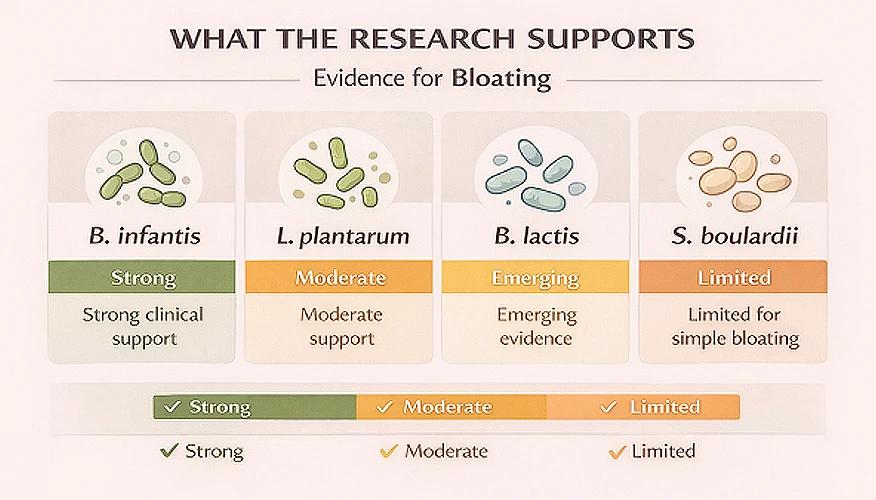
Best probiotic strains for bloating
Not all probiotics are created equal, which is annoying because the labels usually insist otherwise.
However, when you restrict the conversation to strains that have actually survived peer review, it becomes much clearer. Ambitious random blends often sound much more ambitious than evidence suggests.
| Probiotic Strain | Best For | How It Helps |
| Bacillus coagulans | IBS & general bloating | Reduces gas and improves digestion |
| Bifidobacterium lactis | Constipation + bloating | Improves bowel movement |
| Lactobacillus acidophilus | Lactose intolerance | Helps digest dairy |
| Saccharomyces boulardii | Antibiotic-related bloating | Restores gut balance |
| Lactobacillus rhamnosus GG | IBS | Reduces inflammation and gas |
Comparing probiotics for gut health
Clinical data consistently elevate Bacillus coagulans for general bloating and IBS symptoms, largely because network meta-analyses keep crowning it the most effective overall.
Bifidobacterium lactis BB-12 follows closely, especially for bloating paired with constipation, while also noticeably improving bowel frequency.
Lactobacillus acidophilus NCFM is great for lactose intolerance and IBS, and does so with impressively low adverse event rates.
Meanwhile, Lactobacillus rhamnosus GG remains the most documented strain on the planet and reliably reduces bloating in IBS populations.
For gas-heavy cases or SIBO, Saccharomyces boulardii and Lactobacillus reuteri stand out, particularly for methane reduction and constipation.
Probiotic foods that help reduce bloating
Here are some foods that may help you reduce stomach bloating:
- Yogurt supplies Lactobacillus and Bifidobacterium when live cultures are present.
- Kefir has strong effects on bloating and gut barriers.
- Sauerkraut and kimchi contribute Lactobacillus plus preserved plant compounds.
- Miso, kombucha, and tempeh add fermentation benefits alongside protein.
How to take probiotics for bloating
Think of probiotics less like a miracle and more like a cautious science experiment you are running on yourself. Start low so your gut does not revolt. Gradually increase over one to two weeks because research tends to land in the ten to twenty billion CFU range.
Moreover, multi-strain formulas often need less due to synergy. Consistency matters because most strains do not permanently move in.
How to know if probiotics are working for bloating
If you’re taking probiotics for bloating, it’s important to track subtle improvements rather than expecting instant results. Most people begin to notice changes within 2 to 4 weeks of consistent use. The signs that probiotics are working usually appear gradually as your gut microbiome becomes more balanced.
You may notice reduced bloating after meals, especially if your symptoms were triggered by certain foods. A decrease in gas and abdominal pressure is another common sign, indicating improved digestion and fermentation patterns in the gut.
Probiotics may also help regulate bowel function, leading to more regular bowel movements and less discomfort. Over time, you might observe improved stool consistency, which reflects better gut health and smoother digestion.
Keep in mind that results vary depending on the probiotic strain, dosage, and the underlying cause of bloating. If symptoms persist beyond a few weeks or worsen, it’s best to reassess the strain or consult a healthcare professional.
Probiotics vs Digestive Enzymes for Bloating
Probiotics and digestive enzymes are often confused, but they work in very different ways.
Digestive enzymes break down food directly. For example, lactase helps digest lactose, and alpha-galactosidase helps break down gas-producing carbohydrates. Because enzymes act on the meal itself, they typically provide faster relief for bloating triggered by specific foods.
Probiotics, on the other hand, work more gradually. Rather than digesting food directly, they help rebalance the gut microbiome, reduce excess gas production over time, and improve intestinal motility. This makes them more useful for chronic bloating related to IBS, dysbiosis, or constipation.
In some cases, both approaches can complement each other — enzymes for immediate food-related symptoms and probiotics for long-term gut support.
When is the best time to take probiotics?
The best time to take probiotics for bloating is usually in the morning on an empty stomach, when stomach acid levels are lower and more beneficial bacteria can survive and reach the gut. Taking probiotics about 30 minutes before a meal can improve their effectiveness.
However, consistency matters more than timing. If mornings are difficult, taking probiotics at bedtime is also effective, as long as you take them at the same time each day. For certain strains like Saccharomyces boulardii, timing is less critical because they are more resistant to stomach acid.
Ultimately, the best time to take probiotics for bloating is the time you can follow consistently, ensuring long-term gut balance and better digestive results.
Can probiotics cause bloating initially?
Probiotics can initially worsen bloating, and annoyingly, that can be a good sign. Roughly 20 to 30 percent of users experience transient gas and discomfort as pathogenic microbes die off, releasing inflammatory byproducts. However, symptoms usually peak within a week and resolve as the microbiota stabilizes.
Who should avoid or be careful with probiotics?
You should know this before you enthusiastically swallow probiotics like they are harmless yogurt sprinkles. If you are severely immunocompromised, a transplant recipient, critically ill, or dealing with acute pancreatitis, you should avoid them outright because rare infections can be catastrophic and sometimes fatal.
If you are an older adult or someone with barrier damage, evidence shows probiotics are not risk-free for you. Treat them like medicine, not snacks, and involve clinicians when the risk rises.
Lifestyle tips to enhance probiotic benefits
Key lifestyle modifications that amplify the effectiveness of probiotics are:
- Optimize fiber intake by consuming 14 grams of fiber per 1000 calories of food.
- Adequate water intake (8 to 10 glasses) can support probiotic proliferation.
- Combine Probiotics with Prebiotics for beneficial bacteria growth in your tummy.
- Try to reduce stress to stop your gut from overreacting to the symptoms of bloating.
- Consistent 7 to 9 hours of sleep supports gut health.
How to Choose a Quality Probiotic for Bloating?
Not all probiotic supplements are created equal. Product quality plays a major role in whether probiotics actually help reduce bloating.
When choosing a probiotic, look for:
- Strain specificity – The label should list the full strain name (for example, Lactobacillus rhamnosus GG), not just the species. Different strains of the same species can have very different effects.
- Clinically studied strain codes – Identifiers such as GG, BB-12, NCFM, or MTCC 5856 indicate strains that have been evaluated in clinical trials.
- Adequate CFU count – Most studies on bloating use doses ranging from 1 to 20 billion colony-forming units (CFU) daily. Extremely high doses are not always better and may increase gas in some individuals.
- Third-party testing – Independent verification ensures the product contains the strains and CFU count listed on the label.
Proper storage instructions – Some probiotics require refrigeration, while others are shelf-stable. Storage conditions affect bacterial viability.
Choosing a well-studied, clearly labeled product improves the likelihood of symptom relief and reduces the risk of unnecessary side effects.
When to see a doctor for bloating?
While occasional bloating is common and usually harmless, certain symptoms may indicate an underlying health condition that requires medical attention. It’s important to pay attention to warning signs rather than relying only on home remedies like probiotics.
You should consider seeing a doctor if you experience persistent bloating that lasts for several weeks or keeps coming back without a clear cause. Unexplained weight loss along with bloating can be a sign of a more serious digestive issue.
Additionally, the presence of blood in the stool should never be ignored, as it may indicate inflammation, infection, or other gastrointestinal conditions. Severe or worsening abdominal pain accompanied by bloating is another red flag that requires prompt evaluation.
If your bloating interferes with daily life or does not improve despite dietary and lifestyle changes, it’s best to consult a healthcare professional for proper diagnosis and treatment.
Conclusion
Probiotics for bloating work best when chosen carefully and taken gradually. When strains are properly aligned with your gut's demands, results are frequently gradual and comforting. However, keep your expectations reasonable, as outcomes vary greatly.
Ultimately, probiotics are most helpful when paired with supportive habits. Eat mindfully, sleep regularly, hydrate adequately, and manage stress to enhance their effects. When used carefully, probiotics can become a genuinely supportive supplement for bloating.
Meet our expert

Meet our expert
Dr Jatin Bhide is an Ayurvedic doctor with over 16 years of enriching experience in Marketing and Strategy across OTC/FMHG, herbal medicine and Nutraceuticals (Europe) industries. He did his Bachelor of Ayurvedic Medicine and Surgery (BAMS) from Mumbai University, before moving on to do a Post Graduate Diploma in Pharmaceuticals and Healthcare Management.



How was the experience with article?
We'd love to know!