If you want to know how to improve liver health, the most reliable answer isn't a single food or detox, it's a consistent daily routine. Your liver is the body's primary detoxification organ, and for nearly 39% of the global population at risk of fatty liver, it may already be under silent strain. As liver fat accumulates, metabolism slows, nutrient processing becomes less efficient, and waste elimination is disrupted, yet most people feel nothing at first.
Symptoms often appear late, when the condition has progressed beyond simple lifestyle imbalance. Across Southeast Asia, rising insulin resistance and refined carbohydrate intake have pushed fatty liver rates higher than the global average. In many African cities, urbanization and changing food environments are driving similar trends.

But here’s the encouraging part: early liver fat is often reversible.
A structured daily routine — anchored in a practical fatty liver diet, regular movement, restorative sleep, and consistent habits — can significantly reduce liver fat and restore function over time.
This article will give you a clear, actionable framework for building a liver-friendly daily routine that supports metabolic health and long-term recovery.
Because when it comes to liver health, steady daily discipline matters far more than dramatic short-term fixes.
Morning routine for liver health
The morning hours are the greatest opportunity for you to “prime” your liver health and set it for metabolic success throughout the day. What you consume upon waking significantly influences your glucose handling capacity and detoxification efficiency for the next 24 hours. Here’s how to do it:
Hydration protocol (15 - 30 minutes)
- A hydration session with 500-750 mL of water within the first 15-30 minutes of waking up kickstarts your gastrointestinal mobility and bile flow, which accelerates toxin elimination through increased fecal output.
- Drinking enough water also promotes favorable changes in your gut microbiota composition. It also reduces hepatic stress, the process that backs up fat overnight during fasting.
- When following a hydration routine, ensure you’re primarily drinking between meals and every evening.
Strategic breakfast composition (30 - 90 minutes)
Breakfast is pretty critical when it comes to fatty liver diet and health, particularly to sustain it. Consuming breakfast regularly increases hepatic glycogen storage by 50% and enhances the liver's capacity to extract and store glucose from subsequent meals by 34%.
Your ideal liver-protective breakfast should have three components:
- Protein Foundation: Have 20-35 grams of protein in your first meal of the day. It could include Greek yogurt, cottage cheese, plant-based options, and tofu.
- Complex Carbohydrates: 30-50 grams of complex carbohydrates, not sugary treats, should find their way into your breakfast. You should give whole grains (oats, quinoa, millet, etc), brown rice, and other lower GL foods for liver health a chance.
- Healthy Fats: Have avocado, nuts, seeds, and a bit of cold-pressed oils with your morning breakfast.
Meal planning and timing strategy
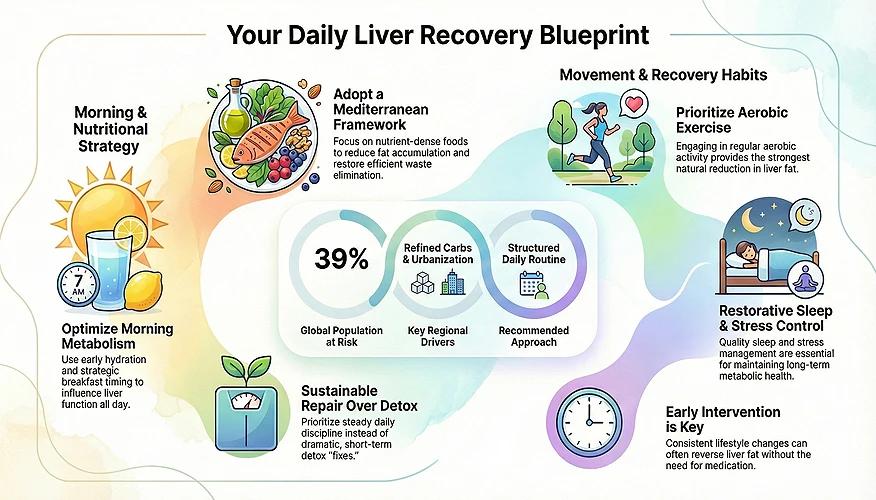
The evidence-backed gold standard is the Mediterranean diet for liver. While the foundation to its success is in the simplicity of the diet, the key is in how the diet addresses multiple pathological pathways.
For instance, target 3+ servings of raw and cooked vegetables daily to neutralize oxidative stress and replace all refined grains with whole grains to prevent hepatic lipogenesis.
Weekly 3-4 servings of legumes and nuts/seeds improve insulin sensitivity and detoxification. Moreover, have olive oil (monounsaturated fats) as your primary fat source, which is better than saturated fats found in palm oils.
In addition, have a reasonable amount of fruits, fatty fish, and other lean protein sources to promote gut and liver health.
If you’re having trouble finding the right foods to include, here is a quick checklist of liver-friendly foods:
- Turmeric: Blocks hepatic stellate cell activation.
- Leafy greens: Spinach, Methi, Kale. Supports detoxification.
- Citrus fruits: Promote collagen synthesis.
- Berries: Anthocyanins protect liver tissues.
- Legumes: Improves insulin sensitivity.
Apart from the beneficial foods for liver health, eliminate refined sugar, high-fructose corn syrup, ultra-processed foods, refined grains, and alcohol to protect your health.
Click below button to download ebook
Exercise types for liver function
Even modest weight reduction produces disproportionate hepatic benefits. Research demonstrates that losing just 5-10% of body weight significantly improves liver enzymes, reduces hepatic steatosis, and can reverse early fibrosis.
While weight loss is mostly diet, here are a few exercises to help support your approach:
Aerobic exercise (Primary modality):
Frequency: 2-5 times weekly
Duration: 20-60 minutes per session
Intensity: 45-85% peak VO₂
Minimum effective dose: 150 minutes/week moderate-to-intense aerobic activity produces clinically significant liver fat reduction.
Resistance training:
While less extensively studied than aerobic exercise, resistance training 2-3 times weekly provides metabolic benefits and helps preserve lean muscle mass during weight loss. Include compound movements: squats, deadlifts, chest press, rows.
High-Intensity Interval Training (HIIT):
Five cycles of high-intensity cycling (3-minute recovery between cycles), three times weekly for 12 weeks demonstrates measurable reductions in liver fat with improved cardiac diastolic function.
Non-exercise activity:
Sedentary behavior poses an independent hepatic risk. Individuals sitting more than 7 hours daily show 34% increased fatty liver prevalence compared to those sitting less than 4 hours. Interrupting sitting with 2-minute movement breaks every 30 minutes improves hepatic profile.
Sleep and stress management for liver function
This has been talked about a lot, but a recent 2025 study further solidifies how sleep and liver function have a non-linear relationship with disease risk. Having enough sleep between 8 and 9 hours produces a far lower disease risk than both short and excessive sleepers.
Poor sleep quality activates the hypothalamic-pituitary-adrenal (HPA) axis, increasing cortisol and catecholamine secretion and affective hormones that:
- Increase hepatic insulin resistance
- Promote visceral adiposity expansion
- Activate inflammatory pathways (NF-κB, MCP-1)
- Impair hepatic detoxification enzyme expression
For better quality of sleep, set an identical sleep and wake time daily, even on weekends, in an environment between 16 and 18°C with humidity between 40 to 60%.
Cease screen exposure at least 2 hours before bed and avoid eating larger meals 3 to 4 hours prior.
Weekly liver-health habit checklist
Use this checklist daily for the first 4 weeks to establish behavioral patterns, then weekly as a progress monitor.
Daily requirements:
- 2-3 liters of water distributed throughout the day. First intake within 30 minutes of waking.
- Breakfast consumed within 2 hours of waking. Have enough proteins, carbs, and fats.
- 3+ servings of veggies
- 20-30 min aerobic exercise and/or reduced sedentary time.
- Zero unit or minimal alcohol consumption. 2023-25 evidence on alcohol consumption and its risk of liver diseases suggests that the only “safe” alcohol limit is ZERO.
- Good quality sleep. No screens before.
- 5-20 minutes mindfulness/meditation
Weekly requirements:
- 2-3 sessions of resistance training
- 2-3 servings of fatty fish
- 3-4 servings of legume-based dishes
- 2-4 cups of coffee daily OR green tea substitutes
- 1-2 servings of dishes with turmeric
- Track weekly weight. Same time, same day.
Monthly Requirements:
- Take NAC (600-1200 mg), Omega-3 (450-1300 mg), Vitamin D
- Baseline AST, ALT, and ALP testing
- Consider the Pittsburgh Sleep Quality Index (PSQI)
Conclusion
Liver health is not restored through isolated actions but through consistent daily structure. When hydration, nutrition, movement, sleep, and stress regulation align, hepatic fat accumulation declines and metabolic flexibility improves. Therefore, small habits practiced daily compound into measurable physiological repair, even in the early stages of fatty liver disease.
While the process requires discipline, it does not require extremes. A liver-friendly routine is sustainable, evidence-based, and adaptable to real life. Moreover, by prioritizing prevention over late intervention, you preserve metabolic resilience, improve energy regulation, and protect long term health outcomes.
Meet our expert

Meet our expert
Chai Jie Qi is a passionate nutritionist and fitness professional with a strong background in healthcare, wellness, and fitness. With over five years of experience in the healthcare industry and a journey in fitness and wellness since 2015, Chai is dedicated to helping individuals achieve their health goals through a well-rounded approach.
How was the experience with article?
We'd love to know!