
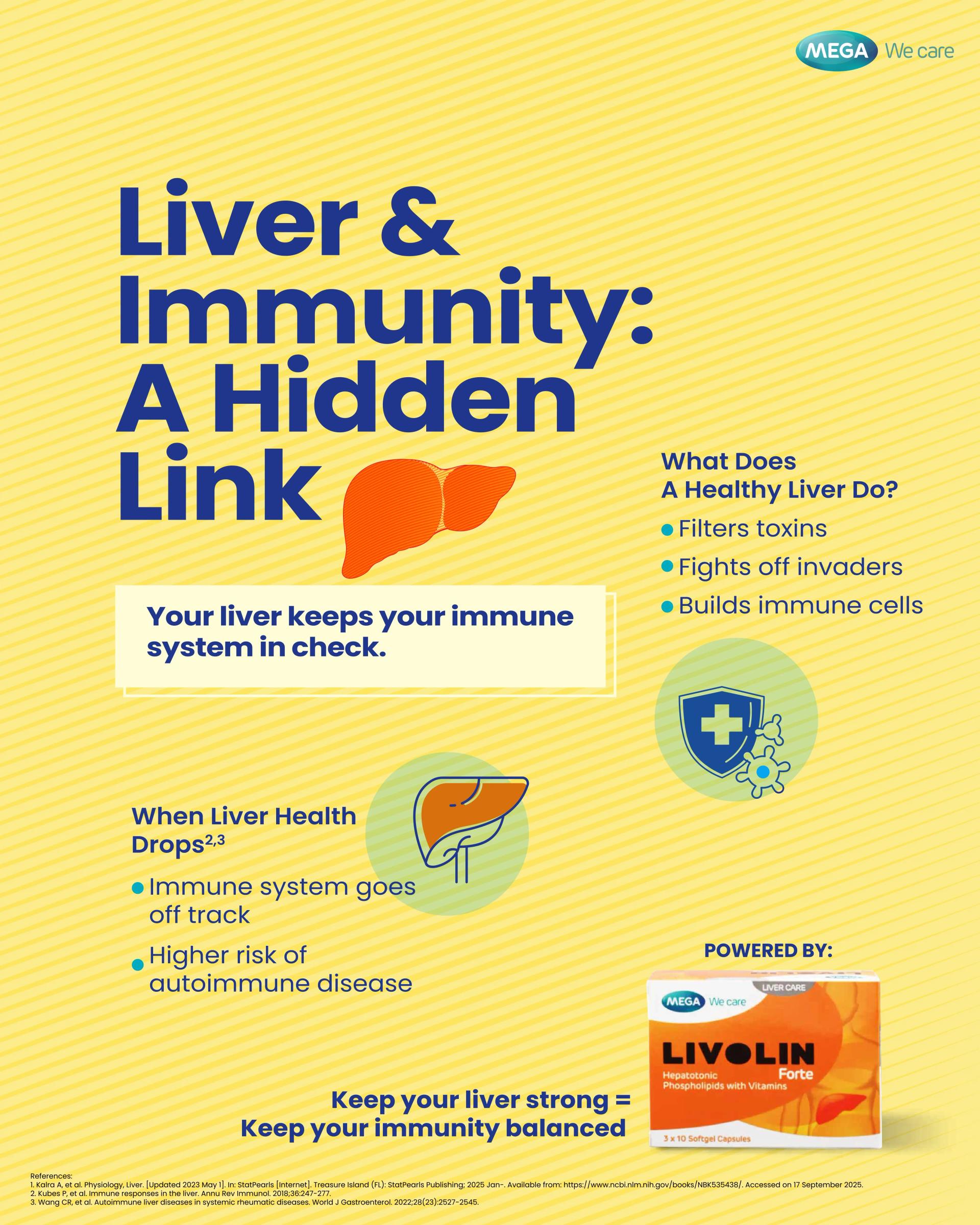
Your liver doesn’t just detox your body—it also plays a key role in regulating your immune system.
Autoimmune diseases affect millions worldwide, with recent research suggesting they may impact up to 1 in 10 people globally. While these conditions are often viewed purely as immune system disorders, growing evidence highlights a strong connection with liver health.
The liver helps regulate inflammation and maintain immune balance. When it is under stress due to poor diet, infections, or metabolic dysfunction, it can disrupt how the immune system functions. Over time, this imbalance may contribute to the body mistakenly attacking its own tissues, a defining feature of autoimmune disease.
This connection is especially relevant in Southeast Asia and Africa, where rising metabolic conditions, infections, and environmental exposures are placing increasing strain on liver health often without obvious symptoms.
The takeaway is simple: a stressed liver can influence immune function and long-term inflammation.
In this guide, we explore how liver health impacts autoimmune diseases, the key causes and risks, and what you can do to protect both your liver and your immune system.
What are autoimmune diseases
Autoimmune diseases develop when the body's immune system attacks its own cells and tissues, causing inflammation and damage. Did you know there are over 80 autoimmune disease types, while the most common ones affect the skin, joints, muscles, and nerves?
Some common autoimmune diseases include:
- Rheumatoid arthritis
- Multiple sclerosis
- Lupus
- Asthma
- Psoriasis
- Type 1 diabetes
- Hashimoto's thyroiditis
- Inflammatory bowel disease (IBD)
- Celiac disease
Though the exact cause of autoimmune diseases is not entirely understood, they are said to develop due to genetic, lifestyle, and environmental factors or a combination of them.
Genetics may predispose individuals to autoimmune diseases, while environmental factors like microbial infections, environmental toxins, and chronic stress can trigger their onset.
What is the link between liver health and autoimmune diseases
The liver is a crucial frontline immune tissue responsible for producing immune cells and filtering toxins. A healthy liver effectively regulates the immune system, preventing it from mistakenly attacking healthy cells and tissues. However, a malfunctioning or damaged liver can lead to an overactive immune response, significantly increasing the risk of developing autoimmune diseases.
A strong connection exists between your liver's health and the risk of developing an autoimmune disease. A healthy liver successfully filters toxins and regulates the immune system, maintaining a proper balance.
It is capable of launching a fast and powerful immune response when needed, always distinguishing between dangerous invaders and your own body's cells.
However, when the liver becomes damaged, inflamed, or malfunctions, this balance is lost. A compromised liver is less effective at regulating the immune system, which can result in an overactive response.
This confusion causes the immune system to mistakenly attack healthy cells and tissues, which is exactly how autoimmune diseases begin.
Common autoimmune liver diseases
Autoimmune liver diseases may sound complex, but the idea is simple: the immune system mistakenly attacks parts of the liver or its pathways. What’s important is that these conditions are often linked with other, more familiar autoimmune diseases.
For example:
- Primary biliary cholangitis (PBC) affects the small bile ducts in the liver and is commonly seen alongside conditions like dry eyes and mouth (Sjögren’s syndrome) or rheumatoid arthritis.
- Primary sclerosing cholangitis (PSC) affects bile flow and is frequently associated with ulcerative colitis, a type of inflammatory bowel disease.
- Autoimmune hepatitis occurs when the immune system attacks liver cells directly and is often linked with thyroid disorders or celiac disease (gluten sensitivity).
Non-alcoholic fatty liver disease (NAFLD)—which is increasingly common due to lifestyle factors—has also been linked to autoimmune conditions. Studies show that people with NAFLD may have a higher risk of diseases like rheumatoid arthritis and psoriasis, highlighting how closely liver health and immune function are connected.
Infographic linking common health conditions like thyroid, arthritis, and fatigue to liver health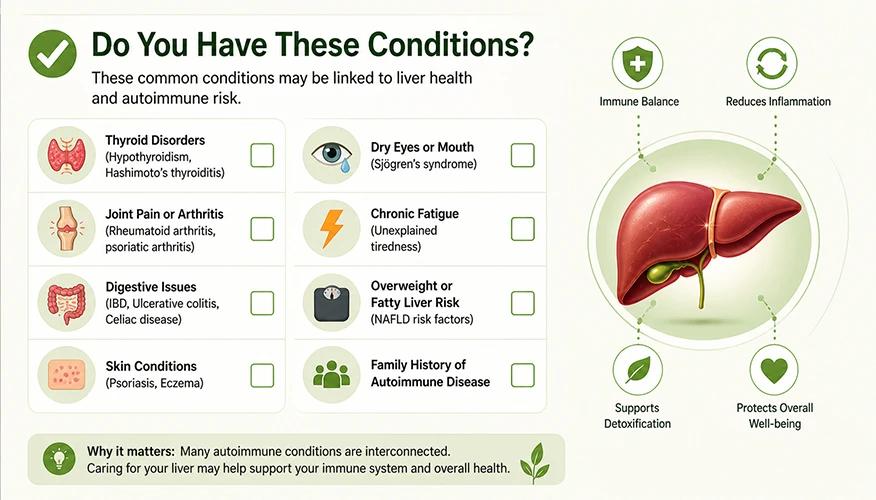
Symptoms to watch for
Recognizing the early warning signs of liver dysfunction and autoimmune activity is vital for timely intervention. Watch for these common symptoms:
- Fatigue: Persistent and unexplained tiredness is one of the most common and earliest symptoms of autoimmune conditions and liver disease.
- Joint pain: Inflammation caused by autoimmunity can often manifest as tenderness, stiffness, or swelling in the joints.
- Jaundice: A yellowing of the skin and eyes, which is a classic sign of liver issues, often due to the buildup of bile (bilirubin) that the liver can't process.
- Digestive issues: Symptoms like unexplained nausea, loss of appetite, abdominal pain, or changes in bowel habits can be related to both liver dysfunction and general autoimmune inflammation.
Besides autoimmune liver diseases, some autoimmune rheumatic diseases can have hepatic manifestations. These include:
- Chronic active hepatitis
- Primary biliary cirrhosis
- Primary sclerosing cholangitis
- Nodular regenerative hyperplasia
How to improve liver health
Here are some effective tips for maintaining a healthy liver, regardless of autoimmunity:
- Maintain a healthy weight and BMI: Higher than normal weight and obesity can increase your risk for fatty liver disease, leading to inflammation and liver damage. Maintaining a healthy weight and BMI through regular exercise and a balanced diet can improve liver health.
- Limit alcohol intake: Excessive alcohol consumption is known to cause liver damage and inflammation, increasing the risk of developing liver disease. So, limiting or avoiding alcohol intake can safeguard your liver health.
- Eat a nutritious diet: A healthy diet loaded with fresh fruits, vegetables, whole grains, lean proteins, and good fats is helpful in improving liver health. Foods rich in antioxidants, such as blueberries, green tea, and dark chocolate, can help protect the liver from free radical damage. Foods rich in fibre, like legumes and whole grains, can also help improve liver health.
- Stay hydrated: Drinking ample amounts of water can help eliminate toxins from the liver and boost liver function.
- Exercise regularly: Regular exercise can help maintain a healthy weight and improve liver function. It can reduce inflammation and oxidative stress, both of which contribute to liver damage.
- Avoid exposure to toxins: Limit exposure to environmental toxins such as pesticides, chemicals, and pollutants, which can damage the liver.
- Consider supplements: Few supplements, like milk thistle, N-acetylcysteine (NAC), and turmeric, may help improve liver function and reduce inflammation.
- Reduce sugar consumption: Consuming too much sugar can lead to fatty liver disease, which can damage the liver over time. Limiting sugar intake and avoiding sugary drinks can help improve liver health.
These lifestyle changes and eating liver-friendly foods can boost your liver health and reduce the risk of developing liver disease.
When to see a doctor
Consult a healthcare professional if you experience persistent symptoms like fatigue, unexplained joint pain, or any signs of jaundice (yellowing of the skin or eyes).
Early diagnosis of liver problems or an underlying autoimmune disease is crucial for effective management and preventing long-term complications or severe organ damage.
Conclusion
Maintaining liver health is crucial for overall health and wellness. A healthy liver can prevent the development of autoimmune diseases and other health conditions. Therefore, it is essential to improve liver health by making lifestyle modifications like exercising regularly, limiting alcohol intake, and consuming liver-friendly foods and supplements. Including these habits in your daily routine can help you improve your liver health and reduce the risk of developing liver disease. Take action now to ensure a healthy liver and a healthy life!
Meet our expert

GHBY Team
GHBY TeamMeet our expert
GHBY Team comprises content writers and content editors who specialise in health and lifestyle writing. Always on the lookout for new trends in the health and lifestyle space, Team GHBY follows an audience-first approach. This ensures they bring the latest in the health space to your fingertips, so you can stay ahead in your wellness game.
How was the experience with article?
We'd love to know!