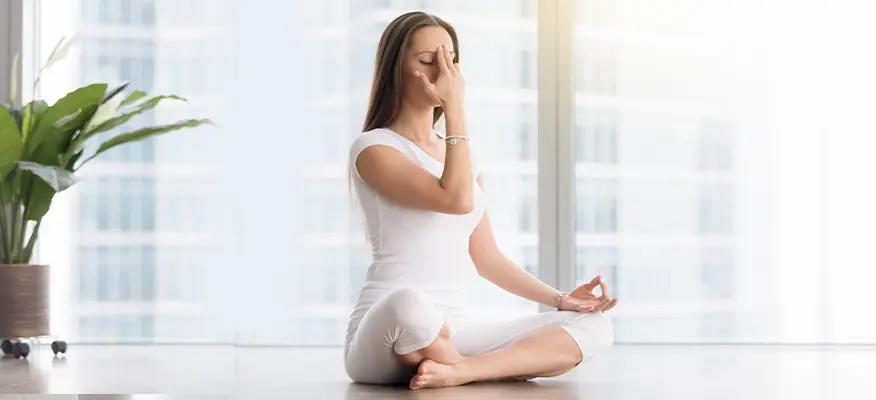
Gentle breathing exercises may help relax the body, calm the mind and support comfort during period cramps and PMS discomfort.
Breathing exercises during periods may help calm the nervous system, relax tense muscles and reduce stress linked with period cramps. They may not remove menstrual pain completely, but they can be a gentle way to support comfort during low-energy days.
Breathing exercises have been in practice for ages. They still stand strong with the traditional knowledge and health benefits that they hold. These traditional breathing exercises are known to have a positive influence on the physical, mental, and emotional state of a person.
These breathing exercises during periods can provide relief from the physical pain and the mental turmoil. Practicing breathing exercises for period cramps and breathing exercises during periods can be very helpful.
Breathing exercises may help during periods by calming the nervous system, reducing stress and relaxing the body. Gentle practices such as deep breathing, alternate nostril breathing, Bhramari pranayama and Shavasana may support comfort during period cramps, but severe or unusual pain should be medically checked.
Can Breathing Exercises Help with Period Cramps?
Breathing exercises may help with period cramps by calming the body, reducing stress and encouraging relaxation. Slow breathing can also help you feel more comfortable when cramps, fatigue or mood changes make periods harder to manage.
How Do Breathing Exercises Help During Periods?
During periods, breathing exercises may help slow down racing thoughts, ease tension and support better relaxation. They can be especially useful when cramps, PMS, anxiety or tiredness make the body feel uncomfortable.
10 Breathing Exercises to Try During Your Period
Try these breathing and relaxation techniques slowly and gently. Sit or lie down comfortably, breathe at your own pace and stop if you feel dizzy or uncomfortable.
| Breathing exercise | May help with |
| Udgeeth Pranayama | Calmness and emotional balance |
| Sheetali Pranayama | Cooling and relaxation |
| Sheetkari Pranayama | Stress and body heat |
| Tadagasan | Fatigue and relaxation |
| Lion’s Breath | Tension release |
| Alternate Nostril Breathing | Anxiety and period stress |
| Ujjayi Breathing | Mind relaxation |
| Bhramari Pranayama | Stress and concentration |
| Viloma Pranayama | Nerve calming and relaxation |
| Shavasana | Deep rest and body relaxation |
These breathing exercises should feel gentle and comfortable. Stop if you feel dizzy, breathless, weak or uncomfortable. If you have severe period pain, very heavy bleeding or unusual symptoms, speak to a healthcare professional.
Read on to learn more about these breathing exercises.
1. How to Do Udgeeth Pranayama (Deep and rhythmic chant) During Periods
What is the best breathing technique for anxiety relief you ask? Try this one out.
- To perform this breathing exercise, sit with your legs folded in a comfortable position, close your eyes.
- Place your hands on your thighs and connect the index finger to your thumb.
- Now close your eyes and take a deep breath filling your lungs.
- Exhale with your mouth while chanting the word Om focusing on the "O" sound and feeling the "m" sound vibration after closing your mouth.
- Repeat 15-20 times. Deep breathing Udgeeth pranayam is known to balance emotion and calm the body and mind.
2. How to Do Sheetali Pranayama (Cooling breath) for Period Comfort
Breathing exercises for menstrual cramps can do wonders.
- To perform this pranayama, sit comfortably with your legs folded in the lotus position or the vajrasana pose.
- Rest your hands on your thighs.
- Now fold your tongue forming a vent and breathe deeply through it.
- Once you have inhaled with your folded tongue, touch your tongue to the roof of your mouth to feel the coolness while swallowing the air. Repeat 15-20 times.
- If your tongue does not fold, you can try pursed-lip breathing and feel relaxed.
- Sheetali pranayama is known to cool the body and mind while regulating the body heat during periods.
3. How to Do Sheetkari Pranayama (Hissing breath) During Periods
This is a modification of the Sheetali pranayama, and is known to regulate heat and calm the body.
- To perform this exercise, sit in a meditative pose with your hands on your thighs.
- Touch your tongue to the roof of your mouth, join the upper and lower row of your teeth.
- Now inhale through your mouth in this position, swallow the cool air and exhale through your nose.
- Repeat 15-20 times. You can also try this by breathing through your teeth. This can reduce stress and anxiety.
4. How to Practise Tadagasan (Pond pose) for Period Relaxation
Tadagasan can help get rid of fatigue and exertion that is common during periods.
- To perform this exercise, lie down in a supine position with your knees bent and feet in line with your hips.
- Rest your arms above your head.
- Now inhale and exhale deeply in this position feeling the flow of air inside and out of your lungs.
- Slowly slide your feet forward and rest your body completely. Repeat 15-20 times.

5.How to Do Lion’s Breath (Simhasana) During Periods
This exercise can help in eliminating excessive heat produced in the body and in clearing respiratory pathways via diaphragmatic breathing.
- To practice Simhasana, sit in the vajrasana pose and spread your knees.
- Place the palms of your hands on the ground right in front of you between your legs such that the fingers of your hands should point backward.
- Keep your spine straight yet flexible.
- Now inhale with your nose, exhaling look up, draw your tongue out as much as you can and exhale forcefully roaring the sound "haa".
- Hold this pose for 20-30 sec, repeat 4-5 times.
6. How to Do Alternate Nostril Breathing (Alternate nostril breathing) for Period Cramps
Anulom Vilom can help with period brain fog and anxiety. It is also effective for high blood pressure. Repeat this process for 5-10 minutes.
- To perform this pranayama, sit in a lotus pose with your legs crossed.
- Keep your back straight.
- Now block your right nostril with your right thumb and inhale deeply through your left nostril.
- Once your lungs are full of oxygen-rich air, simply block your left nostril with your right hand's central finger and exhale through your right nostril.
- This is alternate nostril breathing and it can stabilize respiratory rate/ heart rate.
7. How to Do Ujjayi Breathing (Ocean sound breath) During Periods
For yoga to reduce period pain, perform Ujjayi pranayam.
- Sit comfortably on a mat in a lotus pose.
- In this breathing exercise, inhaling and exhaling are done only via nostrils.
- Breathe in through both the nostrils, and constrict your throat muscles once inhaling is done and hold for a moment.
- Now exhale while making a "ha" sound from your throat through your nostrils. This breathing exercise calms the mind and is recommended during periods.
8. How to Do Bhramari Pranayama (Humming bee breath) for Period Stress
Bhramari Pranayam helps in improving concentration and calming the body and mind.
- To perform this pranayam, sit comfortably on a mat folding your legs or in the lotus pose.
- With the thumbs of your hands block the earlids of your ears, place your index fingers above your eyebrows and your remaining 3 fingers on your eyes.
- Now concentrate on the spot on your forehead between your eyebrows.
- Deeply inhale filling your lungs with air, now while exhaling pronounce the om sound internally and feel the vibrations in your body. Repeat 4-5 times.
9. How to Do Viloma Pranayama for Relaxation
Can you live longer by breathing more slowly? Yoga practitioners say so. Viloma pranayama is known to soothe the nerves and calm the brain.
- To perform this breathing exercise, lie down flat on your back on a mat with your arms on your sides.
- Inhale deeply from both your nostrils. Now perform interrupted exhalation.
- Exhale for 3 seconds and hold your breath, now exhale for 3 seconds again, keep doing until your lungs feel empty.
- Again breathe in a repeat for 5-6 minutes.
10. How to Practise Shavasana (corpse pose) During Periods
Shavasana is the last breathing exercise that is performed at the end. It is a breathing and relaxation technique that helps you relax completely. Shavasana can reduce stress, calm the body and mind and help you relax during periods.
- To perform Shavasana, lie down on a mat in a supine position with your legs distant and arms to your sides.
- Perform slow breathing and mindful breathing while keeping your neck straight and relaxing your body.
- Now inhale deeply, relax your whole body, and exhale out stress.
- Feel the rise and fall of your chest. Repeat for 5-6 minutes.
Which Breathing Exercise Is Best for Period Pain?
Slow deep breathing, alternate nostril breathing and Shavasana may be easier options during painful or low-energy period days. The best breathing exercise is the one that feels gentle, calming and comfortable for your body.
When Should Period Cramps Be Checked by a Doctor?
Speak to a healthcare professional if period cramps are severe, suddenly worsen, affect daily life, come with very heavy bleeding, fever, dizziness, unusual discharge or pain between periods. Breathing exercises may support comfort, but severe menstrual pain should not be ignored.
Conclusion
Can breathing exercises help with period cramps? Yes, in short. Breathing exercises can be very helpful during the menstrual period because of their calming nature and relaxing effects on the body. After all, it is normal to be a little low on energy for the first couple of period days. Heavier bleeding and cramping usually mean keeping high-intensity exercises such as running off the radar. This is where breathing exercises can help with their calming effects on the body.
Go ahead and try the above listed breathing techniques to help you relax, and tide through those painful period days.
Meet our expert

Meet our expert
Dr Sylvia Kama-Kieghe is a UK-based General Practitioner with a special interest in Women's Health and founder of Askawayhealth. She's also a tutor and medical student examiner. She is a Fellow of the Royal College of General Practitioners (FRCGP), Fellow of the Royal Society of Public Health (FRSPH), Fellow of the Royal Society of Medicine (FRSM), and holds a Diploma of the Faculty of Sexual and Reproductive Healthcare (DFSRH).

How was the experience with article?
We'd love to know!