
Dry skin or xerosis, as it’s medically known can feel like a constant battle. The flakiness, tightness, and itchiness aren’t just skin-deep; they often bring frustration too, especially when your shelf is already lined with moisturizers that offer only temporary relief.
Whether it’s the weather, hormonal shifts, nutrition gaps, or simply the passage of time, many women find that no matter how many creams they apply, their skin still feels thirsty from within.
That’s because true, long-lasting hydration doesn’t start on the surface—it begins from the inside. Your skin is your body’s largest organ, and like every other vital part of you, it relies on essential nutrients and vitamins to function, repair, and glow.
Certain vitamins help your skin lock in moisture, strengthen its natural barrier, and protect it from environmental stressors. Understanding these vitamins for dry skin gives you a powerful, inside-out approach to healing—not just covering up dryness, but transforming your skin into one that feels soft, resilient, and naturally radiant.
Let’s explore the most effective vitamins to help your skin stay nourished, hydrated, and healthy, no matter the season.
Why vitamins are important for skin hydration
Your skin is more than an outer covering to keep your internals safe. It's the body's largest organ, and it serves as a frontline defense against weather, toxins, and infections. To do that well, it needs to stay hydrated and structurally intact. A well-hydrated skin barrier prevents moisture from escaping while also barring harmful substances from further affecting your well-being.
While the function of this barrier system depends primarily on lipids, natural moisturizing factors, and ceramides, your body can’t maintain those efficiently without the help of the best vitamins for skin.
Several studies confirm that vitamin deficiencies can lead to dryness, sensitivity, and impaired skin regeneration, and that’s why it pivots from the subject of what you apply to about what you feed your skin through your diet and supplements.
Top 7 vitamins for dry skin
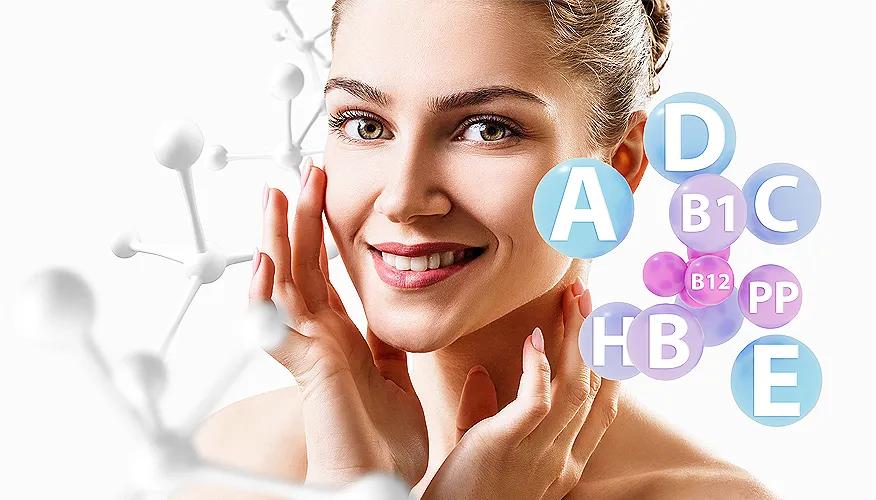
To support lasting hydration and repair from within, these 7 vitamins and essential nutrients play a key role in strengthening your skin barrier and preventing moisture loss:
1. Vitamin E – The moisture retainer
Vitamin E is one of the most powerful fat-soluble antioxidants for your skin, which, when lacking, can cause your skin to struggle to retain moisture. It’s, however, naturally present in your sebum and creates a layer that keeps water from evaporating.
Scientific evidence backs this up as well. It’s concluded that even topical application of vitamin E has been shown to reduce roughness and improve skin hydration. A 2020 review noted that concentrations above 5% in topical creams were particularly effective at increasing water content in the outer skin layers.
Moreover, as its job, vitamin E helps neutralize free radicals that damage skin cells. Stress, pollution, and UV exposure all produce these radicals. If left unchecked, they destroy collagen and elastin, accelerating dryness and wrinkles. Since your skin’s natural vitamin E levels decrease with age, replenishing them from both diet and skincare becomes increasingly important.
2. Vitamin C – For collagen and hydration
Lack of stable collagen, which vitamin C helps produce, often leads to fragile skin that struggles to maintain hydration. It’s like the scaffolding of a building, but only holding your skin together. Vitamin C also protects existing collagen from breaking down by neutralizing oxidative damage, especially from sun exposure.
A trial involving over 150 women showed that daily supplementation with a vitamin C complex led to visibly smoother skin and better water retention after just 8 weeks, supporting the barrier function of the skin. Citrus fruits, berries, bell peppers, and leafy greens usually have sufficient vitamin C to maintain optimum levels.
3. Vitamin A – For skin cell turnover
Vitamin A helps your skin shed dead cells and generate new ones, keeping the surface smooth and allowing moisture to penetrate more evenly. When your body lacks vitamin A, this renewal slows down, often resulting in a buildup of flaky, rough skin.
Retinoids have also been used in dermatology to combat dryness, acne, and early signs of aging for decades. They encourage faster skin regeneration while supporting the development of proteins that improve the barrier function.
However, be cautious of the topical overuse of vitamin A and of higher supplement dosages. It can cause temporary dryness or irritation as the skin adjusts, and liver damage.
4. Vitamin D – The skin-soothing vitamin
We usually associate vitamin D with bone health, but it's just as vital for your skin. It encourages the synthesis of lipids such as ceramides, which create the skin's protective layer, keeping moisture in and avoiding dry, cracked skin on fingers due to vitamin deficiency.
A study published in the Journal of Dermatological Treatment revealed that individuals with dry skin had significantly lower serum vitamin D levels. After supplementing with 600 IU daily for 12 weeks, participants showed remarkable improvement in both hydration and skin smoothness.
5. Vitamin B3 (Niacinamide) – The hydration booster
Niacinamide strengthens the skin’s lipid barrier, reduces water loss, and boosts the natural production of ceramides. These effects are particularly beneficial during winter when skin tends to become drier.
Niacinamide also regulates oil production. While this might sound more relevant for oily skin, balanced oil levels help dry skin retain its natural flexibility and resilience.
6. Vitamin B5 (Pantothenic Acid) – The healing vitamin
Vitamin B5 draws moisture from the environment while helping your skin trap and hold that water in its layers. Topical applications of panthenol, a derivative of vitamin B5, have shown excellent results in reducing skin irritation and speeding up healing in damaged or sensitive skin.
Moreover, recent clinical trials also confirmed its ability to reduce redness, support wound repair, and improve hydration in individuals with dry or damaged skin.
7. Omega-3 Fatty Acids – Bonus support for dry skin
Although not a vitamin, omega-3 fatty acids work hand-in-hand with all the above to improve skin hydration. These essential fats, especially EPA and DHA, enhance the skin’s barrier function and reduce inflammation that contributes to dryness. These fatty acids also help prevent flare-ups in conditions like eczema and rosacea, where dry skin becomes more severe.
Essential minerals for dry skin
Zinc, selenium, and magnesium are the underappreciated partners in skin hydration. Zinc supports wound healing and helps maintain barrier integrity, while selenium reduces oxidative stress and keeps your skin cells functioning properly. Magnesium, on the other hand, calms inflammation and aids moisture retention. A 2021 study found that bathing in magnesium-rich water improved skin hydration scores by nearly 25% in participants with atopic dermatitis.
Related: What Causes Dry Skin In Winter?
How to incorporate these vitamins into your routine

- Start with your diet. A variety of vegetables, fruits, whole grains, nuts, and fatty fish delivers nutrients your skin needs in forms your body absorbs easily.
- Use the best supplement for skin and hair when needed, but not without reason. If your diet falls short, use them.
- A daily multivitamin with A, C, D, E, and B-complex covers the basics, but if you don’t eat fish, omega-3s from flaxseed or algae oil are solid alternatives.
When to see a doctor
If you’ve cleaned up your diet, followed a supplement routine, and your skin is still unbearably dry, it may be time to get professional advice.
Skin that cracks, bleeds, or becomes inflamed might be signaling an underlying issue like eczema, thyroid imbalance, or diabetes.
In those cases, no amount of vitamins will solve the root problem without medical intervention.
Conclusion
Dry skin isn’t just about what you put on, it’s also about what you put in.
If your fingers are cracked, your complexion dull, or your skin feels tight no matter how much you moisturize, it could be your body asking for deeper nourishment. The right mix of vitamins and nutrients doesn’t just soothe dryness—it strengthens your skin’s natural barrier, helping it stay soft, supple, and strong through every season.
So, before reaching for another jar of cream, take a moment to look within. Feed your skin with intention, hydrate from the inside out, and let your natural glow return—gently, beautifully, and in its own time.
Meet our expert

Meet our expert
Deborah Onoja, a dedicated Registered Nutritionist-Dietitian, holds a Bachelor's degree in Nutrition & Dietetics from the Federal University of Agriculture, Abeokuta. She furthered her expertise with a Master's degree in Clinical Nutrition and Diet Therapy from the University of Ibadan.



How was the experience with article?
We'd love to know!