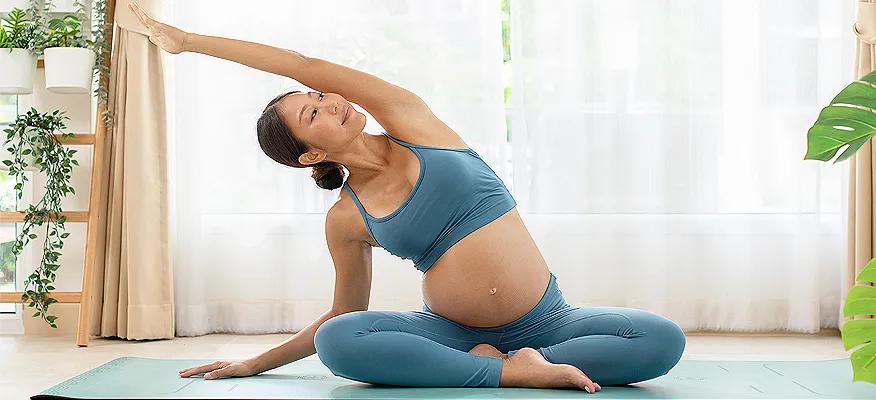
Pregnancy is a beautiful journey, but let’s be honest, it can also be physically demanding. As your body changes to make space for your growing baby, you might feel new aches in your back, hips, or legs that weren’t there before.
That familiar ache in your lower back at 28 weeks, the tight shoulders from hunching over your growing belly, or the hip discomfort that makes getting comfortable at night nearly impossible — that’s where pregnancy stretches come in.
Gentle, well-chosen stretches can do wonders — relieving pain, improving flexibility, easing tension, and even helping you sleep better. The best part? You don’t need fancy equipment or a gym. Just a few mindful movements each day can help your body feel more open, balanced, and ready for what lies ahead.
Whether you’re looking to soothe lower back pain, loosen tight hips, or simply stay active in a safe way, gentle pregnancy stretches can be your best friend during this transformative time, offering natural relief from common discomforts while preparing your body for the journey ahead.
Is it safe to stretch while pregnant?
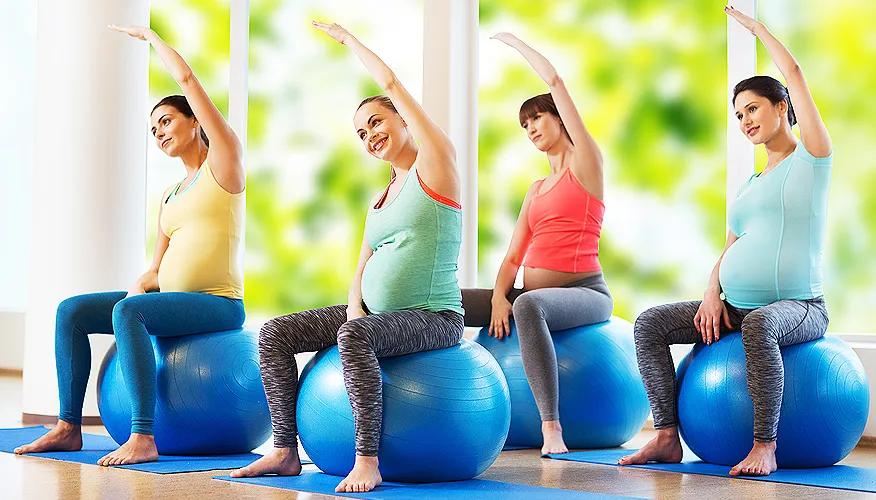
The good news is that stretching is generally safe for most healthy pregnant women and is actually recommended as part of your weekly physical activity routine.
At least 150 minutes of moderate-intensity physical activity each week for women with uncomplicated pregnancies is recommended, and gentle stretching definitely counts toward this goal.
However, there are some important considerations to keep in mind. Your body is changing rapidly, and what felt comfortable in your pre-pregnancy days might need some adjustments now. Always check with your healthcare provider before starting any new exercise routine, especially if you have pregnancy complications, chronic conditions, or experience any concerning symptoms like bleeding or severe pain.
The key is listening to your body and avoiding overstretching. Think of stretching during pregnancy like food seasoning: a little goes a long way, and too much can cause problems.
How hormonal changes affect stretching during pregnancy
Your body is producing a cocktail of hormones right now, and two key players, relaxin and progesterone, are changing how your joints work. These hormones make the ligaments supporting your joints more relaxed and flexible, which is brilliant for childbirth but can increase your risk of injury during stretching.
Here's what's happening:
- Your joints become more mobile than usual, making it easier to overstretch
- Your balance shifts as your growing belly changes your center of gravity
- Your muscles work differently to compensate for these changes
This means that stretches you could easily do before pregnancy might now put you at risk for injury. The solution? practice slow, controlled movements. Avoid bouncy or jerky stretches, and never push a stretch to the point where it feels uncomfortable.
Benefits of stretching during pregnancy
Regular pregnancy stretches offer a wealth of benefits that go beyond just feeling good in the moment. Here's what consistent, gentle stretching can do for you:
Physical benefits
- Reduces common pregnancy discomforts like lower back pain, hip tension, and muscle cramps
- Improves circulation, which can decrease swelling and reduce your risk of varicose veins
- Enhances flexibility to help your body adapt to its changing shape
- May contribute to easier labor and delivery by improving pelvic and core muscle flexibility
Mental and emotional benefits
- Promotes relaxation and stress relief during an emotionally intense time
- Provides dedicated "me time" for mindful connection with your body and growing baby
- Can improve sleep quality by releasing physical tension
These benefits are particularly valuable for women who spend long hours at desks or have limited access to professional fitness guidance.
Best pregnancy stretches
These gentle, effective pregnancy stretches focus on the areas that typically need the most attention during pregnancy. Remember to move slowly and never push through pain.
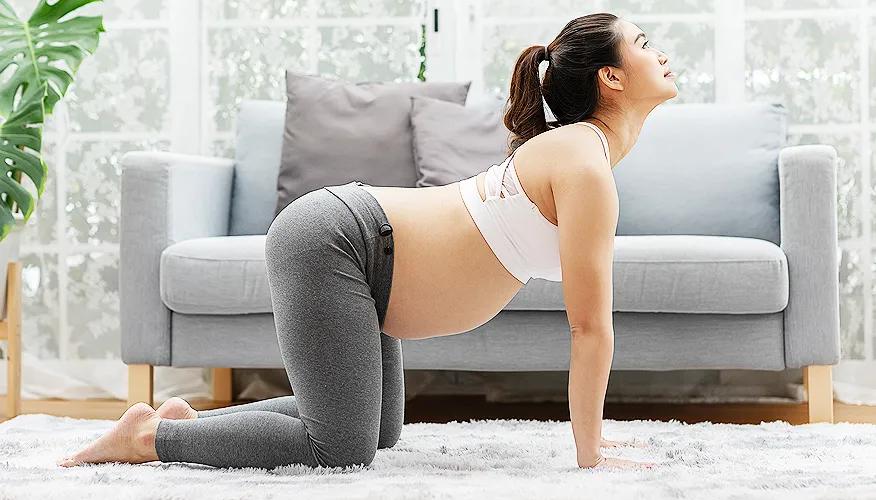
1. Cat-cow stretch
Target areas: Back, spine, and abdomen
How to do:
- Get on your hands and knees in a tabletop position.
- Inhale, arch your back slightly, and lift your head and tailbone (Cow pose).
- Exhale, round your back, and tuck your chin toward your chest (Cat pose).
- Repeat 8–10 times.
Benefits: Helps relieve lower back pain and improves spinal flexibility.
2. Child's pose (modified)
Target areas: Hips, thighs, and back
How to do:
- Kneel on the floor and widen your knees to make space for your belly.
- Sit back on your heels and reach your arms forward on the floor.
- Rest your forehead gently and breathe deeply for 30 seconds.
Benefits: Gently stretches the hips and back while calming the mind.
3. Seated forward bend (Hamstring Stretch)
Target areas: Back of the thighs
How to do:
- Sit on the floor with one leg extended and the other bent inward.
- Reach toward your toes (without forcing) and hold for 15–20 seconds.
- Switch legs.
Benefits: Prevents tightness and improves leg circulation.
4. Pelvic tilts (Standing or on All Fours)
Target areas: Lower back and abdominal muscles
How to do:
- Stand with your back against a wall, feet hip-width apart.
- Gently tilt your pelvis forward and press your lower back into the wall.
- Hold for 5 seconds and release.
- Repeat 10–12 times.
Benefits: Strengthens the lower back and reduces back pain.
5. Standing side stretch
Target areas: Sides of the torso, shoulders, and spine
How to do:
- Stand with feet shoulder-width apart.
- Raise your right arm overhead and lean gently to the left.
- Hold for 15–20 seconds, then switch sides.
Benefits: Relieves tension in the sides and improves posture.
6. Calf stretch exercise in pregnancy
Target area: Calf muscles (back of the lower leg)
How to do:
- Stand facing a wall at arm’s length away.
- Place your hands on the wall for support.
- Step your right leg back, keeping it straight and your heel flat on the floor.
- Bend your left knee slightly while keeping your back straight.
- You should feel a gentle stretch in your right calf.
- Hold for 20–30 seconds, then switch legs.
- Repeat 2–3 times per leg.
Benefits:
- Reduces leg cramps (especially nighttime cramps)
- Improves blood flow to the lower legs
- Eases ankle swelling and stiffness
- Prevents muscle tightness due to reduced physical activity
- Enhances mobility and comfort during daily activities
7. Butterfly Stretch
Target areas: Inner thighs, hips, and pelvic muscles
How to do:
- Sit tall and bring the soles of your feet together.
- Hold your feet with your hands and gently press your knees toward the floor.
- Hold for 20–30 seconds while breathing deeply.
Benefits: Enhances flexibility in the hips and pelvis, helping prepare for childbirth.
8. Neck and Shoulder Rolls
Target areas: Neck and upper back
How to do:
- Sit or stand comfortably with your back straight.
- Slowly roll your shoulders forward in circular motions 5 times.
- Reverse the direction.
- Then, gently roll your neck side to side.
Benefits:Relieves shoulder stiffness and tension headaches.
Stretching tips for each trimester
Your stretching routine should evolve as your pregnancy progresses:
- First trimester (weeks 1-12): Most stretches are safe during this period, but avoid overstretching as your ligaments are already becoming more flexible. You should focus on setting up a gentle routine and listening to your body's changing needs.
- Second trimester (weeks 13-26): This is often when women feel their best, but your growing belly requires modifications. Use props like cushions for support and avoid lying flat on your back for extended periods, as this can reduce blood flow to your baby.
- Third trimester (weeks 27-40): Balance and stability become your priorities. Avoid deep stretches that compress your abdomen or put you at risk of falling. Seated or side-lying positions are usually your safest options.
Related: Exercises for Second Trimester of Pregnancy
Safety precautions
Following safety guidelines will help you stretch confidently throughout your pregnancy:
- Always warm up with light movement before stretching.
- Stop immediately if you feel pain, dizziness, shortness of breath, or any unusual symptoms.
- Avoid bouncing or jerky movements that could strain your increasingly flexible joints.
- Use support like walls, chairs, or yoga blocks to maintain balance and stability.
- Stay hydrated and avoid overheating, especially in warm weather.
- Consult your healthcare provider if you experience vaginal bleeding, severe abdominal pain, or significant swelling.
Stretching after pregnancy
Postpartum stretching supports your overall recovery and helps address the physical changes that linger after delivery. Your body has been through an incredible transformation, and gentle stretching can help ease the transition back to your pre-pregnancy state.
Start slowly and be patient with yourself. Your joints and muscles need time to regain their pre-pregnancy stability and strength. Focus on stretches that address common postpartum issues like tight hip flexors from carrying a baby, rounded shoulders from feeding positions, and lower back stiffness.
Consider stretching as part of a holistic approach to postpartum wellness that includes adequate rest, proper nutrition, and gradual return to physical activity.
Conclusion
Pregnancy stretches offer a natural, accessible way to manage common pregnancy discomforts while supporting your body's incredible journey.
When performed with proper attention to safety and your body's changing needs, these gentle movements can provide significant relief from back pain, improve flexibility, and contribute to your overall well-being.
Remember that every pregnancy is unique, and what works for one woman may not be right for another.
The key is starting slowly, listening to your body, and working with your healthcare provider to create a stretching routine that supports your individual needs. Whether you're dealing with first-trimester fatigue or third-trimester discomfort, the right pregnancy stretches can be a valuable tool in your wellness toolkit.
Meet our expert
.webp&w=1920&q=75)
Meet our expert
Dr. Kulyk Alexander Petrovich is a Ukraine-based gynecologist, with extensive experience in women's health. In 1995, he graduated from the Kyiv Medical University, and specialized in gynecology. He then went on to work as a gynecologist in the Institute of Pediatric, Obstetrics and Gynecology in Kyiv, where he worked until the year 2000.



How was the experience with article?
We'd love to know!