
No, washing your face at night isn't bad — it's one of the best things you can do for your skin. After a long day of work, errands, exercise, and exposure to environmental pollutants, your skin carries more than you might realize. Sweat, excess oil, sunscreen, makeup, dust, and airborne particles accumulate on the skin's surface throughout the day. Far from being harmful, washing your face at night is one of the most important habits for maintaining healthy skin — as long as you do it gently and with the right technique.
Nighttime cleansing does more than leave your skin feeling fresh. It helps remove impurities, supports the skin's natural repair processes, and prepares your skin to benefit from moisturizers, serums, and other nighttime treatments.
Quick Takeaways
- Removes dirt, oil, makeup, sunscreen, and environmental pollutants.
- Supports overnight skin repair and renewal.
- Helps prevent clogged pores and breakouts.
- Improves absorption of nighttime skincare products.
- Reduces the risk of skin barrier damage caused by accumulated debris.
Why is washing your face at night so important?
Washing your face at night removes makeup, sunscreen, excess oil, sweat, bacteria, and pollutants that accumulate throughout the day. It helps prevent clogged pores, supports the skin's overnight repair cycle, and allows skincare products to work more effectively while you sleep.
Throughout the day, your skin is exposed to numerous stressors, including UV radiation, pollution, dust, and humidity. These substances can combine with natural oils and sweat to create a layer of buildup that remains on your skin unless it is properly cleansed.
According to dermatology experts, nighttime cleansing helps reduce the accumulation of debris that may contribute to clogged pores, irritation, and breakouts. Clean skin also creates an ideal environment for overnight recovery and skincare absorption.
What happens to your skin while you sleep?
Sleep is one of the most active periods for skin repair. During the night, the skin follows its natural circadian rhythm, increasing cell turnover and repair processes. New skin cells are generated while damaged cells are replaced.
Blood flow to the skin also increases during sleep, supporting tissue repair and helping maintain a healthy complexion. When your skin is clean before bed, it can focus on these restorative processes rather than dealing with layers of dirt, oil, and pollutants.
Nighttime cleansing also improves the absorption of products such as moisturizers, retinoids, and antioxidant serums, allowing them to work more effectively.
What happens if you skip washing your face at night?
Leaving the day's buildup on your skin overnight can create several problems.
Common consequences include:
- Clogged pores
- Blackheads and acne breakouts
- Dull-looking skin
- Increased irritation and inflammation
- Reduced effectiveness of skincare products
- Weakened skin barrier function
Environmental pollutants can also contribute to oxidative stress, a process linked to premature skin aging. When pollutants remain on the skin for prolonged periods, they may increase the risk of irritation and visible signs of aging over time.
Top benefits of nighttime face cleansing
The benefits of washing face before bed go far beyond just feeling clean. Here's what consistent nighttime face cleansing can do for your skin:
- Prevents acne and breakouts: By removing the day's buildup of oil, sweat, and debris, you're significantly lowering the chances of pore congestion that leads to blackheads and pimples
- Supports anti-aging efforts: Clean skin allows your nighttime treatments—whether it's retinol, peptides, or antioxidant serums—to penetrate effectively and do their job of preventing early signs of aging
- Enhances product effectiveness: When you apply skincare products to clean skin, they can actually reach your skin cells instead of mixing with leftover makeup and pollution
- Maintains healthy barrier function: Gentle nighttime cleansing helps preserve your skin's natural protective barrier, keeping moisture in and irritants out
- Improves skin texture and radiance: Regular cleansing helps your skin's natural renewal process work more efficiently, leading to smoother, more radiant skin over time
Reduces inflammation: Removing irritating particles and bacteria before they can cause damage helps keep your skin calm and balanced
nighttime face cleansing benefits infographic: removes dirt, repair, hydration, absorption, breakouts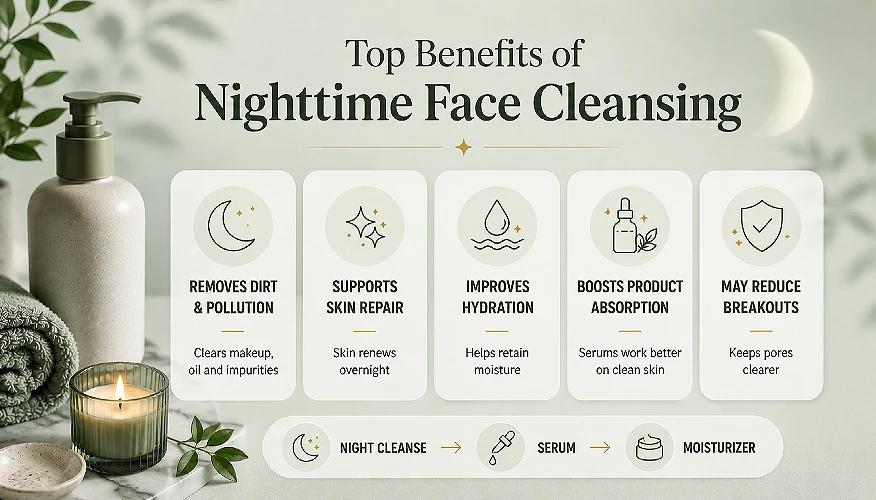
How to wash face at night: A step-by-step guide
To wash your face at night effectively, remove makeup first, cleanse gently for about 60 seconds, rinse with lukewarm water, pat dry, and follow with moisturizer or other nighttime skincare products.
Step 1: Remove Makeup and Sunscreen
If you wear makeup or sunscreen, start by removing these products using a makeup remover, cleansing balm, cleansing oil, or micellar water.
Step 2: Apply a Suitable Cleanser
Choose a cleanser that matches your skin type. Gentle cleansers are generally recommended because they remove impurities without excessively stripping natural oils.
Step 3: Massage for 60 Seconds
Apply the cleanser using gentle circular motions for approximately one minute. This allows the cleanser enough time to break down oil, dirt, sunscreen, and other debris.
Step 4: Rinse With Lukewarm Water
Lukewarm water helps remove impurities effectively without causing the dryness and irritation that can result from hot water.
Step 5: Pat Dry
Use a clean, soft towel and gently pat your face dry. Avoid rubbing, which may irritate the skin.
Step 6: Apply Nighttime Skincare Products
Follow cleansing with toner, serum, moisturizer, or any treatment products recommended for your skin concerns.
What is the 60-second rule for face washing?
The 60-second rule involves gently massaging your cleanser into the skin for a full minute before rinsing. This allows sufficient time for the cleanser to dissolve oil, sunscreen, makeup residue, and daily pollutants.
Many people spend only a few seconds cleansing, which may not adequately remove buildup. Extending cleansing time to around 60 seconds can improve the effectiveness of your routine without requiring harsh scrubbing.
Should you double cleanse at night?
Double cleansing involves using an oil-based cleanser first, followed by a water-based cleanser. This method is particularly beneficial if you wear makeup, sunscreen, or live in a heavily polluted environment.
The first cleanse (oil-based) dissolves makeup, sunscreen, and excess sebum, while the second cleanse (water-based) removes any remaining residue and cleanses the skin thoroughly. Think of it as washing dishes—you wouldn't just rinse greasy plates with water; you'd use soap to cut through the oil first.
Can you wash your face too much?
Yes, you absolutely can overwash your face, and it's more common than you might think. While cleansing is important, doing it too frequently or with harsh products can damage your skin's protective barrier.
Signs you might be overwashing include:
- Persistent tightness or dryness
- Increased redness or irritation
- Skin that feels "squeaky clean" after washing
- More breakouts despite increased cleansing
- Flaking or peeling
For most people, washing twice daily—morning and night—is optimal. However, some people with dry or sensitive skin may find that cleansing only at night works better for them, especially during colder months when skin tends to be drier.
Nighttime face washing by skin type
Different skin types have different cleansing needs. Here's how to tailor your approach:
| Skin Type | Best Cleanser | Frequency | Special Notes |
|---|---|---|---|
| Oily | Foaming or gel cleanser | Twice daily | Look for salicylic acid or benzoyl peroxide for acne-prone skin. |
| Dry | Creamy or hydrating cleanser | Once at night preferred | Morning water rinse may be sufficient. |
| Combination | Balanced gentle cleanser | Twice daily usually | Adjust if the T-zone gets too dry or the cheeks get oily. |
| Normal | Gentle hydrating cleanser | Night essential, morning optional | Choose non-stripping formulas. |
| Sensitive | Fragrance-free, gentle cleanser | Once at night | Patch test new products first. |
Morning vs. night face cleansing: Do both matter?
Both cleansing sessions serve different purposes, but nighttime cleansing is generally considered more important.
| Aspect | Morning Cleansing | Night Cleansing |
|---|---|---|
| Purpose | Removes overnight sweat and oil | Removes makeup, sunscreen, pollutants, and debris |
| Importance | Helpful for many people | Essential for most people |
| Can It Be Skipped? | Sometimes, especially for dry skin | Generally not recommended |
| Product Needs | Gentle cleansing | More thorough cleansing |
| Impact on Skin Repair | Prepares skin for daytime products | Supports overnight regeneration |
Morning cleansing helps prepare the skin for daytime skincare and sunscreen application. However, many dermatologists agree that nighttime cleansing provides greater benefits because it removes the day's accumulated buildup.
Common nighttime cleansing mistakes to avoid

Even with the best intentions, it's easy to make mistakes that can undermine your cleansing efforts. Here are the most common pitfalls:
- Using water that's too hot: Hot water feels relaxing, but it strips your skin's natural oils and can cause irritation and dryness. Stick to lukewarm water.
- Scrubbing too aggressively: Your face isn't a dirty pot that needs scrubbing. Gentle circular motions are all you need to effectively cleanse without causing micro-tears in your skin.
- Skipping makeup removal: Trying to remove makeup and cleanse your skin in one step often means neither job gets done properly. Always remove makeup first.
- Using the wrong cleanser: A cleanser that works for your friend might not work for you. Choose products based on your specific skin type and concerns.
- Overwashing: More isn't always better. Excessive cleansing can disrupt your skin barrier and lead to more problems than it solves.
- Relying solely on wipes: While convenient, face wipes alone don't provide the thorough cleansing your skin needs at night.
Are face wipes and micellar water effective?
Face wipes and micellar water can be useful for convenience, but they should not replace regular cleansing whenever possible.
Micellar water is particularly effective for removing makeup and may serve as the first step of a cleansing routine. Face wipes can be helpful while traveling, after exercise, or when access to water is limited.
However, dermatologists generally recommend following these products with a proper cleanser to ensure complete removal of residue, oil, and pollutants. Think of wipes and micellar water as helpful supplements to your routine rather than complete replacements for nighttime face cleansing.

Conclusion
Washing your face at night is one of the simplest yet most effective habits for maintaining healthy skin. By removing makeup, sunscreen, excess oil, sweat, and environmental pollutants, nighttime cleansing helps reduce the risk of clogged pores, irritation, and breakouts. It also creates the ideal foundation for your skin's natural overnight repair processes and improves the effectiveness of the products you apply before bed.
Whether you have oily, dry, sensitive, or combination skin, making washing your face at night a consistent part of your routine can support clearer, healthier, and more radiant-looking skin over time. A gentle cleanser, proper technique, and regular habit are often all it takes to help your skin look and feel its best every morning.
Meet our expert

Meet our expert
Dr. Irina Borisovna Stefanenko, a medical doctor based in Ukraine, graduated from Vinnitsa State Medical University in 1995. Between 1995 and 2000, Dr. Stefanenko pursued postgraduate studies and engaged in scientific activities at Vinnytsa Medical University in Ukraine.



How was the experience with article?
We'd love to know!