
You've probably heard your grandmother swear by potato slices for dark circles or seen beauty influencers raving about potato face masks. While it might sound unusual, there's actually some science behind why potato for face treatments have gained popularity. Potatoes contain vitamin C, antioxidants, and natural enzymes that may offer mild skin benefits. But before you raid your kitchen pantry, let's look at what research actually says about this humble vegetable's skincare potential.
What does rubbing a potato on your face do?
Rubbing a potato on your face may temporarily brighten your skin, reduce puffiness, and provide mild exfoliation due to its vitamin C, antioxidants, starch content, and natural enzymes.

However, scientific evidence supporting the use of raw potato to treat acne, pigmentation, or dark circles remains limited, and the results are usually subtle rather than dramatic.
Fresh potatoes contain several compounds linked to skin health:
- Vitamin C supports collagen production and antioxidant protection
- Natural starches may help absorb excess oil
- Phenolic compounds in potato peel show antioxidant activity in laboratory studies
- Cooling potato slices may temporarily reduce puffiness under the eyes
Some traditional remedies also mention the “catecholase” enzyme in potatoes as a natural brightening ingredient. While potatoes do contain enzymes within the polyphenol oxidase system, there is currently very little human clinical evidence proving that raw potatoes significantly lighten pigmentation.
A 2024 review of potato peel compounds found antioxidant and anti-inflammatory activity in laboratory and animal studies, but researchers have not confirmed the same effects in people using raw potato directly on the skin. Most evidence for the use of potato juice for skin remains anecdotal.
Quick tip: Chilled potato slices may temporarily reduce under-eye puffiness, much like cold compresses soothe swelling.
Nutrients in potatoes that benefit skin
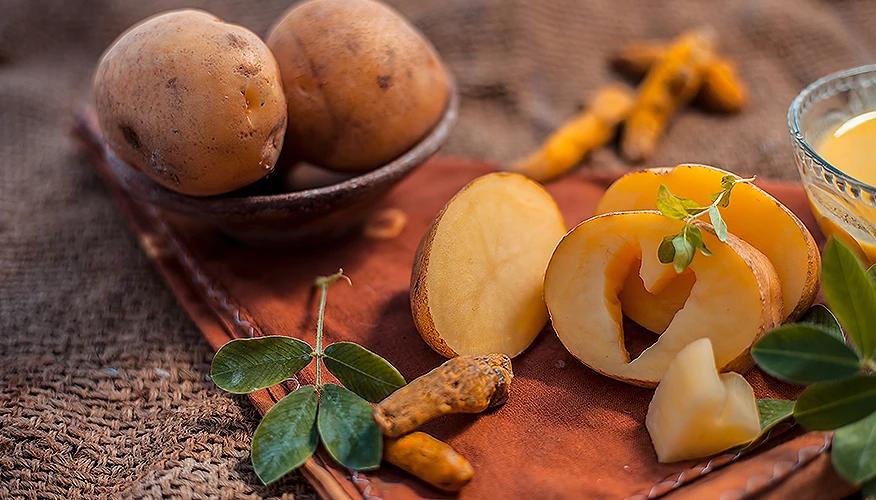
Understanding what's actually in potatoes helps explain why they might have potential for skincare. Here are the key compounds that could benefit your skin:
Vitamin C and collagen production
- A medium potato provides about 30% of your daily vitamin C needs
- Essential for collagen synthesis, the process that keeps skin firm and helps wounds heal
- Acts as a potent antioxidant when applied topically, potentially reducing signs of photoaging
Catecholase enzyme for pigmentation
- Part of the polyphenol oxidase system in potatoes
- Hypothesized to have skin-lightening effects, though clinical research is lacking
- Responsible for the browning you see when potatoes are cut and exposed to air
Starch for mild exfoliation
- Natural starch granules can act as very gentle physical exfoliants
- Helps absorb surface oil, creating a matte finish
- Suitable for sensitive skin that can't tolerate harsher scrubs
Antioxidants (phytonutrients)
- Potato peels contain 5-10 times more antioxidant compounds than the flesh
- Includes phenolic acids, flavonoids, and carotenoids
- Colored potatoes (red, purple) have particularly high antioxidant levels
B vitamins for skin barrier health
- Provides vitamin B6 and other B vitamins important for protein metabolism
- Supports formation of structural skin components
- Helps maintain healthy skin barrier function
Potassium as a natural humectant
- A medium potato contains about 620 mg of potassium (15% of the daily value)
- Important electrolyte for cellular fluid balance
- Indirectly supports skin hydration and moisture retention
7 ways potatoes may help your skin
Let's explore the specific ways potato benefits for face treatments might support your skincare goals, keeping realistic expectations in mind.
1. Brightening dark spots and hyperpigmentation
Vitamin C is known to support brighter-looking skin by helping reduce oxidative stress and influencing melanin production pathways. This is why potatoes are often used for dullness and mild pigmentation. However, raw potato contains unstable vitamin C levels compared with dermatologist-formulated serums.
If potato juice benefits for the skin appear at all, they are usually gradual and mild. Most natural brightening approaches require 4–6 weeks of consistent use to show visible changes. For persistent melasma or deep pigmentation, professional treatments are generally more effective.
2. Reducing under-eye dark circles
Potato for dark circles remains one of the most common traditional remedies.
Cold potato slices may:
- Temporarily reduce puffiness
- Soothe tired eyes
- Mildly brighten the area through hydration and cooling effects
The effect is usually temporary and works best for puffiness rather than genetically inherited dark circles. Place chilled potato slices over closed eyes for 10–15 minutes. Stop immediately if irritation or stinging develops.
3. Soothing sunburn and inflammation
Potato peel extracts show anti-inflammatory activity in experimental studies, likely due to their phenolic compounds and flavonoids. For mild, first-degree sunburn, cool potato slices can provide a soothing sensation and some occlusion that may ease discomfort.
This is only appropriate for very mild sunburn. For blistering, extensive skin involvement, or systemic symptoms like fever, you need a proper medical evaluation. Home remedies aren't sufficient for serious burns.
4. Mild exfoliation
The starch and natural plant acids in potato create a very gentle exfoliating effect when applied as a paste and rinsed off. This might be suitable for sensitive skin that can't tolerate stronger alpha-hydroxy acids (AHAs) or beta-hydroxy acids (BHAs).
Think of it as the gentlest possible introduction to exfoliation, helpful for removing superficial dead cells without the harshness of scrubs with large particles. However, it's not a substitute for professionally formulated exfoliating products if you have specific concerns like acne or significant texture issues.
5. Oil control for acne-prone skin
Potato starch naturally absorbs surface oils and moisture, which is why it is widely used in cosmetic powders to create a matte finish. Some experimental work suggests potato peel extracts have antimicrobial and anti-inflammatory activity, though there's no established evidence that raw potato treats acne lesions.
For moderate-to-severe or cystic acne, you should seek dermatologist-recommended therapies such as topical retinoids, benzoyl peroxide, or antibiotics rather than relying on kitchen ingredients.
6. Hydration and moisture retention
While potassium in your diet helps with systemic hydration, there's little evidence that topical potassium from potatoes acts as a true humectant like glycerin or hyaluronic acid. However, the water content of fresh potato slices and the starchy film they leave can temporarily reduce water loss from your skin.
Combine potato with established moisturizing agents like aloe vera gel or honey if hydration is your main goal.
7. Supporting anti-aging skincare
Topical antioxidants, especially vitamin C, have been shown to improve fine lines, texture, and pigmentation in clinical studies by neutralizing free radicals and stimulating collagen production. Potatoes contain vitamin C and other antioxidants, so they may offer mild antioxidant support.
The concentration, pH, and stability of vitamin C in raw potatoes aren't controlled like in commercial formulations. Potato face mask benefits for anti-aging should be viewed as very modest support, not a replacement for proven treatments like broad-spectrum sunscreen, retinoids, and evidence-based antioxidant serums.
Did you know? Raw potato is generally preferred for skincare because heat can reduce vitamin C content and alter natural enzyme activity. Cooked potato may still provide some soothing or moisturizing effects due to its starch content, but most traditional skincare remedies use fresh raw potato juice or slices.
How to use potatoes on your face safely
Safety should always be your first priority when trying any new skincare ingredient, even natural ones. Here's how to use potato on face safely with step-by-step guidance.
Basic potato juice method
This is the most versatile way to use potatoes for skincare, allowing you to apply it evenly across larger areas.
Step 1: Clean and grate organic potato
Wash thoroughly to reduce pesticide and soil residue. Peel if desired (though the peel contains more antioxidants), then grate using a clean grater to minimize contamination.
Step 2: Extract juice with cheesecloth
Squeeze the grated potato through clean cheesecloth or a fine-mesh strainer to obtain fresh juice. This concentrates the vitamin C, starch, and water-soluble antioxidants. Use immediately to prevent vitamin C oxidation.
Step 3: Patch test on inner arm 24 hours before facial use
Apply a small amount to your inner forearm, leave it on for 15-20 minutes, then rinse. Observe for redness, itching, or bumps within 24 hours. If any reaction occurs, don't use it on your face.
Step 4: Apply with a cotton pad, leave for 15-20 minutes, rinse
On cleansed skin, apply juice with a clean cotton pad or fingertips, avoiding the eye area and any open cuts. Leave on for 15-20 minutes maximum, then rinse with cool or lukewarm water. Always apply broad-spectrum sunscreen in the morning.
Note:Never apply potato juice to broken skin, active eczema, or open acne lesions.
Potato slice application
Slices work best for targeted treatment of specific areas rather than full-face application.
When to use slices vs. juice:
- Slices: Best for under-eye circles, discrete dark spots, or small sunburned patches
- Juice: Better for larger facial areas and general brightening
Best practices:
For under-eye circles, use thin, cool slices on closed eyes for 10-15 minutes. For isolated dark spots, hold a small slice over the area for the same duration, then rinse.
Ice cube variation:
Freeze the diluted potato juice into ice cubes and wrap them in a clean cloth to reduce puffiness. This combines cold therapy (which reduces swelling) with potatoes' antioxidants. Never apply ice directly to skin for prolonged periods to avoid cold injury.
Best face pack combinations by skin type
Different skin types benefit from different ingredient combinations. Here's how to customize potato treatments:
| Skin Type | Combination | Why It Works |
| Oily/Acne-prone | Potato + yogurt + multani mitti | Clay absorbs excess sebum; yogurt provides mild lactic acid exfoliation; potato adds an oil-absorbing effect |
| Dry skin | Potato + honey + almond oil | Honey acts as a humectant; oils provide occlusion; potato offers antioxidants |
| Sensitive skin | Potato + cucumber + aloe vera | All ingredients are traditionally soothing and widely used in gentle cosmetic products |
| Pigmentation concerns | Potato + lemon (high caution) | Lemon provides citric acid for brightening, but carries significant irritation and phototoxic risks |
Note:Lemon juice can cause severe chemical burns and phototoxic reactions when exposed to sunlight. If using, dilute heavily, use infrequently, and apply strict sun protection.
Potato face pack recipes for common skin concerns
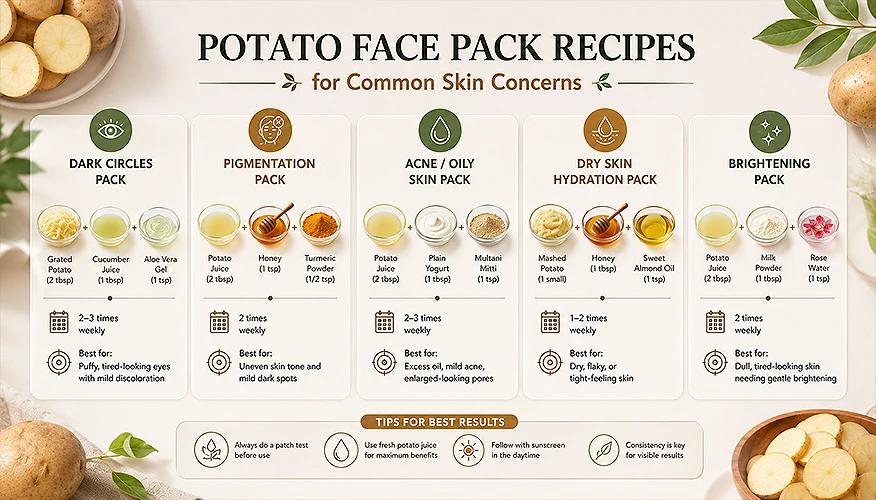
Here are five research-aligned recipes you can try, each designed for specific skin needs. Use these 1-3 times weekly maximum.
Dark circles pack
- Ingredients: 2 tbsp grated potato, 1 tbsp chilled cucumber juice, 1 tsp aloe vera gel
- Instructions: Mix ingredients and soak cotton pads in the mixture. Place over closed eyes for 10-15 minutes, then rinse with cool water
- Frequency: 2-3 times weekly
- Best for: Puffy, tired-looking eyes with mild discoloration
Pigmentation pack
- Ingredients: 2 tbsp potato juice, 1 tsp honey, 1/2 tsp turmeric powder
- Instructions: Combine ingredients into a smooth paste. Apply to clean face, avoiding the eye area. Leave for 15-20 minutes, rinse thoroughly
- Frequency: 2 times weekly
- Best for: Uneven skin tone and mild dark spots
Acne/oily skin pack
- Ingredients: 2 tbsp potato juice, 1 tbsp plain yogurt, 1 tsp multani mitti (Fuller's earth)
- Instructions: Mix to form a spreadable paste. Apply to a clean face, let dry for 15 minutes, rinse with lukewarm water
- Frequency: 2-3 times weekly
- Best for: Excess oil, mild acne, enlarged-looking pores
Dry skin hydration pack
- Ingredients: 1 small mashed potato, 1 tbsp honey, 1 tsp sweet almond oil
- Instructions: Mash potatoes until smooth, mix in honey and oil. Apply a thick layer to the face for 20 minutes, rinse with warm water
- Frequency: 1-2 times weekly
- Best for: Dry, flaky, or tight-feeling skin
Brightening pack
- Ingredients: 2 tbsp potato juice, 1 tbsp milk powder, 1 tsp rose water
- Instructions: Mix ingredients to form a smooth paste. Apply evenly to face, leave for 15 minutes, rinse gently
- Frequency: 2 times weekly
- Best for: Dull, tired-looking skin needing gentle brightening
Safety precautions and who should avoid potato treatments
- Natural ingredients can still cause irritation or allergic reactions.
- Always patch test potato juice on your inner arm for 24 hours before applying it to your face to check for irritation or allergic reactions.
- Stop using potato treatments immediately if you experience itching, redness, swelling, burning, or rash after application.
- Avoid potato-based skincare if you have a known nightshade allergy, very sensitive skin, eczema, open wounds, or severe acne flare-ups.
- Lemon juice mixed with potato can increase sun sensitivity and may cause irritation or reactions if exposed to sunlight.
- Natural remedies like potatoes for face treatments usually take 3–6 weeks of consistent use to show mild visible results.
- Fresh potato juice should ideally be used immediately and not stored for more than 24 hours, even when refrigerated.
- Homemade mixtures should be discarded if they develop an unusual smell, texture, or color change.
- Consult a dermatologist for persistent pigmentation, cystic acne, severe irritation, or any concerning skin changes, rather than relying solely on DIY remedies.
Conclusion
Potato for face treatments may offer mild cosmetic benefits thanks to their vitamin C, antioxidants, cooling effects, and natural starches. They can temporarily soothe puffiness, support gentle exfoliation, and help brighten dull-looking skin when used carefully and consistently.
At the same time, evidence for raw potato skincare remains limited, and results are usually subtle rather than dramatic. Potatoes should not replace dermatologist-recommended treatments for acne, pigmentation, or anti-aging concerns.
The safest approach is to use potato treatments occasionally, patch test first, maintain realistic expectations, and combine DIY remedies with a strong skincare foundation that includes cleansing, moisturizing, nutrition support, and daily sunscreen use.
Meet our expert

Meet our expert
Dr Sylvia Kama-Kieghe is a UK-based General Practitioner with a special interest in Women's Health and founder of Askawayhealth. She's also a tutor and medical student examiner. She is a Fellow of the Royal College of General Practitioners (FRCGP), Fellow of the Royal Society of Public Health (FRSPH), Fellow of the Royal Society of Medicine (FRSM), and holds a Diploma of the Faculty of Sexual and Reproductive Healthcare (DFSRH).


How was the experience with article?
We'd love to know!