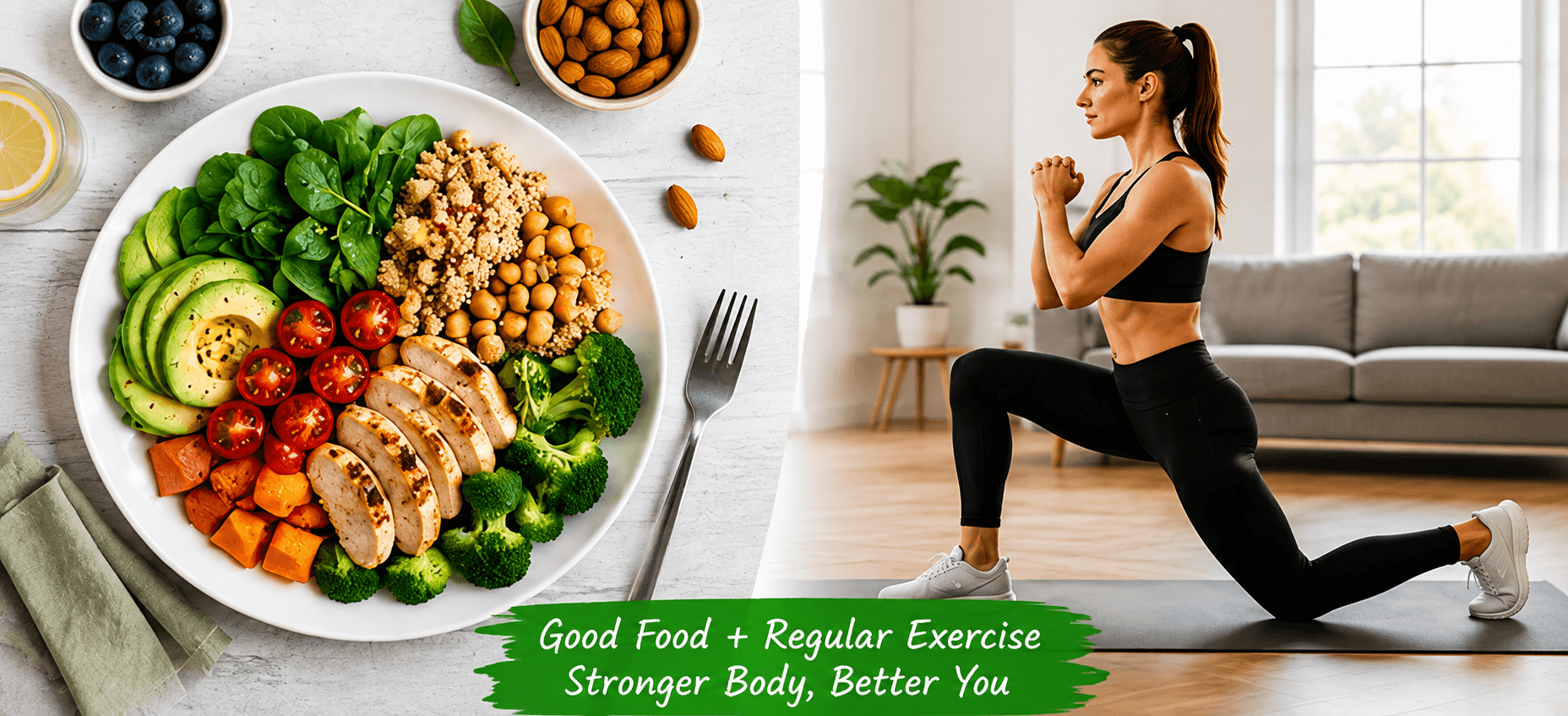
A healthy diet and exercise routine becomes easier when you start small, plan ahead, manage cravings and choose habits you can follow consistently.
Diet and exercise work best when they become part of your daily routine, not a short-term plan. Starting with small changes, eating mindfully, moving more and choosing activities you enjoy can help you stay consistent and build a healthier lifestyle.
Diet and exercise support a healthy lifestyle when they are followed consistently. A balanced diet gives the body nutrients and energy, while regular exercise improves fitness, strength and mood. Starting small, planning meals, moving more and choosing enjoyable activities can make the routine easier to maintain.
Have you ever started on a fitness regime and quit midway? You started eating healthy food, exercising regularly, and also hit the gym every day. However, did your excitement fade away all too soon from get-back-in-shape to those poor old habits? You are not alone! We have all been there and done that. The key to weight loss isn't simply about what you eat or how much you exercise - it's about your attitude and motivation.
Sticking to a fitness schedule or indulging in a healthy diet or regular exercise isn't easy. After all, there are a lot of factors like tiredness, boredom, lack of self-confidence that can stand in your way. You may be making excuses for yourself, or could even be stuck in a genuine problem.
Now, what if instead of making huge changes with the all or nothing principle, you resolve to make a few simple changes at a time? The key is to take small steps and move ahead consistently.
Why Are Diet and Exercise Important for a Healthy Lifestyle?
Diet and exercise support overall health by helping the body get the nutrients, energy and movement it needs. A balanced diet can support energy and recovery, while regular physical activity can improve fitness, mood and daily strength.

How Can You Stay Motivated for Diet and Exercise?
Staying motivated for diet and exercise starts with realistic goals, simple routines and habits that fit your lifestyle. Instead of making big changes all at once, focus on small daily actions such as walking more, planning meals and choosing healthier snacks.
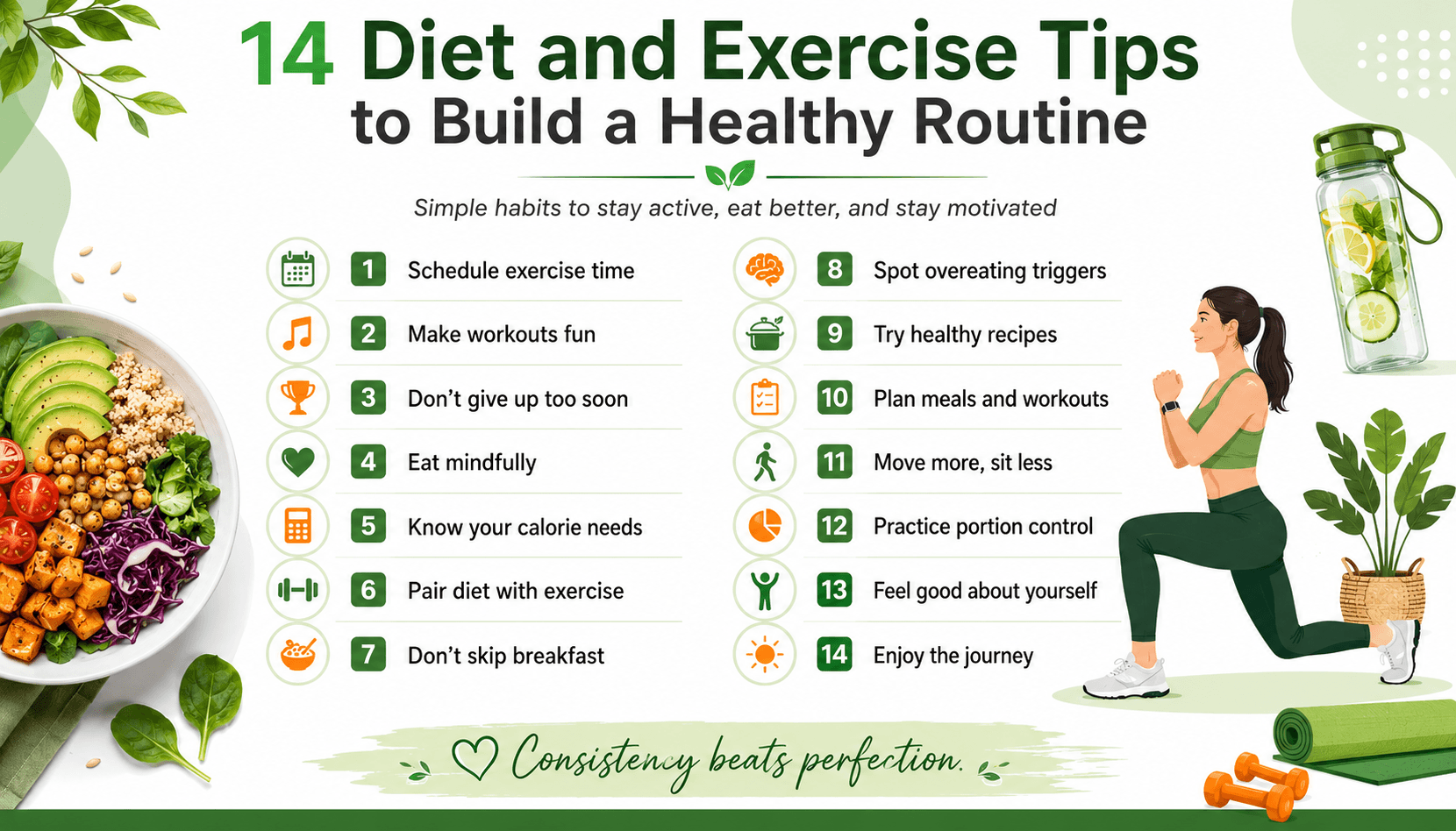
14 Diet and Exercise Tips to Build a Healthy Routine
1. How Can You Exercise When You Do Not Have Time?
Well, to be honest, setting aside time for fitness and exercise can be quite a task. If you have a busy schedule, try waking up 30 minutes early for at least few times a week and aim to work up your way to exercise. Thrice a week can be a good start.
2.How Can You Make Exercise More Enjoyable?
It's natural to grow weary of repetitive tasks especially when you don't have company. However, you can make exercise interesting by choosing different activities and exploring new options. Consider getting a friend or a co-worker to work out with you. This can make working out a fun experience and something to look forward to.
3. What Should You Do If Exercise Did Not Work Before?
Evaluate what went wrong but don't give up. Although you may not see visible changes, exercise can always impact your health in a positive way.

4. How Can You Manage Hunger and Cravings?
The very thought of food can make you crave junk, sugars or fats causing you to eat more and more. Eat mindfully and consider the impact of food choices you make.
5. How Do You Understand Your Daily Calorie Needs?
Our calorie intake per day generally depends on age, metabolism and level of physical activity. The recommended daily calorie intake for men is about 2500 and for women is 2000. You can use health apps and check the food labels of packaged foods to understand how many calories you are consuming.
6. Why Do Diet and Exercise Need to Work Together?
The misconception that exercising is enough to maintain or lose weight needs to be done away with. Exercise and healthy food go hand in hand. You burn calories when you exercise, but it doesn't make sense to eat more and consume more calories, is it?
7. What Can You Eat When You Do Not Have Time for Breakfast?
Breakfast is considered to be the most important meal by many. It kickstarts your metabolism and helps you burn calories throughout the day. However, you may tend to skip breakfast because you woke up late or are rushing for a meeting. Whatever the reason, you shouldn't skip out on this meal. If you don't have time for a full-fledged breakfast, you can have a grab and go breakfast like low-fat yoghurt, cereal bars, whole-grain cereal, and hard-boiled eggs.
8. How Can You Understand What Makes You Overeat?
Do you use food as a tool to cope with disappointment, success, boredom or rejection? Think of some healthier options to cope with mood swings. Keep your kitchen stocked with fruits and vegetables, low-fat yoghurt and other healthier choices.
9. How Can You Make Healthy Eating More Interesting?
Eating healthy doesn't have to be boring. You can try out new recipes from magazines or food blogs. Diet can be interesting and fun if you break up your routine with exciting new recipes.
10. How Can Meal Planning Support Diet and Exercise?
Plan out your day to squeeze in time for preparing a healthy meal and exercising. Plan a healthy menu and write a shopping list to take to the store. Prepare some healthy snacks to munch on well in advance, so that you don't resort to the unhealthy options out there.
11. How Can You Move More During the Day?
Make healthy choices to stay physically active. Take the stairs at work. Go for long walks with friends and family. If it's raining outside, walk at home, or take a jog. Even engaging in household chores can keep you on your feet and help you move around more.
12. How Can Portion Control Help Healthy Eating?
Eating out of large bowls or plates makes us eat more than we normally would. Try eating out of smaller bowls or containers. This can help you to avoid eating large helpings even if we go for seconds.
13. How Can a Positive Mindset Support Healthy Habits?
If you look at yourself in a positive light, people around you will also feel the same about you. Being on a healthy diet and exercising regularly not only keeps you fit physically but also has a huge impact on your mental health. Reinforcing the idea of a healthy you can go a long way in your journey to fitness.
14. Why Is Consistency Better Than Perfection?
Don't forget to enjoy each day's journey amidst your exercise and weight loss goals. Live for the moment and enjoy the simple pleasures of life, every day.
Praise yourself for committing to a healthy lifestyle. It won't always be easy, but keep in mind the important fact that you will never regret making good decisions!
| Challenge | Simple Solution |
| No time for exercise | Start with 20–30 minutes a few times a week |
| Exercise feels boring | Try different activities or work out with a friend |
| Hunger cravings | Eat mindfully and choose healthier snacks |
| Skipping breakfast | Keep quick options like yoghurt, eggs or whole-grain foods |
| Overeating | Identify emotional triggers and practise portion control |
| Sitting too much | Walk more, take stairs and move during breaks |
| Lack of motivation | Focus on small progress and consistency |
What Is the Best Way to Balance Diet and Exercise?
The best way to balance diet and exercise is to eat enough nutritious food to support your activity level while staying physically active in a way you can maintain. Exercise helps your body use energy and build strength, while a balanced diet supports recovery, mood and long-term health.
What Mistakes Should You Avoid in a Diet and Exercise Routine?
Common mistakes include skipping meals, following extreme diets, exercising too hard too soon, ignoring sleep, eating more because you exercised and giving up after one bad day. A healthy routine should feel realistic, flexible and sustainable.
Conclusion
Building a healthy diet and exercise routine does not require perfection. Start with small, realistic changes, plan your meals, move more during the day and choose activities you enjoy. When you eat mindfully, stay active and remain consistent, healthy habits become easier to maintain. Over time, these simple steps can support better energy, fitness, long-term health and confidence every day.
Meet our expert

Meet our expert
A Doctor of Medicine (MD) in Pharmacology., currently based in Mumbai, India, Dr Pramod Mane, comes with an experience of more than 20 years of working in Medical Affairs in the Pharmaceuticals & Nutraceutical Industry. Director of Medical Services at Mega Lifesciences since 2008, Dr Mane has been associated with several MNCs in the areas of Medical Affairs, Medical Services, Medico-marketing, Pharmacovigilance & Clinical trials in his illustrious career.



How was the experience with article?
We'd love to know!