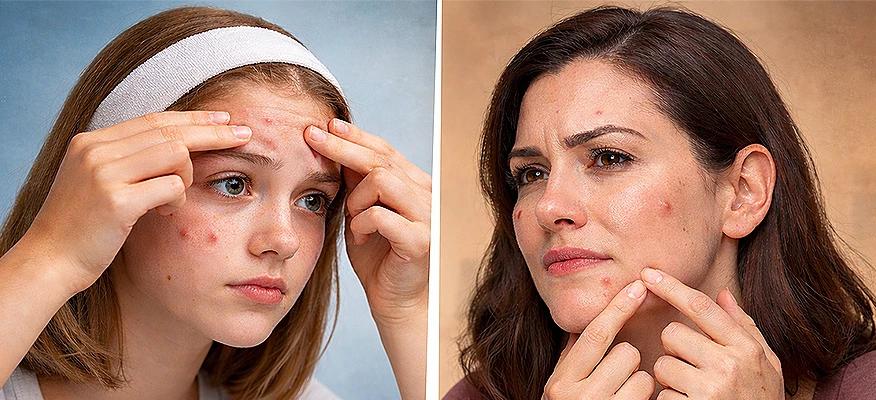
Adult acne is more common than most people think, and it’s not the same as teenage breakouts. The difference comes down to cause, location, and behaviour.
Teen acne is primarily triggered by hormonal surges during puberty, which increase oil production and clog pores, often showing up across the forehead, nose, and cheeks.
Adult acne, however, is driven by a mix of ongoing hormonal fluctuations, stress, lifestyle factors, and underlying conditions like Polycystic Ovary Syndrome. It typically appears along the jawline, chin, and neck, and tends to be deeper, more inflammatory, and longer-lasting.
In simple terms, teen acne is often short-term and easier to manage, while adult acne is more persistent, recurring, and closely linked to internal imbalances requiring a more consistent, targeted approach to treatment and skincare.
Why do adults get acne

Adult acne is a completely different beast with its own set of triggers and patterns. Understanding what's behind those stubborn breakouts is the first step toward clearer skin.
Hormonal imbalances drive most adult breakouts
Your hormones are like a symphony orchestra, and when they're out of tune, your skin pays the price. Fluctuating androgen levels, particularly testosterone, boost sebum production and clog pores, commonly affecting women aged 20-50 and men across adulthood.
The main hormonal culprits include:
- Menstrual cycles: Monthly hormone dips trigger jawline breakouts in women.
- Pregnancy and menopause: Major shifts disrupt skin balance in women.
- Testosterone surges in men: Higher or imbalanced levels increase sebum, leading to persistent acne into adulthood, often worsened by stress or receptor sensitivity.
- Birth control changes: Starting or stopping affects sebum in women.
- PCOS: Excess androgens link to acne in up to 20% of urban Asian women.
- Thyroid disorders: Hypothyroidism alters sebum in both genders.
- Androgen imbalances in men: Conditions like low testosterone therapy or high DHT conversion fuel breakouts.
For women in urban areas across Asia, PCOS prevalence can reach up to 20%, making it a significant factor in adult acne patterns.
Lifestyle factors that trigger adult acne
Your daily habits play a bigger role in adult acne than you might realize. While teenagers can often get away with poor lifestyle choices, adult skin is less forgiving.
- Stress and sleep disruption: Chronic stress elevates cortisol levels, which indirectly increases androgens and oil production. Poor sleep disrupts your hormone balance in similar ways, creating a cycle where stress causes acne, and acne causes more stress.
- Diet and inflammation: High sugar intake may spike insulin-like growth factor-1, promoting sebum production and inflammation. That afternoon sugary chai or late-night sweet craving could be showing up on your face days later. Alcohol and smoking also exacerbate pore clogging, especially in humid climates.
Skincare product mistakes
Many women unknowingly sabotage their skin by using the wrong products. Heavy anti-aging creams with comedogenic ingredients can block pores, worsening acne in oil-prone adult skin. The key is finding non-comedogenic, lightweight formulas that address both aging concerns and acne prevention.
Environmental triggers
Urban pollution deposits particles that inflame pores, while masks trap moisture and bacteria against your skin. Hot, humid weather boosts sweat and oil production, creating perfect conditions for hormonal acne flares - particularly challenging for women living in tropical urban environments.
How adult acne differs from teen acne
Understanding these differences is crucial for effective pimple treatment, as what worked for your teenage skin might actually make adult acne worse.
| Aspect | Teen Acne | Adult Acne |
| Common age group | Usually appears during adolescence and puberty | Persists or begins after age 25 |
| Typical location | Concentrated in the T-zone (forehead, nose, chin) due to widespread oil gland stimulation | Focused on the lower face (jawline, chin, and cheeks), reflecting hormonal fluctuation patterns |
| Primary trigger | Puberty-related androgen surge, increasing overall oil production | Hormonal imbalances driven by stress, menstrual cycles, PCOS, and insulin-related dietary responses |
| Hormonal influence | Temporary and development-related | Cyclical, persistent, and influenced by lifestyle and metabolic factors |
| Type of acne lesions | Mostly blackheads and whiteheads; occasional inflamed pimples | Deep, painful cysts and nodules with prolonged inflammation |
| Skin characteristics | Generally oilier, thicker, and more resilient | More sensitive, thinner, and prone to irritation |
| Inflammation level | Mild to moderate | Moderate to severe with deeper tissue involvement |
| Response to treatment | Responds well to basic pimple treatment and oil-control products | Requires targeted, gentle, and hormone-aware treatment approaches |
| Risk of scarring and marks | Lower risk; skin heals quickly | Higher risk of dark spots and scarring due to slower healing and chronic inflammation |
| Healing speed | Faster cell turnover supports quicker recovery | Slower cell renewal leads to prolonged healing and post-acne marks |
| Treatment considerations | Strong actives often tolerated | Harsh treatments can worsen acne and sensitivity |
The emotional impact of adult acne
Adult acne carries a heavier emotional burden than teenage breakouts, affecting professional confidence and personal relationships in ways that extend far beyond skin deep.
Mental health consequences
Women aged 25-45 face unique pressures like career advancement, relationship milestones, and social expectations that make acne particularly distressing. Studies show adult acne correlates strongly with anxiety and depression, especially in cultures where appearance ties directly to marriage prospects and social status.
Men also experience notable mental health impacts from adult acne, often linked to reduced self-esteem, social withdrawal, and heightened stress from professional competitiveness or body image ideals in urban settings. Research indicates similar risks of anxiety and depression in affected men, compounded by stigma around "adult" breakouts persisting beyond adolescence. Both genders report impaired quality of life, with men showing reluctance to seek treatment due to perceived masculinity norms.
The shame of ‘outgrowing’ your skin problems
There's an unspoken expectation that acne should end with adolescence. When pimples on the face persist into adulthood, many women feel shame and frustration, as if they've somehow failed to achieve basic adult milestones. This stigma is particularly pronounced in professional settings where confidence and polished appearance matter.
Treatment approaches for adult vs teen acne
The best acne treatment for adults requires a completely different strategy than teenage acne management, focusing on hormonal balance rather than just oil control.
Teen acne treatment basics
Teenagers typically benefit from:
- Exfoliating salicylic acid for surface oil control
- Antibacterial benzoyl peroxide for bacterial management
- Simple, straightforward routines targeting widespread oil production
Adult acne requires sophisticated approaches
Adult treatment focuses on:
Topical treatments
- Retinoids for improved cell turnover and pore clearing
- Gentle, non-irritating formulations that won't compromise the skin barrier
- Targeted pimple patch applications for specific breakouts
Hormonal therapy
- Anti-androgen medications like spironolactone for PCOS-related acne
- Hormonal birth control to regulate cycle-related breakouts
- Thyroid management for underlying endocrine issues
Holistic care integration
The most effective adult acne treatment combines medical intervention with lifestyle modifications—low-glycemic diets, stress reduction techniques, consistent skincare routines, and adequate sleep to support overall hormonal balance.
Expert recommendations for adult acne

Professional guidance becomes essential when dealing with adult acne, as the stakes are higher and the solutions more complex than teenage breakouts.
When to see a dermatologist
Don't wait to seek professional help if you experience:
- Acne that persists beyond 6 weeks of consistent home treatment
- Deep, cystic lesions that cause pain or scarring
- Breakouts linked to irregular periods or other PCOS symptoms
- Significant emotional distress affecting your daily life
Early intervention prevents scarring and addresses underlying hormonal imbalances before they worsen.
Why adult acne needs specialized care
Adult acne demands hormone-focused treatment rather than aggressive topical approaches. Your dermatologist can identify whether your breakouts stem from PCOS, thyroid issues, or other hormonal imbalances, creating a targeted treatment plan that addresses root causes rather than just symptoms.
Professional treatment often includes pimple marks removal strategies and long-term pimple marks treatment to address both active acne and post-inflammatory hyperpigmentation that commonly affects adult skin.
Conclusion
Adult vs. teen acne causes and treatment differ fundamentally: while teenage breakouts result from pubertal hormone surges affecting surface oil production, adult acne stems from complex hormonal cycles, lifestyle factors, and environmental triggers that create deeper, more persistent inflammation patterns.
The key to success lies in recognizing that adult acne isn't a failure of personal hygiene or a sign of immaturity. It's a legitimate medical condition that responds best to comprehensive, hormone-aware treatment approaches. Rather than reaching for harsh teenage acne products or quick fixes, invest in professional evaluation and personalized treatment plans that address your unique hormonal profile and lifestyle factors.
Remember, achieving clear skin as an adult often takes longer than teenage acne treatment, but the results are more sustainable when you address underlying causes. Your skin - and your confidence - deserve this thoughtful, comprehensive approach.
Meet our expert

Meet our expert
Dr. Lynda Odoh-Anikwe, holding a Bachelor of Medicine and Bachelor of Surgery (M.B.B.S) degree, she pursued her Master of Public Health (MPH) at the University of Manchester. Actively engaged in advancing preventive healthcare, she is a member of the Society of Lifestyle Medicine Nigeria. Dr. Odoh-Anikwe aims to attain certification as a Lifestyle Medicine Physician from the International Board of Lifestyle Medicine by the final quarter of 2022.

How was the experience with article?
We'd love to know!