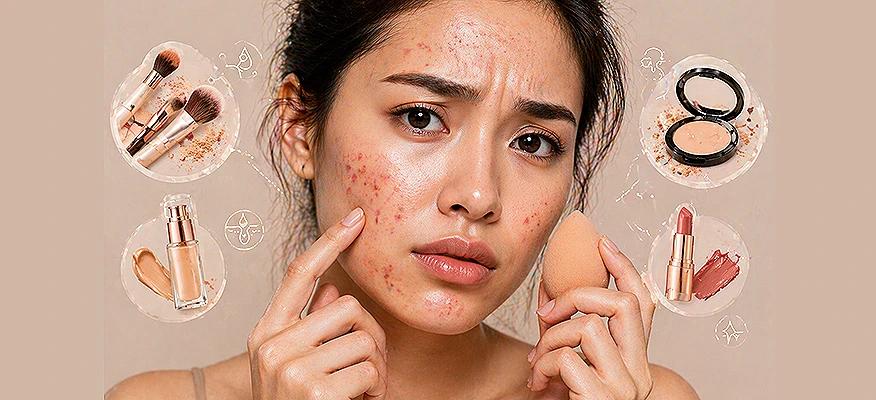
Makeup can be a confidence boost, but if you’re noticing more breakouts, it’s natural to ask: can makeup cause acne? The short answer is yes, especially when products clog pores or aren’t removed properly.
In most cases, it’s not makeup alone, but how it’s formulated and used. Heavy or pore-clogging ingredients, layering multiple products, and sleeping with makeup on can block pores and trigger Acne vulgaris. Dermatology guidance from the American Academy of Dermatology also describes “acne cosmetica” - small, persistent breakouts linked to cosmetic use.
In warmer, more humid climates like Southeast Asia and Africa, where skin tends to be oilier and makeup stays on longer, these triggers can become even more noticeable.
You’re not alone in wondering ‘Does makeup cause acne?’ and the answer might surprise you. While makeup isn’t the villain it’s often made out to be, certain habits and product choices can definitely trigger or worsen breakouts.
In simple terms, makeup doesn’t always cause acne but the wrong products or habits can.
Can makeup really cause acne?

Yes, makeup can contribute to acne, but it's not always the villain we make it out to be. Dermatologists recognize a specific type of acne called acne cosmetica, in which breakouts are caused or worsened by cosmetic products.
Here's what the research tells us:
- Regular cosmetic use, especially foundations, powders, and heavy moisturizers, is linked to a higher risk and severity of acne
- Women who use multiple products daily face a higher risk of developing acne compared with those who use minimal makeup
- The more products you layer and the more frequently you apply them, the greater your chances of experiencing skin breakouts
However, when you choose non-comedogenic, oil-free products and remove them properly, makeup doesn't have to worsen your acne. Many women successfully wear makeup while managing acne-prone skin, so it's all about making smarter choices.
Common makeup mistakes that can worsen acne
Let's talk about the everyday habits that might be sabotaging your skin without you realizing it.
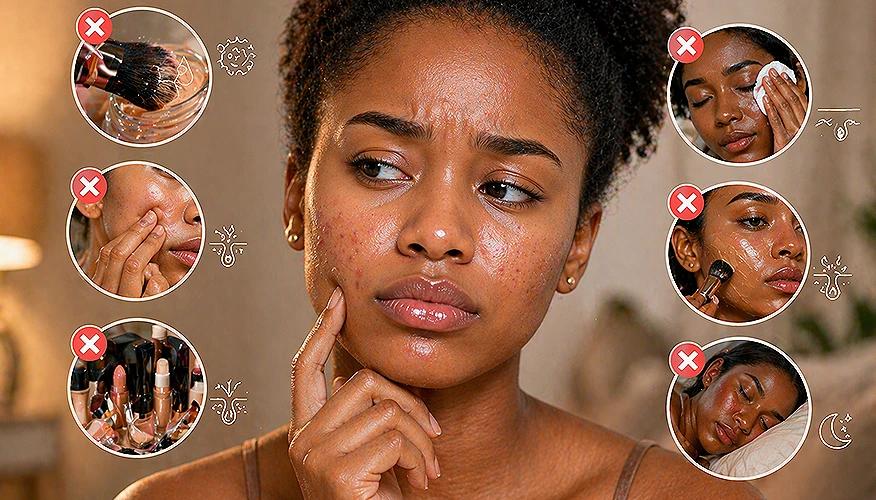
- Not removing makeup completely is probably the biggest culprit. After a long day, that foundation, concealer, and sunscreen mix with sebum, sweat, and pollution. In urban areas where air quality isn't great, this cocktail becomes even more problematic. Your pores get clogged, and inflammation follows.
- Sleeping with makeup on is another major mistake. While you sleep, your skin is busy repairing and renewing itself. When makeup sits on your face all night, it traps dead cells and oil, creating the perfect environment for breakouts.
- Many of us are guilty of layering too many products; think primer, foundation, concealer, color corrector, powder, and setting spray. Each layer increases what experts call the "comedogenic load," so more products usually mean higher acne risk.
- Using heavy, thick formulations is particularly problematic in humid climates. That full-coverage foundation might give you flawless photos, but if it's oil-rich and occlusive, it's also more likely to clog your pores.
- Sharing makeup or not cleaning your tools. Contaminated brushes and sponges can introduce bacteria, making inflammatory acne worse. This is especially risky in hot, humid weather when bacteria multiply faster.
- Finally, aggressive scrubbing to remove stubborn makeup can backfire. Over-cleansing or harsh scrubs disrupt your skin barrier, increase irritation, and can actually trigger more breakouts.
How makeup contributes to acne formation
Understanding the science helps you make better choices and clear doubts like "Does makeup cause acne?" Acne formation involves four key factors: excess oil production, abnormal skin cell shedding, bacterial growth, and inflammation. Unfortunately, certain makeup habits can worsen each of these.
Pore obstruction is the main way in which makeup contributes to breakouts. Many products contain occlusive agents such as oils, waxes, and silicones, which form a film on your skin. While this can give you that smooth, poreless look, it also traps sebum and dead cells underneath, leading to blackheads, whiteheads, and eventually inflamed pimples.
The interaction of makeup with your skin's natural processes is crucial to understand. Your skin constantly produces oil and sheds cells. When makeup creates a barrier, this natural process gets disrupted. Oil can't flow freely, dead cells accumulate, and bacteria have more to feed on.
Makeup ingredients that may trigger acne
Some ingredients in makeup products are more likely to clog pores than others, and knowing which ones to watch for can help you make better choices:
- Comedogenic oils and fatty acids: Classic pore-cloggers include lauric acid, stearic acid, isopropyl myristate, and isopropyl palmitate. Heavy mineral oils, petrolatum, and certain lanolin derivatives can form occlusive films that trap everything underneath.
- Synthetic emollients and esters: Both animal and human studies have revealed that various myristates and palmitates are comedogenic. These ingredients often appear in foundations and moisturizers to give that smooth, luxurious feel.
- Certain surfactants: Present in facial cleansers and makeup removers, they can also contribute to breakouts when used frequently. While they're meant to clean your skin, some anionic surfactants can be irritating and comedogenic.
- Fragrances and preservatives: While not traditionally comedogenic, they're frequent irritant triggers. When your skin is irritated, inflammation around hair follicles can worsen existing acne or create acne-like eruptions.
Choosing the wrong products
Product selection can make or break your skin's health, especially if you're already acne-prone.
Let's look at the choices that research shows are most problematic and make you ask, "Does makeup cause acne?"
- Heavy liquid foundations and concealers: Studies of people whose acne treatments weren't working found that those using liquid foundation and concealer were much more likely to report their acne getting worse. Full-coverage, long-wear formulas might give you camera-ready skin, but they can also trap sweat and oil.
- Powders: They might seem like a safer choice, but research suggests otherwise. One study found that powder use was associated with a 3.47% increased risk of acne. Fine powders can mix with sebum and sweat, creating a paste-like mixture that blocks pores.
- Oil-based, thick moisturizers: Many popular fairness creams, brightening products, and anti-aging formulations are rich and occlusive. When layered under makeup, especially in hot, humid climates, they can be too much for acne-prone skin.
- Climate mismatch: Using products formulated for dry, cold-weather skin in tropical settings can be overly occlusive. Your skin needs different support in different environments.
How to use makeup safely if you have acne
The good news is that having acne doesn't mean giving up makeup entirely. With the right approach, you can enjoy cosmetics while keeping your skin healthy.
- Choose your products wisely: Look for labels like "non-comedogenic," "won't clog pores," "oil-free," or "non-acnegenic" on foundations, sunscreens, and moisturizers. Opt for lighter texture foundations, tinted moisturizers, and gel-based products instead of thick creams or stick formulas.
- Less is often more: Apply the minimum effective amount and avoid unnecessary layering. Instead of a heavy layer of foundation, try spot-concealing only where needed. Rather than reapplying powder multiple times throughout the day, gently blot excess oil with a tissue.
- Master the art of gentle cleansing: Remove makeup every evening using a mild, non-comedogenic makeup remover, followed by a gentle, pH-balanced cleanser suitable for acne-prone skin. Avoid harsh scrubs and over-washing.
- Pay attention to often-missed areas: Clean thoroughly along your hairline, under headscarves, around mask lines, and along your jawline where residues frequently accumulate and cause breakouts.
- Keep your tools clean: Wash brushes and sponges regularly with a gentle cleanser and let them dry completely. Never share makeup or applicators.
- Combine makeup with proper acne care: Using topical acne treatments as prescribed by a dermatologist can help control breakouts while still allowing you to wear makeup. Choose lightweight, non-comedogenic moisturizers that work well with your treatment products.
Is makeup bad for acne-prone skin?
This question doesn't have a simple yes or no answer. Research shows that incorrect or heavy cosmetic use can be a significant risk factor for acne, especially in people who are already prone to breakouts. However, major dermatology organizations confirm that people with acne can wear makeup safely.
The key is how you use makeup, not whether you use it at all. Studies suggest that reducing exposure to comedogenic products can decrease acne severity, which means makeup's effects are modifiable.
Additionally, climate considerations are especially important if you live in hot, humid areas. Heat and humidity increase sweating and oil production, making occlusive or heavily layered makeup riskier. Environmental factors like dust and pollution can also stick to makeup films, adding to pore blockage.
When to seek professional advice
Sometimes DIY skincare and careful product selection aren't enough. Consider consulting a dermatologist or qualified skincare professional if you're experiencing persistent issues.
Seek professional help if:
- Your acne persists or worsens after 6-8 weeks of using non-comedogenic products and improving your routine
- You notice clear connections between specific products and new breakouts
- You have moderate to severe acne with inflamed lesions or cystic bumps
- Your acne is leaving dark marks or scars
- Breakouts are affecting your confidence or social interactions
A skincare professional can determine whether you're dealing with acne cosmetica, hormonal acne, or other skin conditions. They can also recommend appropriate treatments and help you build a makeup routine for acne-prone skin.
Conclusion
So, does makeup cause acne? The answer is complex but empowering; makeup can contribute to or worsen breakouts, especially when products are comedogenic, heavily layered, or not removed properly. However, this relationship is dose-dependent and completely modifiable.
The research is clear that heavier product use increases risk, but careful selection and routine adjustments can significantly reduce that risk. For those of us living in warm, humid climates, focusing on lightweight, non-comedogenic formulations, climate-appropriate textures, minimal layering, and consistent, gentle cleansing offers a practical path forward.
Meet our expert

Meet our expert
Dr Sylvia Kama-Kieghe is a UK-based General Practitioner with a special interest in Women's Health and founder of Askawayhealth. She's also a tutor and medical student examiner. She is a Fellow of the Royal College of General Practitioners (FRCGP), Fellow of the Royal Society of Public Health (FRSPH), Fellow of the Royal Society of Medicine (FRSM), and holds a Diploma of the Faculty of Sexual and Reproductive Healthcare (DFSRH).


How was the experience with article?
We'd love to know!