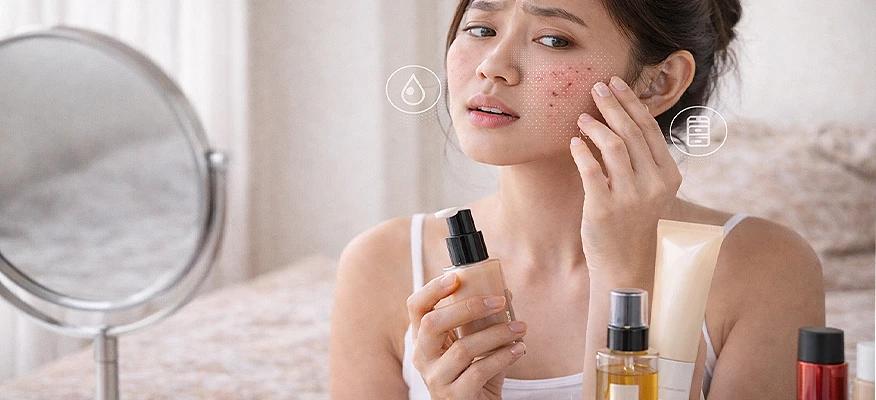
You switch your cleanser, try a new serum, maybe even cut back on certain foods—yet the breakouts keep coming. What often gets overlooked is something far more routine: the products you use every day on your skin and hair.
From foundation and sunscreen to hair oils, conditioners, and even beard balms, some products can clog pores without you realising it. These are known as comedogenic products—formulations that can trap oil, dead skin, and bacteria inside pores, leading to blackheads, whiteheads, and acne over time.
Dermatology guidance from the American Academy of Dermatology highlights that acne is often influenced by external factors like skincare and cosmetic use—especially when products are not suited to your skin type. Ingredients that feel rich or nourishing on the surface may still block pores beneath, particularly in hot and humid environments.
And that’s where everyday context matters. Across Southeast Asia and East Africa, heat, humidity, sweat, and frequent product layering—from sunscreen to makeup to hair care—can make pores more prone to clogging. Even something as simple as hair oil transferring onto the forehead or pillow can quietly contribute to breakouts.
The tricky part? These triggers don’t always show up immediately. Acne caused by comedogenic products can build gradually, making it harder to pinpoint the cause.
The good news is that once you understand what to look for, this is one of the most preventable causes of acne. In this article, we break down what comedogenic products are, how to identify them, and how to choose skin-friendly alternatives, so you can stop guessing—and start making choices that truly support clearer skin.
What does comedogenic mean?
Understanding what comedogenic means is your first step toward clearer skin. The term comes from "comedones," which are those small bumps that form when your pores get clogged with oil and dead skin cells.
Comedogenic simply refers to any ingredient or product that tends to block pores and promote comedone formation. Comedones appear in two forms:
- Blackheads (open comedones): When the clogged material is exposed to air, it oxidizes and turns dark
- Whiteheads (closed comedones): When the plug stays covered by skin, appearing as small white or flesh-colored bumps
When these clogged pores become inflamed or infected with bacteria like Cutibacterium acnes, they can develop into red, painful pimples. For women living in humid cities, the combination of heat, sweat, and heavy products can make comedogenic effects even more pronounced.
How comedogenic products cause acne

Acne develops through a perfect storm of four main factors: increased oil production, buildup of dead skin cells, bacterial growth, and inflammation. Comedogenic products can trigger or worsen each of these processes.
Here's what happens when you use pore-clogging products:
- They mix with your natural oils to form plugs that trap oil, dead cells, and bacteria inside your follicles
- They worsen the buildup of skin cells in your pores, creating tiny microcomedones that eventually become visible blackheads and whiteheads
- They reduce oxygen inside clogged pores, creating an environment where acne bacteria thrive and multiply
- They can damage your skin barrier, especially if they contain harsh surfactants, making your skin more reactive and prone to inflammation.
Makeup products that commonly cause acne
If you're wondering, "Does makeup cause acne?" The answer isn't a simple yes or no, as it depends on the specific formulation and how you use it. However, certain types of makeup are more likely to cause problems than others.
- Foundations and concealers: These products often contain occlusive oils, waxes, and pigments that can block pores, especially when worn for long hours in hot, humid climates. Heavy, full-coverage, or long-wear formulas generally pose higher risks than lightweight, water-based alternatives.
- Powder compacts and blushers: While these products are a must-have in any makeup kit, pressed powders often include emollient binders like certain esters and waxes that can be comedogenic. Add in the friction from repeated application and dirty makeup brushes, and you've got a recipe for acne caused by makeup.
- Primers: This product deserves special attention because it's designed to create a smooth base. However, some primers contain silicones and film-forming agents that can trap sweat, oil, and dead skin if not removed properly at night.
- Heavy cream-based products: Products like stick foundations, cream blushes, and contour sticks are typically rich in oils and waxes that can worsen comedones, particularly if you have oily or combination skin.
Skincare ingredients that can be comedogenic
Not all rich textures or oils are problematic, but research has identified specific ingredients that repeatedly cause issues. Understanding these ingredients to avoid in skincare can help you make better choices.
- Fatty acids and their derivatives are common culprits. Lauric acid and stearic acid, often found in cleansers and moisturizers, have been associated with higher acne risk in human studies. Glyceryl stearate was identified as the most frequent comedogenic ingredient in moisturizers in one significant study.
- Natural oils and butters can be tricky. While many people love coconut oil for its moisturizing properties, it has been rated as more comedogenic in older testing scales, along with cocoa butter and wheat germ oil. This is particularly relevant if you're using traditional hair oils or body butters that might transfer to your face.
- Lanolin and lanolin derivatives have historically shown comedogenic potential in both animal and human testing models. These ingredients are common in rich moisturizers and lip products.
- Algae extracts and iodide-rich ingredients can penetrate deep into pores and potentially trigger inflammation, making them ingredients to avoid for oily acne-prone skin.
Remember, not everyone reacts the same way to these ingredients. Your skin's response depends on your individual skin type, the climate you live in, and how you combine products in your routine.
Grooming products that cause acne
Grooming products don't just affect the areas where they're directly applied, as they can cause breakouts wherever they come into contact with skin, including the face, neck, chest, and back. Pomade acne and acne mechanica are widely recognized patterns, particularly affecting men, but relevant for anyone using hair and body products
Shaving products can be particularly problematic. Shaving creams and aftershaves often contain occlusive emollients, fragrances, and alcohol that can irritate skin and promote pore clogging. The repeated trauma of shaving creates micro-cuts that make skin more reactive to potentially irritating ingredients.
Hair products are major contributors to what dermatologists call "pomade acne." Hair oils, styling gels, and pomades can run from your scalp onto your forehead, temples, and cheeks, causing comedones and inflammatory bumps along your hairline.
Body products like fragranced lotions and thick creams can cause follicular blockage on the chest, back, and shoulders, areas that are particularly prone to sweating in hot climates.
Even if you don't use these products yourself, sharing grooming spaces with partners or family members who do can indirectly expose your skin to comedogenic ingredients through shared pillowcases, towels, or close contact.
Acne cosmetica: Product-induced acne
Acne cosmetica is a specific type of acne that's triggered or worsened by cosmetic products. Unlike typical teenage acne, this condition often appears in adults who may never have had severe breakouts before.
The tell-tale signs of acne cosmetica include:
- Numerous small, uniform comedones and papules
- Breakouts concentrated on areas where products are applied, that is, the forehead, cheeks, chin, temples, and hairline
- Persistent nature that doesn't respond to typical acne treatments until the products are removed
How to identify if a product is causing acne
Figuring out which product might be causing your breakouts requires some detective work, but there are clear patterns to watch for:
- Timing is crucial: New breakouts typically begin days to weeks after starting a new product or increasing how often you use something. The acne may gradually worsen with continued use and improve when you stop using the suspected product.
- Location patterns: If you're getting breakouts mainly where you apply certain products, that's a strong clue.
- Types of lesions: Product-induced acne often shows up as closed comedones and small papules rather than deep, painful nodules.
If you suspect any product to be the culprit, do a "withdrawal test" by stopping one suspected product at a time for 4-6 weeks and observe whether your skin improves. You can also try patch testing new products on a small area, like your jawline, before applying them to your entire face.
What to look for in acne-safe products
When shopping for products that won't aggravate acne-prone skin, focus on formulations that minimize pore blockage and irritation.
Choose lightweight, non-occlusive, oil-free, or water-based products, especially if you live in a humid climate. For sunscreen and makeup, gel, fluid, or mineral-based formulations are usually better tolerated than heavy creams.
Look for helpful labels like "non-comedogenic," "non-acnegenic," or "oil-free." While these aren't regulated terms, they indicate the product was formulated with acne-prone skin in mind.
Seek out beneficial active ingredients like:
- Salicylic acid to help unclog pores
- Benzoyl peroxide to reduce acne bacteria
- Niacinamide for its anti-inflammatory properties
- Topical retinoids (usually prescription) to normalize skin cell turnover
Does non-comedogenic mean acne-proof?
The short answer is no. "Non-comedogenic" is not a strictly regulated term in most regions, and companies may base this claim on limited testing or ingredient analysis.
Non-comedogenic typically means the product is formulated to be less likely to clog pores, often by avoiding known high-risk ingredients or passing basic comedogenicity testing.
People's skin responses vary significantly. An ingredient that's safe for one person may cause breakouts in another, especially if you have underlying hormonal acne or very sensitive skin. Additionally, irritation from fragrances, alcohols, or exfoliants in a "non-comedogenic" product can still provoke acne flares through inflammation, even if visible comedones aren't formed. Over-application and improper cleansing can make otherwise safe products problematic.
Can switching products improve acne?
The good news is that removing comedogenic products from your routine can genuinely reduce acne risk and severity. Research strongly supports this approach, and dermatologists routinely recommend discontinuing suspected cosmetics as part of acne treatment.
When you eliminate pore-clogging products, you might start seeing improvements within 4-8 weeks. Some people notice significant improvement just from changing their cleanser and moisturizer, without needing prescription medications.
The key is simplifying your routine to gentle, non-comedogenic basics like a mild cleanser, appropriate moisturizer, targeted acne treatment if needed, and broad-spectrum sunscreen. This approach is especially valuable if you're working with budget constraints or limited product access, as a few well-chosen products often bring better results than a complicated routine with multiple specialized items.

When to seek expert advice
While switching to non-comedogenic products can help many people, some situations call for professional guidance. Consider seeing a dermatologist or qualified healthcare provider when:
- Your acne is moderate to severe, painful, or leaving scars or dark marks
- You see no improvement after 2-3 months of adjusting products and using over-the-counter treatments
- Your acne comes with other symptoms that might suggest hormonal issues, like irregular periods or sudden weight changes
- You're pregnant, breastfeeding, or planning pregnancy, and need guidance on safe products and treatments
Conclusion
Understanding how comedogenic products contribute to acne empowers you to make better choices for your skin. These products cause problems by clogging pores, disrupting your skin barrier, and creating environments where bacteria and inflammation thrive. For women living in hot, humid climates, being mindful of makeup, skincare, and grooming choices becomes even more important.
The path to clearer skin often starts with learning about basic ingredients, paying attention to patterns on your own skin, and simplifying your routine around gentle, non-comedogenic products. Remember that everyone's skin is different, and what works for your friend might not work for you. When in doubt, don't hesitate to seek expert guidance because your skin deserves the best care you can give it.
Meet our expert

Meet our expert
Dr. Lynda Odoh-Anikwe, holding a Bachelor of Medicine and Bachelor of Surgery (M.B.B.S) degree, she pursued her Master of Public Health (MPH) at the University of Manchester. Actively engaged in advancing preventive healthcare, she is a member of the Society of Lifestyle Medicine Nigeria. Dr. Odoh-Anikwe aims to attain certification as a Lifestyle Medicine Physician from the International Board of Lifestyle Medicine by the final quarter of 2022.



How was the experience with article?
We'd love to know!