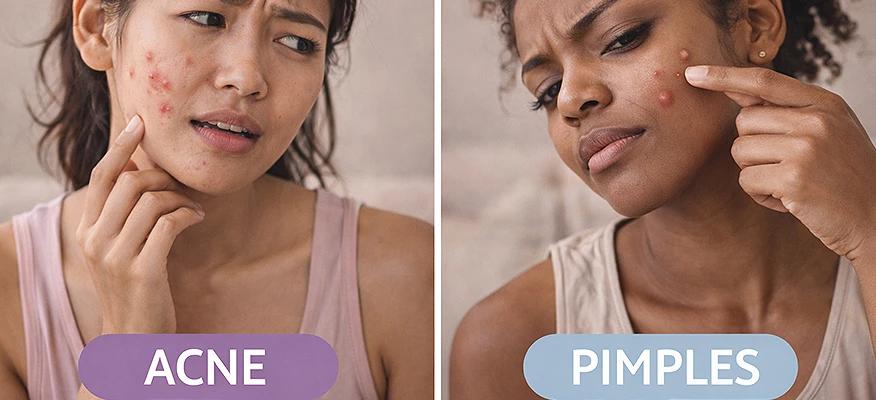
You’ve probably used the words ‘acne’ and ‘pimples’ interchangeably your whole life. Most people do. But if you’ve been searching for the right treatment and still not seeing results, that confusion might be exactly what's holding you back.
Here’s what dermatologists know that most skincare content doesn’t tell you: acne is a disease. A pimple is a symptom.
Understanding that one distinction changes everything — how you shop for products, how you talk to a doctor, and how aggressively you treat your skin. For people across Southeast Asia and Africa, where humidity, diet, hormonal patterns, and access to dermatologists all shape how skin behaves, getting this right isn't just useful. It's necessary.
Knowing the difference between acne and pimples makes it easier to see why some spots fade quickly while others persist, spread, or leave marks behind. This clarity allows you to respond to your skin with confidence and choose care that supports lasting, healthy results.
What is acne?
Acne is much more than just a few spots on your face - it's a chronic inflammatory skin condition that affects your hair follicles and oil glands. It's like an ongoing skin disorder that creates blockages and various types of lesions, typically appearing on your face, chest, and back.
For women aged 25-45, acne often becomes a persistent companion due to hormonal fluctuations. Whether it’s your monthly cycle, work stress, or the demands of juggling family and career, these factors can trigger acne flare-ups.
This is particularly common in urban areas where stress levels run high and environmental factors like humidity can worsen the condition.
Key features of acne
Acne has some distinct characteristics that set it apart from occasional breakouts:
- Persistent pattern: Unlike random pimples, acne involves recurring outbreaks rather than isolated spots
- Multiple lesion types: You'll see a mix of different bumps and spots, not just one type
- Inflammatory process: Clogged pores filled with excess sebum and dead skin cells often become infected with bacteria, causing redness and swelling
- Potential for scarring: If left untreated, acne can lead to permanent marks on your skin
Common types of acne
Understanding what acne and pimples are starts with recognizing the different forms acne can take:
Non-inflammatory acne:
- Blackheads (open clogged pores that appear dark)
- Whiteheads (closed, clogged pores with a white appearance)
Inflammatory acne:
- Papules (small red, tender bumps)
- Pustules (pus-filled bumps with a white center)
- Nodules (large, painful lumps deep within the skin)
- Cysts (deep, pus-filled lumps that can be quite painful)

What is a pimple?
A pimple is essentially a single inflamed lesion. It's typically a pustule or papule that results from a clogged pore that's become infected with bacteria. While annoying, a pimple is just one visible sign of underlying skin issues, often appearing suddenly on your face, back, or shoulders.
Key features of pimples
Pimples have their own set of characteristics that make them different from acne:
- Localized issue: Usually appears as a single red, tender bump, sometimes with pus at the center
- Quick formation: Can appear seemingly overnight, especially during stressful periods or hormonal changes
- Faster resolution: Generally resolves much quicker than acne outbreaks
- Less scarring risk: While they can be painful, pimples usually don't cause the same scarring concerns as severe acne
The main cause behind pimples is the same trio of factors: excess oil production, dead skin cell buildup, and bacterial growth in the follicle. However, pimples tend to be more of a temporary reaction rather than an ongoing condition.
Is acne the same as pimples?
This is one of the most common questions women ask, and the answer is no, acne and pimples are definitely not the same thing. Here's the key distinction: acne is the broader disease or chronic condition that affects your skin, while pimples are individual symptoms or lesions that can be part of that condition.
Think of it this way - if acne were a storm system, pimples would be individual raindrops. You can have pimples without having acne (like when you get a single breakout before your period), but if you have acne, pimples are likely part of the bigger picture.
The main differences between acne and pimples
Here's a clear breakdown:
| Aspect | Acne | Pimples |
| Definition | Chronic skin disorder affecting multiple follicles | Single or occasional inflamed pore lesion |
| Scope | Widespread, recurring outbreaks across the face/body | Isolated spots that often self-resolve |
| Severity | Ranges from mild to severe with scarring risk | Usually mild, superficial inflammation |
| Duration | Persistent condition needing ongoing management | Short-term, typically clears in days to weeks |
| Treatment approach | Requires a comprehensive, long-term strategy | Can often be managed with spot treatments |
Causes of acne and pimples
Both acne and pimples stem from the same basic process, but acne involves additional triggers that make it more complex.
The foundation for both includes:
- Excess sebum production: Your oil glands are working overtime
- Dead skin cell buildup: Old cells clogging your pores instead of shedding naturally
- Bacterial growth: P. acnes bacteria are multiplying in the clogged environment
However, acne involves additional hormonal triggers, particularly androgens, which can surge in adult women due to:
- Chronic stress from demanding lifestyles
- A diet high in processed foods and sugars
- Hormonal conditions like polycystic ovary syndrome (PCOS)
- Environmental factors like humidity and pollution in urban areas
What are the symptoms of acne vs. pimples?
Recognizing whether you're dealing with acne or pimples helps determine the best treatment for acne and pimples. Here's what to look for:
| Symptom Type | Acne Symptoms | Pimple Symptoms |
| Mild | Multiple blackheads, whiteheads, scattered papules | Single red bump or pus-filled pustule |
| Moderate | Clusters of pustules with widespread inflammation | Localized swelling and tenderness |
| Severe | Deep nodules, cysts, significant pain, scarring potential | Rarely deep or scarring (unless picked at) |
Acne typically shows patterns: you'll notice clusters of different lesion types appearing regularly. Pimples, in contrast, tend to be singular events that pop up occasionally.
Treatment options for acne and pimples
The approach to pimples and acne treatment varies significantly based on what you're dealing with. Here's how to fight pimples and acne effectively:
For both conditions:
- Topical treatments: Benzoyl peroxide or salicylic acid to unclog pores and reduce bacteria
- Gentle retinoids: Help increase cell turnover (start slowly if you have sensitive skin)
- Consistent routine: Non-comedogenic products used regularly
For persistent acne:
- Oral medications: Antibiotics for bacterial control or hormonal therapies for cycle-related flares
- Professional treatments: Chemical peels, light therapy, or isotretinoin for severe cases
- Dermatologist guidance: Essential for creating a comprehensive treatment plan
For occasional pimples:
- Spot treatments: Targeted application of salicylic acid or benzoyl peroxide
- Ice and warm compress: Can help reduce inflammation and bring pimples to a head
- Hands-off approach: Avoid picking to prevent scarring and pigmentation
Recommended skincare for pimple and acne-prone skin
Creating the right routine is crucial for managing both conditions. Here's what works best:
Daily essentials:
- Gentle cleanser: Non-comedogenic, oil-free formula used twice daily
- Exfoliation: Salicylic acid (2%) for unclogging pores, used 2-3 times weekly
- Moisturizer: Lightweight, gel-based formulas with ingredients like niacinamide for oil control
- Sun protection: SPF 30+ broad-spectrum sunscreen to prevent post-inflammatory hyperpigmentation
Helpful ingredients to look for:
- Tea tree oil: Natural antibacterial properties
- Azelaic acid: Helps with both acne and pigmentation
- Niacinamide: Reduces oil production and inflammation
Remember, consistency is more important than using multiple products. Start with basic steps and gradually add treatments as your skin adjusts.
Prevention tips that help both acne and pimples

Prevention is often easier than treatment, especially when you know how to cure pimples and acne naturally through lifestyle changes:
Skincare habits:
- Cleanse gently twice daily - avoid harsh scrubbing
- Pat your skin dry instead of rubbing
- Change pillowcases weekly to reduce bacteria buildup
- Use oil-free, non-comedogenic products consistently
Lifestyle factors:
- Diet awareness: Limit high-glycemic foods and dairy if you notice they trigger breakouts
- Stress management: Practice regular exercise, adequate sleep, and stress-reduction techniques
- Hydration: Drink plenty of water, especially in humid climates
- Hair care: Keep hair products away from your face and wash your hair regularly
When to see a dermatologist
While many cases can be managed at home, certain situations definitely call for professional help:
See a dermatologist if:
- Pimples persist beyond 6-8 weeks despite consistent home care
- Breakouts are spreading or becoming more severe
- You're developing cysts, nodules, or deep, painful lesions
- Scarring or dark spots are appearing
- The condition is affecting your emotional well-being or confidence
- Over-the-counter treatments haven't worked after 4-6 weeks of consistent use
For adult women, especially those with hormonal acne linked to menstrual cycles or conditions like PCOS, professional guidance can make a significant difference in treatment outcomes.
Conclusion
Understanding the difference between acne and pimples empowers you to take the right approach for your skin. While pimples are isolated incidents that can often be managed with spot treatments and good habits, acne requires a more comprehensive, long-term strategy.
Whether you're dealing with occasional breakouts or persistent acne, remember that effective treatment takes time and consistency. The key is identifying what you're actually dealing with, choosing appropriate treatments, and being patient with the process. With the right knowledge and approach, clearer, healthier skin is absolutely achievable.
Meet our expert

Meet our expert
Dr Sylvia Kama-Kieghe is a UK-based General Practitioner with a special interest in Women's Health and founder of Askawayhealth. She's also a tutor and medical student examiner. She is a Fellow of the Royal College of General Practitioners (FRCGP), Fellow of the Royal Society of Public Health (FRSPH), Fellow of the Royal Society of Medicine (FRSM), and holds a Diploma of the Faculty of Sexual and Reproductive Healthcare (DFSRH).
How was the experience with article?
We'd love to know!