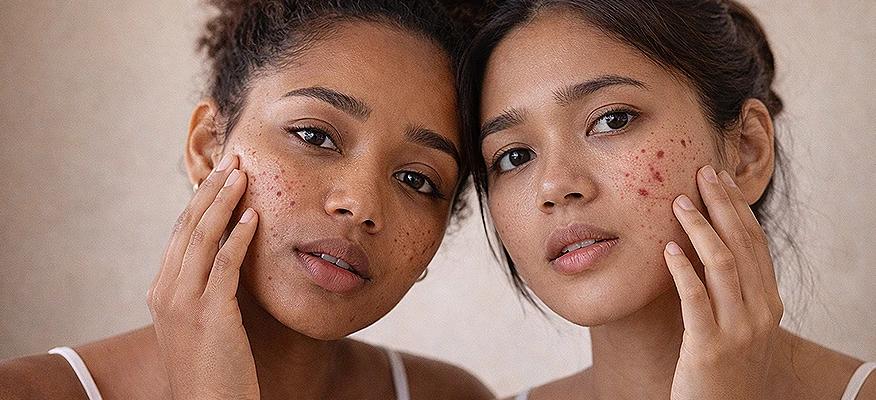
It often begins quietly — a breakout before an important day, a mark that doesn’t fade as quickly as you hoped. Over time, it becomes more than just skin. It can shape how you see yourself in the mirror, how comfortable you feel without makeup, and even how confidently you show up in everyday moments.
Acne is one of the most common skin conditions in the world, yet its emotional impact is often underestimated. For many women, it’s not just about appearance — it’s about feeling seen, judged, or not quite like yourself. You might find yourself avoiding photos, second-guessing your reflection, or trying one product after another in search of control.
And you’re not imagining it. Research published in the British Journal of Dermatology has shown that acne can significantly affect self-esteem, body image, and overall quality of life—sometimes in ways comparable to other chronic health conditions. Clinical guidance from the American Academy of Dermatology also acknowledges that the psychological effects of acne, including stress and reduced confidence, are a real and important part of the condition.
In regions like Southeast Asia and East Africa, where social interactions, community settings, and cultural perceptions of appearance can be closely tied to confidence, these feelings can be even more pronounced. Add to that the visibility of post-acne marks on melanin-rich skin, and the experience can feel prolonged—long after the acne itself has healed.
But here’s what’s important to remember: acne does not define you—and it is both manageable and treatable. Understanding its emotional impact is not about over-emphasising the problem, but about recognising that your experience is valid—and that support, both medical and emotional, can make a meaningful difference.
In this article, we explore how acne affects self-esteem, why these feelings are more common than we think, and what can help you rebuild both skin confidence and self-trust over time.
Understanding acne and its visibility

Acne isn't just a few random pimples that appear and disappear. It's a complex skin condition that happens when hair follicles get clogged with sebum (your skin's natural oil) and dead skin cells. This creates blackheads and whiteheads along with inflamed papules, pustules, and sometimes deeper, painful nodules or cysts.
What makes acne particularly challenging is its visibility. Unlike other health conditions you can hide, acne often shows up on your face, chest, or back (areas that are hard to cover). Your face is central to every social interaction, and many women report feeling like others notice their skin before anything else about them. The visibility factor becomes even more complex when you consider the following:
- Post-inflammatory hyperpigmentation (dark spots left after pimples heal) can persist for months
- In darker skin tones, these marks often feel as distressing as active acne
- Even mild acne can feel overwhelming when it's right there for everyone to see
The link between acne and self-esteem
Research consistently shows that acne and self-esteem are intimately connected. Multiple studies across Europe and Asia reveal that adults with acne report significantly lower self-worth compared with those with clear skin, with women experiencing this impact more intensely than men.
The numbers tell a compelling story. In one international study, 45% of participants with acne and facial pigmentation reported low to very low self-esteem. Many described persistent inadequacy and emotional distress directly linked to their skin's appearance. People with acne often describe feeling:
- Less attractive
- Less "put together" or professional
- Constantly self-conscious about their appearance
- Judged by others based on their skin
In cultures where clear, even-toned skin is strongly associated with cleanliness, discipline, or professional success, visible acne can intensify internalized stigma. Women may develop harsh internal narratives, believing their worth is diminished by their skin condition.
How acne impacts confidence in daily life
The effects of acne on self esteem shows up in subtle but significant ways throughout your daily routine, influencing how you participate in social, professional, and intimate situations. Many women with facial acne report feeling less confident at work, especially in roles requiring frequent interaction, presentations, or customer-facing responsibilities.
Acne has also been linked to avoidance behaviors that can quietly limit your social world. These might include declining invitations, avoiding being photographed, or feeling hesitant about dating. Some women report spending considerable time and money on makeup, not for pleasure, but as armor before leaving the house.
However, this can be particularly challenging in hot, humid climates where makeup feels heavy or melts, creating additional discomfort. Over time, these small daily hesitations can erode confidence and limit opportunities that would otherwise support personal and professional growth.
Emotional and psychological effects of acne
The emotional toll of living with acne goes beyond occasional bad skin days. A multicenter study from West Africa reported significantly higher rates of anxiety among patients with acne compared with controls, with women showing higher rates than men.
Common emotional responses include:
- Constant self-consciousness: Checking mirrors, avoiding eye contact, worrying about skin under bright lights
- Frustration and loss of control: Especially when acne persists despite lifestyle efforts or treatments
- Embarrassment and shame: Often reinforced by cultural messages about "perfect" skin
- Social withdrawal: Pulling back from activities that once brought joy
Shame or sadness about your skin may reinforce negative internal stories like "I'm not good enough" or "People will only see my flaws." In vulnerable individuals, these patterns can contribute to clinically significant mental health conditions, including major depression or body dysmorphic disorder. Because these emotional effects often aren't visible to others, many women suffer in silence.
Acne in teens: A vulnerable phase
Adolescence is already a time of identity formation and heightened self-consciousness, and acne often appears just when young people are most sensitive about their appearance. Hormonal changes during puberty increase oil production, making acne particularly common among teenagers.
Research shows that adolescents with acne frequently report lower body esteem, higher self-consciousness, and more social anxiety than peers with clear skin. In school settings, teasing or casual comments about appearance can intensify the emotional impact.
Since self-esteem is still developing during adolescence, negative experiences related to acne during this period can leave long-lasting emotional traces, influencing how young girls see themselves well into adulthood. Early, empathetic education and treatment can help prevent acne from shaping a teenager's entire sense of self.
Acne in adults: Confidence beyond appearance
Adult female acne can feel particularly discouraging for women who expected their skin troubles to "disappear after school." The reality is that adult acne is common and often influenced by hormonal changes, stress, and lifestyle factors that are part of modern life.
Studies of adult women show that facial acne significantly reduces quality of life and can cause feelings of embarrassment and lower self-esteem. For women juggling careers, family responsibilities, and social expectations, acne may conflict with internal images of how a "professional" or "mature" woman should look. In some cultures, adult acne may be misunderstood as a sign of stress, poor self-care, or hormonal "imbalance," adding to stigma and pressure to hide the condition.
However, research also emphasizes that many women learn to draw confidence from non-appearance-related strengths, such as skills, achievements, relationships, and values. By reframing self-worth beyond flawless skin, adult women can maintain stable confidence even while seeking appropriate medical care for their acne.
The vicious cycle: Stress, acne, and self-esteem
One of the most frustrating aspects of living with acne is how stress and acne can feed off each other in a seemingly endless cycle. Psychological stress can influence hormones and immune responses in the skin, potentially worsening acne flare-ups. When acne becomes more active, you may feel more anxious, ashamed, or frustrated, which can increase stress levels again.
This cycle often looks like:
- Stress from work, relationships, or life changes triggers hormonal responses
- Acne flares up or worsens in response to stress
- Visible breakouts increase anxiety and lower self-esteem
- Emotional distress creates more stress, continuing the pattern
Stress-related behaviors, such as poor sleep, picking at the skin, skipping gentle skincare routines, or comfort eating, can also indirectly worsen acne. The emotional toll often shows up as anticipatory anxiety or self-blame.
Coping strategies to improve self-esteem with acne
Improving self-confidence involves both practical skin care steps and mindset shifts that help you reclaim your sense of worth beyond your complexion.
Practical approaches:
- Seek structured acne treatment from a healthcare professional
- Use gentle, consistent skincare and sun protection to limit dark marks
- Avoid harsh scrubbing or home remedies that can irritate skin and worsen pigmentation
Psychological strategies:
- Challenge negative thoughts like "My skin defines my worth" with more balanced beliefs
- Practice mindfulness, breathing exercises, or faith-based reflection for stress reduction
- Limit time spent comparing yourself to filtered or edited images online
- Curate social media feeds toward realistic, diverse beauty representations
When possible, ask healthcare providers to address both skin and emotional concerns. You deserve to be heard as a whole person, not just "another acne case."
When to seek professional help

Professional help becomes important when the effects of acne on self-esteem start interfering with your daily functioning. Medical guidelines encourage seeking care if acne is moderate to severe, leaves dark marks or scars, persists despite simple measures, or affects your quality of life.
Signs that emotional support might be helpful include persistent sadness, loss of interest in usual activities, ongoing anxiety related to appearance, social withdrawal, or any thoughts of self-harm. Combining dermatological treatment with psychological support often works better than treating either aspect alone.
In many settings, starting with a trusted general practitioner can be a practical first step, especially where specialist access is limited.
Acne is not your identity
While acne can feel very visible and overwhelming, it's important to remember that it doesn't define who you are. Research consistently shows that while acne strongly influences self-image, it doesn't diminish your abilities, intelligence, kindness, or potential.
Many women continue to succeed in demanding careers, nurture families, and lead in their communities while managing ongoing acne. Recognizing acne as a medical condition helps separate your identity from your skin.
Conclusion
The effects of acne on self-esteem reach far beyond the skin's surface, touching emotions, relationships, and opportunities in ways that deserve recognition and compassion. Whether you're dealing with teenage breakouts or adult acne, the emotional impact is real and valid.
Research shows that acne and mental health are closely connected, but it also highlights important sources of resilience. Many women learn to cope by seeking effective treatment, building supportive relationships, and anchoring their identity beyond appearance.
The path forward involves addressing both the physical and emotional aspects of acne. This might mean combining gentle skincare with stress management, seeking professional help when needed, and practicing more compassionate self-talk. Remember that acne is a common, treatable medical condition and not a reflection of your worth, discipline, or character.
With the right information, support, and treatment, acne becomes a manageable health issue rather than a life-defining label. You can focus on your goals, relationships, and overall well-being while taking care of your skin with patience and kindness.
Meet our expert

Meet our expert
Dr Sylvia Kama-Kieghe is a UK-based General Practitioner with a special interest in Women's Health and founder of Askawayhealth. She's also a tutor and medical student examiner. She is a Fellow of the Royal College of General Practitioners (FRCGP), Fellow of the Royal Society of Public Health (FRSPH), Fellow of the Royal Society of Medicine (FRSM), and holds a Diploma of the Faculty of Sexual and Reproductive Healthcare (DFSRH).
How was the experience with article?
We'd love to know!