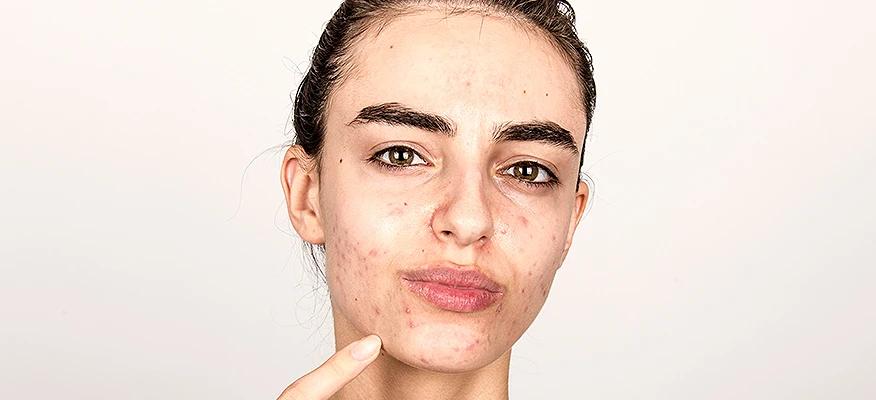
If you’ve tried everything — from cleansers and spot treatments to trending routines — and your acne still isn’t improving, it’s not a lack of effort. It’s often a sign that your acne needs a different level of care.
Over the counter (OTC) products and self-care can work well for mild breakouts. But severe acne behaves differently. It tends to be deeper, more inflamed, and more persistent; driven not just by surface-level clogging, but by complex processes within the skin, including excess oil production, bacteria, and inflammation that OTC solutions can’t fully address.
Dermatology guidance from the American Academy of Dermatology emphasizes that moderate to severe acne often requires prescription treatments to effectively control inflammation and prevent long-term skin damage such as scarring.
And this is where many people get stuck. It’s common to spend months, or even years, switching products, hoping for results, especially in regions like Southeast Asia and East Africa where heat, humidity, and product layering can make acne more persistent. But during this time, untreated inflammation can continue beneath the surface.
Here’s the shift: severe acne isn’t about trying harder — it’s about treating smarter.
With the right medical guidance, acne can be controlled more effectively, reducing both active breakouts and the risk of lasting marks.
In this article, we break down why OTC treatments may not be enough for severe acne treatment, what signs indicate you need expert care, and what actually works to treat it, so you can move beyond trial-and-error to a more targeted, effective approach.
Underlying factors that contribute to acne breakouts
Before we talk about why your current routine might not be working, let's understand what's really happening beneath your skin. Acne develops when hair follicles become clogged with oil and dead skin cells, creating the perfect environment for bacteria to thrive and inflammation to take hold.
For individuals, especially those living in humid climates across Asia and Africa, several factors work together to create persistent breakouts:
- Hormonal fluctuations from your menstrual cycle or conditions like PCOS (Polycystic Ovary Syndrome), testosterone surges, or androgen imbalances
- Excess sebum production increases in warm, humid weather
- Inflammatory responses when clogged follicles rupture beneath the skin
- Bacterial proliferation that thrives in oily, warm conditions
When all these factors align, your skin becomes a battleground that's much harder to control with surface-level treatments alone.

Understanding acne severity
Acne severity is typically categorized into three main levels based on the types of lesions, how many you have, and the extent of inflammation involved.
Four Stages Acne On Face Young Stock Vector (Royalty Free) 2195374415 | Shutterstock
Grade Acne Severity Medical Diagram About Stock Vector (Royalty Free) 1256813908 | Shutterstock
Dermatologists use various grading systems, including the Investigator's Global Assessment (IGA), to evaluate acne precisely. These assessments separate non-inflammatory lesions (like blackheads and whiteheads) from inflammatory ones (papules, pustules, nodules, and cysts).
Knowing where your acne falls on this spectrum is crucial because mild acne responds very differently to treatment than severe forms.
What is mild acne?
Mild acne is characterized by:
- Few blackheads and whiteheads (non-inflammatory lesions)
- Minimal papules and pustules
- Inflammation covering less than one-quarter of your face
- Rare scarring
If you have mild acne, you're likely to see good results with consistentover-the-counterr acne treatment and proper skincare habits.
What is moderate acne?
Moderate acne involves:
- More widespread comedones across your face
- Numerous papules and pustules
- Coverage over half of your face
- Occasional nodules with noticeable inflammation
- Some risk of scarring, though usually limited
What is severe acne?
Severe acne on the face includes:
- Extensive nodules and cysts
- Deep, painful lesions across the face, chest, or back
- Intense inflammation and high scarring risk
- Scores exceeding 30-38 on dermatological grading scales
- Widespread, destructive lesions that can cause permanent damage
Over-the-counter (OTC) acne treatments
Let's be honest about what OTC acne treatment can and cannot do. These products are formulated to target mild acne and work primarily on the surface of your skin.
Common over-the-counter acne medication includes:
| Ingredient | How It Works | Best For |
|---|---|---|
| Benzoyl Peroxide | Kills acne-causing bacteria | Surface bacteria, mild inflammation |
| Salicylic Acid | Unclogs pores, gentle exfoliation | Blackheads, whiteheads |
| Azelaic Acid | Reduces mild inflammation | Light inflammatory lesions |
These ingredients are effective for reducing surface bacteria and clearing mild comedones, but they lack the strength needed to penetrate deeper inflammation or address the nodules and cysts characteristic of severe acne.
Prescription acne treatments
When acne moves beyond the mild category, dermatologist-acne treatment becomes necessary. Prescription options work on multiple levels and can address the deeper, systemic causes of severe breakouts.
Professional treatments include:
- Topical retinoids that increase cell turnover and prevent clogging
- Oral antibiotics like doxycycline that reduce inflammation and bacteria
- Hormonal therapies that address underlying hormonal triggers
- Isotretinoin - the best oral medication for acne in severe, recalcitrant cases
Isotretinoin deserves special mention as it's considered the gold standard for severe acne treatment. Prescribed at 0.5-1 mg/kg daily, it works by dramatically reducing oil production and preventing new lesions from forming.
Why OTC products and self-care are not enough
Here's the reality check: over-the-counter acne treatment simply cannot penetrate deep enough to address the inflammation that drives severe acne. While these products work on surface-level issues, severe acne involves deep nodules and cysts that form well below where topical treatments can reach effectively.
Several factors explain why OTC approaches fall short:
- Limited penetration depth: Surface treatments can't reach nodular inflammation
- Insufficient anti-inflammatory power: OTC ingredients aren't strong enough for severe inflammation
- Missing systemic factors: Hormonal imbalances require internal treatment
- Inadequate bacterial control: Severe cases need stronger antimicrobial action
When you're dealing with how to treat severe acne, you need medication for severe acne that can work from the inside out, not just on the surface.
Common myths about self-care and acne
Let’s clear up some misconceptions that might be sabotaging your efforts.
- One persistent myth is that heavy, oil-based products can "balance" your skin and clear acne. In reality, these products often worsen breakouts by clogging pores further.
- Another dangerous myth is that severe acne will resolve quickly with the right self-care routine. This misconception keeps people stuck in ineffective treatment cycles when they should be seeking professional help for systemic intervention.
- Some people believe that a warm compress or a hot compress on a pimple can cure severe inflammation. While gentle warmth might provide temporary comfort, it cannot address the deep, systemic nature of severe acne.
Signs that OTC products and self-care are not working
How do you know when it's time to abandon your current approach? Watch for these clear indicators:
- Persistent nodules or cysts after 8 weeks of consistent OTC treatment
- Increasing scarring or dark marks that don't fade
- Pain and tenderness from deep lesions
- Spread beyond your face to your chest, back, or shoulders
- No improvement in overall severity after two months
- Emotional impact like avoiding social situations or feeling depressed about your skin
If you're asking, "Does acne go away on its own?" after months of DIY treatment, the answer for severe cases is usually no; professional intervention is needed.
When to step up care

The decision to seek professional help shouldn't be delayed when you're dealing with severe acne. Step up your care if you've tried sequential OTC treatments for 8 weeks without improvement, or if you're experiencing scarring, deep lesions, or emotional distress.
Youths, especially those past their early twenties, should consider professional evaluation sooner rather than later, as hormonal acne often requires targeted treatment approaches that OTC products cannot provide.
Why professional treatment works better
Dermatologist-led acne therapy uses a targeted, multi-pronged approach that addresses all the factors contributing to your breakouts. Professional treatment typically achieves 2-grade improvements on severity scales and significantly reduces both active lesions and the risk of scarring.
The most effective acne treatment plans combine:
- Precise diagnosis of your specific acne type and triggers
- Customized medication combinations tailored to your severity level
- Systemic treatments that address hormonal and inflammatory causes
- Regular monitoring and adjustment of treatment protocols
- Prevention strategies to minimize relapse
This comprehensive approach addresses the variable lesion types and underlying causes that OTC treatments miss entirely.
Role of self-care alongside medical treatment
Good self-care practices enhance the effectiveness of prescription medications and help prevent irritation.
Effective supportive self-care includes:
- Gentle cleansing with mild, non-comedogenic products
- Sun protection to prevent post-inflammatory hyperpigmentation
- Consistent application of prescribed treatments
- Hydration support to counteract medication dryness
- Stress management, since stress can trigger hormonal fluctuations
Think of self-care as the foundation that helps your professional treatment work more effectively.
When to see a dermatologist
Don't wait until your acne becomes unbearable to seek professional help. Schedule a dermatologist appointment if you have:
- Moderate to severe acne that hasn't responded to OTC treatments
- Any signs of scarring or dark marks
- Acne that's affecting your emotional well-being
- Persistent adult acne, especially with hormonal patterns
- Deep, painful nodules or cysts
Early intervention prevents scarring and reduces the overall treatment time needed to achieve clear skin.
Conclusion
Severe acne treatment requires professional intervention that goes beyond what OTC and self-care can accomplish alone. While these approaches have their place in mild cases and as supportive measures, they simply cannot address the deep, systemic nature of severe acne.
Remember, seeking professional help is making a smart decision to get the most effective treatment for your specific situation. Your skin deserves care that matches the complexity of what you're dealing with, and that means combining the right medical treatment with supportive self-care practices for the best possible outcome.
Meet our expert

Meet our expert
Dr. Naveeda Adam serves as the Medical Officer of the Gastrology Department at Muhimbili National Hospital in Dar es Salaam, Tanzania.
How was the experience with article?
We'd love to know!