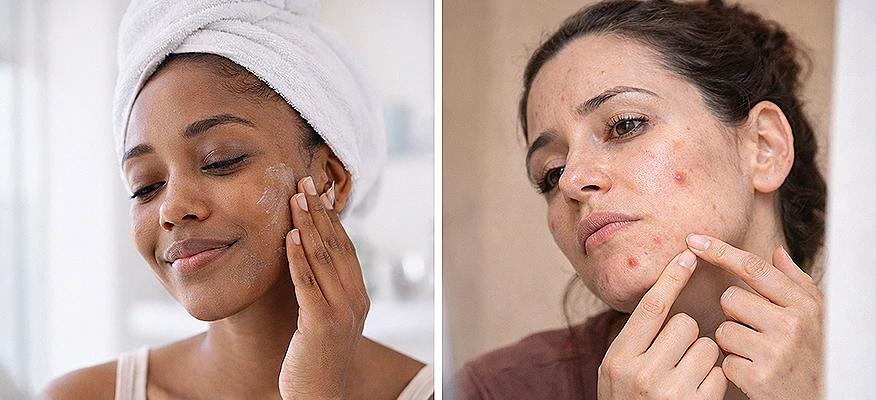
If you’re dealing with acne, the real question isn’t just what to use; it’s when self-care is enough and when you need a dermatologist.
According to guidance from the American Academy of Dermatology, mild acne like occasional pimples, blackheads, or whiteheads can often be managed effectively with consistent at-home care using ingredients such as salicylic acid or benzoyl peroxide. But when acne becomes painful, deeper, widespread, or keeps returning despite treatment, it often signals a more persistent form of Acne vulgaris that requires medical attention.
In simple terms, self-care can help control early acne, but it may not be enough to fully treat it. Dermatology guidelines emphasise that moderate to severe acne responds better to prescription treatments like topical retinoids, oral medications, or hormonal therapy tailored to the individual.
Knowing when self-care is enough and when a dermatologist for acne treatment can make a meaningful difference is key to managing acne effectively and protecting your skin in the long run.
Understanding acne and its causes

Acne isn't just a teenage problem but a complex skin condition that affects millions well into their adult years. The process begins deep within your hair follicles, where dead skin cells and natural oils (sebum) get trapped, creating the perfect environment for bacteria to thrive.
Your hormones play a starring role in this drama. Androgens and estrogen fluctuations, especially common during menstrual cycles, pregnancy, or hormonal changes, directly influence how much oil your skin produces. This explains why many women notice their acne patterns align with their monthly cycles.
For teenagers, who commonly experience break outs or flare ups, acne can be even more challenging. The risk of scarring and post-inflammatory hyperpigmentation is significantly higher. Additionally, certain cultural hair care practices using heavy oils or pomades can contribute to what's called "pomade acne" along the hairline and forehead.
What self-care acne treatment involves
Self-care acne treatment typically starts with over-the-counter products and home remedies. This approach includes gentle cleansing routines, topical treatments containing ingredients like benzoyl peroxide or salicylic acid, and making smart choices about the products you use on your skin. The foundation of good acne skin care involves:
- Using non-comedogenic cleansers twice daily
- Applying acne treatment products with proven ingredients
- Avoiding harsh scrubbing or picking at your skin
- Choosing makeup and skincare products labeled as suitable for acne-prone skin
- Being mindful of hair products that might transfer to your face
For many, especially those in humid climates, this also means being extra careful about heavy moisturizers or oils that can exacerbate breakouts.
When self-medication works well
Self-care works best for mild, non-inflammatory acne, such as blackheads, whiteheads, and the occasional small pimple. In these cases, consistent use of appropriate over-the-counter products can help manage breakouts effectively. This approach is most likely to succeed when:
- Breakouts remain mostly surface-level
- Acne appears occasionally, including mild hormonal flares
- Skin responds well to gentle, consistent care
- Personal acne triggers can be identified and avoided
- There is a commitment to maintaining a long-term skincare routine
Many individuals in their late twenties and thirties find success with quality acne treatment products, especially when combined with lifestyle factors like stress management and a balanced diet.
Limitations of self-medication for acne
While self-medication has its place, it has significant limitations, especially for more severe cases. Over-the-counter acne products simply aren't strong enough to tackle moderate to severe inflammatory acne, such as painful, deep cysts and nodules.
The most concerning limitation is the risk of permanent damage. Individuals with darker skin tones face higher risks of scarring and hyperpigmentation, and delaying professional treatment can lead to lasting marks that are much harder to treat later. Self-care also struggles with:
- Hormonal acne that requires internal treatment approaches
- Cystic acne that develops deep under the skin
- Acne that doesn't respond after 6-8 weeks of consistent use of OTC pharmacy products
- Breakouts that worsen despite proper self-care
- Cases where cultural practices (like certain hair oils or skin-lightening products) contribute to the problem
Many unknowingly use products that worsen their acne, such as comedogenic hair oils that are traditional in certain cultures, or corticosteroid-containing skin lighteners that can actually trigger more breakouts.
What is dermatologist acne treatment?
A professional dermatologist for acne treatment takes a comprehensive, medical approach to your skin concerns. Unlike the one-size-fits-all nature of over-the-counter products, a dermatologist creates a personalized treatment plan based on your specific acne type, skin tone, lifestyle, and medical history.
This professional approach considers factors that self-care simply can't address, such as hormonal imbalances, genetic predispositions, and the complex interplay between your skin type and environmental factors. For people with ethnic skin, dermatologists can adjust treatments to minimize the risk of post-inflammatory hyperpigmentation and scarring.
A dermatologist doesn't just treat existing acne; they work to prevent future breakouts and address any scarring or dark spots left behind from previous acne episodes.
What dermatologist treatment options may include
Professional acne treatment offers a much broader toolkit than what's available over-the-counter. Your dermatologist might recommend:
Topical prescription medications:
- Retinoids (like tretinoin) that prevent clogged pores and promote cell turnover
- Prescription-strength benzoyl peroxide or antibiotics
- Combination treatments that target multiple acne causes
Oral medications:
- Antibiotics for inflammatory acne
- Hormonal treatments like birth control pills or spironolactone for adult women
- Isotretinoin for severe, treatment-resistant cases
Professional procedures:
- Chemical peels tailored to your skin type
- Extraction of stubborn comedones
- Steroid injections for painful cystic lesions
- Light and laser therapies
For individuals from Southeast Asian and East African backgrounds, dermatologists can select treatments that work effectively while minimizing the risk of hyperpigmentation, which is crucial for maintaining even skin tone.
Why is acne treatment by a dermatologist more effective

Seeing a dermatologist for acne treatment means targeting the root causes of acne rather than only managing surface breakouts. While the best acne treatment available over-the-counter might improve mild cases, dermatologists can target the hormonal, genetic, and bacterial factors that drive more persistent acne.
Professional treatment is particularly superior for:
- Preventing scarring through early, aggressive intervention
- Treating hormonal acne that doesn't respond to topical treatments alone
- Addressing post-inflammatory hyperpigmentation
- Providing maintenance strategies that prevent long-term recurrence
- Combining multiple treatment modalities for comprehensive care
Self-care vs dermatologist acne treatment: key differences
Understanding the fundamental differences between these approaches helps you make informed decisions about your skin care:
- Treatment targets:
- Self-care: Surface-level symptoms, mild comedonal acne
- Professional: Root causes, moderate to severe inflammatory acne
- Available tools:
- Self-care: Limited to over-the-counter concentrations and formulations
- Professional: Prescription-strength medications, procedures, combination therapies
- Customization:
- Self-care: Generic solutions that may not suit your specific skin type
- Professional: Personalized protocols adjusted for your skin tone, acne type, and lifestyle
- Risk management:
- Self-care: Higher risk of inadequate treatment leading to scarring
- Professional: Proactive prevention of complications, especially in ethnic skin
- Long-term outcomes:
- Self-care: May provide temporary improvement, but often insufficient for lasting control
- Professional: Better sustained remission and prevention of recurrence
Can self-care and dermatologist treatment work together?
The most effective approach often combines professional treatment with smart self-care practices. Your dermatologist provides the medical intervention needed to control your acne, while consistent daily care maintains your results and prevents new breakouts. This combined approach works particularly well for:
- Maintaining clear skin between dermatologist visits
- Supporting prescription treatments with appropriate daily skincare
- Preventing flares during stressful periods or hormonal changes
- Building long-term healthy skin habits
Your dermatologist can recommend specific products for acne-prone skin that complement your prescription treatments, ensuring that your entire routine works together harmoniously rather than against each other.
When to see a dermatologist for acne
Knowing when to seek professional help can prevent unnecessary suffering and permanent skin damage. Consider scheduling a consultation if:
- Your acne persists after 6-8 weeks of consistent self-care
- You have sever break outs of flare ups
- You're developing painful, deep cysts or nodules
- You notice scarring or dark spots forming
- Your acne is affecting your confidence or quality of life
- You're experiencing adult-onset acne that seems hormonal
- Over-the-counter acne treatment products cause excessive irritation
Safety considerations
Both self-care and professional treatment come with safety considerations, though the risks differ significantly.
Self-care safety concerns:
- Over-drying or irritating your skin with too many acne removal products
- Using comedogenic products that worsen breakouts
- Inadequate treatment leading to scarring or hyperpigmentation
- Delayed professional care when needed
Professional treatment considerations:
- Prescription medications require monitoring for side effects
- Some treatments may initially cause temporary irritation or dryness
- Certain medications aren't suitable during pregnancy or breastfeeding
- Proper sun protection becomes even more critical with some treatments
Long-term results and acne control
When it comes to lasting results, professional treatment consistently outperforms self-care alone. This is particularly important for those who want to prevent the long-term consequences of untreated or inadequately treated acne. Professional treatment offers:
- Higher rates of sustained remission
- Better prevention of scarring and hyperpigmentation
- More effective management of hormonal fluctuations
- Proactive strategies for maintaining clear skin long-term
While self-care can maintain results and prevent minor flares, the foundation of truly effective acne control often requires professional intervention, especially if dealing with persistent adult acne or those at higher risk for complications.
Conclusion
The choice between self-care and seeing a dermatologist for acne treatment isn't always either-or, but about finding the right balance for your specific situation. While self-care with quality acne treatment products can effectively manage mild, occasional breakouts, persistent or inflammatory acne requires professional intervention to prevent lasting damage.
For adults, early professional treatment can make the difference between temporary breakouts and permanent skin damage. The best acne treatment approach combines professional medical care with consistent, appropriate self-care practices that support your skin's long-term health.
Meet our expert

Meet our expert
Sharina Farhana Binti Mohd Merah is a registered Dietitian since 2022, who is passionate in helping people achieve health through Nutrition.

How was the experience with article?
We'd love to know!