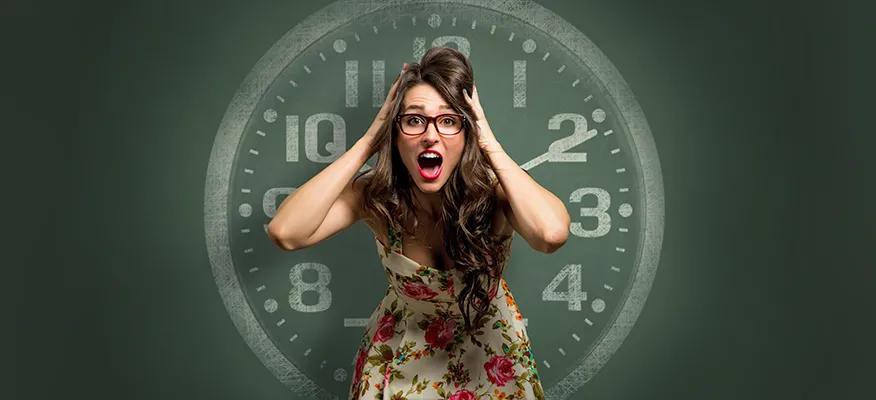
Stress usually has a clear trigger, while anxiety may continue even after the trigger has passed or may appear without an obvious cause.
Stress and anxiety can feel similar, but they are not exactly the same. Stress is usually linked to an external pressure or situation, while anxiety often involves ongoing fear, worry or dread that may continue even when the trigger is gone.
Stress is usually a response to a clear pressure or problem, while anxiety is ongoing worry, fear or nervousness that may continue even after the trigger has passed. Both can cause physical symptoms such as rapid heartbeat, fast breathing, stomach upset and sleep problems.
Have you ever run very fast to catch a bus to work, and felt your heart beat wildly fast?
Ever lost a crucial job and felt a feeling of fear grasp you, till you got another job?
If your answer to both these questions is 'yes', then surely, you recognize the feelings accompanying the events.
Would you say you felt stressed, or, would you say you felt anxious while catching the bus or until the time you got another job?
So, is there any difference between stress and anxiety, or are these two feelings the same?
Let us explore.
Are Stress and Anxiety the Same?
Stress and anxiety are related, but they are different. Both can trigger a fight-or-flight response and share symptoms like fast heartbeat, rapid breathing and stomach discomfort. The main difference is that stress is usually linked to a clear trigger, while anxiety may last longer or appear without a clear cause.
Stress and anxiety have an interesting relation.
- Both of them are the body's natural response to danger.
- Both are part of the body's natural fight or flight reaction that happens when the brain feels a sense of danger.
- Both have several tell-tale symptoms that overlap;
and yet, there's a fine line of difference between stress and anxiety.
What Is the Difference Between Stress and Anxiety?
| Factor | Stress | Anxiety |
| Main trigger | Usually linked to a clear stressor | May continue without a clear trigger |
| Source | Often external pressure | Often internal worry or fear |
| Duration | May reduce when the problem resolves | May last even after the problem passes |
| Main feeling | Overwhelmed, tense or tired | Fearful, worried or restless |
| Action response | May push action or problem-solving | May make action feel difficult |
| When to seek help | When it becomes constant or affects daily life | When worry, fear or panic persists |
Does Stress or Anxiety Have a Clear Trigger?
The key difference between stress and anxiety is the trigger and duration. Stress usually comes from a specific situation, while anxiety is more connected to persistent worry, fear or uncertainty that may continue even after the situation improves.
Stress can be good or bad, both.
Good stress (eustress) is caused by factors like trying to finish a deadline, or, moving to another country. Bad stress (distress) is caused by more disturbing factors like losing a family member, or, facing abuse.
Either way, stress will always have a 'stressor', i.e., a factor that triggers the body and mind to feel stressed out.
On the other hand, anxiety may not have an identifiable trigger.
Where Do Stress and Anxiety Come From?
Stress originates mostly from external factors (triggers/stressors) and is defined as physical or mental tension that is felt in response to that trigger.
Anxiety stems from internal fear that gets developed by a stressor. Anxiety is a response that the body and mind give to the uncertainty and doubts we feel about something.
Incidentally, this uncertainty or doubt can be triggered even without a stressor. Genetics, personality, and brain chemistry may also lead to anxiety in a person, without any firm reason.
How Long Do Stress and Anxiety Last?
If addressed in due time and not allowed to become chronic, stress usually goes away in short-term after the stressor (problem) is resolved.
Anxiety can stay on for a long time even after the trigger (problem) is resolved. It can set in and turn into a disorder.
How Do Stress and Anxiety Feel Different?
Stress makes a person feel overwhelmed, tired, or disinterested in taking action.
Anxiety increases the feeling of fear and dread, which in turn makes a person unable to take action.
How Do Stress and Anxiety Affect Health?
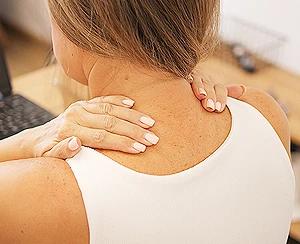
Physical effects of stress include headaches, alopecia (baldness), muscle pain, stomach ache, and heart problems.
Psychological effects of stress include loss of sleep, fatigue, feeling angry without reason, sadness, and lack of concentration.
If allowed to linger for more time, stress can lead to depression, anxiety, or burnout. It can also create debilitating physical effects like stomach ulcers, auto-immune disorders, stroke, and heart attack.
As for anxiety, if allowed to persist, or, if it does not respond to anxiety management techniques, anxiety can convert into disorders such as generalized anxiety disorder, social anxiety disorder, Post-Traumatic Stress Disorder (PTSD), obsessive compulsive disorder (OCD), panic disorder, and phobias (excessive, irrational fear) about something.
Psychological breakdown is one of the most serious effects of long-continuing anxiety.
What Are the Symptoms of Stress and Anxiety?
Stress and anxiety may share symptoms such as fast heartbeat, rapid breathing, stomach upset and sleep problems. Stress may feel more like pressure or overwhelm, while anxiety may feel more like fear, nervousness or constant worry.
In spite of the marked differences between the two, stress and anxiety both have some common symptoms, apart from having individual, independent symptoms as well.
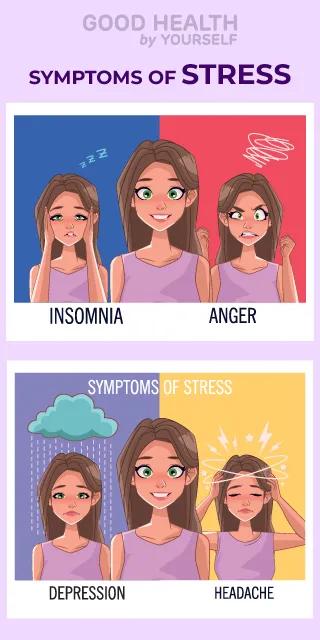
What Are Common Symptoms of Stress?
- Feeling overwhelmed
- Feeling tired
- Nausea
- Irritability, unexplained angry outbursts
- Stomach cramps
- Heaviness in heart
- Jaw clenching
- Acidity, heartburn
- Unexplained aches and pains in joints
- Trouble in sleeping
- Overeating
- Trouble in getting enough sleep or insomnia
- Digestive problems
- Pimples, acne
- Hair-fall
- Low immunity leading to infections and illnesses faster
- Low sexual libido
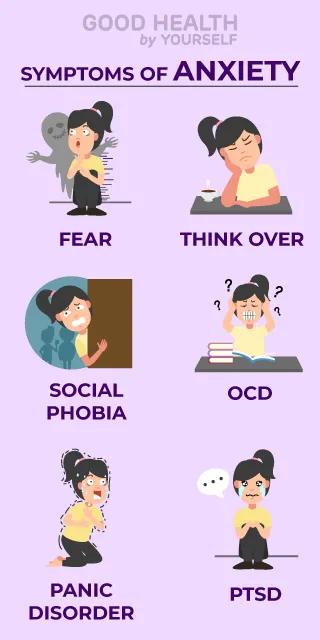
What Are Common Symptoms of Anxiety?
- Constant feelings of fear or dread
- Feeling restless
- Feeling tense
- Sweating profusely
- Rapid heartbeats
- Rapid breathing
- Shaking involuntarily
- Nervousness
- Being hyper-alert
- Frequent urination
Stress and anxiety also share some common symptoms such as having rapid heartbeats, breathing rapidly, and getting unexplained diarrhea or constipation.
If a person starts showing symptoms of substance abuse, alcohol abuse, self-harm, and suicidal thoughts, these should be given immediate attention and intervention of psychological experts.
How Do You Know If It Is Stress or Anxiety?
Ask whether your symptoms are linked to a specific problem and whether they improve when that problem is resolved. If worry, fear or physical symptoms continue even after the situation improves, it may be anxiety rather than everyday stress.
Which Symptoms Do Stress and Anxiety Share?
Stress and anxiety can both cause fast heartbeat, rapid breathing, stomach discomfort, constipation or diarrhoea, sleep disturbance and muscle tension.
How Can You Manage Stress and Anxiety?
Stress and anxiety may be managed with healthy routines, physical activity, relaxation techniques, meditation, therapy, social support and medical help when symptoms persist or become severe.
Stress and anxiety can both be resolved better when managed and/or treated at earlier stages. The key is to not let these problems turn from mild to severe.
When stress or anxiety become severe, they take more time to get resolved; they contribute to the development of other health problems; and, they require medical intervention.
While it is definitely advisable to see a mental health expert if the need be felt, there are other ways to manage these issues while they are mild. These are known as coping mechanisms.
What Coping Strategies Help with Stress and Anxiety?
Can a Healthy Diet Support Stress and Anxiety Management?
- Eat a diet containing fresh vegetables, fruit, nuts, fiber, grains, and protein.
- They help build core immunity and protect the body from illnesses and infections that're easy to catch when our immunity is low due to stress.
- Avoid eating junk food filled with bad fats, foods heavy with sugar, and alcohol. They make the immune system weak and also add to body fats, thus increasing the risk for heart diseases, blood pressure, and diabetes.
Can Exercise Help Reduce Stress and Anxiety?
- Get into the habit of taking a brisk walk, jogging, cycling, or running – preferably outdoors, around nature, instead of on a treadmill.
- Exercise helps in loosening up tense muscles, reduces body fat, and improves immunity.
- Being outdoors helps increase oxygen intake, and release happy hormones that beat the stress.
Which Relaxation Techniques May Help?
- Breathing exercises, yoga, tai chi, visualization are some wonderful, cost-effective ways to release stress and anxieties.
- They help in reducing stress hormones, slowing the increased heart rate, lowering blood pressure, reducing anger and irritability, improving digestion, and reducing muscle tension and chronic pain.
- For best results, it is advisable to learn relaxation techniques from an expert, and practice them regularly.
Can Meditation and Mindfulness Help?
- Meditation and mindfulness-based stress reduction (MBSR) show wonderful positive effects on reducing stress, anxiety, and even depression.
- Meditation helps the mind and body relax by focusing on breathing and being aware of one's body in the present.
- MBSR helps people realise how negative thoughts affect the body and mind, thus reducing stress, and improving focus, memory, and resilience.
Which Therapies May Help Stress and Anxiety?
- A wide range of non-medical therapies are now available to indulge in to reduce stress and anxiety. For instance, the oils used in Aromatherapy have positive effects on the emotional part of the brain.
- Dance therapy helps in loosening up of clenched muscles, allows expression of hidden emotions without words, promotes overall physical & mental wellbeing.
- Laughter therapy helps decrease heart rate and blood pressure, and increases oxygen intake and the happy hormone endorphin.
- Animal (pet) therapy helps boost positive happy hormones like dopamine, oxytocin, and serotonin and reduces the stress hormones called cortisol, thus helping a person feel less stressed or anxious and more relaxed, happy, and free.
Can CBT Help with Stress and Anxiety?
- A provenly effective way to reduce stress and anxiety is to practice Cognitive Behavioural Therapy (CBT).
- This works on the premise of helping a person understand how their thoughts affect their behaviour/moods, how negative thoughts create problems for mental health, and how reframing thoughts can help manage stress and anxiety in productive ways.
When Should You Seek Medical Help?
- If the stress or anxiety continues to persist in spite of practicing above-mentioned techniques, it is best to seek medical help.
- Psychiatrists and counsellors are better-equipped to understand the root of the problem, and prescribe appropriate practices or medication to resolve the issue.
When Should Stress or Anxiety Be Taken Seriously?
Seek professional help if stress or anxiety affects sleep, appetite, work, relationships or daily life, or if symptoms include panic attacks, substance abuse, self-harm thoughts or suicidal thoughts. Immediate support is needed if someone feels unsafe.
Conclusion
Stress and anxiety are mental health issues that have several physical, emotional, and behavioural side-effects on a person.
They grow more serious if allowed to fester. Hence, timely intervention and due attention is very important to prevent the issues from growing further from the mild stage.
While there are several alternate management techniques one can practice, there is no shame in consulting a mental health expert if the need is felt. Just as physical health is important and we go to a doctor if something goes wrong with that, so also, mental health is equally important to lead a happy, balanced life.
Hence, recognise the stressors, practice stress/anxiety management techniques, be open about your problems instead of hiding them, and visit a mental health expert if needed.
After all, a stress- and anxiety-free mind is the key to a happy life.
Meet our expert

Meet our expert
Dr. Iunis Galina Ivanovna is a Neurologist from Ukraine. She graduated from the Luhansk State Medical University in 1998, and has been in the medical profession since then. In the course of her career as a neurologist, Dr. Ivanovna has gathered extensive experience and expertise having handled a wide variety of cases.

How was the experience with article?
We'd love to know!