If you’ve just been told you have fatty liver, the first question that comes to mind is simple: What should I eat now?
Across Southeast Asia and East Africa, fatty liver is becoming increasingly common — often picked up during routine checks for diabetes, cholesterol, or weight gain. Many people feel nothing at all. Others notice subtle signs like fatigue or increasing abdominal weight.
Globally, nearly one in three adults is estimated to have fatty liver. In many parts of Asia, rates are even higher. In East Africa, rising urbanisation, changing food patterns, and increasing metabolic disease are quietly pushing numbers upward.
The encouraging news? In its early stages, fatty liver is often reversible.
And diet plays a central role. Not extreme dieting. Not detoxes. But a sustainable way of eating that reduces excess sugar and refined carbohydrates, supports insulin balance, and helps the liver gradually shed stored fat.
In this guide, we’ll explore what drives liver fat, which foods support recovery, and how to create a practical eating pattern that works in Southeast Asia and East Africa.
Because when it comes to fatty liver, food is not the enemy, food is therapy.
Understanding fatty liver disease
Your liver has many tasks to perform for an active, detoxified, and healthy you. Although if your liver is unable to work at its best efficiency because of the fat build-up, you might be facing a fatty liver disease.
What is fatty liver?
Fatty liver happens when there is a build-up of too much fat inside liver cells. A small amount of fat in the liver is normal, but when fat makes up more than about 5 to 10 percent of the liver’s weight, it becomes a problem. However, it may vary from one person to another depending on the cause, the percentage of weight, and the resulting effects.
Types of fatty liver (NAFLD vs AFLD)
Depending on the cause, the issue is of two types.
If someone drinks liquor heavily, it may change how their liver processes fat. This may result in alcoholic fatty liver disease.
This doesn’t mean that if you don’t drink alcohol, then you are safe. Non-alcoholic fatty liver disease affects those who don’t drink (or hardly do) but have other factors like obesity, type 2 diabetes, sedentary lifestyle, etc.
Common signs and symptoms
You might not notice explicit signs of fatty liver, especially in the initial phase. Even if they are present, they are not easily distinguished.
When symptoms do appear, one may experience tiredness, weakness, discomfort, or pain in the upper right side of the belly, bloating, and trouble concentrating. Some people may also notice weight gain or changes in blood sugar levels.
What causes fatty liver?
If there is an imbalance in how the body handles fats and sugars, it may cause fatty liver. When a person is obese, the fat-storing cells need help, which is provided by the liver. Also, the cause of fatty liver in diabetes is insulin resistance since the liver keeps producing insulin.
Eating too many calories, especially from sugar and refined carbs, causes the liver to turn excess sugar into fat. Over time, this fat builds up. Besides, when you drink alcohol, it changes the priority list of your liver, asking it to divert its focus here.
Can diet reverse fatty liver?
Yes, one may manage and even reverse the issue if they diligently work towards it, especially if they abstain from fatty liver foods. Nonetheless, if fatty liver has progressed into later stages like cirrhosis or liver cancer, it can’t be reversed.
Best diet for fatty liver
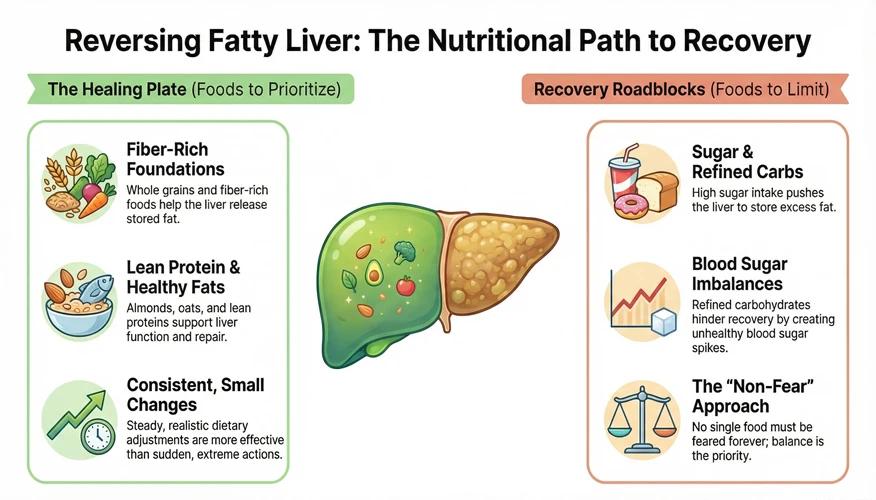
While creating a diet for fatty liver, you should be clear about your goals, which are to:
- Have a stable blood sugar
- Reduce weight/fat from the body
- Lighten the work of the liver
- Lower inflammation
Keeping these pointers in mind, you may start creating a food chart depending on your lifestyle and other health issues (if any).
There are many options to choose from, like a calorie-deficient diet, or having a low-carb diet as it helps with insulin resistance, a Mediterranean diet, or an intermittent one.
The most important thing for fatty liver is losing weight through a calorie deficit; how you do it matters less than consistency and food quality.
Foods to eat for fatty liver
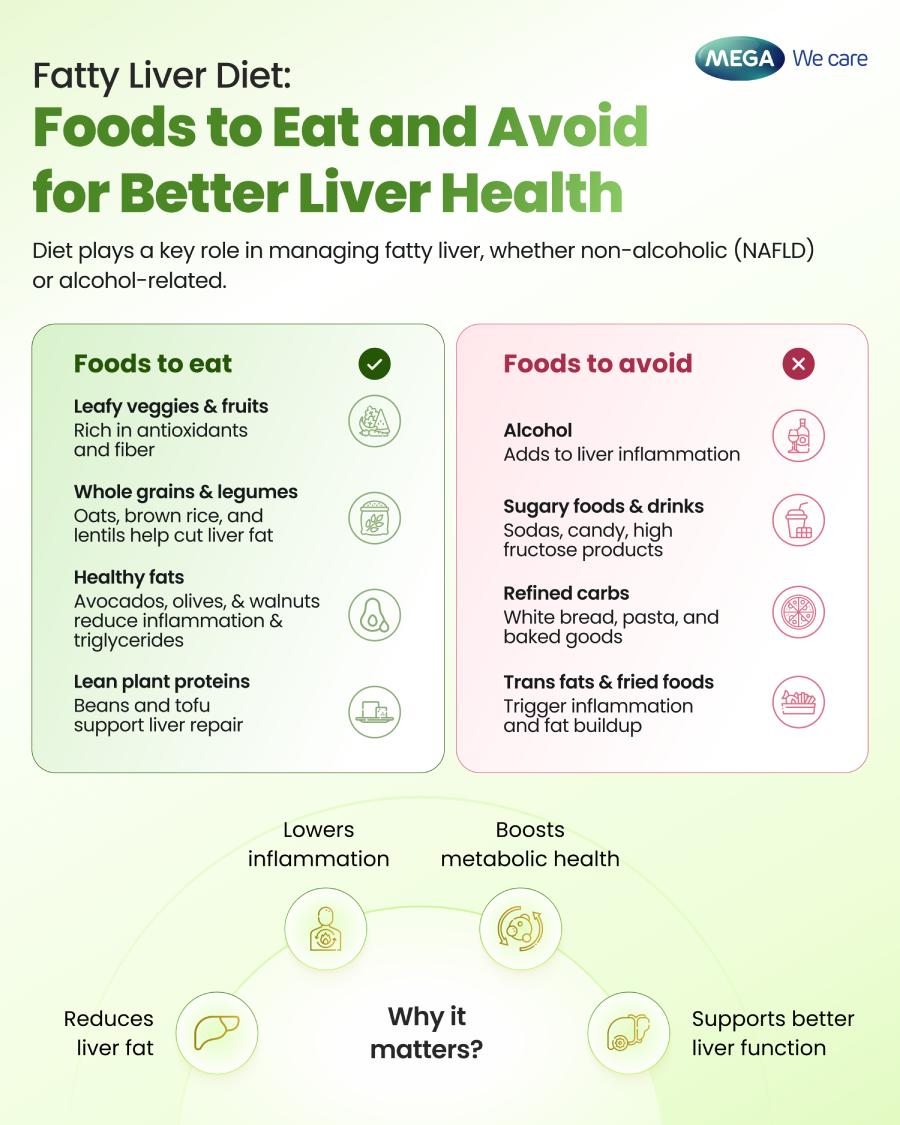
A significant focus while planning a diet for fatty liver is to remember that whatever you consume is either supporting your body/liver cells or exacerbating them. Do consume:
- Vegetables: The fiber in leafy greens, broccoli, cauliflower, carrots, and peppers helps with fat absorption, while the antioxidants may help with inflammation.
- Fruits: A majority have natural sweetness along with fiber. As a result, there can be better control of sugar spikes than processed sweets.
- Lean protein: These are found in lentils, soy, etc., and may help repair liver tissue.
- Whole grains: Your blood sugar is stabilized when the food is digested slowly, which is why you must focus on oats, brown rice, quinoa, and whole wheat breads.
Foods to avoid for fatty liver
The fatty liver foods to avoid are the ones that put extra pressure on your liver.
The sugar drinks/food has fructose in it, which is processed by the liver into fats and gets stored there. The fried food has unhealthy fats, which can be difficult for the liver to break down, thereby aiding in inflammation.
Also, the highly processed foods contain preservatives, additives, and excess salt, making the liver work harder to detoxify. Speaking about drinks, the liver does break down alcohol while producing harmful by-products.
Sample 7-day fatty liver meal plan
The fatty liver causes and treatment are reciprocal; thus, to work on the efficiency of your liver, notice what tools you provide to it in the form of consumption.
Here is a sample diet plan for fatty liver:
| Day | Breakfast | Lunch | Snack | Dinner |
| Day 1 | Oats with plant milk, flaxseed, and fresh fruit | Brown rice with lentil stew and steamed vegetables | Roasted chickpeas or boiled corn | Stir-fried vegetables with tofu and whole grains |
| Day 2 | Whole-grain toast with avocado and tomato | Quinoa with black beans and leafy greens | Nuts or seeds | Vegetable soup with beans and salad |
| Day 3 | Green smoothie (leafy greens, cucumber, banana, plant milk) | Whole-grain flatbread with vegetable-lentil filling | Roasted pumpkin seeds | Baked sweet potato with vegetables and beans |
| Day 4 | Chia pudding with plant milk and berries | Millet or sorghum with vegetable-legume stew | Fresh coconut or nuts | Steamed vegetables with tofu and herbs |
| Day 5 | Tofu vegetable scramble with whole-grain bread | Brown rice with chickpea vegetable curry | Unsweetened plant-based yogurt | Vegetable and bean soup with salad |
| Day 6 | Overnight oats with seeds and fruit | Whole-grain pasta with tomato-vegetable lentil sauce | Roasted groundnuts or sunflower seeds | Stir-fried greens with mushrooms and quinoa |
| Day 7 | Whole-grain porridge with cinnamon and fruit | Mixed bean salad with vegetables and lemon-olive oil dressing | Carrot or cucumber sticks with hummus | Vegetable stew with small portion of whole grains |
Exercise for fatty liver
Another step for fatty liver treatment is to move your body, but in a disciplined and planned manner. Your body needs to burn extra calories to remove fat from the liver, while increasing your muscles’ ability to absorb glucose, and reducing weight.
You may go for 150 minutes of weekly aerobics (with exercise you like: brisk walking, swimming, zumba, etc.), with a routine for strength/resistance training of the whole body three times a week.
Additional tips to reduce fatty liver last
If you are wondering about how to reduce fatty liver, the answer doesn’t end with your diet and exercise alone. Here are some other points to remember as well:
- Drink plenty of water to support digestion and toxin removal.
- Eat smaller portions to avoid overeating.
- Your quantity and quality of sleep are affected by blood sugar and weight, so have a consistent one.
- Manage stress, as stress hormones can worsen insulin resistance.
- Crash diets may show favourable results, but in the long term, they can make fatty liver worse.
Conclusion
Fatty liver improves when the body feels safe again. Eating a diet for fatty liver, moving your body, and cutting back on sugar tells your liver that it no longer needs to store excess fat. This is a gradual reset, not a punishment or restriction.
There will be days when you will follow everything easily, while some days will be harder. Both are normal. What matters is returning to healthier habits without guilt or pressure. Your body responds to patterns, not perfection.
With time, these changes become routine. The liver heals quietly, and you gain strength by realizing you can support your health step by step.
Meet our expert

Meet our expert
Deborah Onoja, a dedicated Registered Nutritionist-Dietitian, holds a Bachelor's degree in Nutrition & Dietetics from the Federal University of Agriculture, Abeokuta. She furthered her expertise with a Master's degree in Clinical Nutrition and Diet Therapy from the University of Ibadan.
How was the experience with article?
We'd love to know!