
‘Ouch!’
How many times have you found yourself saying this after bending over to tie your shoelaces or putting away the groceries? That annoying twinge of back pain can ruin your day and leave you scrambling for a solution.

Back pain is an all-too-common discomfort, often striking when we least expect it. Whether it's from lifting something incorrectly, sitting for long periods, or even from a sleepless night on an uncomfortable mattress, back pain finds a way to sneak into our lives and wreak havoc.
Did you know that some food can actually help alleviate back pain? Yes, indeed! It might sound surprising, but certain foods can go a long way in providing relief from this persistent nemesis.
So, if you’re tired of your back acting up and slowing you down, join us as we reveal some foods that can help put your back pain to rest. Discover natural remedies for back pain that can give you the relief you need and help you get back in the game.
Buckle up as we set out to explore what food is good for back pain and how you can incorporate these healing foods into your daily routine. Keep reading to find out more!
Importance of Diet In Managing Back Pain
Though various factors can cause back pain, diet often plays a significant role in managing this discomfort.
Consuming the right food for back pain relief can help alleviate the symptoms and improve your quality of life. Your diet can influence inflammation, which is often at the heart of persistent back pain. By focusing on foods that are known to reduce inflammation, you may experience less pain and more mobility.
Nutrients in certain foods can play a crucial part in back health. For instance, calcium helps maintain strong bones to prevent spine issues. Vitamin C aids collagen production, crucial for the health of spinal discs and other joints. Omega-3 fatty acids found in some foods have anti-inflammatory properties that may provide relief for individuals suffering from back pain.
Top 5 Foods for Back Pain Relief
Here’s a quick guide on what to eat and what to avoid for managing back pain naturally:
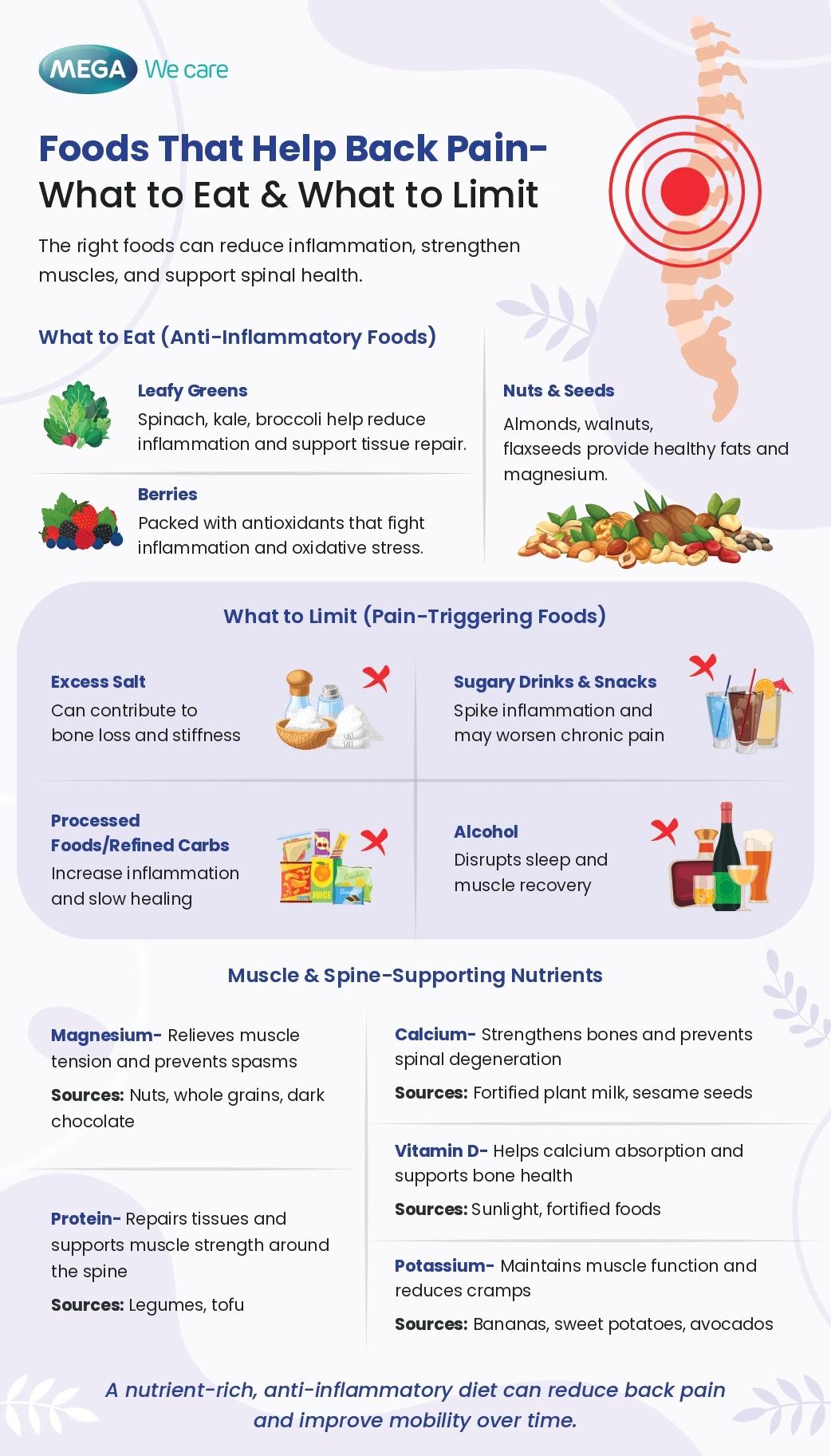
In seeking natural remedies for back pain, we've compiled a list of the five best foods, which have been noted for their potential role in managing inflammation and supporting overall back health.
1. Turmeric
- Beyond its culinary uses, turmeric has long been prized in traditional medicine for its potent anti-inflammatory properties.
- Curcumin, its active ingredient, has been studied extensively for its ability to reduce inflammation throughout the body, which may contribute to alleviating back pain and discomfort.
- Incorporating turmeric into your diet, whether through cooking or as a supplement, could offer relief for those suffering from chronic back issues.

2. Cherries
- Cherries, particularly tart cherries, are rich in antioxidants and compounds with anti-inflammatory effects.
- These properties may help to reduce oxidative stress and inflammation in the body, potentially easing the symptoms of back pain.
- Additionally, cherries contain anthocyanins, which have been linked to lower levels of inflammation and may provide relief for those with inflammatory conditions contributing to back discomfort.
3. Broccoli
- This cruciferous vegetable is a nutritional powerhouse, boasting high levels of vitamins C and K, as well as calcium.
- Vitamin C plays a crucial role in collagen synthesis, which is essential for maintaining the integrity and strength of connective tissues, including those in the back.
- Meanwhile, vitamin K supports bone health by aiding in the regulation of calcium, which is vital for bone density.
- Incorporating broccoli into your diet can help support overall bone health and potentially alleviate back pain.
4. Pineapple
- Beyond its sweet taste, pineapple contains bromelain, an enzyme with anti-inflammatory properties.
- Bromelain has been studied for its potential to reduce inflammation and swelling, which may help to alleviate back pain caused by inflammation.
- Whether enjoyed fresh or as a supplement, incorporating pineapple into your diet may provide natural relief for back discomfort.
5. Spinach
- Magnesium is a crucial mineral involved in over 300 enzymatic reactions in the body, including those related to muscle function and relaxation.
- Adequate magnesium intake has been linked to reduced muscle cramping and tension, which are common contributors to back pain.
- Spinach is an excellent source of magnesium, making it a valuable addition to a diet aimed at supporting back health and managing discomfort.
Incorporating These Foods into Your Diet
To reap the benefits of these foods for lower back pain relief or general back discomfort, it's vital to incorporate them into your everyday meals and snacks.
For instance, turmeric can be mixed into smoothies or used as a seasoning in savory dishes.
Cherries can be enjoyed as a sweet snack, added to salads, or blended into smoothies. Broccoli, pineapple, and spinach can also be consumed in a variety of delicious ways.
Remember, while these foods might aid in back pain relief, they need to be part of a balanced diet, which is essential for overall health and back pain management.
Consuming a rainbow of fruits and vegetables alongside lean proteins and whole grains is ideal.
Other Dietary Tips for Back Pain Relief
Apart from including food good for back pain, there are other dietary factors to consider for back pain relief:
1. Stay Hydrated
- Proper hydration is crucial for maintaining spinal health.
- The spinal discs, which act as shock absorbers between the vertebrae, are comprised mostly of water.
- Dehydration can reduce the fluid content in these discs, making them less effective in cushioning the spine and potentially contributing to back pain.
2. Avoid Inflammatory Foods
- Certain foods can promote inflammation in the body, exacerbating back pain and other inflammatory conditions.
- Processed foods high in refined sugars, unhealthy fats, and artificial additives can trigger inflammatory responses.
- Excessive consumption of caffeine and alcohol can also contribute to inflammation and may worsen back pain symptoms.
3. Maintain A Healthy Weight
- Excess weight places additional strain on the spine and its supporting structures, increasing the risk of back pain and exacerbating existing conditions.
- Carrying extra weight, particularly around the abdomen, can disrupt the body's natural alignment and posture, leading to musculoskeletal imbalances and discomfort.
Lifestyle Changes to Support Back Health

In addition to making dietary changes, incorporating regular exercise and movement into your lifestyle is crucial for back health.
Let's explore:
1. Walking
- Walking is a low-impact aerobic exercise that can be easily incorporated into daily routines.
- It helps to improve circulation, strengthen the muscles that support the spine, and promote flexibility in the back and legs.
- Additionally, walking helps to maintain a healthy weight, reducing the risk of excess strain on the spine and alleviating pressure on the spinal discs.
2. Swimming
- Swimming and water aerobics are excellent exercises for individuals with back pain because they provide a supportive, low-impact environment.
- The buoyancy of water reduces the pressure on the spine and joints, making it easier to move and exercise without exacerbating pain.
- Swimming engages the entire body, including the back muscles, helping to build strength, endurance, and flexibility while minimizing stress on the spine.
3. Yoga
- Yoga combines physical postures, breathing techniques, and mindfulness to promote overall health and well-being.
- Many yoga poses specifically target the muscles of the back, spine, and core, helping to improve posture, flexibility, and strength.
- Yoga also emphasizes relaxation and stress reduction, which can be beneficial for individuals experiencing back pain due to tension or stress-related muscle tightness.
4. Stretching Exercises
Incorporating stretching exercises into your daily routine can help relieve muscle tension, improve flexibility, and reduce the risk of injury.
Focus on stretching the muscles of the back, hamstrings, hips, and thighs, as tightness in these areas can contribute to back pain and stiffness.
Stretching exercises can be performed both as part of a warm-up before exercise and as a standalone activity to alleviate tightness and promote relaxation in the muscles.

Conclusion
In conclusion, let's revisit our journey of discovering natural remedies for back pain. We've learned that diet plays a pivotal role in managing back pain.
Foods rich in anti-inflammatory properties like turmeric, cherries, broccoli, pineapple, and spinach serve as the best food for back pain relief.
Additionally, incorporating these foods into a well-balanced diet, coupled with regular exercise and maintaining a healthy weight, can make all the difference in managing back pain.
Although these home remedies for lower back pain may not replace professional medical advice or treatment, they serve as an ayurvedic remedy for back pain or a herbal remedy for back pain that you can easily incorporate into your lifestyle.
Remember, small changes can often lead to big impacts. So, here's to a healthier back and a pain-free life!
Meet our expert

Meet our expert
Dr Jatin Bhide is an Ayurvedic doctor with over 16 years of enriching experience in Marketing and Strategy across OTC/FMHG, herbal medicine and Nutraceuticals (Europe) industries. He did his Bachelor of Ayurvedic Medicine and Surgery (BAMS) from Mumbai University, before moving on to do a Post Graduate Diploma in Pharmaceuticals and Healthcare Management.



How was the experience with article?
We'd love to know!