
Chinese herbs for muscle pain relief focus on improving circulation, reducing stiffness, and supporting recovery. Explore commonly used TCM herbs, herbal formulas, and therapies that may help manage muscle aches naturally.
Have you ever felt like your muscles were having a party, and they forgot to invite you? Muscle pain is more common than you might think and more annoying than you can even imagine.
It's that uninvited guest that arrives at the most inconvenient times - when we're rushing to finish a project, when we're excited about going on a long-awaited hike, or even when we just want to relax after a tiring day.
One might think of muscle pain as the body's cranky way of saying, "Hey, slow down a bit!" But did you know that it could also be the body's way of hinting at deeper issues like muscle strain or blood stagnation?
Now imagine this - what if I told you there's a natural way to wave goodbye to this pesky problem? An age-old secret from the treasure chest of Traditional Chinese Medicine (TCM)? Intriguing, isn't it?
Welcome to our blog where today we'll be talking about Chinese herbs for muscle pain. So, sit back, relax (literally), and read on as we unravel together the wisdom of TCM and its gentle yet powerful remedies for muscle pain.
Here's to a pain-free life!
Common Causes Of Muscle Pain You Should Know

Muscle pain, also known as myalgia, can range from mild discomfort to severe, debilitating pain. It is a common complaint among adults and can result from various causes.
These include:
Muscle strain: This is often due to overuse, misuse, or injury to a muscle during physical activity. This type of pain is usually localized, affecting just one or more muscles or parts of the body.
Overuse injuries: These occur when a certain activity is performed repetitively over time, leading to wear and tear on the muscle tissues.
These are just two examples of the types of muscle pain you may experience. Having an understanding of what may be causing your pain is the first step toward finding an appropriate treatment method.
Chinese Herbs For Muscle Pain Relief
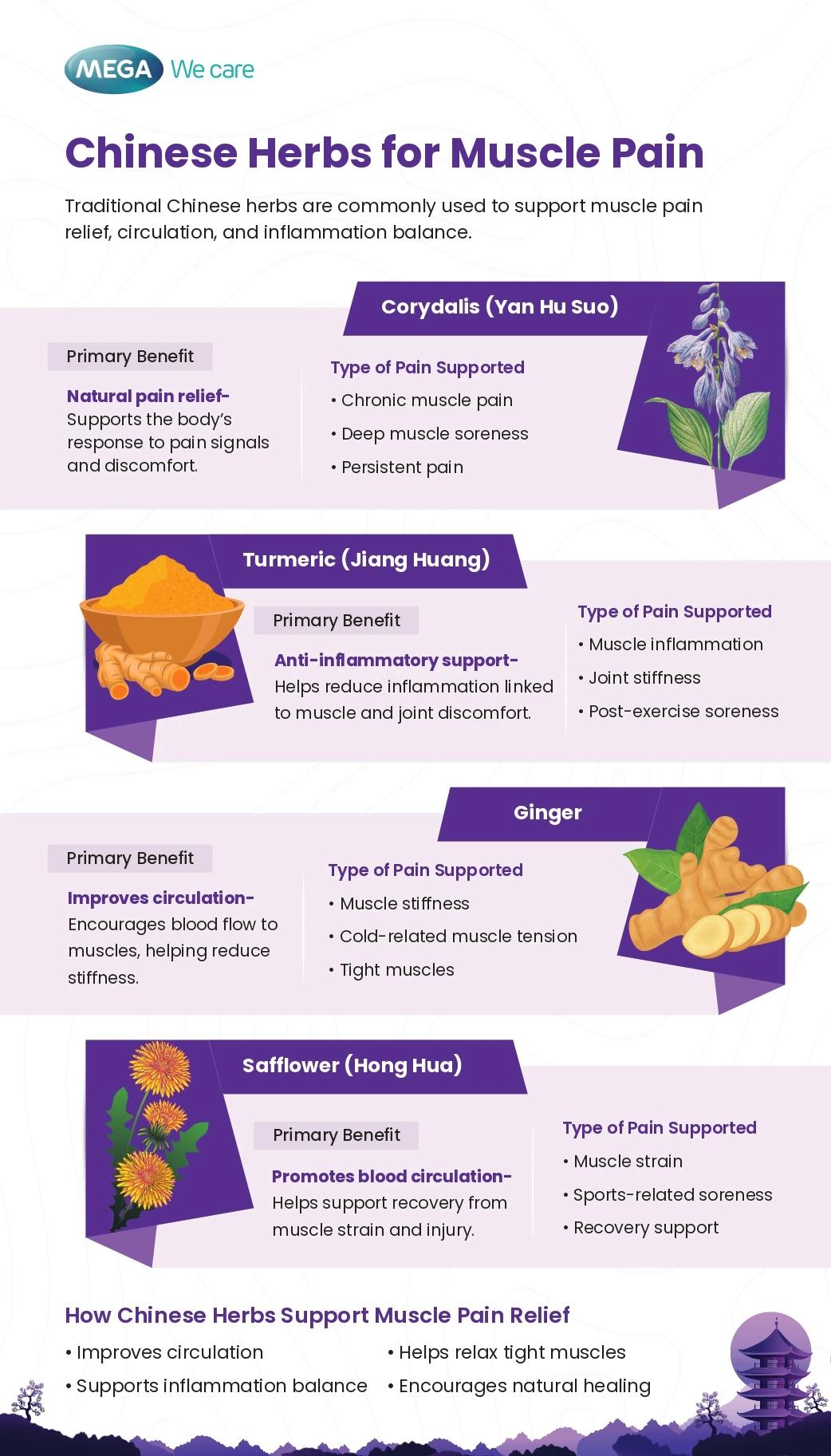
Some commonly used herbs include:
1. Ma Qian Zi (Strychnos Nux-Vomica)
- Ma Qian Zi, derived from the seeds of the Strychnos nux-vomica tree, is renowned for its potent analgesic properties.
- This herb is often used in TCM to help alleviate muscle pain and discomfort. It works by reducing inflammation and blocking pain signals, providing significant relief from chronic and acute muscle pain.
- Due to its strong effects, Ma Qian Zi is usually prescribed in carefully controlled doses by experienced TCM practitioners to ensure safety and effectiveness.
2. Gui Zhi (Cinnamomum Cassia)
- Gui Zhi, also known as cinnamon twig, is prized in TCM for being one of the best supplements for blood circulation and alleviating pain.
- This herb is particularly beneficial for conditions where poor circulation contributes to muscle pain and stiffness.
- By enhancing blood flow, Gui Zhi helps deliver essential nutrients and oxygen to the muscles, facilitating their relaxation and reducing pain.
- Additionally, its warming properties make it an excellent choice for treating muscle pain caused by cold and damp conditions.
3. Mu Gua (Chaenomeles Speciosa)
- Mu Gua, derived from the fruit of the Chaenomeles speciosa plant, is commonly used in TCM to relax muscles and tendons, thereby relieving muscle tension and pain.
- This herb is particularly effective for treating muscle spasms, cramps, and stiffness.
- Mu Gua works by nourishing the tendons and promoting flexibility, making it an ideal remedy for muscle pain resulting from overuse, injury, or chronic conditions.
- Its sour and slightly warm nature helps to break up stagnation and improve overall muscle function.
Effective Chinese Herbal Formulas For Muscle Pain
In addition to individual herbs, TCM also utilizes herbal formulas that combine several herbs to treat muscle pain.
These formulas aim at promoting circulation, relaxing muscles, and alleviating pain. Some examples include:
1. Shu Jing Huo Xue Tang
Shu Jing Huo Xue Tang is a well-known herbal formula in TCM specifically aimed at treating muscle spasms and promoting blood circulation.
This formula is particularly effective for conditions where muscle pain and stiffness result from impaired blood flow and energy stagnation.
By invigorating the circulation of blood and Qi (vital energy), Shu Jing Huo Xue Tang helps to relieve muscle tension, reduce inflammation, and accelerate the healing of strained muscles.
It is commonly used for treating muscle strain, chronic muscle pain, and sports injuries.
Key components often included in Shu Jing Huo Xue Tang may include:
- Dang Gui (Angelica sinensis): Enhances blood circulation and nourishes the blood.
- Chuan Xiong (Ligusticum chuanxiong): Promotes the movement of Qi and blood, alleviating pain.
- Bai Shao (Paeonia lactiflora): Relieves muscle spasms and soothes pain.
- Sang Ji Sheng (Taxillus chinensis):Strengthens muscles and tendons and improves flexibility.
2. Shen Tong Zhu Yu Tang
Shen Tong Zhu Yu Tang is another prominent herbal formula used in TCM for addressing muscle pain, especially pain caused by blood stagnation.
In TCM, blood stagnation is a condition where the flow of blood is obstructed, leading to pain, swelling, and stiffness.
Shen Tong Zhu Yu Tang is formulated to break up blood stasis, invigorate circulation, and alleviate pain.
This formula is ideal for treating chronic muscle pain, joint pain, and conditions where pain is exacerbated by poor blood flow.
Key herbs in Shen Tong Zhu Yu Tang typically include:
- Tao Ren (Prunus persica): Promotes blood circulation and resolves blood stasis.
- Hong Hua (Carthamus tinctorius): Enhances blood flow and alleviates pain.
- Qin Jiao (Gentiana macrophylla): Dispels wind-dampness and relaxes muscles.
- Di Long (Pheretima aspergillum): Unblocks channels and collaterals, reducing pain and inflammation.
Other TCM Therapies For Muscle Pain Relief
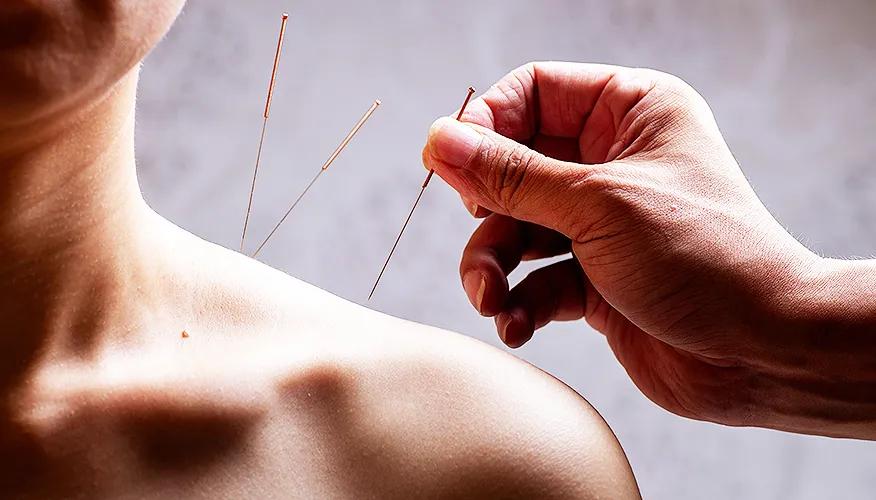
Besides Chinese herbs for muscle pain relief, TCM also employs other modalities. A TCM doctor may recommend these based on your specific needs:
1. TCM Acupuncture
- TCM acupuncture involves inserting thin needles into specific points on the body, known as acupoints, to relieve muscle tension and pain.
- This practice helps to restore the balance of Qi and improve blood circulation, which can alleviate pain and promote healing.
- Acupuncture is particularly effective for chronic pain conditions and muscle injuries, providing both immediate relief and long-term benefits.
2. Chinese Acupressure Massage
- Chinese acupressure massage targets the same acupoints as acupuncture but uses hands instead of needles.
- By applying pressure to these points, acupressure can help relieve muscle tension and pain, improve circulation, and enhance the body’s natural healing processes.
- This technique is beneficial for those who may be apprehensive about needles but still want the therapeutic effects of TCM.
3. Tui Na Massage
- Tui Na massage is a form of Chinese therapeutic massage that aims to balance the body's energy and promote natural healing.
- Using techniques such as kneading, rolling, and pressing, Tui Na focuses on the body’s energy channels, or meridians, to relieve muscle tension and pain.
- This massage not only addresses physical symptoms but also helps to harmonize the body’s Qi, leading to overall well-being and pain relief.
Precautions Before Using Chinese Herbs for Pain
- While these Chinese herbs and treatments can provide significant relief from muscle pain, it's important to consult with a doctor of traditional Chinese medicine or another healthcare provider before starting any new treatment.
- Some herbs can have side effects or interact with other medications you may be taking. Always ensure that you are sourcing your herbs from a reputable supplier to avoid any adulterated or low-quality products.
Conclusion
Muscle pain can be quite debilitating, affecting your quality of life. With its holistic approach, TCM offers a range of natural treatments to alleviate this discomfort.
From individual herbs like Mu Gua and Gui Zhi to herbal formulas and therapies such as Tui Na massage – there are numerous pathways to attain relief from muscle pains.
Using Chinese herbs for muscle pain relief can be an effective way to manage your discomfort.
However, remember to consult with a TCM doctor or another healthcare provider before starting any herbal treatment. As each person is unique, the best approach is always one tailored to your specific needs and overall health.
By understanding and treating the root cause of the pain, TCM not only helps alleviate immediate discomfort but also promotes long-term health and well-being.
Meet our expert

Meet our expert
Dr. Inna Anatolyivna Kirilyuk graduated from Vinnytsia National Medical University in 2008, marking the inception of her remarkable journey in healthcare. Following her graduation, Dr. Kirilyuk embarked on a path of continuous learning and specialization.



How was the experience with article?
We'd love to know!