
Yes, emotional stress can contribute to joint pain—mainly by increasing inflammation and affecting how your body responds to pain.
Yikes, another twinge in the knee! Do you ever wake up from a restless night’s sleep to find your joints aching? Is it just age, or could there be something more to it?
If you’ve been battling unexplained joint pain and inflammation, it's time to consider an often-overlooked factor: emotional stress. Stress, whether from work pressure, family issues, or financial troubles, can affect our bodies in surprising ways. It’s not just about mood swings or difficulty in focusing; prolonged emotional stress can have real physical impacts.
In today’s bustling world, where we constantly juggle responsibilities, it's easy to ignore the connection between mind and body. But believe it or not, a disturbed mind can lead to disturbed physical health.
Does that sound intriguing? It surely is! So, buckle up as we explore the fascinating topic of how emotional stress affects joint health.
You might be surprised to discover just how interconnected your body truly is!
How Emotional Stress Affects Joint Health
Here’s a simple breakdown of how emotional stress can trigger joint pain through a mind-body cycle:
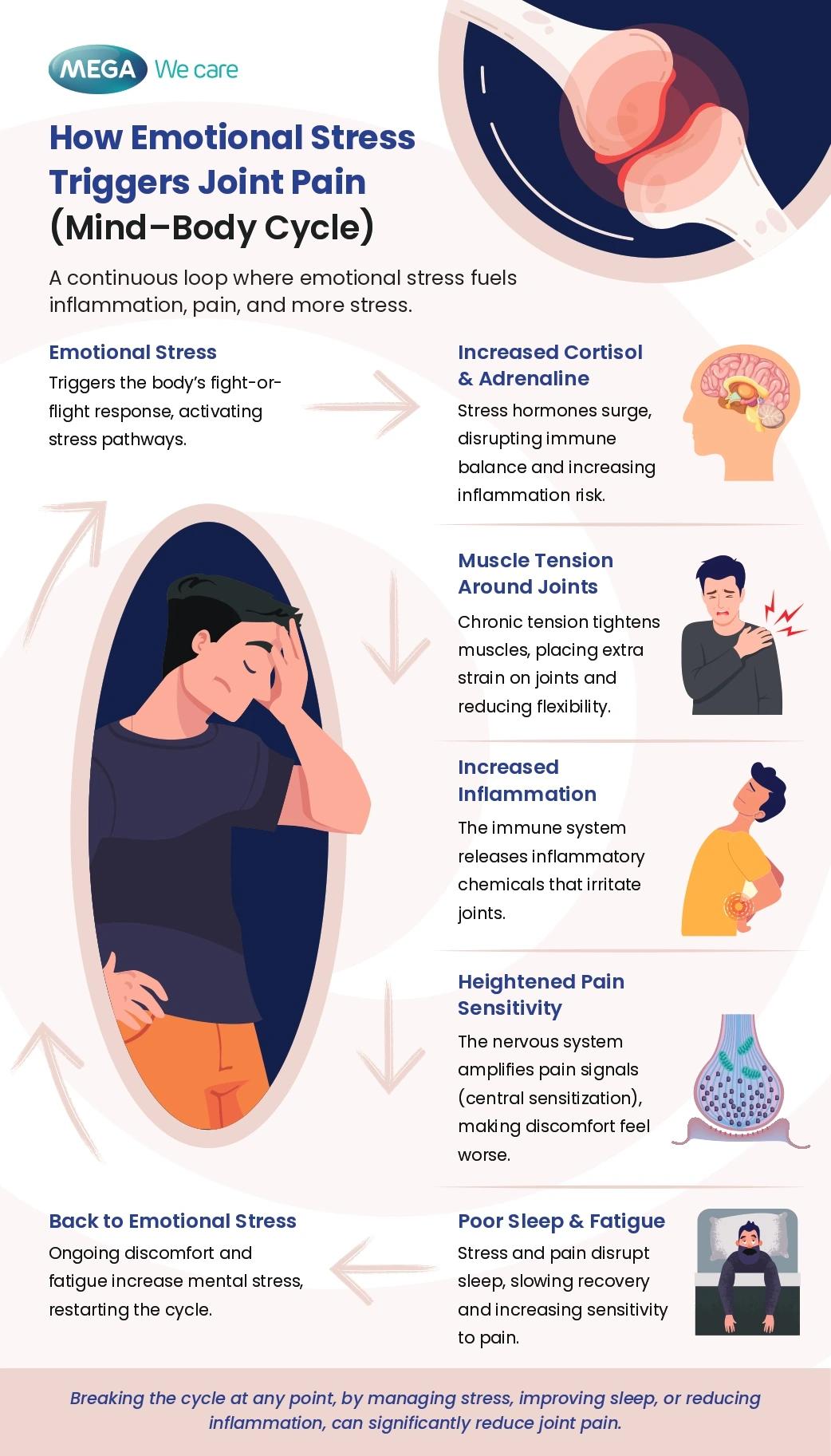
Have you ever wondered, ‘What is emotional stress, and can it affect my joint health?’
Emotional stress is a response to challenging events or situations that can induce a range of physiological changes in your body. When we’re under stress, our bodies react by releasing hormones such as adrenaline and cortisol to help us deal with the situation at hand. This is often known as the ‘flight or fight’ response.
However, persistent emotional stress can lead to several health problems, including joint pain and inflammation.

- Chronic stress weakens the immune system, which can increase inflammation throughout the body.
- Moreover, it can exacerbate existing conditions like arthritis or fibromyalgia, leading to increased joint pain.
- Thus, managing emotional stress should be a priority for maintaining good joint health.
Role of Stress Hormones in Joint Pain
Stress hormones like cortisol play a significant role in how emotional stress affects our joints.
When we are stressed, our adrenal glands produce more cortisol, which prepares our bodies for a fight-or-flight response. Cortisol’s effects on muscle include reducing inflammation and suppressing the immune system.
However, when our bodies are under constant stress and continually producing cortisol, it can lead to chronic inflammation and cause joint pain. High levels of cortisol can also result in high blood pressure and other health problems.
Therefore, understanding the effects of stress hormones on your body is crucial in managing joint pain and inflammation.
How Stress Worsens Joint Pain

Chronic stress acts like a gasoline can on the fire of fibromyalgia.
While stress isn’t the sole cause of fibromyalgia, it can significantly worsen symptoms and trigger debilitating flare-ups.
Here's a deeper dive into this complex relationship:
1. Stress and the tension-pain cycle
- Muscle tightness: When under stress, the body goes into ‘fight-or-flight' mode, tensing muscles throughout the body. In fibromyalgia, these already sensitive muscles become further aggravated, leading to increased pain and stiffness.
- Pain Amplification: Stress can heighten pain perception. The nervous system becomes hypersensitive, amplifying pain signals sent from the body to the brain, making even minor discomfort feel excruciating.
- Trigger points: People with fibromyalgia often have tender spots called trigger points. Stress can activate these trigger points, causing radiating pain and muscle spasms.
2. Stress and the inflammatory response
- Cytokine cascade: When stressed, the body releases hormones like cortisol. Cortisol can trigger the immune system to release inflammatory chemicals called cytokines. These cytokines attack healthy tissues, contributing to joint pain and swelling – a hallmark feature of fibromyalgia flare-ups.
- Gut issues: Stress can disrupt the gut microbiome, the community of bacteria in your digestive system. This disruption can worsen inflammation throughout the body, further impacting fibromyalgia symptoms.
3. Examples of stress-induced fibromyalgia symptoms
- Worsened pain: Existing pain throughout the body, especially in the muscles, joints, and tender points, can become more intense and widespread.
- Increased fatigue: Stress can drain energy levels, leaving individuals with fibromyalgia feeling even more exhausted and sluggish.
- Sleep disturbances: Stress can disrupt sleep patterns, making it harder to fall asleep and stay asleep. This lack of quality sleep can exacerbate fibromyalgia symptoms the next day.
- Mood changes: Chronic stress can contribute to anxiety and depression, which often co-occur with fibromyalgia. These emotional changes can further worsen the perception of pain and overall well-being.
How to Manage Emotional Stress for Joint Health

Managing emotional stress is crucial for maintaining joint health. Here are some strategies that can help:
1. Relaxation techniques
- You mentioned meditation, deep breathing, and yoga - all excellent choices.
- You can also explore progressive muscle relaxation, guided imagery, spending time in nature, or listening to calming music.
- Find what works best for you and incorporate it into your daily routine.
2. Mindfulness
- Practicing mindfulness helps you become aware of your thoughts and feelings without judgment.
- This allows you to identify stress triggers and respond to them in a healthier way.
- Many mindfulness apps and courses are available to help you get started.
3. Social connection
- Strong social connections provide emotional support and a sense of belonging.
- Spend time with loved ones, join a support group, or volunteer in your community.
- Feeling connected can significantly reduce stress.
4. Exercise regularly
- Physical activity is a powerful stress reliever.
- Aim for at least 30 minutes of moderate-intensity exercise most days of the week.
- Exercise strengthens muscles that support your joints, improves flexibility, and releases endorphins, which naturally elevate mood.
- Low-impact exercises like swimming, walking, or water aerobics are great for joint health.

5. Balanced diet
- Eating a balanced diet rich in fruits, vegetables, whole grains, and lean protein provides your body with the nutrients it needs to function optimally and cope with stress.
- Limit processed foods, sugary drinks, and unhealthy fats, which can contribute to inflammation and worsen joint pain.
6. Quality sleep
- When you’re well-rested, you’re better equipped to handle stress.
- Aim for 7-8 hours of quality sleep each night.
- Develop a relaxing bedtime routine to ensure you fall asleep easily and stay asleep throughout the night.
7. Time management
- Feeling overwhelmed by deadlines and responsibilities can be a major stressor.
- Learn effective time management skills to prioritize tasks, delegate when possible, and set realistic goals.
- The key is to find what works best for you as an individual. It could be any activity or hobby that helps you relax and unwind from your daily stresses.
Mind-Body Connection and Joint Pain
Understanding the connection between mind and body is fundamental when addressing joint health.
This connection signifies that our thoughts, feelings, beliefs, and attitudes can affect our physical functioning and overall health positively or negatively.
Relaxation techniques such as deep breathing, meditation, and yoga can help manage stress levels and thereby improve joint health. These practices not only help in reducing emotional stress but also promote a positive mindset which is beneficial for overall health.

Therapy Options for Stress-Related Joint Pain
If emotional stress becomes overwhelming, therapy options such as cognitive behavioral therapy (CBT) or counseling may be beneficial. CBT techniques involve changing thought patterns that lead to harmful behaviors or emotional distress. This can be done through one-on-one sessions or cognitive behavioral group therapy.
For instance, people with fibromyalgia often find CBT helpful in managing their symptoms. It helps them change how they perceive pain, which can reduce their sensitivity to it.
Conclusion
In conclusion, understanding the relationship between emotional stress and joint health is crucial. Chronic stress can lead to several health problems, including inflammatory joint diseases and increased joint pain. Thus, managing emotional stress through relaxation techniques, maintaining a healthy lifestyle, and considering therapy options can significantly improve joint health.
Remember, it’s important to listen to your body and recognize when stress is affecting your health. If you're experiencing chronic joint pain, it’s always best to consult with a healthcare professional to discuss potential causes and treatments.
After all, your health deserves undivided attention, and caring for your emotional well-being is a significant part of that.
Meet our expert

Meet our expert
Dr. Inna Anatolyivna Kirilyuk graduated from Vinnytsia National Medical University in 2008, marking the inception of her remarkable journey in healthcare. Following her graduation, Dr. Kirilyuk embarked on a path of continuous learning and specialization.



How was the experience with article?
We'd love to know!